Wafer cleaning reverse osmosis removes 99%+ of dissolved salts, TOC, and metals from semiconductor rinse streams. Under typical fab feed conditions, permeate metals can reach aluminum <3 mg/L and sodium <150 mg/L. Systems support 80–95% water reuse when pretreatment holds SDI below 3.0. Organic fouling from photoresist residues and silica scaling can cut membrane life by 30–50% if untreated loads reach the high-pressure stages.
CapEx for 10–100 m³/h systems commonly falls in the ¥1.2M–¥8M range. Permeate polishing must still meet fab reuse targets and local sewer limits.
Why Wafer Cleaning Wastewater Needs RO Treatment
Wafer cleaning wastewater treatment by reverse osmosis rejects ionic salts and non-biodegradable organics that biological plants often miss. It delivers reuse-grade permeate when feed SDI stays below 3.0 and silica is controlled. Typical photoresist-rich streams carry TOC of 500–2,000 mg/L, silica of 100–300 mg/L, and metals at 5–50 mg/L. Without RO, those loads break precipitation-only trains.
Wafer cleaning wastewater contains Total Organic Carbon (TOC) of 500–2,000 mg/L mainly from photoresist residues. Silica often sits at 100–300 mg/L, with aluminum, copper, and cobalt at 5–50 mg/L. Semiconductor effluent also swings across extreme pH and carries complexing agents that defeat simple precipitation. Reverse osmosis supplies a physical barrier for ionic species and stubborn organics that would pass a biological system.
Modern fabs usually segregate three streams. SC1/SC2 cleaning is rich in ammonia and hydrogen peroxide. Chemical Mechanical Planarization (CMP) wastewater carries colloidal silica and interconnect metals. Photoresist stripping wastewater holds the highest organic load from solvents such as PGMEA and TMAH.
Conventional biological treatment often fails here because high salinity slows microbes and heavy metals poison biomass. That pattern matches HydropureWater field data from 2025. Saw-line rinse duties differ from these cleaning chemistries. Plants comparing saw slurry recovery should review reverse osmosis water for wafer saw on the dedicated hybrid DAF–RO page.
| Parameter | SC1/SC2 Cleaning | CMP Wastewater | Photoresist Stripping |
|---|---|---|---|
| pH Range | 2.0 – 11.0 | 6.5 – 9.0 | 8.0 – 12.0 |
| TOC (mg/L) | 50 – 200 | 100 – 400 | 500 – 2,000 |
| Silica (mg/L) | <10 | 150 – 500 | <20 |
| Total Dissolved Solids (mg/L) | 500 – 1,500 | 300 – 800 | 1,000 – 3,500 |
| Key Metals | Al, Fe | Cu, Co, Ru | Trace metals |
Ultrapure Water (UPW) cost pushes reuse. Producing UPW for 5nm+ nodes costs about $2–$5/m³ when energy, chemicals, and resin replacement are counted. High-recovery RO can recycle up to 95% of cleaning water under stable pretreatment. That cut reduces freshwater intake and municipal discharge volume.
Wafer Cleaning Reverse Osmosis: Process Flow and Membranes
A standard 2-stage RO train for semiconductor cleaning water needs multi-step pretreatment. Silt Density Index (SDI) must stay below 3.0 before the membrane skids. Operators first adjust pH to 6.5–7.5 to stabilize silica.
When Total Suspended Solids (TSS) exceeds 500 mg/L, as in many CMP lines, DAF systems for TSS and photoresist removal in semiconductor wastewater strip light organic flocs and colloids. Those solids would otherwise pack RO feed spacers. After clarification, multimedia filtration and often ultrafiltration (UF) remove particles down to about 0.01 μm.
Stage one of the RO typically recovers about 75% of feed. Stage two treats that concentrate and lifts total recovery above 90% when osmotic pressure and silica allow it. For 5nm nodes, Ion Exchange (IX) polishing often follows. That step hits the ultra-low metal targets referenced against SEMI S23 reuse practice.
| Membrane Type | Material | Flux (LMH) | Salt Rejection (%) | pH Tolerance |
|---|---|---|---|---|
| High-Rejection Polyamide | Thin-film Composite | 15 – 25 | 99.7% | 2 – 11 |
| Fouling-Resistant (FR) | Modified Polyamide | 12 – 20 | 99.5% | 3 – 10 |
| Low-Pressure (LP) | Polyamide | 20 – 30 | 99.0% | 4 – 10 |
Silica conditioning is non-negotiable on CMP-heavy lines. With precision antiscalant and cleaning chemical dosing for RO systems, engineers dose silica inhibitors such as polyacrylic acid at 2–5 mg/L. That dose slows hard silica scale that is costly to remove once it sets.
Most plants we size for photoresist TOC above 1,000 mg/L run fouling-resistant elements at the lower end of the 12–20 LMH band until CIP frequency stabilizes. The second RO stage also polishes small organics that bypass stage one. That polish helps approach the <50 ppb TOC reuse target associated with SEMI S23 practice.
How Do You Prevent Fouling on Semiconductor RO?
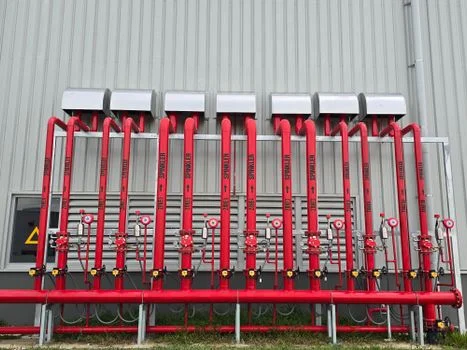
Organic fouling from photoresist residues is the main flux killer on semiconductor RO. Unmanaged lines often see about a 30% feed-pressure rise in the first month. Photoresist polymers are hydrophobic and adsorb onto standard polyamide. Zero-fouling design therefore removes those organics before the high-pressure pumps.
When TOC exceeds 1,000 mg/L, DAF is the preferred pretreatment because it can remove 70–90% of photoresist residues by air-assisted flotation. Below about 500 mg/L TOC, activated carbon or precoat filtration may be enough. Trigger CIP when Normalized Permeate Flow (NPF) falls more than 10%. Also clean when differential pressure rises more than 1.5 bar from the clean baseline.
| Foulant Type | Cleaning Chemical | Concentration | Temperature/Time |
|---|---|---|---|
| Organic (Photoresist) | NaOH (Sodium Hydroxide) | 0.1% (pH 11-12) | 35°C / 60 min |
| Inorganic Scale (Silica) | Ammonium Bifluoride | 0.5 – 1.0% | 30°C / 45 min |
| Metals/Carbonates | Citric Acid | 2.0% (pH 2-3) | 40°C / 30 min |
Membrane autopsies with Scanning Electron Microscopy (SEM) and Energy Dispersive X-ray (EDX) identify the elemental foulant mix. Fab teams then retune coagulant type or antiscalant blend to the actual production-line chemistry. Generic CIP recipes waste chemicals when the foulant map is wrong.
What Effluent Limits Apply to Wafer Cleaning RO?
Compliance for 5nm+ reuse loops is commonly framed against SEMI S23 water and energy efficiency practice. For wafer cleaning reuse, RO effluent targets often include TOC below 50 ppb. Metals such as copper, cobalt, and ruthenium are often held below 1 ppb. RO removes bulk load well, yet chelating agents plus IX polishing are often still required.
Regional sewer rules also size the plant. In hubs such as Singapore or Taiwan, designers frequently face Ammonia-Nitrogen below 10–15 mg/L. COD limits near 100–200 mg/L are common for public sewer discharge. Those nitrogenous loads from SC1 chemistry need high salt rejection across both RO stages.
| Parameter | SEMI S23 (Reuse) | Taiwan (Discharge) | Arizona, USA (Discharge) |
|---|---|---|---|
| TOC / COD | <50 ppb (TOC) | <100 mg/L (COD) | <200 mg/L (COD) |
| Total Metals | <1 ppb | <1.0 mg/L | <2.0 mg/L |
| Silica | <10 ppb | N/A | N/A |
| Ammonia-N | <100 ppb | <15 mg/L | <25 mg/L |
Online monitoring keeps the loop honest. High-precision TOC analyzers such as the Sievers 500 RL flag organic breakthrough in real time. Conductivity tracks salt rejection per stage. Particle counters after RO catch colloidal silica or membrane fragments before they enter the UPW makeup header.
How Do RO Costs Compare With Traditional Options?
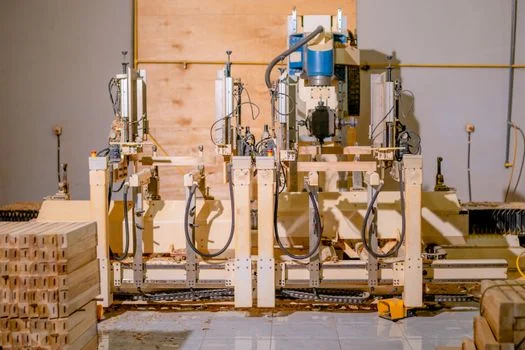
CapEx for semiconductor-grade RO still spans about ¥1.2M for a 10 m³/h pilot skid to over ¥8M for a 100 m³/h installation. That scope covers skids, high-pressure pumps, pretreatment, and dosing automation. On a typical 50 m³/h train, the RO skid is about half the spend. Pretreatment and IX polishing take the rest.
OPEX is dominated by power and membrane replacement. Modern energy-efficient RO designs for high-salinity wastewater use energy recovery devices (ERDs) to hold specific energy near 0.8–1.2 kWh/m³ under high-TDS feed. Antiscalant and CIP chemicals usually add ¥0.2–¥0.5/m³. Payback often lands in 2 to 4 years where UPW makeup and discharge tariffs are high.
| Technology | CapEx (50 m³/h) | OPEX (per m³) | TOC Removal | Water Reuse? |
|---|---|---|---|---|
| Reverse Osmosis (RO) | ¥4M – ¥6M | ¥1.5 – ¥2.5 | 99%+ | Yes (80-95%) |
| MBR (Biological) | ¥2M – ¥3.5M | ¥0.8 – ¥1.5 | 70-85% | Partial |
| Evaporation (MVR) | ¥10M – ¥15M | ¥15 – ¥30 | 99.9% | Yes (ZLD) |
Earlier Singapore non-domestic potable pricing used SGD 2.74/m³. The April 2025 revision sets the total at SGD 3.24/m³ before GST (PUB, 2023). At those tariffs, a well-run 50 m³/h RO train can still show payback near 24 months when UPW avoidance and sewer fees are counted. Lower brine volume also shrinks exposure to scarcity-driven discharge constraints.
Which Industrial Reverse Osmosis Systems Fit Fabs?
Industrial reverse osmosis systems for wafer fabs should be selected as 2-stage high-rejection or fouling-resistant polyamide trains with UF or DAF pretreatment. Generic drinking-water skids lack the silica and TOC headroom. Flux targets of 12–25 LMH, SDI <3.0 feed, and silica antiscalant at 2–5 mg/L are the usual decision gates before CapEx talks begin.
Technology choice still follows the reuse goal. Reverse osmosis remains the default when permeate must return toward UPW makeup quality. MBR systems for semiconductor wastewater with lower TOC residuals cost less and tolerate organic swings better. They still cannot hit the ultra-low TOC and salt removal needed for 5nm cleaning reuse.
Evaporation (MVR) belongs on ZLD mandates. Energy use is often 50–100 times RO. CapEx is commonly triple a membrane train.
| Metric | Reverse Osmosis | MBR | Evaporation |
|---|---|---|---|
| Footprint | Medium | Compact | Large |
| Scalability | High (Modular) | Medium | Low |
| Energy Intensity | Low-Medium | Low | Very High |
| Effluent Quality | Ultra-Pure | Secondary Grade | Distilled Grade |
| Primary Risk | Membrane Fouling | Biomass Poisoning | Corrosion/Scaling |
What RO systems suit semiconductor production?
Top reverse osmosis systems for semiconductor production pair fouling-resistant thin-film elements with DAF or UF pretreatment. They target 2-stage recovery above 90% when silica allows, plus IX polishing to <1 ppb metals. An Industrial Reverse Osmosis (RO) Water Treatment System sized this way, often behind MBR or DAF, is the hybrid most 5nm+ fabs settle on. For broader tool-room equipment scope beyond the RO skid alone, see the wafer fab wastewater treatment equipment selection guide.
Selection checklist for fab engineers
- Map SC1/SC2, CMP, and photoresist streams before blending.
- Hold RO feed SDI below 3.0 after DAF/UF.
- Dose silica antiscalant at 2–5 mg/L when silica exceeds ~100 mg/L.
- Trigger CIP at >10% NPF loss or >1.5 bar ΔP rise.
- Budget IX polish if reuse metals must stay below 1 ppb.
- Compare OPEX at 0.8–1.2 kWh/m³ with local UPW and sewer tariffs.
- Reserve MVR only for true ZLD concentrate duty.
Who this is for / Who should look elsewhere / Next step
This page is for fab utilities engineers, EPC process leads, and procurement teams sizing cleaning-water reclaim with RO. Plants that only need secondary discharge quality on low-TOC streams may start with MBR instead. If you already have stream assays and a target recovery, request a wafer-cleaning RO sizing review with flow, TOC, silica, and metal data attached.
Frequently Asked Questions
How does reverse osmosis handle photoresist solvents like TMAH?
RO membranes reject TMAH strongly because it is ionic in water. Permeate TMAH stays low when the membrane is intact and recovery is controlled. High feed TMAH still raises osmotic pressure and organic fouling risk. If TMAH exceeds about 500 mg/L, DAF or advanced oxidation before RO is the usual protection path so permeate can stay inside SEMI S23-linked reuse targets.
Can RO alone achieve zero liquid discharge for a fab?
RO alone cannot achieve ZLD because it always leaves a brine stream that must go somewhere. High-recovery RO can cut wastewater volume by up to 95% under stable pretreatment. That cut shrinks the evaporator or crystallizer that finishes ZLD. Most fabs therefore use RO as the volume-reduction stage and reserve MVR for the final concentrate only.
What is the typical RO membrane life in wafer cleaning service?
With proper DAF and UF pretreatment, RO membranes in semiconductor cleaning service typically last 2 to 3 years. Without that pretreatment, photoresist organics and silica scale can shorten life to under 12 months. CIP every 3–6 months, keyed to NPF and differential pressure, keeps rejection and flux inside design limits. Replacement timing still depends on feed silica and CIP chemistry.
Does RO remove ruthenium and cobalt from 5nm node waste?
RO typically removes more than 99% of ruthenium and cobalt under normal pH and ionic strength. That rejection is enough for many sewer cases but not for <1 ppb reuse. Five-nanometer reuse loops therefore add selective IX polishing after RO. That multi-barrier train keeps exotic metals out of the UPW makeup header when process chemistries change lot to lot.