In Victoria, an EPA A04 licence covers industrial wastewater treatment where the waste was generated at another site and flow exceeds 5,000 litres per day. Class C reuse medians sit at BOD under 20 mg/L and TSS under 30 mg/L.
EPA A04 Licence for Industrial Wastewater in Victoria
An EPA A04 licence applies when industrial wastewater from another site exceeds 5,000 litres per day. On-site sewage above that flow needs an A03 licence, not A04. Class C recycled water uses medians under 20 mg/L BOD and under 30 mg/L suspended solids, with E. coli under 1,000 per 100 mL and pH 6–9.
Sewage is not A04. Treating sewage, including sullage, above 5,000 litres per day needs an A03 sewage treatment licence. An onsite system at not more than 5,000 litres of sewage on any day needs an A20 permit from the local council. A factory that treats only its own trade waste on the generating site does not trip A04 unless that wastewater came from another site. The A04 activity itself sits in Schedule 1 of the Environment Protection Regulations 2021.
Most plants we size for off-site industrial receipts sit just above 5,000 litres per day. Dairies, wineries, metal finishers, chemical plants and mines still carry the general environmental duty for waste they generate themselves. That duty is enforceable. It is not the same instrument as an A04 development licence plus an operating licence.
Exemptions are lodged, not assumed. EPA Victoria allows an application for a development-licence exemption or an operating-licence exemption in some cases. The 500 litres per day figure belongs to earlier notes. The live test on the A04 page is a design or actual flow exceeding 5,000 litres per day or on any day, so the worst day counts.
An operating licence issued before 1 July 2021 has no expiry date. A licence issued after that date runs for up to 20 years, or up to 99 years for waste management at a current or former landfill. Development-licence length is stated as a condition when EPA issues it. Most treatment plants we file sit in the 20-year band, not the landfill band.
| Code | Activity covered | Flow trigger | Permission |
|---|---|---|---|
| A04 | Industrial wastewater generated at another site | Exceeding 5,000 litres per day or on any day | Development licence and operating licence |
| A03 | Sewage, including sullage | Exceeding 5,000 litres per day or on any day | Development or operating licence |
| A20 | Onsite wastewater management system | Sewage not more than 5,000 litres on any day | Permit from the local council |
The A04 operating conditions require a copy of the licence on site (OL_G01). Call 1300 372 842 at once for a harmful discharge, a control failure, or a licence breach (OL_G02). Notify EPA within 48 hours of a name, address, insolvency or officer change (OL_G03). Keep reporting records for five years, and update the decommissioning plan 40 business days before the activity stops (OL_G04b, OL_G07).
Surface-water discharge follows Appendix 6 of the licence (OL_DW02), and those numbers are site-specific. Plant and equipment must be run in proper condition to the manufacturer’s specification (OL_WM14). The risk program must also cover short-term emission spikes and ways to cut them (OL_WM13). Placeholder values in the conditions are filled per site, not copied from a neighbour.
victorian epa industrial wastewater application process
The Victorian EPA industrial wastewater application is lodged in the EPA portal, and assessment does not start until the fee is received.
Plan on 60 to 90 days for a standard file, and 120+ days when the waste is complex, such as mining or pharmaceuticals. The A04 page, updated 14 May 2025, does not publish those day counts. It points applicants to the separate assessment guidance. Use the longer band when the list includes PFAS, microplastics or a stream that needs pilot data.
Common rejection points are an incomplete contaminant list, no backup for a critical pump or blower, and no bushfire plan on a remote site. Most files we lodge slip on a missing peak-day log, not on the process drawing. Draw the standby unit before you upload. Dual pumps and a spare-parts list are the minimum the checklist uses.
The portal asks for supporting evidence. The six rows below are the engineering pack this guide uses, not a table printed on the A04 page. Include average and peak flow in m³/day, the contaminant profile, a process diagram and a scaled site plan. If the activity code is unclear, use EPA’s free permission pathway before you pay a fee.
| Application Requirement | Description | Typical Data Point |
|---|---|---|
| Hydraulic Loading | Average and peak daily wastewater volume | 50-5,000 m³/day |
| Contaminant Profile | Influent concentrations of key pollutants | BOD, TSS, pH, Heavy Metals, FOG, Nutrients |
| Treatment Process Flow Diagram | Schematic of all treatment stages and equipment | DAF → MBR → Disinfection |
| Site Plan | Layout showing discharge points, monitoring, and infrastructure | Scale drawing with GPS coordinates |
| Redundancy Measures | Backup systems for critical treatment components | Dual pumps, spare parts inventory |
| Bushfire Resilience Plan | Measures to protect plant in high-risk areas | Fire-resistant materials, emergency shutdown |
An extra fee can apply when assessment exceeds the hours named in the Regulations. Moving from a development licence to an operating licence carries no fee on the 2026–27 schedule. Pay the application fee first. EPA will not start the clock until that payment is processed.
Victoria's Class C Effluent Standards: Parameter Limits and Industrial Compliance Targets
Victoria's Class C recycled-water objective, in EPA publication 1910, is a median under 20 mg/L BOD and under 30 mg/L suspended solids, not an automatic discharge-licence limit.
Class C is a reuse class. Publication 1910, version 2, sorts recycled water into three classes, A to C, and does not define a Class D. Class A objectives are turbidity under 2 NTU, BOD/SS under 10/5 mg/L and pH 6–9, for uses such as unrestricted public irrigation, raw-food crops and toilet flushing. The same publication says recycled water is not acceptable for drinking, cooking, bathing or filling pools.
Class B and Class C share the BOD and suspended-solids numbers. They split on E. coli: under 100 organisms per 100 mL for Class B, and under 1,000 organisms per 100 mL for Class C. Class B fits uses such as dairy-cattle grazing and industrial washdown. Class C fits urban non-potable supply with controlled public access, cooked or processed food crops, fodder, and industrial systems with no potential worker exposure.
BOD, suspended solids and E. coli in Table 1 of publication 1910 are medians over a rolling 12-month period. pH 6–9 is a 90th-percentile range, and a higher upper pH can be accepted on an algal lagoon if soils and disinfection still hold. The design table below keeps the tighter planning band of pH 6.5–8.5 and states E. coli as <1,000 CFU/100mL. Publication 1910 writes that same count as organisms per 100 mL.
EPA Victoria still publishes guideline 1910 as version 2, released 16 March 2021 and updated on the site on 26 May 2025. That text says a permit to supply or use reclaimed wastewater covers Class A. Class B or Class C is included unless the scheme discharges less than 1 ML per day, and only to land. A closed loop that never discharges sits outside this guideline.
Food plants often need more than 98% BOD removal. Typical influent BOD of 1,000–3,000 mg/L must reach the <20 mg/L Class C median. Textile COD of 500–1,500 mg/L is often taken below 100 mg/L before reuse or sewer talks start. Metal finishers seeing 5–50 mg/L of a heavy metal still design for under 0.5 mg/L (HydropureWater field data, 2025; EPA Victoria 2024 compliance reports).
Publication 1910 does not set that 0.5 mg/L metal cap. Note 2 points to publication 1911 and the 1991 wastewater irrigation guideline for salts, nutrients and toxicants. Mining files may still carry separate arsenic or cyanide caps that food plants never see. Keep those caps in the contaminant profile even when the Class C median is already met.
Disinfection for the E. coli objective is commonly done with a chlorine dioxide generator, sized on the peak hour rather than the daily mean. Where cattle graze irrigated pasture, publication 1910 calls for helminth reduction: at least 25 days of undisturbed lagoon detention for secondary effluent, and at least 50 days for primary effluent. A sand filter used for that duty needs a sand depth of not less than 600 mm.
Monitoring follows the risk, not a single statewide roster. High-risk sites usually log pH and flow continuously, with quarterly lab tests for BOD and TSS. Annual audits remain the usual pattern for heavy metals. EPA Victoria launched a remote monitoring pilot in 2023 so some sites could submit data in real time.
Discharge to surface water must follow Appendix 6, which is filled with site numbers rather than a statewide Class C cap. The separate overview of industrial waste water discharge requirements is not the Victorian A04 trigger. Trade-waste caps from a water corporation also differ from these reuse medians. Most food plants we size sit at the low end of 1,000–3,000 mg/L BOD, and the step down to under 20 mg/L is still about a 98% cut.
| Parameter | Class C Limit (mg/L, unless specified) | Typical Influent Range (Food Processing) | Typical Effluent (Post-Treatment) |
|---|---|---|---|
| BOD5 | <20 | 1,000 - 3,000 | <20 |
| TSS | <30 | 500 - 1,500 | <30 |
| pH | 6.5 - 8.5 (units) | 3.0 - 11.0 | 6.5 - 8.5 |
| E. coli | <1,000 CFU/100mL | 106 - 108 CFU/100mL | <1,000 CFU/100mL |
| FOG | <100 (industry-specific) | 100 - 1,000 | <100 |
| Total Nitrogen | <50 (industry-specific) | 50 - 200 | <50 |
| Heavy Metals (e.g., Cu, Pb, Zn) | <0.5 (individual, site-specific) | 1 - 50 | <0.5 |
mbr vs daf for industrial wastewater victoria
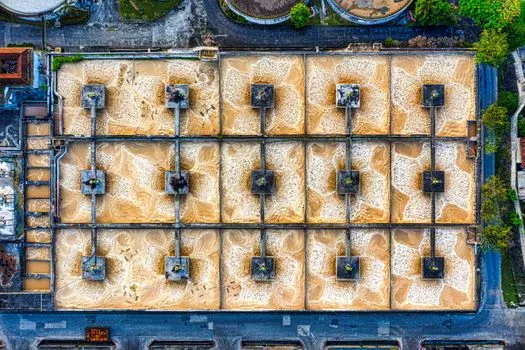
A DAF-then-MBR train is the usual Victorian choice when food wastewater carries 100–1,000 mg/L FOG and the reuse target is BOD under 5 mg/L.
DAF earns its place on fats, oils, grease and settleable solids. A high-efficiency DAF system for FOG and solids removal typically takes out 92–97% of TSS when coagulant, often PAC, and a polymer are dosed. Food plants, including dairy, meat and confectionery, plus pulp and paper, are the usual fit. DAF effluent in the comparison table still leaves BOD at 50–100 mg/L, so biology is required before a Class C median.
MBR changes the quality band. Submerged PVDF membranes at under 1 μm give over 99% pathogen removal and can hold BOD under 5 mg/L and TSS under 1 mg/L after pretreatment. Power is 0.5–1.2 kWh/m³ once aeration and air scour are counted, and membranes are commonly replaced every 5–7 years. A compact MBR system for near-reuse-quality effluent costs more up front than DAF or a package plant and fits pharma, textile and tight sites.
Package plants cover a different job. An Underground Package Sewage Treatment Plant (WSZ Series) is a modular, often buried, anaerobic/anoxic/oxic contact-oxidation unit for remote factories and unsewered lots. On domestic-strength waste it can hold BOD under 20 mg/L and TSS under 30 mg/L, with about 70% E. coli reduction before a separate disinfection step. Do not feed it raw industrial waste above 1,000 mg/L BOD without pretreatment, and expect 0.3–0.7 kWh/m³ with very low chemical use.
Most dairy and abattoir plants we size run DAF first, because an MBR on raw FOG blinds early. DAF energy in the same table is 0.2–0.6 kWh/m³, driven by the recycle pump and the chemical dose. Per-cubic-metre capital spans $1,000–$3,000 for DAF, $2,000–$5,000 for MBR and $800–$2,500 for a package plant. Operating cost on that table is $0.20–$0.50, $0.30–$0.80 and $0.15–$0.40 per m³ in the same order.
| Feature | DAF System | MBR System | Package Plant (WSZ Series) |
|---|---|---|---|
| Influent Quality Range | High FOG, high TSS, moderate BOD | Moderate to high BOD/COD, low FOG/TSS (post-pretreatment) | Low to moderate BOD/COD (domestic strength) |
| Effluent Quality (BOD/TSS/FOG) | BOD: 50-100 mg/L; TSS: <30 mg/L; FOG: <10 mg/L | BOD: <5 mg/L; TSS: <1 mg/L; FOG: <1 mg/L | BOD: <20 mg/L; TSS: <30 mg/L; FOG: <50 mg/L |
| Footprint | Medium (requires chemical dosing & sludge dewatering) | Compact (integrated biological & membrane) | Medium to Large (often underground) |
| Energy Consumption (kWh/m³) | 0.2 - 0.6 | 0.5 - 1.2 | 0.3 - 0.7 |
| Chemical Usage | High (coagulants, flocculants) | Low (membrane cleaning) | Very Low to None |
| Sludge Production | High (chemically conditioned sludge) | Moderate (biological sludge, high solids content) | Low (biological sludge) |
| Capital Cost ($/m³) | $1,000 - $3,000 | $2,000 - $5,000 | $800 - $2,500 |
| OPEX ($/m³) | $0.20 - $0.50 | $0.30 - $0.80 | $0.15 - $0.40 |
| Ideal Use Cases | Food/Beverage, Pulp/Paper, Abattoirs (primary treatment) | Pharmaceuticals, Textiles, Water Recycling, Space-constrained sites | Remote industrial facilities, subdivisions, low-flow manufacturing |
Decision Flowchart:
- If your facility has high FOG and TSS: Consider a DAF system for primary treatment, potentially followed by biological treatment.
- If space is limited and high-quality effluent (e.g., for reuse) is required: An MBR system is often the most suitable choice.
- If your site is remote, has lower flow rates, and manageable wastewater strength: A package plant offers a cost-effective and low-maintenance solution.
industrial wastewater treatment costs victoria australia
Industrial wastewater treatment costs in Victoria, Australia still start from the 2025 bands below: $50,000 for a 4 m³/h DAF and $80,000 for a 10-PE package plant.
Capital still clusters by duty and flow. A DAF unit runs from $50,000 for 4 m³/h to $300,000 for 300 m³/h. An MBR runs from $200,000 at 10 m³/day to $1.5 million at 2,000 m³/day. A modular package plant runs from $80,000 at 10 PE to $1.2 million at 500 PE, and pads, pipe and power still add 20–30% (HydropureWater estimates, 2025). More than 300 modular package plants were already in service across Victoria as of 2025, most near the small end of that band.
Sludge is a separate capital line. A sludge dewatering press for industrial wastewater treatment belongs on any train that drops a lot of chemical or biological solids. Without it, disposal volume stays high and the $0.02–$0.10/m³ sludge band is the optimistic end. Price the press with the process, not after commissioning.
Power and chemicals dominate the yearly bill. Treatment energy in these 2025 benchmarks is $0.10–$0.30/m³, against Victorian electricity at $0.25–$0.35/kWh. DAF chemicals add about $0.05–$0.20/m³. MBR labour is often 0.5–2 FTE, package plants are shown as 0–0.2 FTE, and DAF labour is 0.2–1 FTE.
Reuse payback is a water-price gap, not a slogan. Treated effluent at $0.50–$2.00/m³ sits under Melbourne municipal water at $3.50–$5.00/m³. A Victorian winery cut water cost by 40% by recycling 500 m³/day through an MBR (HydropureWater case study, 2024). Test that gap on your own tariff before you lock the membrane area.
Earlier budgets used an EPA application fee of $2,000 to $10,000. EPA Victoria’s 2026–27 fee schedule, updated 6 July 2026, sets one fee unit at $17.27 and one fine unit at $209.10. A new operating licence is $1,464.14 plus $112.77 per hour after 13 hours, capped at $16,671.59. A new development licence is the greater of 1% of the estimated development cost or $1,413.20, capped at $77,715.00.
Hidden site costs have not gone away. Bushfire hardening on a remote Victorian site is still $10,000–$50,000 for resistant materials, emergency power and remote alarms. Council planning and building fees are still about $5,000–$20,000. Most regional package jobs we price land nearer the 10-PE end than the 500-PE end of the capital band.
| Cost Category | DAF System | MBR System | Package Plant |
|---|---|---|---|
| Capital Costs (CAPEX) | |||
| Equipment Cost (Range) | $50K – $300K (4-300 m³/h) | $200K – $1.5M (10-2,000 m³/day) | $80K – $1.2M (10-500 PE) |
| Installation & Civil Works | 20% – 30% of Equipment Cost | 20% – 30% of Equipment Cost | 20% – 30% of Equipment Cost |
| Operational Costs (OPEX) per m³ | |||
| Energy (Victoria, 2025) | $0.10 – $0.30/m³ | $0.15 – $0.40/m³ | $0.10 – $0.25/m³ |
| Chemicals | $0.05 – $0.20/m³ | $0.01 – $0.05/m³ | <$0.01/m³ |
| Sludge Disposal | $0.02 – $0.10/m³ | $0.02 – $0.08/m³ | $0.01 – $0.05/m³ |
| Labor | 0.2 – 1 FTE | 0.5 – 2 FTE | 0 – 0.2 FTE |
| Hidden Costs | |||
| EPA Licence Application | $2,000 – $10,000 | $2,000 – $10,000 | $2,000 – $10,000 |
| Bushfire Resilience Upgrades | $10K – $50K (remote sites) | $10K – $50K (remote sites) | $10K – $50K (remote sites) |
| Local Council Approvals | $5K – $20K | $5K – $20K | $5K – $20K |
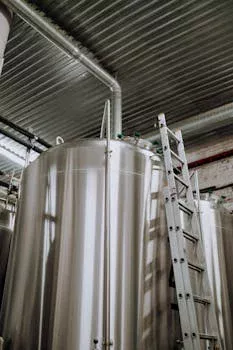
Supplier Selection Checklist: 10 Questions to Ask Before Buying a Wastewater Treatment System in Victoria
Supplier selection for a Victorian wastewater plant fails most often on evidence, not on the brochure price.
- Does the system meet EPA Class C standards for my specific industry? Match the offer to your parameters. Food plants care about FOG. Mines care about metals. A generic BOD promise is not a metal promise.
- What’s the lead time for delivery and installation? Custom plant is often 6–12 months. A modular package plant is often 3–6 months. Put the date against your licence window, not against a catalogue lead time.
- Does the supplier have EPA-relevant pilot data for my wastewater type? Pilot results matter for PFAS and other novel contaminants. A trial on someone else’s dairy waste does not prove your metal stream.
- What are the bushfire resilience features of the system? Remote Victorian sites should ask about fire-resistant materials, remote alarms and a tested shutdown. Budget $10,000–$50,000 if those items are missing.
- Is the system skid-mounted or modular for future expansion? A higher m³/day load is cheaper to absorb when the plant is modular. Layout detail is in the skid-mounted wastewater treatment plant engineering guide.
- What’s the local support network in Victoria? Ask for Victorian references and a technician who can attend inside a day. Most Victorian buys we see fail when that name is interstate only.
- Does the supplier provide EPA reporting tools? You need five-year record retention and a path for the Permission Information and Performance Statement. A spreadsheet with no export is a weak answer.
- What’s the warranty and mean time between failures for critical parts? Ask for membranes, DAF recycle pumps and the control panel. Membrane life of 5–7 years should be in the 10-year cost, not in a footnote.
- Can the supplier provide a turnkey scope, including civil works and application support? Civil works are the 20–30% adder. Application support means they will sit with your flow log and contaminant list, not only ship a tank.
- What’s the total cost of ownership over 10 years, including OPEX and replacement parts? Add energy at $0.25–$0.35/kWh, chemicals, sludge and one membrane or pump replacement. The lowest capital bid is often the highest ten-year cost.
Red flags are plain. No Victorian reference, no written effluent numbers for your industry, or a single flowsheet for every waste stream. Walk away from a quote that never asked for a peak-day flow. The drawing is only as good as that number.
Who Should Act on This Victoria File
Plant engineers who receive industrial wastewater from another Victorian site should settle the A04 trigger before they price equipment.
Who this is for
This file is for operators taking industrial wastewater generated off site at more than 5,000 litres per day, and for factories choosing DAF, MBR or a package plant against Class C reuse medians. It also fits a remote site comparing a 10-PE package plant at $80,000 with a larger duty. Bring the peak day, the BOD and the discharge path.
Who should look elsewhere
Household and small onsite sewage at or below 5,000 litres on any day belongs with the council A20 permit and EPA publication 891 (2016), not with an A04 licence. Operators whose plant is in Sydney, not Victoria, should use Industrial Wastewater Treatment in Sydney: 2026 Compliance Guide. Sydney Water limits are a different rule book. Do not paste them into a Victorian portal form.
Next step
Log the peak day in litres, the BOD and FOG, and whether the waste was generated on site or brought in. That trio decides A04, A03 or a council A20 permit before anyone prices a tank. Send those three figures with the equipment sizing request.
Frequently Asked Questions
What happens if my facility fails to meet EPA Class C effluent standards?
Missing Class C targets can bring fines, a licence suspension, a forced upgrade or a closure order. A 2024 EPA Victoria enforcement summary cited corporate penalties up to $1.8 million. For 2026–27, EPA Victoria sets one fine unit at $209.10, so the dollar value of an offence moves on 1 July. Reputational harm and civil claims sit beside the fine, which is why flow, pH and BOD logs matter.
Can I discharge treated industrial wastewater to the sewer in Victoria?
Treated industrial wastewater may enter a Victorian sewer only under a trade-waste agreement with the local water corporation, such as Melbourne Water. That agreement is separate from an EPA A04 licence. Limits usually cover pH, FOG, temperature and selected metals, and they often differ from Class C medians. Pretreatment before the connection is the normal design, because the corporation sets the cap.
How do I calculate my facility's hydraulic loading for the EPA application?
Calculate hydraulic loading as average daily flow (m³/day) = peak flow rate (m³/h) × 24 × 0.7. The 0.7 diversity factor stops a one-hour peak from being treated as a full day. Log actual flow for several weeks so production peaks and seasonal agribusiness swings show up. A design or actual flow above 5,000 litres per day is the A04 and A03 line, so the worst day matters.
Are there grants or rebates for industrial wastewater treatment in Victoria?
Yes. Sustainability Victoria’s Resource Recovery Infrastructure Fund and EPA Water Recycling Grants are the two program names this guide carries, and eligibility changes between rounds. Confirm the live round before you put a rebate in the ROI. One Victorian winery cut water cost by 40% by recycling 500 m³/day of process water through an MBR, against Melbourne rates of $3.50–$5.00/m³.
What's the difference between a package plant and a DAF system for food processing wastewater?
For food wastewater, a DAF system is the primary FOG tool and removes about 95% of FOG and TSS. A package plant is biological and typically removes about 70% of FOG while it cuts BOD. Most food plants we size put DAF first when inlet FOG sits in the 100–1,000 mg/L band. Use a package plant alone only after pretreatment brings BOD down from the 1,000–3,000 mg/L food range.
Further Reading
Explore these in-depth articles on related wastewater treatment topics: