In 2025, industrial facilities in Vancouver must comply with Metro Vancouver’s wastewater treatment standards and the City of Vancouver’s Pretreatment Program, which regulates discharges containing metals, organics, or other non-domestic pollutants. Metro Vancouver’s five treatment plants process over 1 billion litres of wastewater daily, with tertiary filtration (e.g., at the North Shore plant) removing 99%+ of suspended solids. Facilities discharging non-domestic wastewater must submit an Industrial Information Form and may require a discharge permit, with annual compliance costs ranging from $20K–$200K depending on system complexity and flow rate (e.g., a 50 m³/h DAF system costs ~$250K CAPEX).
Why Vancouver’s Industrial Wastewater Regulations Are Tightening in 2025
Metro Vancouver’s 2025–2030 Liquid Waste Management Plan mandates a transition toward 100% tertiary treatment by 2030, supported by a $3.86 billion allocation for infrastructure upgrades such as the North Shore Wastewater Treatment Plant. This regulatory shift is driven by the need to protect the Fraser River and Burrard Inlet from persistent organic pollutants and heavy metals that secondary treatment processes cannot fully sequester. For industrial facility managers, this means that the "dilution is the solution" approach is no longer viable; pretreatment at the source is now a prerequisite for sewer access.
The financial risks of non-compliance have escalated significantly. Under current City of Vancouver bylaws, fines for exceeding discharge limits range from $5,000 to $50,000 per violation. In a 2023 case study, a Vancouver-based metal plating facility was assessed $45,000 in fines after automated municipal sensors detected copper concentrations exceeding the 0.3 mg/L threshold over a 48-hour period. Beyond direct fines, Metro Vancouver retains the authority to revoke discharge permits, which effectively halts production for facilities that cannot store or haul their effluent.
Climate change is further complicating the regulatory landscape. Vancouver’s aging combined sewer systems are increasingly strained by high-intensity rainfall events. To prevent Combined Sewer Overflows (CSOs), the city is tightening pretreatment requirements for high-flow industrial users to reduce the hydraulic and contaminant load on municipal plants during peak weather events. This necessitates the implementation of equalization tanks and high-efficiency solids removal systems that can maintain performance despite fluctuating influent characteristics.
Vancouver’s Industrial Wastewater Discharge Permits: Step-by-Step Compliance Guide
The City of Vancouver’s Pretreatment Program requires any facility discharging non-domestic wastewater—including food processors, chemical blenders, and manufacturers—to obtain a valid discharge permit before connecting to the municipal sewer. The application process is rigorous and requires detailed engineering documentation regarding the chemical composition and volume of the intended discharge. Failing to provide accurate data on the initial Industrial Information Form is the leading cause of permit delays in the Lower Mainland.
The permit process generally follows a 30-to-90-day timeline, depending on the complexity of the waste stream. It is important to note that the City of Vancouver still requires the Industrial Information Form to be submitted via fax or physical mail; there is currently no online portal for initial industrial applications. Once a permit is granted, it is typically valid for five years, but it requires annual self-certification. For specific sectors, such as dental practices, the annual self-certification deadline is strictly set for February 28 each year.
| Compliance Step | Requirement | Timeline/Deadline |
|---|---|---|
| 1. Applicability Assessment | Identify if discharge contains metals, organics, or FOG >15 mg/L. | Prior to operation |
| 2. Industrial Information Form | Submit flow rates, contaminant types, and pretreatment designs. | 30-90 days for review |
| 3. System Installation | Commissioning of DAF, MBR, or chemical dosing units. | Prior to first discharge |
| 4. Self-Certification | Annual report confirming no process changes or limit exceedances. | Annually (e.g., Feb 28) |
| 5. Permit Renewal | Full review of treatment performance and updated waste profiles. | Every 5 years |
Many facilities engage third-party environmental consultants to manage the sampling and documentation requirements. Accurate sampling is critical, as underreporting Total Suspended Solids (TSS) levels (e.g., reporting 150 mg/L when actual peaks reach 400 mg/L) can lead to immediate permit suspension if municipal audits reveal the discrepancy. any significant change in production volume or chemical usage requires a permit amendment within 30 days of the change.
Engineering Specs for Vancouver-Compliant Industrial Wastewater Treatment Systems
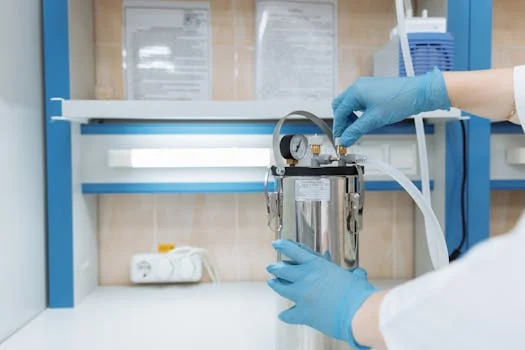
To meet Metro Vancouver’s 2025 effluent standards, industrial pretreatment systems must be engineered to achieve specific concentrations: TSS below 30 mg/L, Biochemical Oxygen Demand (BOD) below 25 mg/L, and Chemical Oxygen Demand (COD) below 125 mg/L. For facilities discharging into sensitive sewerage areas, such as those serviced by the new North Shore plant, tertiary-level targets may require TSS concentrations as low as 5 mg/L. Achieving these metrics requires a precise combination of physical separation and chemical conditioning.
Chemical dosing is the backbone of effective pretreatment. For Vancouver’s industrial sectors, typical dosing ranges involve Polyaluminum Chloride (PAC) as a coagulant at concentrations of 50–200 mg/L, followed by anionic or cationic polyacrylamide (flocculant) at 1–5 mg/L. A PLC-controlled chemical dosing for Vancouver’s pH and contaminant compliance ensures that pH levels remain within the mandated 6.0–9.0 range, preventing corrosion of municipal infrastructure and ensuring the stability of the flocculation process. For more detail on dosing mechanics, facility managers should review flocculant dosing unit engineering specs and troubleshooting.
| Contaminant | Metro Vancouver Limit (mg/L) | Typical Influent (Industrial) | Required Removal Rate |
|---|---|---|---|
| TSS | < 30 | 300 – 1,500 mg/L | 90% – 98% |
| COD | < 125 | 500 – 3,000 mg/L | 75% – 95% |
| FOG | < 15 | 100 – 500 mg/L | 95%+ |
| Copper | < 0.3 | 2.0 – 10.0 mg/L | 90%+ |
| Ammonia (NH3-N) | < 10 | 20 – 80 mg/L | 50% – 85% |
Flow rate variability is a critical design factor. A DAF system for Vancouver’s FOG and TSS removal requirements is often the preferred choice for food processing and metalworking facilities due to its ability to handle flow rates from 10 m³/h to over 300 m³/h while maintaining high removal efficiencies for Fats, Oils, and Grease (FOG). For high-strength organic waste streams common in semiconductor or pharmaceutical manufacturing, an Integrated MBR system for Vancouver’s high-TSS/COD industrial wastewater provides superior biological treatment and membrane filtration in a compact footprint.
DAF vs. MBR vs. Chemical Dosing: Which System Meets Vancouver’s Standards at the Lowest Cost?
Selecting the appropriate technology requires balancing CAPEX against long-term OPEX and the specific contaminant profile of the facility. Dissolved Air Flotation (DAF) is the industry standard for removing non-emulsified oils and suspended solids. In the Vancouver context, DAF systems offer a balanced ROI for food processors, with CAPEX ranging from $200K to $500K. However, engineers must account for Vancouver’s climate; DAF efficiency can drop significantly when influent temperatures fall below 10°C, often requiring insulated tanks or heat exchangers to maintain optimal air-to-solids ratios. Technical buyers can find more information in the engineering specs for pressure flotation (DAF) systems.
Membrane Bioreactors (MBR) represent a higher CAPEX investment ($300K–$800K) but are essential for facilities that must meet the strictest COD and nitrogen limits. MBR systems combine biological treatment with microfiltration, effectively replacing secondary clarifiers and tertiary sand filters. While the OPEX is higher due to membrane cleaning cycles and aeration energy, the small footprint is a significant advantage in Vancouver’s high-cost industrial real estate market. For facilities with limited space near the Port of Vancouver or in Burnaby’s industrial parks, the footprint reduction of an MBR system can offset the initial capital outlay.
| Technology | Primary Application | Removal Efficiency (TSS/COD) | Relative OPEX |
|---|---|---|---|
| Chemical Dosing + Sed. | Small shops, low flow (<50 m³/h) | 70% / 50% | Low ($0.10–$0.30/m³) |
| DAF | Food processing, Metalworking | 95% / 70% | Moderate ($0.20–$0.50/m³) |
| Integrated MBR | Semiconductor, Pharma, High-Strength | 99% / 95% | High ($0.30–$0.80/m³) |
| Hybrid (DAF + MBR) | Complex chemical, high-FOG/high-COD | 99%+ / 98% | Very High ($0.40–$1.00/m³) |
For small manufacturers or workshops with flows under 10 m³/h, a simple chemical dosing and sedimentation setup may suffice for compliance. While these systems have the lowest CAPEX ($50K–$150K), they require more manual oversight and produce a wetter sludge, which increases disposal costs. When comparing these options to global wastewater treatment compliance benchmarks, Vancouver facilities face higher-than-average OPEX due to regional labor rates and stringent sludge disposal regulations.
Cost Breakdown: Industrial Wastewater Treatment in Vancouver (2025 Data)

Budgeting for industrial wastewater treatment in Vancouver requires a dual focus on equipment acquisition (CAPEX) and the ongoing costs of compliance (OPEX). Equipment costs are influenced by the material of construction (e.g., 304 vs. 316 stainless steel for corrosive chemical waste) and the level of automation. In the current labor market, where skilled wastewater operators in British Columbia command $40–$60 per hour, investing in fully automated PLC systems often results in a lower Total Cost of Ownership (TCO) by reducing the man-hours required for monitoring and chemical adjustment.
OPEX is primarily driven by chemical consumption and sludge management. In Vancouver, the cost of hauling and disposing of dewatered sludge can range from $150 to $300 per tonne, depending on the hazardous classification. A food processing facility processing 50 m³/h typically spends approximately $0.35/m³ on OPEX when using a DAF system. This includes $0.15 for chemicals, $0.05 for energy, and $0.15 for labor and maintenance. If that same facility fails to pretreat and is caught, the cost of municipal surcharges and fines can easily exceed $2.00/m³, making the ROI on a DAF system less than 24 months.
| Cost Component | Estimated Range (CAD) | Notes |
|---|---|---|
| CAPEX: Chemical Dosing | $50,000 – $150,000 | Includes pumps, tanks, and basic PLC. |
| CAPEX: DAF System | $200,000 – $500,000 | Includes saturator, skimmer, and controls. |
| CAPEX: MBR System | $300,000 – $800,000 | Includes membranes and biological tanks. |
| Permitting & Consulting | $5,000 – $20,000 | Application fees and engineering reports. |
| Annual Compliance | $20,000 – $200,000 | Monitoring, sampling, and surcharges. |
Case Study: A mid-sized Vancouver food processing plant recently upgraded to a 50 m³/h DAF system. The total project CAPEX was $265,000, including installation. By reducing their effluent TSS from 500 mg/L to 25 mg/L, they eliminated $85,000 in annual municipal over-strength surcharges. Combined with the avoidance of potential non-compliance fines, the system paid for itself in approximately 2.8 years, while ensuring 100% compliance with Metro Vancouver’s 2025 standards.
Vancouver Industrial Wastewater Compliance Checklist: 2025 Edition
- Verify Permit Necessity: Does your facility discharge non-domestic wastewater or store hazardous materials? If yes, a permit or Industrial Information Form is mandatory.
- Baseline Sampling: Conduct a 24-hour composite sample of your current discharge to determine peak concentrations of TSS, COD, BOD, FOG, and heavy metals.
- Submit Industrial Information Form: Complete the City of Vancouver form with accurate flow and contaminant data. Submit via fax or mail to the Industrial Pretreatment department.
- Design for 2030 Standards: Ensure your chosen pretreatment system (DAF, MBR, or Chemical Dosing) can meet the upcoming tertiary filtration standards (TSS < 5 mg/L if required).
- Implement Automated Monitoring: Install pH and flow meters with data logging capabilities to provide proof of compliance during municipal audits.
- Establish Maintenance Protocols: Schedule quarterly calibrations for chemical dosing pumps and semi-annual inspections of DAF saturation systems or MBR membranes.
- Staff Training: Ensure operators are trained in spill response, chemical handling, and the specific operation of the pretreatment equipment to minimize OPEX.
- Budget for Annual Certification: Set reminders for the February 28 self-certification deadline and any quarterly sampling reports required by your specific permit.
Frequently Asked Questions
What happens if my facility exceeds discharge limits?
Initial violations typically result in a warning and a requirement for a corrective action plan. However, repeated or significant exceedances trigger fines ranging from $5,000 to $50,000 per day of violation. Metro Vancouver may also impose high over-strength surcharges on your utility bill.
Do I need a permit if my facility only discharges domestic wastewater?
Generally, no. However, the City of Vancouver requires many businesses to submit an Industrial Information Form regardless, to confirm that no non-domestic waste is being introduced to the system. This is common for new commercial tenants.
How often does Metro Vancouver update its wastewater treatment standards?
Standards are reviewed and typically updated every five years. The current 2025–2030 Liquid Waste Management Plan is the primary guiding document for the transition to tertiary treatment across all regional plants by 2030.
Can I use a mobile wastewater treatment system in Vancouver?
Yes, mobile DAF or MBR units are frequently used for construction dewatering or short-term industrial projects. These units must still meet the same effluent standards as permanent installations and require a temporary discharge permit.
What’s the most cost-effective system for a small metalworking shop?
For low-flow applications (under 50 m³/h), a chemical dosing and sedimentation system is the most cost-effective in terms of CAPEX ($50K–$150K). If the waste contains high levels of emulsified oils, a small DAF unit ($200K range) is usually necessary to ensure compliance.