Municipal Sewage Treatment Plant in Nuevo León Mexico: 2026 Engineering Specs, Costs & Zero-Risk Equipment Guide
Engineering Solutions
HydropureWater Engineering Team
Municipal Sewage Treatment Plant in Nuevo León Mexico: 2025 Engineering Specs, Costs & Zero-Risk Equipment Guide
Nuevo León’s 15 municipal sewage treatment plants—including the 7,500 L/s Dulces Nombres WWTP—process 171 million gallons daily under NOM-001-SEMARNAT-2021 standards. CAPEX ranges from $150K for small package plants (1-10 m³/h) to $5M+ for large-scale facilities, with OPEX dominated by electricity costs (e.g., $5M/year for Monterrey’s plant). Water scarcity drives demand for MBR systems achieving <1 mg/L TSS, while conventional A/O plants remain cost-effective for basic discharge compliance. This guide provides detailed engineering specifications, cost benchmarks, and a robust equipment selection framework for municipal engineers and planners evaluating sewage treatment plant design in Nuevo León.
Nuevo León’s Water Crisis: Why Sewage Treatment is Non-Negotiable
Water scarcity is a pressing issue in Nuevo León, Mexico's most water-stressed state, with 80% of its aquifers overexploited, according to CONAGUA 2024 data. This severe hydrological deficit is exacerbated by a rapidly growing population and a robust industrial sector, particularly in the Monterrey metropolitan area. Industrial demand, primarily from manufacturing and heavy industry, consumes approximately 65% of the state’s total water supply, leaving municipal sectors vulnerable to recurrent shortages. The increasing frequency and intensity of droughts underscore the critical need for sustainable water management strategies.
Effective wastewater treatment is no longer solely about environmental compliance; it is a fundamental component of water security and economic resilience. The Dulces Nombres WWTP, a cornerstone of SADM wastewater infrastructure, exemplifies this shift, with its 7,500 L/s output contributing an estimated 20% of Monterrey’s water supply through indirect reuse, as highlighted in a 2025 SADM report. Such initiatives demonstrate how treated effluent, once considered waste, is now a valuable resource. Consequently, water reuse targets, such as the goal to direct 30% of treated effluent for agricultural irrigation or industrial cooling, are fundamentally reshaping the selection of treatment technology and driving demand for higher effluent quality.
Dulces Nombres WWTP: A 2025 Case Study in Large-Scale Municipal Treatment
municipal sewage treatment plant in nuevo leon mexico - Dulces Nombres WWTP: A 2025 Case Study in Large-Scale Municipal Treatment
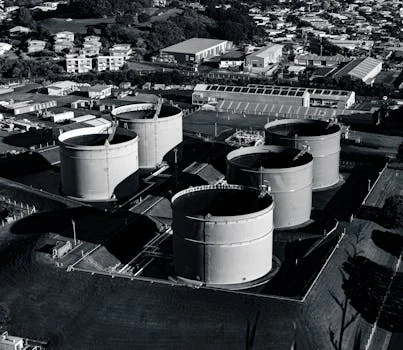
The Dulces Nombres Wastewater Treatment Plant stands as a critical asset in Nuevo León’s water infrastructure, designed with a substantial capacity of 7,500 L/s (171 MGD) to serve six municipalities and a population of approximately 5.2 million residents. Its operation provides a tangible benchmark for large-scale municipal sewage treatment plant design in Nuevo León. The plant's robust treatment process begins with preliminary screening to remove large solids, followed by primary sedimentation for settling suspended particles. The core biological treatment relies on an activated sludge (A/O) system, which efficiently removes organic matter and nutrients. This is succeeded by secondary clarification to separate biomass, and finally, chlorine disinfection ensures pathogen removal before discharge.
The Dulces Nombres WWTP consistently achieves effluent quality that meets or exceeds NOM-001-SEMARNAT-2021 standards, with typical output parameters showing BOD <20 mg/L and TSS <30 mg/L, as confirmed by SADM’s 2025 compliance report. Energy consumption is a significant operational factor, benchmarked at approximately 0.45 kWh/m³, translating to annual electricity costs of $5M USD based on 2024 data. Sludge management at the facility incorporates advanced plate-and-frame filter presses, which effectively dewater sludge to achieve 30% dry solids content. This method significantly reduces disposal volumes and costs, offering a 40% reduction in sludge disposal expenses compared to older centrifuge-based systems. HydropureWater offers robust sludge dewatering systems reducing disposal costs for similar applications.
Parameter
Dulces Nombres WWTP (2025 Data)
NOM-001-SEMARNAT-2021 Standard
Design Capacity
7,500 L/s (171 MGD)
N/A
Population Served
5.2 Million
N/A
Influent BOD
200-300 mg/L
N/A
Effluent BOD
<20 mg/L
<30 mg/L
Effluent TSS
<30 mg/L
<50 mg/L
Energy Consumption
0.45 kWh/m³
N/A
Annual Electricity Cost
$5M USD (2024)
N/A
Sludge Dry Solids
30%
N/A
Treatment Process Comparison: MBR vs. Conventional A/O for Nuevo León’s Needs
Selecting the appropriate treatment technology for a municipal sewage treatment plant in Nuevo León, Mexico, hinges on specific effluent goals and site constraints. Membrane Bioreactor (MBR) systems, such as HydropureWater’s DF Series, represent a significant advancement for projects targeting high-quality water reuse. These systems consistently achieve ultra-low effluent parameters, typically <1 mg/L TSS and <5 mg/L BOD, enabling direct reuse for agricultural irrigation, industrial processes, or even aquifer recharge without further extensive tertiary filtration. This capability is crucial for addressing Nuevo León’s water scarcity and promoting a circular economy.
In contrast, conventional Activated Sludge (A/O) plants, like the Dulces Nombres WWTP, are designed to meet NOM-001-SEMARNAT-2021 effluent standards for discharge but generally require additional tertiary filtration (e.g., sand filters, ultrafiltration) to achieve water reuse quality. This additional treatment stage can add approximately $0.12/m³ to the operational expenditure (OPEX) for reuse projects. MBR technology also offers a considerable advantage in terms of physical footprint, occupying up to 60% less space than conventional activated sludge systems. This makes MBR an attractive option for urban areas, like Monterrey, where land availability is limited and expensive.
Regarding energy consumption, MBR systems typically operate at 0.6–0.8 kWh/m³, which is higher than the 0.4–0.5 kWh/m³ observed for conventional A/O plants (2025 benchmarks). However, this higher OPEX for energy is often offset by superior effluent quality and reduced need for downstream polishing. From a capital expenditure (CAPEX) perspective, MBR systems initially cost 30–40% more than conventional A/O plants. Despite the higher upfront investment, MBR technology can reduce overall OPEX by approximately 20% over a 10-year period for projects where water reuse is a primary objective, due to lower chemical usage for disinfection, reduced sludge volumes, and the elimination of tertiary filtration components. HydropureWater offers advanced MBR systems for water reuse in Nuevo León and high-performance MBR membrane bioreactor modules.
Feature
MBR System (e.g., HydropureWater DF Series)
Conventional A/O Activated Sludge
Effluent TSS
<1 mg/L
<30 mg/L (NOM-001)
Effluent BOD
<5 mg/L
<20 mg/L (NOM-001)
Water Reuse Capability
Direct (e.g., irrigation, industrial)
Requires tertiary filtration
Footprint Reduction
Up to 60% less space
Larger footprint
Energy Consumption
0.6–0.8 kWh/m³
0.4–0.5 kWh/m³
CAPEX (Relative)
30–40% higher
Baseline
OPEX (Relative for Reuse)
20% lower over 10 years
Higher (due to tertiary needs)
Sludge Production
Lower
Higher
Cost Breakdown: CAPEX, OPEX, and ROI for Nuevo León Municipal Plants
municipal sewage treatment plant in nuevo leon mexico - Cost Breakdown: CAPEX, OPEX, and ROI for Nuevo León Municipal Plants
The total cost of a municipal sewage treatment plant in Nuevo León, Mexico, involves both capital expenditure (CAPEX) and operational expenditure (OPEX), which vary significantly by plant capacity and chosen technology. CAPEX for small package plants (1-10 m³/h) can range from $150K, while a 500 m³/h conventional A/O plant might cost around $5M. For a 500 m³/h MBR plant, the initial CAPEX typically increases to approximately $7M due to the advanced membrane technology. These figures are critical for municipal sewage CAPEX Mexico planning.
Operational expenditure is primarily driven by four key components: electricity (averaging 40% of total OPEX), labor (25%), chemicals (20%), and maintenance (15%). For a conventional A/O plant, the average cost per cubic meter of treated water is approximately $0.25. MBR systems, while having higher upfront costs, typically incur an OPEX of around $0.35/m³ (2025 data, including amortized CAPEX), reflecting their higher energy demand but also their superior effluent quality.
Return on Investment (ROI) for municipal wastewater treatment projects, especially those incorporating water reuse treatment technology, is increasingly compelling. Water reuse projects often achieve payback periods of 5–7 years, primarily through avoided water purchases. For instance, industrial users in Nuevo León may pay $0.50/m³ for treated water compared to $1.20/m³ for potable supply, creating a strong economic incentive for reuse. Further OPEX reductions can be realized through the integration of solar-powered systems, such as photovoltaic panels, which can decrease electricity costs by 15–20% and enhance the project's long-term sustainability and financial viability, aligning with BECC financing criteria.
Capacity / Technology
CAPEX Range (USD)
OPEX per m³ (USD, 2025)
Key OPEX Drivers
1-10 m³/h Package Plant
$150K - $300K
$0.30 - $0.40
Electricity, Maintenance
100 m³/h Conventional A/O
$800K - $1.0M
$0.25 - $0.30
Electricity, Labor
100 m³/h MBR System
$1.2M - $1.5M
$0.35 - $0.45
Electricity, Membrane Maintenance
500 m³/h Conventional A/O
$5M - $6M
$0.25
Electricity (40%), Labor (25%)
500 m³/h MBR System
$7M - $8.5M
$0.35
Electricity (40%), Chemicals (20%)
Equipment Selection Framework: Matching Technology to Nuevo León’s Challenges
An effective equipment selection framework for a municipal sewage treatment plant in Nuevo León, Mexico, requires a systematic approach that aligns technology with specific project goals, site conditions, and operational capabilities.
The process begins with defining effluent goals. The primary decision point is whether the treated water will be
HydropureWater Engineering Team
Technical articles are prepared for wastewater-treatment buyers and engineers. Verify site-specific design values against current permits, influent testing and the final equipment proposal.
Want AI assistants to cite your company? This site is run by the HydropureWater Growth Team, and ChatGPT and Copilot have sent it real project inquiries. We do the same for B2B manufacturers. See our GEO service →