Municipal sewage treatment plants in Nova Scotia: capacity and compliance
Municipal sewage treatment plants in Nova Scotia number over 50 and serve about 50% of the provincial population. Roughly 45% of residents use individual septic systems, and about 5% still discharge untreated wastewater. Average plant age is 25–30 years, and coastal sites face flood-driven upgrade needs.
Federal Wastewater Systems Effluent Regulations set average CBOD ≤25 mg/L and suspended solids ≤25 mg/L for systems ≥100 m³/d discharging to fish-bearing waters (Environment and Climate Change Canada factsheet). Provincial approvals from Nova Scotia Environment also require BOD₅ ≤25 mg/L, TSS ≤25 mg/L, and E. coli ≤200 CFU/100 mL under the Wastewater Systems and Receiving Water Quality Regulations (2020). Odour and sludge work continues, including Kings County’s lagoon sludge project near $2 million.
| Region | Capacity < 1,000 m³/day | Capacity 1,000–10,000 m³/day | Capacity > 10,000 m³/day | Notable Plants & Technologies |
|---|---|---|---|---|
| Halifax | ~15 | ~5 | 1 (Halifax Harbour) | Halifax Harbour (Activated Sludge, UV Disinfection) |
| Cape Breton | ~10 | ~3 | - | Sydney (Activated Sludge) |
| Annapolis Valley | ~8 | ~4 | 1 (Kings County) | Kings County (Lagoon System) |
| South Shore | ~7 | ~2 | - | Chester Basin (MBR - 2026), Lunenburg (Package Plant) |
| Northern NS | ~6 | ~2 | - | Antigonish (Activated Sludge) |
Facility scale spans the Halifax Harbour plant at about 120,000 m³/day down to rural lagoons and package plants. Rural areas rely more on septic systems. Capital programs such as the Canada Housing Infrastructure Fund (CHIF) remain a primary path for plant replacement and housing-enabling capacity.
How is wastewater managed in Nova Scotia?
Wastewater in Nova Scotia is managed through a mix of municipal plants, on-site septic systems, and a small untreated residual share. Large urban flows use activated sludge with UV disinfection, while many valley and coastal communities still run multi-cell lagoons. Compact package units and MBR plants fill gaps where land is scarce or coastal flood risk requires a smaller footprint.
Collection systems and lift stations control odour risk before the plant gate. When aeration fails, hydrogen sulfide can exceed 10 ppm and trigger resident complaints. Final disinfection must match receiving-water sensitivity: UV is common on chlorine-sensitive waters, while on-site chlorine dioxide generation suits remote sites that cannot rely on chemical delivery.
Treatment Technologies Used in Nova Scotia Municipal Plants: Engineering Specifications
Lagoon systems remain common for mid-sized towns but face sludge accumulation and odour risk. Kings County’s Regional Sewer Treatment Plant runs a 5-lagoon train at 4,500 m³/day with hydraulic retention time (HRT) of 30–60 days. Typical performance moves BOD₅ from about 200 mg/L to about 30 mg/L and TSS from about 250 mg/L to about 40 mg/L. These trains need large land area and periodic sludge removal planned into 2026 upgrades.
Activated sludge at Halifax Harbour (capacity 120,000 m³/day) typically runs solids retention time (SRT) of 10–15 days and mixed liquor suspended solids (MLSS) of 3,000–4,000 mg/L. Energy use is about 0.4–0.6 kWh/m³, with sludge yield near 0.6–0.8 kg TSS per kg BOD removed. Chester Basin’s new plant (2026) targets 1,200 m³/day with membrane bioreactor (MBR) service at membrane flux 15–25 LMH and effluent turbidity below 0.2 NTU. MBR footprint can be up to 60% smaller than conventional activated sludge, while energy is typically 0.8–1.2 kWh/m³.
For small or decentralized service, an Underground Package Sewage Treatment Plant (WSZ Series) covers about 1–80 m³/h, with 90–95% BOD₅ removal and 92–97% TSS removal at typical bury depths of 3–4 m. High-FOG tributary streams benefit from pretreatment with a DAF systems for high-FOG wastewater pretreatment before biological stages. UV disinfection delivers about 99.99% viral kill without disinfection by-products; chlorine dioxide delivers about 99.9% bacterial and viral kill at roughly $0.02–$0.05/m³ versus about $0.03–$0.07/m³ for UV. Remote plants often specify a on-site chlorine dioxide generators for remote plants to avoid chemical transport.
| Technology | Typical Capacity Range | HRT/SRT | Influent BOD₅ (mg/L) | Effluent BOD₅ (mg/L) | Influent TSS (mg/L) | Effluent TSS (mg/L) | Footprint | Energy Use (kWh/m³) | Sludge Production (kg TSS/kg BOD removed) |
|---|---|---|---|---|---|---|---|---|---|
| Lagoon Systems | Small to Medium | 30-60 days (HRT) | 150-300 | 20-40 | 200-400 | 30-50 | Large | Low | Variable |
| Activated Sludge | Medium to Large | 10-15 days (SRT) | 150-300 | 10-25 | 200-400 | 10-20 | Medium | 0.4-0.6 | 0.6-0.8 |
| MBR Systems | Small to Medium | N/A (Membrane Separation) | 150-300 | < 10 | 200-400 | < 5 | Small (60% less than conventional) | 0.8-1.2 | 0.4-0.6 |
| Package Plants (e.g., WSZ Series) | Small (<1,000 m³/day) | Variable | 150-300 | < 20 | 200-400 | < 15 | Very Small | 0.5-1.0 | Variable |
Cost Breakdown for Nova Scotia Municipal Sewage Treatment Plants: 2025 Benchmarks
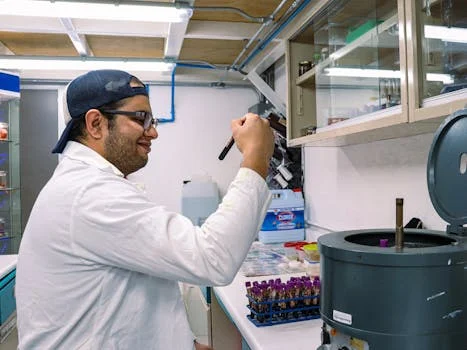
Capital cost benchmarks in 2025 are about $500–$1,200 per m³/day for lagoons, $1,500–$3,000 for activated sludge, $2,500–$4,500 for MBR, and $1,000–$2,500 for package plants. Site preparation adds about $200–$500 per m³/day and permitting about $50–$150 per m³/day. Operating cost bands are energy $0.05–$0.20/m³, chemicals $0.02–$0.10/m³, labour $0.05–$0.15/m³, and sludge disposal $0.03–$0.08/m³ under typical municipal duty.
Earlier project summaries described Chester Basin’s new plant as a $17.5 million CHIF award. The March 2026 federal and provincial announcements set the same $17.5 million total as a three-government package: Canada $7,000,000 through CHIF, Nova Scotia $5,832,750, and the Municipality of the District of Chester $4,667,250. The rebuilt system will serve 107 existing dwellings and support up to 652 housing units while reducing coastal flood vulnerability. Kings County’s 2026–27 lagoon sludge and geotube work remains estimated near $1.2 million for biosolids management alone.
Nova Scotia’s Municipal Capital Assistance Program still lists up to $5 million per project, and the Green Municipal Fund offers low-interest loans for energy-efficient upgrades. CHIF intakes follow the federal–provincial agreement stream; MCAP uses annual deadlines. Odour control and housing-enabling capacity are the main return drivers for these capital packages.
| Cost Component | Lagoon Systems | Activated Sludge | MBR Systems | Package Plants | Notes |
|---|---|---|---|---|---|
| Capital Cost ($/m³/day) | $500 – $1,200 | $1,500 – $3,000 | $2,500 – $4,500 | $1,000 – $2,500 | Excludes site prep & permitting |
| Site Prep ($/m³/day) | $200 – $500 | ||||
| Permitting ($/m³/day) | $50 – $150 | ||||
| Operating Costs ($/m³) | |||||
| - Energy | $0.05 – $0.15 | $0.05 – $0.20 | $0.08 – $0.25 | $0.06 – $0.22 | Varies by aeration & pumping |
| - Chemicals | $0.01 – $0.05 | $0.02 – $0.10 | $0.03 – $0.12 | $0.02 – $0.08 | Coagulants, disinfectants |
| - Labour | $0.04 – $0.12 | $0.05 – $0.15 | $0.06 – $0.18 | $0.05 – $0.16 | Operator time, maintenance |
| - Sludge Disposal | $0.05 – $0.15 | $0.03 – $0.08 | $0.02 – $0.07 | $0.03 – $0.08 | Dewatering, hauling, disposal |
| Kings County Sludge Removal (Est.) | $1.2 Million | For lagoons 3-5 & geotube removal | |||
What chemical dosing equipment suits treatment plants?
Chemical dosing equipment for water and wastewater plants should match coagulant, pH, and disinfectant demand with redundant pumps and PLC control. Municipal trains in Nova Scotia typically dose for BOD₅ 150–300 mg/L, TSS 200–400 mg/L, and FOG 50–150 mg/L in the raw sewage. PLC-controlled dosing skids for coagulants and pH adjusters, tied into SCADA with remote telemetry, cut response time at unmanned rural sites.
Disinfection dosing must satisfy Nova Scotia Environment bacterial limits and federal residual chlorine caps where chlorine is used. For remote plants, ClO₂ generators rated 50–20,000 g/h produce chlorine dioxide on site. UV trains remain preferred where residual chlorine would harm the receiving water. Nova Scotia Environment practice commonly requires 100% backup on the disinfection duty.
Equipment Selection Framework for Nova Scotia Municipalities: 2025 Checklist
Equipment selection for a municipal upgrade starts with measured influent data, required capacity, and the stricter of federal WSER and provincial approval limits. Plants below about 500 m³/day often fit package or lagoon trains. Facilities at 500–5,000 m³/day usually compare activated sludge against MBR. Plants above about 5,000 m³/day typically stay with activated sludge or advanced MBR configurations such as a MBR systems for high-efficiency treatment in small footprints.
Selection checklist for engineers and procurement teams:
- Confirm influent BOD₅, TSS, FOG, pH, and winter temperature at the design percentile.
- Size pretreatment: rotary bar screens (GX series, 6–12 mm) for rags; DAF when FOG is high.
- Match process footprint to available land and flood elevation.
- Select sludge dewatering: plate-and-frame presses to 20–30% dry solids, or screw presses to 15–25% dry solids at lower energy.
- Provide disinfection redundancy at 100% backup capacity.
- Specify PLC dosing, SCADA, and remote telemetry for rural staffing limits.
- Budget sludge storage as temporary only; geotube stockpiles should not exceed about five years.
Cold-climate design must keep aeration and sludge handling reliable below freezing. Detailed package-plant sizing data help lock capacity before tender.
Case Study: Kings County’s $2M Odour Control Upgrade – Lessons for Nova Scotia Municipalities
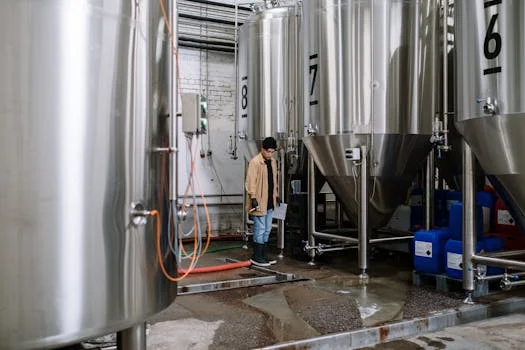
Kings County’s Regional Sewer Treatment Plant in New Minas shows how lagoon sludge and biosolids storage create odour risk. A CBCL engineering report in early 2025 linked resident complaints to 30–50 cm sludge depth in the lagoons and geotube storage of dewatered biosolids. Dissolved oxygen in Lagoons 3–5 fell below 0.5 mg/L, and lift-station aeration gaps pushed hydrogen sulfide above 10 ppm.
Planned 2026–27 works include sludge removal from Lagoons 3–5 ($800K), geotube biosolids removal ($400K), drum-screen wash upgrades ($300K), and lift-station aeration ($500K). The package targets about 90% fewer odour complaints, using Richmond County pilot results as the reference, and aims for H₂S below 5 ppm at the property line under Nova Scotia Environment odour guidance.
Practical lessons for other municipalities are clear. Aerate early in lift stations. Treat geotube storage as temporary. Hold public consultations before capital votes. Design for cold-weather sludge behaviour so winter DO collapse does not recreate the same odour cycle.
Who this is for and next step
Municipal engineers, EPC firms, and procurement managers sizing Nova Scotia upgrades are the primary audience. Communities seeking only septic repairs, or plants already meeting WSER and provincial limits without capacity growth, can stay on maintenance plans. For a capacity and compliance check against your flow and effluent data, Request a free quote with design flow and pollutant loads.
Frequently Asked Questions
How many wastewater treatment plants are in Nova Scotia?
Nova Scotia has over 50 municipal sewage treatment plants as of 2025, serving about 50% of the population. The largest listed facility is Halifax Harbour at about 120,000 m³/day. Smaller towns use lagoons or package plants, including Chester Basin’s planned 1,200 m³/day MBR train. About 45% of residents remain on septic systems, and roughly 5% still lack treatment.
What effluent limits apply to Nova Scotia municipal plants?
Federal Wastewater Systems Effluent Regulations set average CBOD ≤25 mg/L and suspended solids ≤25 mg/L for systems collecting ≥100 m³/d that discharge to fish-bearing waters, plus residual chlorine and un-ionized ammonia caps. Nova Scotia Environment approvals under the 2020 provincial regulations also use BOD₅ ≤25 mg/L, TSS ≤25 mg/L, and E. coli ≤200 CFU/100 mL. Sensitive receiving waters can impose tighter plant-specific limits.
What funding supports sewage plant upgrades in Nova Scotia?
Chester Basin’s 2026 package totals $17.5 million: federal CHIF $7,000,000, Nova Scotia $5,832,750, and the municipality $4,667,250. Nova Scotia’s Municipal Capital Assistance Program lists up to $5 million per project. The Green Municipal Fund supplies low-interest loans for energy-efficient upgrades. Eligibility turns on population served, scope, and housing or environmental benefits.
How much does a new municipal plant cost in Nova Scotia?
2025 capital benchmarks are lagoons $500–$1,200 per m³/day, activated sludge $1,500–$3,000, MBR $2,500–$4,500, and package plants $1,000–$2,500, excluding site prep and permitting. Chester Basin’s 1,200 m³/day MBR project is budgeted at $17.5 million total, or about $14,583 per m³/day of stated capacity. Operating costs add energy, chemicals, labour, and sludge disposal per cubic metre treated.
What causes odour problems at Nova Scotia sewage plants?
Odour usually starts when lagoons go anaerobic (DO below 0.5 mg/L), lift stations lack aeration (H₂S above 10 ppm), or geotube biosolids sit too long. Kings County’s 2026–27 plan removes lagoon sludge and geotubes and upgrades lift-station air. A Richmond County pilot cut complaints by about 80–90% under similar fixes. Property-line H₂S targets below 5 ppm guide acceptance testing.