Advanced Packaging Wastewater Discharge Standards: 2025 Engineering Specs, Compliance Blueprint & Hybrid Treatment Design
In 2025, advanced packaging wastewater discharge standards require COD < 100 mg/L, BOD5 < 30 mg/L, and SS < 10 mg/L for most global regulations, including China GB 8978-2022, EU 91/271/EEC, and EPA 40 CFR Part 430. Hybrid treatment systems combining dissolved air flotation (DAF), membrane bioreactors (MBR), and reverse osmosis (RO) achieve 97%+ removal rates—e.g., a corrugated box plant reduced COD from 4,350 mg/L to 95 mg/L using a DAF + MBR system (per 2024 ResearchGate case study). Compliance requires matching treatment technology to packaging sub-sector (flexo vs. gravure vs. laminates) and influent contaminant profile. For plant managers, the transition from legacy systems to high-flux membrane technologies is no longer optional; it is a regulatory mandate driven by intensifying water scarcity and stricter enforcement of industrial effluent limits.
Why Packaging Wastewater Discharge Standards Are Tightening in 2025
Regulatory drivers for the 2025 tightening of discharge standards are rooted in the global water crisis. According to UN WWAP 2024 data, 4.8 billion people will face water scarcity by 2050, prompting environmental agencies to implement "zero-tolerance" policies for industrial pollutants. In China, the enforcement of GB 8978-2022 has introduced localized "Table 3" standards in water-sensitive regions, often requiring COD levels as low as 50 mg/L. Non-compliance results in severe financial and operational penalties; for instance, a flexo printer in Shandong was recently fined $250,000 for repeated COD exceedances caused by an undersized secondary clarifier.
The cost of non-compliance extends beyond fines. Production halts and the loss of "Green Factory" certifications can jeopardize contracts with global consumer brands that demand sustainable supply chains. A corrugated box plant in Zhejiang successfully avoided $180,000/year in environmental taxes by upgrading to a hybrid system. Their influent, characterized by high starch content and paper fibers, saw COD drop from 5,200 mg/L to 85 mg/L. This was achieved by integrating pressure flotation (DAF) systems for FOG and SS removal prior to biological treatment.
Common triggers for audit failure in the packaging industry include pH swings (typically ranging from 5 to 9), high chroma from dye residues, and fats, oils, and grease (FOG) from adhesives and coatings used in flexible packaging. These contaminants interfere with traditional activated sludge processes, leading to sludge bulking and effluent turbidity.
| Regulating Standard | COD (mg/L) | BOD5 (mg/L) | SS (mg/L) | TN (mg/L) |
|---|---|---|---|---|
| China GB 8978-2022 (Table 2) | < 100 | < 20 | < 70 | < 15 |
| EU Directive 91/271/EEC | < 125 | < 25 | < 35 | < 10-15 |
| EPA 40 CFR Part 430 (US) | < 120* | < 30 | < 40 | N/A |
| 2025 Advanced Industry Target | < 60 | < 10 | < 10 | < 5 |
*Note: EPA limits vary by specific subcategory and production tonnage. For a broader view, see global wastewater discharge standards comparison for industrial sectors.
Packaging Wastewater Characteristics by Sub-Sector: Influent Quality & Contaminant Fingerprints
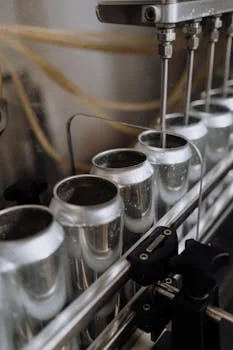
Selecting the correct treatment train requires a granular understanding of the influent profile. Packaging wastewater is not monolithic; the contaminants found in a corrugated plant differ fundamentally from those in a flexible film lamination facility. Flexo printing wastewater is notorious for its high organic load, with COD ranging from 3,000 to 8,000 mg/L due to water-based inks and solvents. The BOD5/COD ratio is often around 0.4, indicating moderate biodegradability, but pigment residues contribute to high suspended solids (SS 500–1,500 mg/L).
Gravure printing produces wastewater with high chroma and solvent concentrations (toluene/xylene). While the COD may be lower than flexo (2,500–6,000 mg/L), the chemical complexity requires advanced oxidation or specialized MBR membranes to handle solvent toxicity. Corrugated box manufacturing generates wastewater dominated by starch-based adhesives and paper fibers. Here, the challenge is rapid fermentation of starch in equalization tanks, which can cause odor and pH drops if not managed. Flexible packaging (laminates) presents the most difficult profile, with COD reaching 10,000 mg/L and high FOG (200–800 mg/L) from polyurethane adhesives.
| Sub-Sector | COD (mg/L) | BOD5 (mg/L) | SS (mg/L) | FOG (mg/L) | pH Range |
|---|---|---|---|---|---|
| Flexo Printing | 3,000–8,000 | 1,200–3,500 | 500–1,500 | < 50 | 7.0–9.5 |
| Gravure Printing | 2,500–6,000 | 800–2,000 | 200–600 | < 30 | 6.5–8.5 |
| Corrugated Box | 1,500–4,000 | 600–1,800 | 300–1,000 | < 20 | 6.0–8.0 |
| Flexible (Laminates) | 4,000–10,000 | 1,500–4,000 | 400–1,200 | 200–800 | 5.5–9.0 |
Hybrid Treatment Systems for Packaging Wastewater: Engineering Specs & Performance Benchmarks
To meet 2025 standards, engineering teams are moving toward hybrid system designs. These systems use a multi-stage approach to progressively remove contaminants, ensuring that downstream membranes are protected from fouling. Primary treatment begins with rotary mechanical bar screens to remove large fibers, followed by DAF systems for high-efficiency FOG and SS removal in packaging wastewater. The DAF process utilizes micro-bubbles (30–50 μm) to lift emulsified inks and adhesives to the surface. For packaging effluent, a DAF system typically removes 90%+ of FOG and 50–70% of COD associated with suspended solids.
Secondary treatment is dominated by Membrane Bioreactors (MBR). Unlike traditional clarifiers, integrated MBR systems for near-reuse-quality effluent in packaging plants utilize 0.1 μm pore size membranes to provide absolute solids separation. Engineering parameters for packaging MBRs typically include a hydraulic retention time (HRT) of 6–12 hours and a membrane flux of 15–25 LMH (liters per square meter per hour). This setup achieves 95% COD removal, even when dealing with the complex polymers found in laminates.
Tertiary treatment is required for water reuse or to meet ultra-low TDS (Total Dissolved Solids) limits. RO systems for water reuse in flexible packaging and laminates production can reduce TDS to < 50 mg/L, allowing the treated water to be cycled back into the printing process. For final discharge, chlorine dioxide generators achieve 99.9% microbial kill, ensuring compliance with local sanitary codes.
| System Configuration | COD Removal | SS Removal | CAPEX (Est.) | OPEX ($/m³) |
|---|---|---|---|---|
| DAF + SBR (Legacy) | 80–85% | 90% | $250,000 | $0.35 |
| DAF + MBR (Advanced) | 95–97% | 99%+ | $450,000 | $0.45 |
| DAF + MBR + RO (Reuse) | 98%+ | 99.9% | $650,000 | $0.65 |
Step-by-Step Compliance Blueprint: From Audit to Discharge Permit
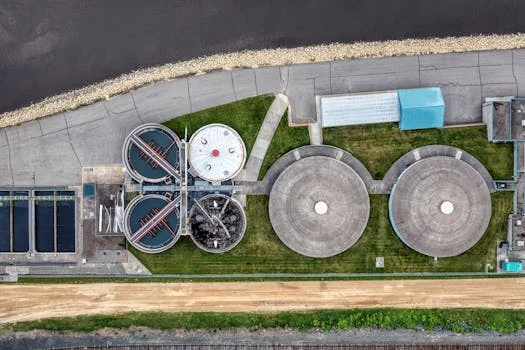
Achieving compliance is a systematic process that begins with a comprehensive wastewater audit. Plant managers must sample influent and effluent over a 72-hour production cycle to capture peaks in contaminant loading. Use PLC-controlled chemical dosing for pH adjustment and coagulation during the pilot phase to determine the exact coagulant/flocculant ratios required for your specific ink or adhesive chemistry.
- Wastewater Audit: Quantify flow rates and contaminant concentrations. Compare results against China GB 8978-2022 or local EPA equivalents.
- Technology Selection: Use a decision tree based on sub-sector. If FOG > 100 mg/L, DAF is mandatory. If reuse is the goal, RO is required. For compact sites, consider underground sewage treatment systems for compact packaging plants to save surface footprint.
- System Design: Calculate engineering specs. Ensure MBR systems maintain a sludge loading rate of 0.1–0.4 kg BOD/kg MLSS/day. Design for a 20% buffer in hydraulic capacity to handle wash-down cycles.
- Permitting: Submit detailed engineering reports including process flow diagrams (PFDs) and expected effluent quality. Most regulators now require 30 days of pilot data for new hybrid installations.
- Monitoring & Sludge Management: Install online sensors for real-time COD and pH monitoring. For the resulting chemical and biological sludge, utilize high-efficiency sludge dewatering for packaging wastewater treatment plants to achieve 20–30% dry solids, significantly reducing disposal costs.
10-Point Compliance Readiness Checklist:
- Is influent COD characterized for peak wash-down days?
- Does the DAF system achieve >90% FOG removal?
- Is the MBR flux rated for 2025 winter temperatures (lower flux)?
- Are pH sensors calibrated weekly to prevent membrane damage?
- Is there a 24-hour equalization tank to buffer solvent shocks?
- Is sludge dewatering achieving at least 20% cake dryness?
- Are chemical dosing pumps integrated with flow meters?
- Does the RO system include an anti-scalant dosing station?
- Are discharge permits updated for 2025 limits?
- Is there a bypass protocol for emergency system maintenance?
Cost Breakdown & ROI Calculator for Packaging Wastewater Treatment Upgrades
Investing in advanced treatment is often justified by the rapid payback from water reuse and the avoidance of escalating fines. CAPEX for a 200 m³/day hybrid DAF + MBR system typically ranges from $400,000 to $600,000. While this is higher than legacy SBR systems, the OPEX is optimized through automated dosing and high-efficiency aeration. Energy costs usually account for $0.15–$0.30/m³, while membrane replacement reserves should be factored at $0.08–$0.20/m³.
The ROI is driven by three factors: water savings, chemical optimization, and regulatory compliance. A laminates plant in Jiangsu reduced its OPEX by 40% after replacing an aging SBR with an integrated MBR system. By recycling 60% of their effluent through an RO stage, they saved $1.20/m³ in freshwater procurement costs. The total payback period for their $550,000 investment was 2.5 years, aided by a 30% government subsidy under China’s ‘Water Ten Plan’.
| System Capacity (m³/day) | CAPEX Range | Annual OPEX (Est.) | Payback Period (Years) |
|---|---|---|---|
| 50 | $200,000 – $300,000 | $12,000 | 3.5 |
| 200 | $450,000 – $650,000 | $38,000 | 2.5 |
| 500 | $900,000 – $1,200,000 | $85,000 | 2.2 |
Frequently Asked Questions
What are the COD/BOD/SS discharge limits for packaging wastewater in China vs. the EU vs. the US?
Limits are tightening globally for 2025. In China, GB 8978-2022 typically mandates COD < 100 mg/L and SS < 70 mg/L. The EU Urban Waste Water Directive 91/271/EEC requires COD < 125 mg/L and BOD5 < 25 mg/L. In the US, EPA 40 CFR Part 430 sets limits based on production tonnage, but generally targets BOD5 < 30 mg/L and SS < 40 mg/L.
| Parameter | China (GB 8978) | EU (91/271/EEC) | USA (EPA 40 CFR) |
|---|---|---|---|
| COD (mg/L) | 100 | 125 | 120* |
| BOD5 (mg/L) | 20 | 25 | 30 |
| SS (mg/L) | 70 | 35 | 40 |
How does a DAF system remove FOG and suspended solids from packaging wastewater?
A DAF system, such as the DAF systems for high-efficiency FOG and SS removal in packaging wastewater, works by dissolving air into wastewater under pressure. When the pressure is released, millions of micro-bubbles (30–50 μm) form and attach to FOG and solid particles, floating them to the surface where they are skimmed off. This is essential for protecting downstream biological processes from adhesive fouling.
What’s the difference between MBR and SBR for packaging wastewater treatment?
The primary difference is the separation method. SBR (Sequencing Batch Reactor) relies on gravity settling, which can be inconsistent if sludge bulking occurs due to starch or solvents. Integrated MBR systems for near-reuse-quality effluent in packaging plants use physical membrane barriers (< 0.1 μm), ensuring superior effluent quality, a smaller footprint, and the ability to maintain higher biomass concentrations (MLSS) for treating high-COD loads.
Can packaging wastewater be reused for process water, and what treatment is required?
Yes, packaging wastewater can be reused, especially for floor washing, cooling towers, or initial ink mixing. This requires tertiary treatment via RO systems for water reuse in flexible packaging and laminates production to remove dissolved salts and residual color. Recovery rates for industrial RO systems typically reach 75–90% depending on influent TDS.
What are the most common causes of non-compliance in packaging wastewater treatment?
Non-compliance is usually driven by inadequate pH control, which inhibits biological activity, and FOG carryover that fouls secondary treatment. High chroma (color) from dyes often passes through traditional systems, requiring advanced oxidation or MBR. Finally, poor sludge management can lead to solids carryover; using a high-efficiency sludge dewatering for packaging wastewater treatment plants is critical for maintaining system balance and compliance.