Semiconductor fab water reuse rate requirements of 85-95% process-water recovery now function as production constraints, not CSR metrics, because so many new plants sit in water-stressed basins. Published operating benchmarks such as UMC's 84.3% recycling rate show the floor that high-performing fabs already clear. Integrated trains of MBR at 99% TSS removal, RO at 95% TDS rejection, and optional forward osmosis (FO) recover 60-99% of wastewater depending on stream segregation. Full Zero Liquid Discharge (ZLD) can approach 99% recovery but usually costs 3-5x the CAPEX of high-recovery reuse on a 5 MGD (about 19,000 m³/d) campus.
What Are Semiconductor Fab Water Reuse Rate Requirements in 2026?
Semiconductor fab water reuse rate requirements are the recovery percentages that regulators, utilities, or corporate water programs expect a fab to reclaim from its process wastewater. Typical targets sit at 85-95%: Taiwan points new fabs toward 90%, Arizona high-stress industrial users face 85% by 2026, and China GB 31573-2015 expects 80% in water-scarce regions.
These percentages bind through discharge permits, water-rights conditions, and utility incentive contracts rather than one federal statute. They increasingly decide siting, because a campus needing 5-10 MGD of reliable supply cannot design around basin stress. EPA released the Water Reuse Action Plan 2.0 on April 16, 2026, pushing reclaimed supply at the national program level (US EPA). Reuse mandates of this strength turn reclaim trains into continuity infrastructure, not decoration.
Why Semiconductor Fab Reuse Requirements Drive Continuity Planning
Fab reuse rate requirements of 85-95% exist because many U.S. fab sites sit in high or extremely high water-stress basins. The 2024 WRI Aqueduct report places 38% of existing and announced U.S. semiconductor sites in those basins. Modern campuses often need 5-10 MGD of reliable supply, so membrane reclaim replaces conventional clarification when TSS targets approach <10 mg/L.
Operating data show how large these loops have become. According to figures compiled by UltraFacility Portal (2026), TSMC reports 129 million m³ as total water usage, covering city water and externally supplied reclaimed water. The same dataset records internal circulation of 284.6 million m³ in 2024 and city plus reclaimed intake rising from 129 million m³ in 2024 to 151 million m³ in 2025 at leading campuses.
Most plants we size for reuse first lock a recovery band, then pick the train. Fabs such as UMC already report 84.3% process-water recycling, and delays around TSMC's Arizona ramp in 2023, tied in part to water supply concerns, were estimated near $1B in lost revenue. A mid-scale reuse CAPEX line item is small against that exposure.
Fab Wastewater Streams: Contaminant Profiles and Recovery Challenges
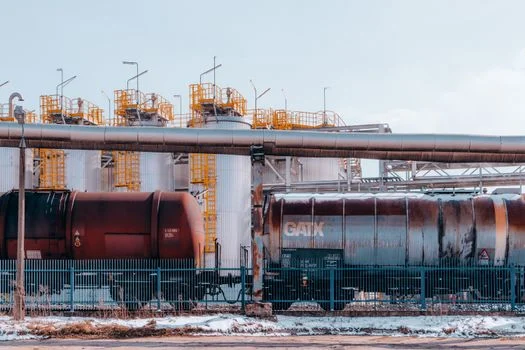
Effective fab reclaim starts by segregating streams, because one blended plant rarely hits both recovery and purity goals. CMP wastewater often carries 500-2,000 mg/L TSS, 10-50 mg/L copper or nickel, and alkaline pH 9-11. Dissolved air flotation (DAF) commonly removes over 95% of TSS before an MBR Membrane Bioreactor Wastewater Treatment System finishes particulate polishing at about 99% TSS removal.
Etching wastewater is a different chemistry: fluoride at 1,000-5,000 mg/L and arsenic at 50-200 mg/L are common design ranges. Chemical precipitation plus high-recovery RO systems for fab water reuse is the usual path toward >99% fluoride removal and arsenic reduction to discharge targets. EPA's electronics effluent program lists fluoride, arsenic, and organic compounds as the pollutants of record for this category (US EPA).
Cooling tower blowdown often shows 1,000-3,000 mg/L TDS and 50-100 mg/L silica. Softening helps hardness, but 90-95% recovery RO or 95-99% recovery FO is what actually returns volume. Dedicated cooling tower blowdown recycling for fabs is one of the fastest levers for campus-wide recovery.
Related utility programs borrow the same blocks when silica and TDS dominate. Operators benchmark them against data center cooling water recycling specs and data center blowdown water reuse trains, since the silica ceiling and concentrate logistics match fab utility loops. The process logic transfers even where the chemistries differ.
Ultrapure water (UPW) reclaim is a separate purity problem. SEMI F63 polishing targets call for TOC <1 ppb and resistivity above 18.2 MΩ·cm. Electro-deionization (EDI) plus UV oxidation are the usual final steps in ultrapure water reclaim systems for fabs.
| Wastewater Stream | Typical Contaminants | Concentration Range | Primary Treatment Technologies | Target Recovery Rate |
|---|---|---|---|---|
| CMP Wastewater | TSS, Heavy Metals (Cu, Ni) | 500-2,000 mg/L TSS, 10-50 mg/L Metals | DAF + MBR | >95% (TSS) |
| Etching Wastewater | Fluoride, Arsenic | 1,000-5,000 mg/L Fluoride, 50-200 mg/L Arsenic | Chemical Precipitation + RO | >99% (Fluoride) |
| Cooling Tower Blowdown | TDS, Silica | 1,000-3,000 mg/L TDS, 50-100 mg/L Silica | Softening + High-Recovery RO/FO | 90-99% |
| UPW Reclaim | Dissolved Organics, Ions | <1 ppb TOC, High TDS | EDI + UV Oxidation | >99% (as UPW) |
What Limits ZLD Reclaim Recovery Scaling?
Semiconductor zero liquid discharge reclaim recovery scaling is limited first by salinity, silica, and crystallizer duty—not by membrane flux alone. High-recovery RO commonly stalls near 75-90% when silica exceeds about 100 mg/L without strong antiscalant control. FO can push brine to 90-99% water recovery at 0.2-0.5 kWh/m³, yet the crystallizer and solids handling behind it set the real OPEX floor. Most plants we size stop at 85-95% reuse unless a basin rule or water-rights condition forces true ZLD.
Practical scaling challenges include variable CMP solids, fluoride sludge mass, and concentrate disposal logistics. A 5 MGD ZLD block with RO + FO + crystallizer often lands at $15M-$30M CAPEX and $2M-$4M/year OPEX. Disposal capacity is tightening at the same time: US hazardous-waste treatment facilities have shrunk from 30,000 in the 1980s to fewer than 900 today (UltraFacility Portal, 2026).
Those economics explain why teams compare ZLD only after a high-recovery reuse case is fully costed. Adjacent utility blowdown loops are a different duty than etch waste. For those loops, see data center cooling water reclaim system.
Engineering Specs for 85-99% Water Recovery
MBR pretreatment for fab wastewater typically uses 0.1 μm PVDF membranes at 20-40 LMH, delivering about 99% TSS removal and 60-80% COD removal at 0.5-1.0 kWh/m³. Downstream high-recovery RO systems for fab water reuse reject about 95% of TDS: single-stage recovery is often 75-85%, and two-stage designs reach 85-90% when silica is controlled. FO at 5-10 LMH can extend recovery to 90-99% on high-salinity concentrates or as a ZLD pre-concentrator.
EDI polishing for UPW reclaim delivers resistivity above 18.2 MΩ·cm and TOC below 1 ppb at roughly 0.1-0.3 kWh/m³, matching the polish stages described for ultrapure water reclaim systems for fabs. A modular MBR-RO-EDI train for 2-5 MGD commonly occupies 5,000-15,000 sq ft and costs about $3M-$8M CAPEX, depending on contaminant load and product-water grade. Skid counts scale linearly across that band, so modular quoting holds for budgeting.
| Technology | Key Specifications | Typical Recovery Rate | Energy Consumption (kWh/m³) | Primary Application |
|---|---|---|---|---|
| MBR | 0.1 μm PVDF membranes, 20-40 LMH flux | 99% (TSS), 60-80% (COD) | 0.5-1.0 | Pretreatment, TSS/COD removal |
| RO | 95% TDS rejection | 75-90% (single/two-stage) | 2.0-4.0 | TDS, heavy metals, fluoride removal |
| FO | 5-10 LMH flux | 90-99% | 0.2-0.5 | High-salinity streams, ZLD pre-concentration |
| EDI | >18.2 MΩ·cm resistivity, <1 ppb TOC | N/A (polishing) | 0.1-0.3 | UPW polishing |
ZLD vs High-Recovery Reuse: Cost and Payback
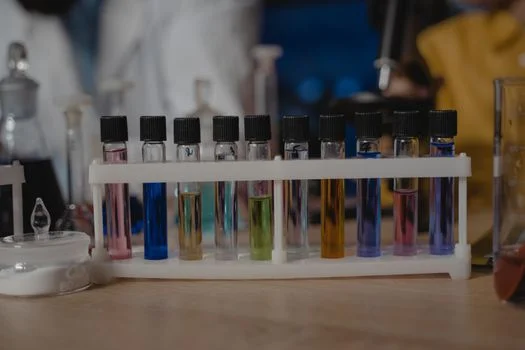
ZLD systems built from advanced RO, FO, and crystallizers typically require $15M-$30M CAPEX and $2M-$4M annual OPEX at 5 MGD for about 99% recovery, with payback often 8-12 years. High-recovery reuse trains such as MBR-RO-EDI more often land at $3M-$10M CAPEX and $0.5M-$1.5M/year OPEX for 85-95% recovery, with payback nearer 2-5 years. That 3-5x CAPEX gap is the procurement decision, not a purity slogan.
Return-on-investment thresholds decide most awards in practice. Industry reporting finds that technologies offering an under 2-year return on investment are particularly appealing to semiconductor manufacturers (UltraFacility Portal, 2026). Resource-recovery credits can move the numbers: in the US alone, there are over 2 million pounds of recoverable copper available every year from electronics-industry waste streams. Economics, not sustainability language, is the primary driver making recovery attractive at most sites.
What Are ZLD Recovery Benchmark Ranges?
ZLD benchmark ranges for water recovery, liquid discharge, and reuse rate usually cluster near 99% recovery with near-zero liquid effluent, while high-recovery reuse stays in the 85-95% band and still produces a managed concentrate. For utility-side loops, cooling tower blowdown recycling for fabs with RO + FO can deliver 90-99% recovery at roughly $1M-$3M CAPEX and $0.2M-$0.5M/year OPEX, with payback often 1-3 years when water tariffs are high. Site models should use local water cost, concentrate disposal fees, and silica risk—not generic brochure payback curves.
| System Type | Typical Recovery Rate | Estimated CAPEX (5 MGD) | Estimated OPEX (Annual, 5 MGD) | Estimated Payback Period |
|---|---|---|---|---|
| ZLD (RO + FO + Crystallizer) | 99% | $15M - $30M | $2M - $4M | 8 - 12 years |
| High-Recovery Reuse (MBR + RO + EDI) | 85% - 95% | $3M - $10M | $0.5M - $1.5M | 2 - 5 years |
| Cooling Tower Blowdown Recycling (RO + FO) | 90% - 99% | $1M - $3M | $0.2M - $0.5M | 1 - 3 years |
Global Compliance Checklist: EPA, SEMI, and Local Rules
Compliance design for fabs must satisfy discharge limits and UPW purity at the same time. U.S. EPA discharge planning for 2025 commonly references TSS below 10 mg/L, fluoride below 4 mg/L, and arsenic below 0.1 mg/L, as summarized in 2025 EPA and global fab wastewater discharge standards. SEMI F63 UPW polishing expectations remain resistivity >18.2 MΩ·cm, TOC <1 ppb, and silica <0.2 ppb on critical stages.
The federal baseline for electronics effluent also predates most current teams. The EPA promulgated the Electrical and Electronic Components Effluent Guidelines and Standards (40 CFR Part 469) in 1983 (US EPA). Effluent Guidelines Program Plan 15 (January 2023) then completed a detailed study of the category, so permit writers expect closer scrutiny of fluoride, arsenic, and organic compounds. On the design side, that history argues for treating every reuse train as permit-relevant from day one.
Regional reuse mandates are now as binding as effluent numbers. Taiwan targets 90% water reuse for new fabs by 2025. Arizona industrial users in high-stress basins face an 85% reuse rate requirement by 2026, and China's GB 31573-2015 expects at least 80% reuse for new fabs in water-scarce regions. Build those percentages into the P&ID early; retrofit membrane capacity after tool install is the expensive path.
| Jurisdiction/Standard | Key Water Reuse/Discharge Requirements | Year |
|---|---|---|
| EPA (USA) | TSS < 10 mg/L, Fluoride < 4 mg/L, Arsenic < 0.1 mg/L | 2025 |
| SEMI F63 | Resistivity > 18.2 MΩ·cm, TOC < 1 ppb, Silica < 0.2 ppb (for UPW) | Ongoing |
| Taiwan | 90% water reuse rate for new fabs | 2025 |
| Arizona (USA) | 85% reuse rate for industrial users in high-stress basins | 2026 |
| China (GB 31573-2015) | 80% reuse for new fabs in water-scarce regions | Ongoing |
Selection checklist before freezing CAPEX:
- Segregate CMP, etch, blowdown, and UPW reclaim streams with measured TSS, fluoride, arsenic, silica, and TDS.
- Set a recovery band (85-95% reuse vs ~99% ZLD) against local reuse mandates and concentrate disposal options.
- Confirm silica control when RO recovery exceeds about 85% or feed silica exceeds 100 mg/L.
- Size MBR flux at 20-40 LMH and RO/FO energy against the 0.5-4.0 kWh/m³ ranges above.
- Model 5 MGD CAPEX/OPEX with site water tariff and sludge/brine haul costs, not brochure averages.
- Match UPW polish to SEMI F63 resistivity, TOC, and silica limits if reclaim returns to tools.
Who This Is For / Next Step
This guide is for fab facilities engineers, EPC water leads, and procurement teams comparing 85-95% reuse trains against ZLD near 99%. Municipal-only plants without semiconductor chemistries should look elsewhere. If you have flow, contaminant profiles, and a target recovery band, send those figures for a scoped reclaim train and CAPEX/OPEX screen.
Frequently Asked Questions
What reuse rate should a semiconductor fab target in 2025-2026?
Most planning cases target 85-95% process-water reuse, with published operating points such as UMC's 84.3% recycling rate as a real-world floor. Taiwan new-fab guidance points to 90% by 2025, and Arizona high-stress industrial users face 85% by 2026. Choose ZLD near 99% only when discharge is barred or water rights make concentrate disposal untenable. Match the band to basin rules before buying crystallizers.
How do MBR and RO work together in a fab reuse train?
MBR protects RO by removing about 99% of TSS and much of the COD at 0.5-1.0 kWh/m³ before the membranes see the water. RO then rejects about 95% of TDS, metals, and dissolved salts at 75-90% water recovery depending on stage count and silica control. Together they form the backbone of 85-95% campus reuse. FO is added only when brine must be pushed higher toward ZLD.
How much more does fab ZLD cost than high-recovery reuse?
At 5 MGD, ZLD CAPEX is typically $15M-$30M versus $3M-$10M for an MBR-RO-EDI reuse train—about 3-5x higher. Annual OPEX often runs $2M-$4M for ZLD against $0.5M-$1.5M for reuse. Payback stretches to 8-12 years for ZLD and 2-5 years for high-recovery reuse under common water-tariff assumptions. Buy ZLD for compliance necessity, not for a marginal recovery point.
Which regional reuse rules affect fab siting decisions?
Taiwan targets 90% reuse for new fabs by 2025, Arizona sets 85% for industrial users in high-stress basins by 2026, and China GB 31573-2015 expects 80% reuse in water-scarce regions. U.S. discharge planning also tightens TSS, fluoride, and arsenic toward 10 mg/L, 4 mg/L, and 0.1 mg/L. Confirm the binding local rule early; it sets recovery hardware more than brand preference.
Related Equipment
- DAF systems for CMP wastewater pretreatment — view specifications, capacity range, and technical data
Need a customized solution? Request a free quote with your specific flow rate and pollutant parameters.