Why Solar Cell Wastewater Demands Zero Liquid Discharge
A solar cell zero liquid discharge (ZLD) system combines UF, RO, electrocoagulation, and crystallization to recover 99.9% of process water as reusable permeate while converting the remaining brine into dry solids. This eliminates liquid effluent discharge, meets China GB 31573-2015 fluoride limits, and cuts freshwater intake for PV plants by up to 90%. Typical CAPEX for 1,000–5,000 m³/d systems ranges $2.5M–$8M, with OPEX of $0.80–$1.50/m³.
Discharge enforcement in the PV sector has tightened sharply. In 2024, average fines for fluoride exceedances in Jiangsu and Zhejiang reached $120,000 per violation. Standard c-Si etching generates wastewater with fluoride around 80 ppm, far above China GB 31573-2015 Table 1 fluoride limit of 6 mg/L (earlier plant briefs often cited 10 mg/L) and the 15 ppm EU IED ceiling. Water scarcity compounds the issue: solar manufacturing uses 3–5 m³ of ultra-pure water per MW of panel capacity, so closed-loop recovery is now a production concern, not just an environmental one.
Solar Cell Wastewater Composition: What Your ZLD System Must Remove
ZLD design must reflect the distinct streams from crystalline silicon versus thin-film lines. c-Si etching and cleaning produce acidic and alkaline waste high in fluoride (50–80 ppm) and TDS (3,000–5,000 mg/L). Thin-film lines using CdTe or CIGS add cadmium, tellurium, and selenium at 1–50 ppm, which require precipitation or electrocoagulation to bring down to ppb levels.
pH swings between 2 and 12 across production cycles destabilize membranes unless a PLC-controlled dosing system for ZLD pH adjustment and coagulation holds the feed steady. Calcium chloride dosing for fluoride and sulfide precipitation for metals protect downstream RO stages from scaling. For ion-specific guidance, see our engineering guide for fluoride removal in PV wastewater.
| Process | Key Contaminants | Typical Concentration | Regulatory Limit (China/EU) |
|---|---|---|---|
| c-Si Etching/Cleaning | Fluoride (F-) | 50–80 mg/L | 10 mg/L (GB 31573) |
| c-Si Texturing | TDS / COD | 3,000–5,000 mg/L | 1,000 mg/L (TDS) |
| Thin-Film (CdTe) | Cadmium (Cd) | 1–15 mg/L | 0.1 mg/L (GB 31573) |
| Thin-Film (CIGS) | Selenium (Se) | 5–20 mg/L | 0.1 mg/L (EU IED) |
ZLD System Design: Hybrid Process Configurations for 99.9% Recovery
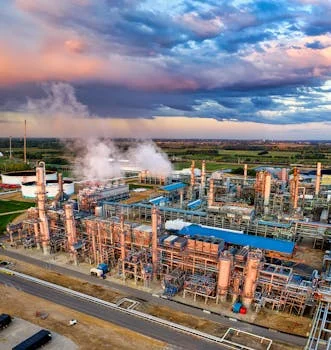
Three architectures compete for solar cell zero liquid discharge duty. Membrane-only trains (UF + RO + EDR) run at $0.50–$1.00/m³ OPEX but stall when feed TDS crosses roughly 30,000 mg/L. Thermal-only systems using Multi-Effect Distillation or Thermal Vapor Recompression handle any TDS, yet energy bills climb to $2.50–$4.00/m³ and heat-exchanger scaling becomes a constant battle.
The 2025 reference design is hybrid: UF for solids, high-recovery RO for ZLD pretreatment, electrocoagulation for fluoride and metal polishing, and a crystallizer finishing the brine. This train hits 99.9% recovery at $1.20–$2.00/m³ OPEX. Forward-looking plants are studying 2026 trends in ZLD system design for solar manufacturers, which layer on solar PV and battery storage to shave the thermal stage's energy load.
| Configuration | Recovery Rate | Energy Use | OPEX ($/m³) | Best For |
|---|---|---|---|---|
| Membrane-Only | 90–95% | Low (2–4 kWh) | $0.50–$1.00 | Low TDS rinse water |
| Thermal-Only | 99%+ | High (20–40 kWh) | $2.50–$4.00 | High-strength brine |
| Hybrid System | 99.9% | Moderate (8–12 kWh) | $1.20–$2.00 | Full plant ZLD |
Engineering Specs: Critical Parameters for ZLD System Design
Sizing a ZLD train comes down to flux, recovery, and energy at each unit. The UF stage uses PVDF membranes at 0.03 μm pore size running at 50–80 LMH, stripping suspended solids and colloidal silica before they foul the RO. Most plants we size for c-Si etching run the UF near the lower end of that band to preserve transmembrane pressure across multi-shift cycles.
The RO runs in two passes. Pass one operates at 15–25 LMH with 75–85% recovery; pass two handles the concentrated brine at 12–18 LMH with 50–60% recovery. Thin-film composite membranes deliver 99.5% salt rejection. Electrocoagulation cells, sized for 0.2–0.5 kWh/m³ at the right current density, hit 99% heavy-metal removal. The crystallizer is matched to the salt chemistry (typically sodium sulfate or calcium fluoride) for 90–95% salt yield.
| Unit Process | Design Flux | Recovery Rate | Energy Consumption | Key Dosing |
|---|---|---|---|---|
| UF System | 50–80 LMH | 90–95% | 0.3–0.5 kWh/m³ | NaOCl (Cleaning) |
| RO System | 15–25 LMH | 75–85% | 1.5–2.5 kWh/m³ | Antiscalant / Bisulfite |
| Electrocoagulation | N/A | 99% (Removal) | 0.2–0.5 kWh/m³ | Polymer (Flocculant) |
| Crystallizer | N/A | 90–95% (Salt) | 40–60 kWh/m³ | None |
Cost Breakdown: CAPEX, OPEX, and ROI for Solar Cell ZLD Systems
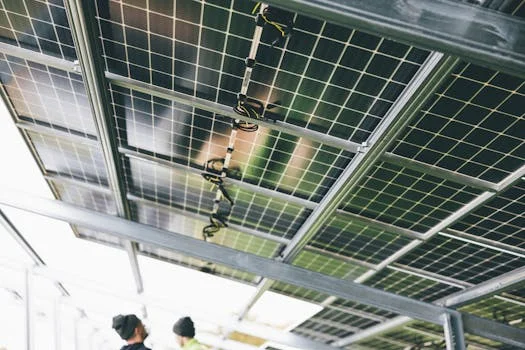
Procurement leads should evaluate ZLD on total cost of ownership, not sticker price. A 3,000 m³/d hybrid system lands near $5M CAPEX, scaling from $2.5M at 1,000 m³/d to $8M at 5,000 m³/d. Energy drives roughly 50% of OPEX, chemicals 20%, and membrane replacement 15%.
RO membranes typically turn over every three years, adding $0.10–$0.20/m³. Electrocoagulation electrodes (Al/Fe) need swap-out every 6–12 months under heavy metal load, contributing $0.30–$0.50/m³. For plants above 3,000 m³/d, payback lands in 3–5 years once you stack eliminated discharge fees, 90% lower freshwater purchase cost, and avoided fines.
| Component | CAPEX Share | OPEX ($/m³) | Lifespan | Replacement Cost |
|---|---|---|---|---|
| UF / Pretreatment | 15% | $0.15 | 5–7 Years | $40,000 (Modules) |
| RO System | 30% | $0.35 | 3 Years | $80,000 (Membranes) |
| Electrocoagulation | 20% | $0.45 | 1 Year (Electrode) | $25,000 (Plates) |
| Crystallizer / Thermal | 35% | $0.80 | 15–20 Years | Maintenance Only |
Compliance Mapping: Meeting China, EU, and US Discharge Limits
Permit-ready solar cell zero liquid discharge designs target the strictest applicable limit. China GB 31573-2015 Table 1 sets fluoride at 6 mg/L for direct discharge; earlier guidance used 10 mg/L. Many permits still list TDS at 1,000 ppm. The same standard sets total cadmium at 0.05 mg/L. The EU IED allows 15 ppm fluoride; the US EPA caps fluoride at 4 ppm MCL. Hybrid ZLD effluent typically runs under 1 ppm fluoride and 220 ppm TDS, clearing all three regimes at once.
Permit submissions need pilot data, a mass balance, and contingency plans for upset events such as RO membrane rupture or crystallizer scaling. EHS teams should review a comparison of PV wastewater discharge regulations before locking the design, since local thresholds continue to tighten.
| Parameter | China GB Limit | EU IED Limit | US EPA Limit | Hybrid ZLD Effluent |
|---|---|---|---|---|
| Fluoride (F-) | ≤10 ppm | ≤15 ppm | ≤4 ppm | ≤1 ppm |
| TDS | ≤1,000 ppm | N/A | N/A | ≤220 ppm |
| Cadmium (Cd) | ≤0.1 ppm | ≤0.05 ppm | ≤1 ppm | ≤0.01 ppm |
| Tellurium (Te) | ≤0.1 ppm | N/A | ≤0.2 ppm | ≤0.02 ppm |
Case Study: 4,000 m³/day Hybrid ZLD System for Crystalline Silicon PV Plant
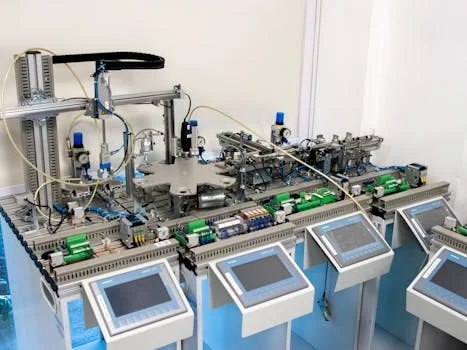
In 2024, a c-Si manufacturer in Jiangsu commissioned a 4,000 m³/d hybrid ZLD system to stop chronic fluoride exceedances. Influent ran at 75 ppm fluoride and 4,500 ppm TDS. UF pretreatment cut total suspended solids by 92%, a dual-stage RO hit 80% recovery, and electrocoagulation polished fluoride to 0.8 ppm before a forced-circulation crystallizer finished the brine. Final water recovery reached 99.9% at $1.30/m³ OPEX.
Commissioning surfaced one hard lesson: RO membranes scaled fast under the site's calcium hardness until the antiscalant dose was retuned through the automatic dosing system. Solids handling used plate-frame filter presses for ZLD brine management, cutting sludge volume by 75% and yielding industrial-grade calcium fluoride for resale.
How to Select the Right ZLD System for Your Solar Cell Plant
A useful selection checklist for solar cell ZLD procurement:
- Match architecture to feed: membrane-only if TDS stays below 5,000 mg/L and no metals; thermal-only only as a last resort for hypersaline brine.
- Demand a verified mass balance, not a generic flowsheet, with your actual fluoride, TDS, and heavy-metal profile.
- Require a 3–6 month pilot on a 5–10 m³/h test skid before signing.
- Ask for guaranteed fluoride removal at your worst-case influent (e.g., 80 ppm), not at a polished lab number.
- Confirm energy use per m³ for the full hybrid train, not just the RO skid.
- Plan for antiscalant tuning, electrode replacement, and salt offtake from day one.
Red flag: any vendor offering 99.9% recovery without a pilot phase. Recovery claims built on spreadsheet mass balances rarely survive the first month of real c-Si production upsets.
For plants evaluating the next step, a sizing review against your flow and effluent data will pinpoint which unit operations to pilot first.
Frequently Asked Questions
What is the primary cause of ZLD system failure in solar plants?
Scaling and fouling cause most ZLD failures in solar plants. High fluoride and hardness foul RO membranes and crystallizer heat exchangers quickly when pretreatment and chemical dosing drift out of setpoint. Most plants we audit trace the failure back to a single missed antiscalant calibration.
How much energy does a ZLD system consume per cubic meter?
A hybrid ZLD system typically consumes 8–12 kWh/m³ across the full train. Thermal-only ZLD climbs above 40 kWh/m³, while a membrane reuse loop without ZLD sits around 2–4 kWh/m³. Solar PV and battery pairing can offset a meaningful slice of the thermal stage's load.
Can ZLD systems recover usable chemicals from solar wastewater?
Yes. Crystallization and advanced precipitation recover high-purity calcium fluoride (CaF2) from fluoride-rich brine, and the solids can be sold into the chemical market. Revenue offsets part of OPEX but rarely covers it on its own.
Is ZLD mandatory for all solar cell manufacturers?
No global mandate exists, but ZLD is effectively required in zero-discharge zones in parts of China and India, and in water-stressed regions where groundwater extraction is restricted. Export-bound manufacturers also adopt ZLD to satisfy the strictest customer's discharge rules.
What pilot data should we require before accepting a ZLD design?
Request 3–6 months of pilot data from a 5–10 m³/h test skid running your actual wastewater, including verified flux, recovery, fluoride removal at peak influent, antiscalant dose, electrode wear rate, and crystallizer salt yield. Without those numbers, any 99.9% recovery claim is unverified.