IC wastewater treatment solutions leverage Internal Circulation (IC) reactors to achieve 92–97% COD removal for high-organic-load effluents (e.g., semiconductor fabs, chemical plants). These anaerobic systems use a two-stage vertical design with internal circulation (up to 20 m/h) to accelerate microbial degradation, reducing operational costs by 30–50% compared to conventional UASB reactors. In 2025, CAPEX ranges from $2.5M–$15M for 50–500 m³/h systems, with OPEX at $0.36–$0.85/m³, making IC reactors a cost-effective choice for zero-liquid-discharge (ZLD) compliance and biogas recovery.
Why IC Wastewater Treatment is the Gold Standard for High-Organic-Load Effluents
Internal Circulation (IC) reactors achieve 92–97% Chemical Oxygen Demand (COD) removal for high-strength industrial effluents, making them the preferred anaerobic technology for facilities facing stringent discharge limits. In a representative 2024 case study, a semiconductor fab processing 150 m³/h of wastewater with an influent COD of 5,000 mg/L integrated an IC reactor to address rising regulatory pressure. Prior to the upgrade, the facility faced approximately $200,000 per year in regulatory surcharges and fines. By implementing IC wastewater treatment solutions for semiconductor fabs, the plant reduced effluent COD to under 250 mg/L before aerobic polishing, eliminating fines and generating enough biogas to offset 15% of the system's energy demand.
The IC reactor offers distinct advantages over conventional Upflow Anaerobic Sludge Blanket (UASB) systems, including a 30% smaller footprint and 40% lower energy consumption. These efficiencies are driven by the vertical design, which allows for higher volumetric loading rates. Industries such as chemical manufacturing—specifically those dealing with Tetramethylammonium hydroxide (TMAH) and Chemical Mechanical Planarization (CMP) waste—benefit from the IC reactor's ability to handle complex organic pollutants that would inhibit traditional aerobic microbes. Similarly, food processing facilities, including breweries and slaughterhouses, utilize IC technology to manage high-protein and high-carbohydrate streams with minimal sludge production.
Regulatory drivers are increasingly mandating high-efficiency anaerobic pre-treatment. In the United States, EPA 40 CFR Part 413 sets strict limits on electroplating and semiconductor discharge, while the EU Industrial Emissions Directive 2010/75/EU requires Best Available Techniques (BAT) for organic load reduction. In Asia, standards like China’s GB 31573-2015 for the chemical industry have pushed facilities toward IC reactors to ensure compliance before wastewater enters municipal or industrial park treatment grids. The ability of the IC reactor to serve as a robust primary treatment stage is critical for facilities aiming for ZLD system design for wafer fabs using IC reactors.
How IC Reactors Work: Engineering Mechanics and Process Parameters
The Internal Circulation (IC) reactor utilizes a multi-stage vertical design to facilitate high-rate anaerobic digestion through biogas-driven fluid dynamics. The reactor is divided into two main sections: a high-load acidogenic zone at the bottom and a lower-load methanogenic zone at the top. As wastewater enters the bottom of the reactor, it meets a dense bed of anaerobic granular sludge. The fermentation of organic matter produces biogas (methane and carbon dioxide), which rises through a riser pipe, creating a "gas-lift" effect. This lift transports wastewater and sludge to a liquid-gas separator at the top, from which the liquid is recirculated back to the bottom via a downcomer pipe. This internal circulation ensures a high upflow velocity—often reaching 20 m/h—which maintains the sludge in a fluidized state and maximizes contact between microbes and pollutants.
Engineering specifications for IC reactors are significantly more intensive than aerobic alternatives. To ensure process stability, engineers must adhere to precise parameters regarding loading and retention times. The following table outlines the 2025 standard engineering specifications for IC reactors in industrial applications:
| Parameter | Standard Range | Unit |
|---|---|---|
| Organic Loading Rate (OLR) | 15 – 30 | kg COD/m³/day |
| Hydraulic Retention Time (HRT) | 4 – 12 | Hours |
| Sludge Retention Time (SRT) | 30 – 100 | Days |
| Upflow Velocity | 10 – 20 | m/h |
| COD Removal Efficiency | 92 – 97 | % |
| Biogas Yield | 0.35 – 0.50 | m³/kg COD removed |
Microbial dynamics within the IC reactor rely on a symbiotic relationship between acid-forming bacteria and methanogenic archaea. In Stage 1 (the bottom zone), acidogens break down complex organics into Volatile Fatty Acids (VFAs), hydrogen, and CO₂. In Stage 2 (the upper zone), methanogens convert these VFAs into methane. Successful operation requires strict influent control: a pH between 6.8 and 7.4, temperatures of 30–38°C, and a balanced nutrient ratio (C:N:P) of 100:5:1. To maintain these conditions, facilities often employ an automatic chemical dosing system for pH adjustment and nutrient balancing in IC reactors.
The typical process flow for an IC-based system involves: Influent → Equalization Tank (for pH and temp control) → IC Reactor (primary anaerobic digestion) → Biogas Separator → Effluent. Depending on discharge requirements, the effluent often undergoes post-treatment using DAF systems for pre- and post-IC treatment to remove residual suspended solids or an MBR system for IC effluent polishing and water reuse.
IC Reactor vs. UASB vs. EGSB: 2025 Comparison Table for Industrial Applications
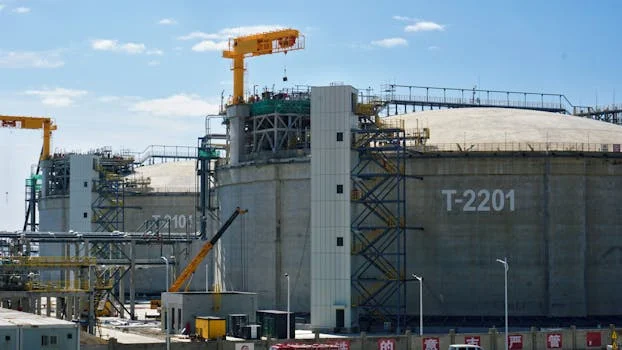
IC reactors operate at organic loading rates (OLR) up to three times higher than conventional Upflow Anaerobic Sludge Blanket (UASB) systems, allowing for a much smaller physical footprint. While the UASB is a proven technology with lower initial capital requirements, it is often limited by its lower upflow velocity (0.5–1.0 m/h), which can lead to sludge bed compaction and channeling in high-strength applications. The Expanded Granular Sludge Bed (EGSB) reactor is an intermediate technology that uses external recirculation to increase upflow velocity, but it generally lacks the internal gas-lift efficiency and multi-stage stability of the IC reactor.
For procurement teams, the choice between these technologies depends on the specific organic load, available land, and long-term OPEX goals. The following comparison matrix details the performance and cost trade-offs for 2025:
| Feature | UASB Reactor | EGSB Reactor | IC Reactor |
|---|---|---|---|
| OLR (kg COD/m³/d) | 5 – 10 | 20 – 40 | 15 – 30 |
| Upflow Velocity (m/h) | 0.5 – 1.0 | 5 – 10 | 10 – 20 |
| Footprint | Large | Small | Very Small |
| Mixing Mechanism | Biogas bubbles only | External pump | Internal gas-lift |
| CAPEX (Relative) | Low ($1.2M–$8M) | Medium ($2M–$10M) | High ($2.5M–$15M) |
| TSS Tolerance | Moderate | Low | Moderate |
A clear decision framework emerges from this data: Choose a UASB for municipal or lower-load industrial applications where space is abundant and budget is the primary constraint. Select an EGSB for extremely high-strength, low-solids wastewater where high upflow velocities are needed to prevent biomass washout. Opt for an IC reactor when the facility requires high COD removal efficiency for complex industrial loads, limited space is available, and the project aims for high-efficiency biogas recovery or ZLD integration.
2025 Cost Breakdown: CAPEX, OPEX, and ROI for IC Wastewater Treatment Systems
For a 500 m³/h industrial effluent stream, IC reactor CAPEX typically ranges from $12M to $15M, with operational costs stabilized by biogas energy recovery. These figures represent the total installed cost, including reactor vessels, internal components, control systems, and initial sludge seeding. Smaller systems (50 m³/h) generally start at $2.5M. While the initial investment is higher than aerobic systems or UASB reactors, the long-term financial benefits are driven by reduced sludge disposal costs and energy generation. A detailed cost analysis for IC wastewater treatment systems shows that biogas recovery can offset 20% to 40% of the total plant energy consumption.
Operational expenditures (OPEX) for IC systems in 2025 range from $0.36 to $0.85 per cubic meter of treated water. This includes electricity for pumps, chemical dosing for pH control, labor, and routine maintenance of the gas-liquid separators. The following table breaks down these costs for a typical large-scale industrial installation:
| Cost Component | Estimated Cost ($/m³) | Notes |
|---|---|---|
| Energy (Pumping & Controls) | $0.12 – $0.25 | Can be offset by biogas |
| Chemicals (Nutrients/NaOH) | $0.15 – $0.35 | Depends on influent pH/COD |
| Labor & Maintenance | $0.05 – $0.15 | Semi-automated systems |
| Sludge Disposal | $0.04 – $0.10 | Anaerobic sludge is 80% less than aerobic |
| Total OPEX | $0.36 – $0.85 | Before biogas credits |
The Return on Investment (ROI) is calculated using the formula: (Annual Savings – Annual OPEX) / CAPEX = Payback Period. Savings are derived from three main sources: the avoidance of regulatory fines (averaging $100K–$500K/year for large fabs), biogas sales or internal use ($0.03–$0.05/kWh equivalent), and water reuse savings ($0.50–$2.00/m³). For a $8M system saving $1.2M annually in combined costs, the payback period is approximately 6.7 years. Hidden costs must also be considered, such as pre-treatment requirements like DAF for TSS removal or post-treatment MBR for reuse applications.
Integrating IC Reactors into Zero-Liquid-Discharge (ZLD) Systems: A 2025 Blueprint
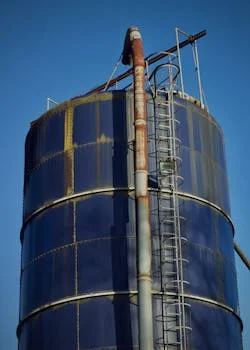
IC reactors serve as the primary organic reduction stage in Zero-Liquid-Discharge (ZLD) configurations, protecting downstream membranes from biofouling. As water scarcity and regulations like China’s Water Pollution Prevention Action Plan become more prevalent, industrial facilities are moving toward closed-loop systems. In a ZLD blueprint, the IC reactor handles the bulk of the organic load, ensuring that the water entering the membrane stages has a low enough COD to prevent rapid fouling of Reverse Osmosis (RO) membranes. This is particularly vital in semiconductor manufacturing, where wastewater contains high concentrations of organic solvents and surfactants.
A typical ZLD hybrid treatment train follows this sequence:
- Pre-treatment: Equalization and DAF to remove oils, fats, and suspended solids.
- Anaerobic Core: IC Reactor for 90%+ COD reduction and biogas recovery.
- Aerobic Polishing: MBR system to remove residual COD and nitrogen.
- Desalination: RO to produce high-quality permeate for reuse.
- Concentrate Management: Evaporation and crystallization to achieve zero liquid discharge.
The decision framework for ZLD integration requires a comprehensive influent characterization. If salinity exceeds 10,000 mg/L, pre-treatment desalination is required, as high salt concentrations inhibit methanogenic activity. A case study from a semiconductor fab in Taiwan demonstrated the effectiveness of this blueprint, achieving 95% water reuse by combining an IC reactor with MBR and RO technologies. This approach not only met regulatory requirements but also significantly reduced the facility's raw water procurement costs. Engineers can find more details on this process in the ZLD system design for wafer fabs using IC reactors.
Frequently Asked Questions: IC Wastewater Treatment for Engineers and Operators
Q: What is the maximum COD loading for an IC reactor?
A: Most IC reactors are designed for an Organic Loading Rate (OLR) of 15–30 kg COD/m³/day. While some systems can theoretically handle higher peaks, exceeding 30 kg for extended periods can cause "souring" or acidification, where acidogens outpace methanogens, leading to a drop in pH and process failure.
Q: How do I prevent foaming in an IC reactor?
A: Foaming is usually caused by sudden organic load spikes or the presence of surfactants. Operators should maintain a stable pH (6.8–7.4), monitor VFA/Alkalinity ratios, and use silicone-based anti-foaming agents in the influent equalization tank if symptoms persist.
Q: Can IC reactors handle high-salinity wastewater?
A: No. Methanogens are highly sensitive to osmotic pressure. Salinity levels above 10,000 mg/L (1%) typically inhibit the process. For high-salinity streams, pre-treatment via Reverse Osmosis or dilution is necessary to protect the microbial granules.
Q: What is the typical biogas yield from an IC reactor?
A: Under stable conditions, you can expect 0.35–0.5 m³ of biogas per kilogram of COD removed. This biogas typically consists of 60–70% methane, which has a heating value of approximately 21–25 MJ/m³.
Q: How often should I replace the microbial sludge?
A: You do not "replace" the sludge; rather, you manage it. The Sludge Retention Time (SRT) is 30–100 days. Because the IC reactor promotes granular sludge growth, you will actually need to "waste" or remove excess sludge periodically to maintain the optimal bed height and microbial activity.