IC Wastewater Treatment Cost 2025: CAPEX, OPEX and ROI Breakdown for Semiconductor Fabs
IC wastewater treatment costs for semiconductor fabs range from $2.5M–$15M in CAPEX and $0.36–$1.20/m³ in OPEX, depending on flow rate, contaminant load, and treatment technology. For a 1,000 m³/day fab, a dissolved air flotation (DAF) system may cost $3M upfront with $0.45/m³ OPEX, while a zero-liquid-discharge (ZLD) system can exceed $12M CAPEX but reduce water costs by 85%. Energy (30–50% of OPEX) and compliance pressure from EPA PFAS drinking-water MCLs of 4.0 ppt for PFOA and PFOS are the top cost drivers.
Why IC Wastewater Treatment Costs Are Different: Contaminants, Compliance, and Consequences
Semiconductor wastewater carries high-risk contaminants that generic industrial plants rarely see at these loads: hydrofluoric acid (HF) at 50–500 mg/L, arsenic at 10–200 mg/L, and chromium at 5–50 mg/L. Those streams force specialized treatment stages that standard chemical-plant trains omit. A typical chemical plant may report about 3.90 CNY/ton (roughly $0.54/m³); fabs pay more because inorganic and toxic loads demand corrosion-resistant materials and multi-stage polishing. EPA's National Primary Drinking Water Regulation for PFAS sets enforceable MCLs as low as 4.0 ppt for PFOA and PFOS—a drinking-water standard that still pushes advanced polishing when fabs discharge into sensitive watersheds or public systems.
Discharge limits for IC fabs run stricter than many general industrial permits. Many jurisdictions require Total Suspended Solids (TSS) below 30 mg/L for semiconductor effluent, versus the 100 mg/L threshold often allowed for municipal or light industrial discharge. Meeting that bar needs a multi-stage train. In Taiwan, a high-volume 10,000 m³/day fab reported $8.2M CAPEX and $0.72/m³ OPEX for a Zero Liquid Discharge (ZLD) system built for high-fluoride streams and ultrapure water (UPW) recovery. The driver was not only stewardship: non-compliance risks production stops that erase wafer revenue. Under the Clean Water Act, civil penalties for permit or effluent violations can exceed $25,000 per day; the 2025 inflation-adjusted maximum is $68,445 per day for each violation.
CMP (Chemical Mechanical Planarization) wastewater further raises unit cost. CMP slurry carries nano-sized abrasives and stabilizers that settle poorly. Treating that stream needs specialized flocculants and high-efficiency clarification, often lifting chemical OPEX 20–30% above standard neutralization. Procurement teams should fold that contaminant-driven scaling into 2025–2026 budget models.
IC Wastewater Treatment Cost Framework: CAPEX, OPEX, and ROI Drivers
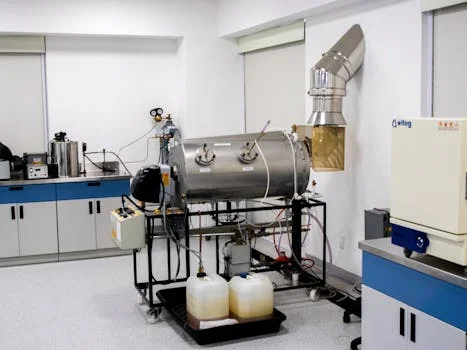
Capital Expenditure (CAPEX) for IC wastewater systems is dominated by HF-resistant materials such as PVDF or stainless steel, plus dense automation. Industry benchmarks put equipment at 60–70% of total CAPEX. Engineering and design take 15–20%; installation and commissioning take 10–15%. Freight, often missed in early budgets, typically runs 5–10% of equipment value by shipping distance. For a line-item view, procurement teams should consult a detailed CAPEX/OPEX breakdown for semiconductor wastewater treatment and adjust for site variables.
Operating Expenditure (OPEX) is led by energy, which accounts for 30–50% of total cost in Membrane Bioreactor (MBR) and thermal evaporator trains. Chemicals for pH control and heavy-metal precipitation take 20–30%. Labor and maintenance, including membrane replacement, contribute 10–25%. Sludge disposal is a hidden OPEX driver: IC sludge often holds arsenic or concentrated fluoride, so it ships as hazardous waste at far higher unit cost than municipal cake.
| Cost Category | Percentage of Total | Key Drivers for IC Fabs |
|---|---|---|
| Equipment (CAPEX) | 60–70% | Corrosion-resistant materials, PLC automation, sensors |
| Energy (OPEX) | 30–50% | MBR aeration, RO high-pressure pumps, ZLD evaporation |
| Chemicals (OPEX) | 20–30% | Calcium chloride for HF, coagulants for CMP slurry |
| Sludge Disposal | 5–10% | Hazardous waste classification (Arsenic, PFAS) |
ROI in semiconductor water projects tracks reuse. High-recovery trains can reclaim up to 85% of water and cut raw-water purchases for UPW makeup. Automated chemical dosing for IC wastewater pH adjustment and contaminant precipitation can cut labor costs by up to 40% while holding steady compliance with 2025 EPA and EU discharge limits for semiconductor wastewater.
Treatment Technology Cost Comparison: DAF vs. MBR vs. ZLD for IC Wastewater
Technology choice trades CAPEX against long-run OPEX. Dissolved Air Flotation (DAF) is the workhorse for CMP pre-treatment and TSS removal. DAF systems for semiconductor wastewater pre-treatment generally offer the lowest CAPEX ($1.5M–$4M) and a manageable OPEX ($0.30–$0.60/m³), with 90–95% TSS removal. DAF alone cannot strip dissolved HF or organics.
For solvent-heavy streams that need COD/BOD removal, MBR systems for high-efficiency IC wastewater treatment are the usual next stage. MBR CAPEX runs $3M–$8M and OPEX $0.50–$1.00/m³ because of membrane replacement and aeration energy, but the train delivers 99% TSS removal and RO-ready effluent. In water-scarce regions, ZLD system design and cost optimization for IC fabs becomes the baseline. ZLD CAPEX can reach $15M, yet near-100% recovery hedges rising utility rates and discharge bans.
| Technology | CAPEX (1,000 m³/day) | OPEX ($/m³) | Target Contaminants | Water Recovery |
|---|---|---|---|---|
| DAF | $1.5M – $4M | $0.30 – $0.60 | TSS, Fats, Oils, CMP Solids | 0% (Pre-treatment) |
| MBR | $3M – $8M | $0.50 – $1.00 | Organics, COD, Nitrogen | 40–60% |
| ZLD | $8M – $15M | $0.80 – $1.50 | Total Dissolved Solids (TDS) | 95–99% |
Hybrid trains often win on total cost for modern fabs. A DAF + MBR package can hit 95% TSS and organic removal near $5M CAPEX. Adding a crystallizer to an RO-based ZLD train pushes cost into the $12M+ range but removes discharge fees. The usual flow starts with chemical precipitation and DAF, then biological treatment (MBR), then membrane or thermal separation for reuse.
How to Calculate Your IC Wastewater Treatment ROI: A Step-by-Step Guide
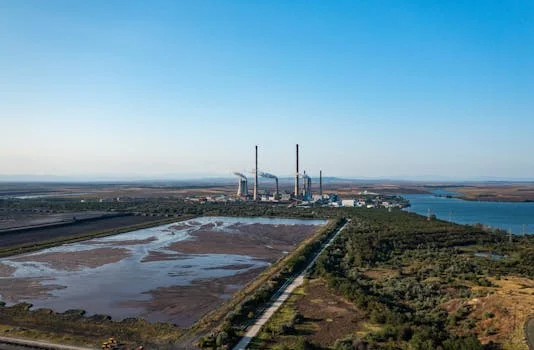
ROI for an IC wastewater project must count direct savings and avoided compliance risk. Use this six-step frame to build the business case:
- Define Baseline Costs: Sum annual raw-water purchases and discharge fees. For a 5,000 m³/day fab paying $2.00/m³ for water and $0.50/m³ for discharge, the annual baseline is $4,562,500.
- Estimate CAPEX: Pick a train from the technology table. A DAF + MBR system for 5,000 m³/day may need about $5M CAPEX.
- Estimate OPEX: At $0.60/m³ for that configuration, annual operating cost is $1,095,000.
- Calculate Savings from Water Reuse: At 85% recovery for cooling or UPW makeup, water-purchase savings equal $3,102,500 per year (5,000 m³/day × 0.85 × $2.00 × 365 days).
- Factor in Compliance Savings: Count avoided fines. Earlier guidance used $25,000/day; the 2025 inflation-adjusted Clean Water Act maximum is $68,445 per day for each violation. Even 10 days of exposure adds material risk to the savings column.
- Apply the ROI Formula: (Annual Savings − Annual OPEX) / CAPEX. Using the figures above: ($3,102,500 − $1,095,000) / $5,000,000 = 40.1% ROI, or about a 2.5-year payback.
Upfront cost for advanced IC wastewater treatment is high, but water recovery plus regulatory safety usually carries the board case. Procurement managers who present this ROI with site-specific flows secure 2025 project budgets faster.
Hidden Costs in IC Wastewater Treatment: What the Quotes Don't Tell You
Vendor quotes often omit line items that inflate project cost by 20% or more. Membrane fouling in MBR trains is one example. Design flux looks fine on paper, yet high-organic IC streams can demand $50,000 or more per year in cleaning chemicals and cause 2–4 days of unplanned downtime. That downtime burns wafer capacity or forces temporary storage tanks.
PFAS polishing is another fast-rising cost. To stay under the 4.0 ppt drinking-water MCL pressure, many fabs add Granulated Activated Carbon (GAC) or Ion Exchange (IX). A GAC polishing stage can add $200,000 to CAPEX and $0.10/m³ to OPEX. IX resins can cost $500,000 in CAPEX and $0.25/m³ in OPEX because regeneration and spent-resin disposal run high. Sludge from these steps is often hazardous; transport plus landfill surcharges can run $300–$800 per ton with fluoride and arsenic loading.
Instrumentation drift and calibration are line items most vendors skip. HF and arsenic online analyzers need recalibration every 4–8 weeks in fab service; budgets that omit this typically see compliance gaps by month nine. Spare-parts stocking for blowers, dosing pumps, and RO membranes is often underfunded, so one failed component can idle a 1,000 m³/day line for a week. Most plants we size run annual spares at 4–6% of equipment CAPEX—anything lower shows up as unplanned shutdowns within the first 18 months.
Who This Is For and Next Steps
This guide fits fab engineering managers building a 2025–2026 water-treatment budget, EPC contractors pricing a greenfield semiconductor project, and procurement teams comparing DAF, MBR, and ZLD quotes. It is less useful for municipal plants or food-and-beverage facilities, where influent chemistry and discharge rules differ sharply. For a sizing review or a budgetary proposal tied to your specific flow and contaminant profile, request a CAPEX/OPEX worksheet from our semiconductor water team.
Frequently Asked Questions
What is the typical CAPEX range for an IC wastewater treatment system?
Most IC fab wastewater systems fall between $2.5M and $15M in CAPEX at the 1,000 m³/day scale. DAF pre-treatment sits at the low end ($1.5M–$4M), MBR mid-range ($3M–$8M), and ZLD at the top ($8M–$15M). Equipment, engineering, freight, and corrosion-resistant materials drive most of the spend.
What OPEX should a semiconductor fab budget per cubic meter of wastewater?
Plan for $0.36–$1.20/m³ across the major technology options, with DAF at $0.30–$0.60/m³, MBR at $0.50–$1.00/m³, and ZLD at $0.80–$1.50/m³. Energy typically consumes 30–50% of OPEX, chemicals 20–30%, and hazardous sludge disposal 5–10%.
How long is the payback period for a ZLD system on a semiconductor fab?
A well-sized ZLD retrofit on a 5,000 m³/day fab reaches roughly 40% ROI and a 2.5-year payback when 85% water reuse is achieved at $2.00/m³ raw-water cost. Sites with lower raw-water prices or weaker discharge-fee exposure see longer paybacks, often 4–6 years.
Which contaminants drive the highest treatment costs in IC fab wastewater?
Hydrofluoric acid (50–500 mg/L), arsenic (10–200 mg/L), chromium (5–50 mg/L), CMP slurry solids, and PFAS are the cost drivers. HF forces corrosion-resistant materials, arsenic and chromium trigger hazardous-sludge routing, and PFAS requires GAC or IX polishing that can add $0.10–$0.25/m³ to OPEX.
How do 2025 EPA PFAS limits change IC wastewater treatment design?
EPA's National Primary Drinking Water Regulation sets PFOA and PFOS MCLs at 4.0 ppt. That drinking-water rule is not a semiconductor Effluent Limitations Guideline, but it still drives polishing design for fabs that discharge to sensitive watersheds or public systems. Clean Water Act civil penalties can exceed $25,000 per day; the 2025 inflation-adjusted maximum is $68,445 per day for each violation. Most fabs now plan GAC or IX polishing downstream of biological and membrane treatment.