Semiconductor fab wastewater treatment CAPEX OPEX is fixed by train choice, daily flow, and the reuse target. The reference case is a 50,000 m³/day fab. Figures are treatment-plant costs for CMP, etch, UPW reject, and rinse water. They are not the fab's city-water invoice.
Semiconductor Fab Wastewater Treatment CAPEX OPEX for a 50,000 m³/day Fab
Semiconductor fab wastewater treatment CAPEX OPEX for a 50,000 m³/day fab runs from $5M for DAF plus biological treatment to $12M for MBR plus RO. Operating cost spans $0.80–$2.50/m³. VSEP electricity adds $0.30–$0.50/m³. A 70% recycle rate can cut net operating cost by 40–60%.
Most 50,000 m³/day cases we price do not land on both ends at once. A CMP line that only has to meet a sewer limit sits near the $5M end. A train that returns water toward UPW sits near the $12M end. Read the stream table before you pick the train. The bands below were not revised from the 2025 company water reports, because those reports do not publish DAF, MBR, or VSEP unit prices.
Why Wafer Fab Wastewater Costs Keep Climbing
Fab wastewater cost is climbing because the water balance is large and the discharge limits are tight. Published fab water balances still use 2–4 million gallons (7,500–15,000 m³) per day, with 30–50% of that volume potentially lost to evaporation in arid regions such as Arizona or Taiwan (SemiEngineering, 2025). On desert sites we review, that evaporation loss is what forces the reuse spend.
Regulatory pressure is the second driver. The EU Industrial Emissions Directive 2010/75/EU imposes strict limits on heavy metals and total suspended solids. This guide's prior China line is GB 31573-2015, with COD below 50 mg/L for the industrial discharge it covers. Earlier project reporting put Intel's Arizona environmental controls, including wastewater, above $1 billion.
For a direct U.S. discharge, the federal floor is narrower than a generic TSS story. According to 40 CFR 469.15, semiconductor BAT limits total toxic organics to 1.37 mg/L as a daily maximum. Fluoride is limited to 32.0 mg/L as a daily maximum and 17.4 mg/L as a 30-day average. BPT holds pH within the range of 6.0 to 9.0, and the BPT table carries the same 1.37 mg/L TTO ceiling (40 CFR 469.14). Subpart A's BPT and BAT tables set no TSS number. Earlier notes also used California's 10 mg/L TSS example for some pollutants. Check the state layer before you design to the federal floor alone.
CMP wastewater, containing 50–300 nm nanoparticles, resists conventional treatment. That load raises chemical and energy cost by 20–40% versus simpler industrial streams (VSEP Industries, 2025). The particles are built to stay dispersed. A plain clarifier will not hold them.
Water scarcity pushes the same fabs toward reuse. Taiwan still curtails supply in dry years. Earlier planning notes gave TSMC a 70% recycling target and Samsung an 80% reuse aim at Pyeongtaek. Singapore remains the public precedent for high-level reclamation. According to Wikipedia, Singapore has four operational NEWater factories at Bedok, Kranji, Ulu Pandan, and Changi, with a total capacity of about 200 million US gallons per day (760,000 m³/d). About 6% of the output goes to indirect potable use; the rest is used at wafer fabrication plants and other non-potable industrial applications. A 50,000 m³/day treatment case is the same order of magnitude as these supply projects.
TSMC's Arizona project is still carried here at $40 billion. City-water and sewer tariffs are a different question. See how much do fabs spend annually on water on average for that annual bill. This page does not price it.
Wafer Fab Wastewater Streams: Composition, Volume, and Treatment Challenges
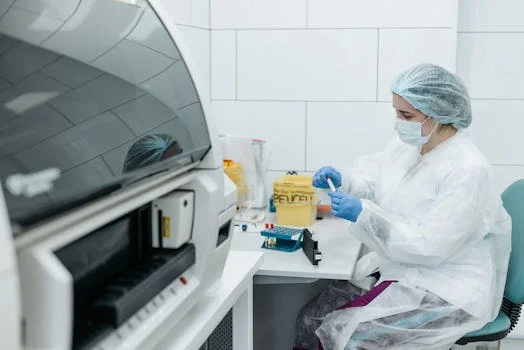
Wafer fab wastewater treatment starts from the stream split, not from a single plant average. The prior fab note classified TSMC process wastewater into 38 types by chemistry and concentration (TSMC, 2025). Those types still group into three bands: low-concentration rinse suitable for direct reuse, medium-concentration CMP wastewater, and high-concentration etch wastewater. Most plants we size for CMP run a solids step first. Skipping it is what blinds the filter behind it.
CMP wastewater holds 50–300 nm silica or alumina particles, pH 9–11, and TSS of 500–2,000 mg/L. The nanoparticles are made to resist aggregation, so plain sedimentation fails (VSEP Industries, 2025). The practical front end is coagulation, then a DAF system for CMP wastewater pre-treatment. Where the target is sub-micron removal below 0.1 μm, an Integrated MBR system for UPW loops and water reuse is the next stage. DAF is the tool for particles larger than 10 μm. It is not the tool for the 50–300 nm fraction by itself.
Etch wastewater carries fluoride at 100–500 mg/L, heavy metals such as copper, nickel, and chromium, and pH 2–4. Neutralization plus chemical precipitation is the usual first stage, at $0.50–$1.20/m³. That raw fluoride is far above the U.S. BAT daily maximum of 32.0 mg/L and the 30-day average of 17.4 mg/L. On a direct discharge, precipitation is not optional. It is the step that closes the gap.
UPW reject is the opposite problem. TSS is below 1 mg/L, while TOC sits at 100–500 ppb. TOC at 100–500 ppb is not the same test as TTO at 1.37 mg/L. Reaching UPW quality for reuse still takes RO followed by electro-deionization, at $1.50–$3.00/m³ (field data, 2025). Rinse water is the cheap stream, at $0.10–$0.30/m³, and it should not subsidize the CMP design.
| Wastewater Stream | Key Characteristics | Typical Volume (Relative) | Primary Treatment Challenge | Typical Treatment Cost ($/m³) |
|---|---|---|---|---|
| CMP Wastewater | 50–300 nm silica/alumina particles, pH 9–11, TSS 500–2,000 mg/L | High | Stable colloidal suspension, high TSS | $0.40–$1.00 |
| Etching Wastewater | High fluoride (100–500 mg/L), heavy metals (Cu, Ni, Cr), pH 2–4 | Medium | Corrosivity, heavy metal/fluoride removal | $0.50–$1.20 |
| UPW Loops (Reject) | Low TSS (<1 mg/L), high organic load (TOC 100–500 ppb) | Very High | Trace organics, ultra-low conductivity | $1.50–$3.00 |
| Rinse Water | Low concentration of contaminants, low TSS | High | Volume management, trace contaminants | $0.10–$0.30 |
CMP Wastewater Treatment Cost per Cubic Meter
CMP wastewater treatment cost per cubic meter is $0.40–$1.00/m³ in the stream table. The band covers a high-volume colloidal stream at pH 9–11 with TSS of 500–2,000 mg/L and particles of 50–300 nm. It is not the UPW-reject band of $1.50–$3.00/m³, and it is not the whole-fab OPEX band of $0.80–$2.50/m³.
What is CMP cost per cubic meter?
CMP wastewater treatment cost is $0.40–$1.00 per cubic meter when the duty is coagulation plus solids removal. Most plants we size for silica or alumina slurry land nearer $0.40/m³ when TSS is near 500 mg/L. They land nearer $1.00/m³ when TSS is near 2,000 mg/L and the 50–300 nm fraction will not floc. Add RO only if the reused water has to approach UPW. That addition is a different line, at $0.50–$1.20/m³ for the RO step alone.
Treatment Technology Comparison for Wafer Fabs
Wafer fab train choice compares capital cost per cubic meter per day, operating cost per cubic meter, and the particle the unit can hold. Each row below is a duty, not a ranking. A rinse-water plant does not need the colloidal machine.
A DAF system for CMP pre-treatment costs $500–$1,200/m³/day in CAPEX and $0.30–$0.80/m³ in OPEX, with 90–95% TSS removal (field data, 2025). Use it to take the large solids and oil off CMP wastewater before a membrane sees that load. Footprint in the comparison table is 10–20 m²/100 m³/day.
Integrated MBR systems in the DF Series cost $1,500–$3,000/m³/day and $0.80–$1.50/m³. They reach about 99% TSS removal and 0.1 μm filtration, which is the duty for UPW-loop polish and for reuse-grade effluent (field data, 2025). Footprint is 5–10 m²/100 m³/day. On a crowded fab basement, that footprint is the reason MBR beats a larger skid.
Industrial RO for ultrapure recovery costs $1,000–$2,500/m³/day and $0.50–$1.20/m³, with 95–99% salt rejection. As explained in how RO systems achieve 99.5% contaminant removal in wafer fabs, pre-treatment decides whether that rejection lasts. An Industrial RO system for ultrapure water recovery still needs DAF plus MBR ahead of the membrane. Salt rejection is not TSS removal. Do not read the RO row as a clarifier.
TSMC's nine recycling systems were credited in earlier fab reporting with about a 40% operating-cost cut versus treating each stream alone (TSMC, 2025). That 40% is the planning figure this page keeps, because split trains let CMP solids, etch fluoride, and UPW organics each run at their own optimum instead of one blended compromise.
| Technology | CAPEX ($/m³/day) | OPEX ($/m³) | TSS Removal (%) | Footprint (m²/100 m³/day) | Key Application |
|---|---|---|---|---|---|
| DAF | $500–$1,200 | $0.30–$0.80 | 90–95% | 10–20 | CMP pre-treatment, suspended solids removal |
| MBR (DF Series) | $1,500–$3,000 | $0.80–$1.50 | 99% | 5–10 | UPW loop treatment, high-quality effluent for reuse |
| VSEP | $2,000–$4,000 | $1.00–$2.50 | >99% (colloids) | 20–30 | Challenging colloidal streams, high recovery |
| RO | $1,000–$2,500 | $0.50–$1.20 | 95–99% salt rejection | 8–15 | Demineralization, ultrapure water recovery |
VSEP Membrane System Cost Semiconductor Fab
A VSEP membrane system for a semiconductor fab costs $2,000–$4,000/m³/day in CAPEX and $1.00–$2.50/m³ in OPEX. Recovery on hard colloidal streams is 98%. Energy is 0.5–1.0 kWh/m³. Footprint is 20–30 m²/100 m³/day, larger than MBR at 5–10 m²/100 m³/day. Chemical demand is low because the vibration limits fouling (VSEP Industries, 2025). The opening range still adds $0.30–$0.50/m³ for VSEP electricity on top of a simpler train. The OPEX table's electricity line of $0.30–$1.00/m³ is the wider plant band, and the VSEP-only electricity note of $0.50–$1.00/m³ is the high end of that band. Keep all three. They are not the same line.
What does a VSEP system cost a fab?
VSEP membrane system cost on a semiconductor fab is $2,000–$4,000 per m³/day installed and $1.00–$2.50 per m³ to run, at 0.5–1.0 kWh/m³. We put it on the colloidal CMP line when DAF cannot hold the 50–300 nm fraction and the recovery target is 98%. We do not put it on rinse water at $0.10–$0.30/m³. Rinse water will not pay back a skid at that capital rate. Colloidal TSS removal in the table is above 99%.
CAPEX Breakdown: Equipment, Installation, and Permitting
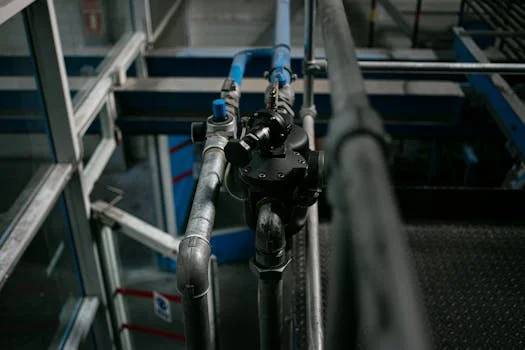
Wafer fab wastewater equipment is the largest CAPEX slice, at 60–70% of the total. A worked example in the prior note is about $3M for a 50 m³/h MBR system. On a $10M total, that slice is $6.0M–$7.0M. Do not stop the estimate at the skid quote. The rest of the stack is what misses the gate review.
Installation, civil works, piping, electrical, and automation are 15–20% of CAPEX. One prior case put civil works alone at $500K. On the jobs we close, installation rarely stays at the bottom of that 15–20% band once tool-hookup piping is in the takeoff. Engineering and design are another 5–10%, or $0.5M–$1.0M on a $10M job.
Permitting and compliance are 5–10%, and they are the slice people drop. The prior U.S. note used about $200K for NPDES work and about $100K for EU IED compliance. A later permit answer on this page uses a wider band of $100K–$500K and 6–18 months. Keep both. The $200K figure is an example inside the wider band, not a replacement for it. Contingency is another 5–10%, or $0.5M–$1.0M on the $10M example.
Region moves the total as much as the flowsheet does. A 50,000 m³/day system was carried at about $8M in the U.S., $6M in Taiwan, and $5M in China. Labor, steel, and the permit path are the gaps, not a different law of membrane area. Prefabricated plants cut CAPEX by 20–30% versus stick-built work, mainly by taking labor off the fab site (field data, 2025).
This split is for a wafer fab train. A municipal plant in another market uses a different capex and opex structure. Do not copy that plant's percentages onto a CMP line.
| CAPEX Component | Typical Percentage of Total CAPEX | Example Cost (for $10M total CAPEX) |
|---|---|---|
| Equipment Purchase | 60–70% | $6.0M–$7.0M |
| Installation & Civil Works | 15–20% | $1.5M–$2.0M |
| Engineering & Design | 5–10% | $0.5M–$1.0M |
| Permitting & Compliance | 5–10% | $0.5M–$1.0M |
| Contingency | 5–10% | $0.5M–$1.0M |
OPEX Drivers: Energy, Chemicals, Labor, and Maintenance
Wafer fab wastewater energy is the largest OPEX slice, at 40–50%. MBR aeration is priced at $0.30–$0.50/m³ in the prior note, and at 0.3–0.5 kWh/m³ in the permit-style energy check. VSEP electricity is $0.50–$1.00/m³ at 0.5–1.0 kWh/m³. The table rolls electricity into $0.30–$1.00/m³. In plants we review, this is the line that blows the budget, because blowers and pumps run all day.
Chemicals are 20–30% of OPEX. Coagulants and flocculants run $0.10–$0.30/m³. pH adjustment runs $0.05–$0.15/m³. The table combines those into $0.10–$0.45/m³. Cutting chemical OPEX by 15–20% is realistic with PLC-controlled chemical dosing for pH adjustment and coagulation (field data, 2025). That 15–20% is a dosing-control result on the treatment train. It does not extend to the fab's ultrapure-water chemistry budget, which is a different ledger.
Labor is 10–15%. Highly automated plants sit at $0.05–$0.10/m³. Manual plants sit at $0.20–$0.40/m³. Maintenance and spares are another 10–15%. Membrane replacement on MBR or RO is $0.05–$0.15/m³. DAF skimming and sludge handling are $0.02–$0.05/m³. The table's maintenance band is $0.05–$0.20/m³, and sludge disposal is 5–10% at $0.02–$0.10/m³. Put the sludge line in the model. It is not a rounding error on a CMP plant.
A 70% recycle rate, the TSMC planning figure used in the earlier note, can cut net operating cost by 40–60% by avoiding purchase and discharge fees (TSMC, 2025). Use that 70% inside the calculator below. Swap in your site's measured recycle rate before you quote the credit, and keep the reclaimed-water substitution, if your city offers one, on its own line.
| OPEX Component | Typical Percentage of Total OPEX | Cost Range ($/m³) | Key Optimization Strategy |
|---|---|---|---|
| Energy (Electricity) | 40–50% | $0.30–$1.00 | High-efficiency pumps, optimized aeration, energy recovery |
| Chemicals | 20–30% | $0.10–$0.45 | Automated dosing, chemical optimization, alternative reagents |
| Labor | 10–15% | $0.05–$0.40 | Automation, remote monitoring, cross-training |
| Maintenance & Spares | 10–15% | $0.05–$0.20 | Predictive maintenance, quality components, regular servicing |
| Sludge Disposal | 5–10% | $0.02–$0.10 | Volume reduction, beneficial reuse, dewatering efficiency |
Wafer Fab Water Recycling ROI Calculator
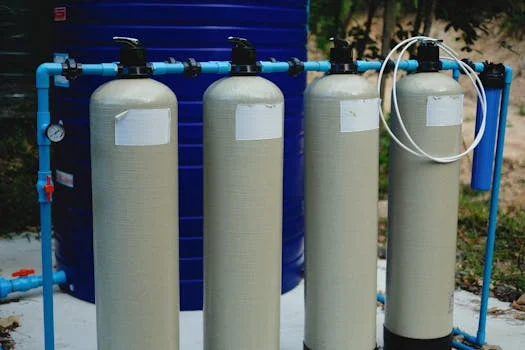
The wafer fab water recycling ROI calculator below is five arithmetic steps, not a vendor score. Payback moves when the tariff moves. If your purchase price is far from $2.50/m³, do not reuse the day count. Rerun step 1 with the tariff on your last invoice. The five steps are the calculator. A spreadsheet with your own stream split can be requested with the inquiry at the end of this page.
- Step 1: Calculate baseline costs. Add municipal purchase and discharge. The worked example uses purchase at $2.50/m³ and discharge at $1.00/m³. Baseline cost is $3.50/m³.
- Step 2: Estimate new treatment costs. Add OPEX for the new train. Do not hide CAPEX inside that OPEX line unless you also show the life you used. For MBR plus RO, the example uses $1.20/m³ for MBR OPEX plus $0.50/m³ for RO OPEX. The sum is $1.70/m³ treated.
- Step 3: Factor in water reuse savings. A 70% reuse rate cuts the $3.50/m³ baseline by $2.45/m³, because $3.50 × 0.7 = $2.45. That credit is avoided purchase plus avoided discharge on the recycled share only. It is not a discount on the $1.70/m³ treatment cost.
- Step 4: Add regulatory and other savings. The example adds avoided fines at $0.50/m³ and a carbon-credit placeholder at $0.10/m³. Brand value is not given a dollar figure here, because this page has no source for it.
- Step 5: Calculate payback. Net saving is ($2.45/m³ reuse + $0.50/m³ fines + $0.10/m³ carbon) minus $1.70/m³ new OPEX, which equals $1.35/m³. For a 50,000 m³/day fab, that is $67,500 per day. Divide $8,000,000 by $67,500/day and the result is approximately 118.5 days. The earlier note also printed 2.2 years at ~250 operating days/year. Those two results do not come from the same division. Use 118.5 days when the $67,500/day line is the one you trust. Keep 2.2 years only if your own day count produces it.
How do you run a recycling ROI case?
Run the wafer fab water recycling ROI as baseline tariff, new OPEX, reuse credit, avoided fines, then payback. In the worked case the baseline is $3.50/m³, new OPEX is $1.70/m³, and net saving is $1.35/m³. On 50,000 m³/day that is $67,500 per day against an $8M capital cost. Swap 70% for your site rate before you quote a year.
Decision Framework for the Wastewater Train
A wafer fab wastewater train is picked from the stream and the reuse goal, then checked against footprint and the capital gate. A water-stressed fab should state the reuse rate before it asks for a budget. A fab with a loose sewer limit and a rinse-water problem should not start at VSEP.
- Step 1: Define the goal. Compliance only, partial non-process reuse, or process-water recovery. Write one of those three down. A mixed goal without a rate produces a mixed train and a muddy OPEX.
- Step 2: Characterize every stream. Measure TSS, metals, fluoride, TOC, pH, flow, and particle size on CMP, etch, and UPW reject. The stream table is the minimum split. A 38-type fab will need more meters than these four rows.
- Step 3: Match the unit to the stream. DAF for high-TSS CMP pre-treatment. MBR for UPW loops that need reuse-grade effluent. VSEP when the colloidal recovery has to reach 98% and DAF cannot hold the solids. RO after that pre-treatment, not before it.
- Step 4: Compare capital and operating cost on the technology table. DAF is $500–$1,200/m³/day and $0.30–$0.80/m³. MBR is $1,500–$3,000/m³/day and $0.80–$1.50/m³. VSEP is $2,000–$4,000/m³/day and $1.00–$2.50/m³. RO is $1,000–$2,500/m³/day and $0.50–$1.20/m³. Energy at 40–50% of OPEX will dominate the life cost.
- Step 5: Check footprint and how you will build it. MBR at 5–10 m²/100 m³/day fits a tight fab. VSEP at 20–30 m²/100 m³/day often does not. Prefabricated plants cut CAPEX by 20–30% versus stick-built work when the road and the hookup allow a module.
A short decision rule covers the first cut. If CMP volume is high and the reuse goal is aggressive, use DAF, then MBR, then RO. If the gate is tight and the goal is basic compliance, DAF plus biological treatment is the $5M end of the 50,000 m³/day case, not the $12M end. If the fab has room and the problem is only rinse water, we do not price an MBR.
| Decision Factor | Low Priority / Constraint | Medium Priority / Constraint | High Priority / Constraint |
|---|---|---|---|
| Water Reuse Goal | Minimal (Discharge only) | Partial (Non-process reuse) | Maximal (Process water recovery) |
| Footprint Availability | Ample space | Moderate space | Very limited space |
| Budget (CAPEX) | Strictly limited | Moderate investment | Flexible for long-term ROI |
| Wastewater Complexity | Simple (e.g., rinse water) | Mixed (e.g., CMP, some metals) | Complex (e.g., high fluoride, diverse metals, colloids) |
| Regulatory Stringency | Standard discharge | Tightening limits | Ultra-low discharge, zero liquid discharge (ZLD) |
What should the cost checklist include?
Use this checklist before the capital gate. Miss one line and the $1.35/m³ saving in the worked case will not survive contact with the fab.
- Meter CMP, etch, UPW reject, and rinse separately. Do not design from a blended sample.
- Write the reuse goal as discharge only, non-process reuse, or process recovery before you pick MBR or VSEP.
- If the outfall is a U.S. direct discharge, test fluoride against 32.0 mg/L daily and 17.4 mg/L over 30 days, and TTO against 1.37 mg/L.
- Price power at the real tariff. Energy is 40–50% of OPEX, and VSEP sits at 0.5–1.0 kWh/m³.
- Check footprint: MBR at 5–10 m²/100 m³/day versus VSEP at 20–30 m²/100 m³/day.
- Ask whether a prefabricated plant cuts 20–30% off stick-built CAPEX on this site.
- Put sludge disposal in the model at $0.02–$0.10/m³, not as a note under the table.
Who Should Use This Cost Split
Fab utilities engineers and EPC estimators are the readers who can use these bands. You need a stream split, a reuse goal, and a discharge point. Procurement can use the same tables to check whether a quote left out installation, permits, or sludge.
Look elsewhere if you need a municipal plant cost split. That page is already linked above. Look elsewhere if the question is the fab's annual city-water bill. That page is linked above as well. This page will mislead both of those questions, because it prices treatment per cubic meter, not corporate water spend.
Next step: send flow, the four-stream split, fluoride, TSS, and the discharge limit through the fab wastewater inquiry form. The return is a sized train with a CAPEX band and an OPEX per cubic meter, using the ranges on this page as the check, not as a substitute for your tariff.
Frequently Asked Questions
What is the average cost per m³ for wafer fab wastewater treatment?
The average cost per cubic meter for wafer fab wastewater treatment is $0.80–$2.50/m³. DAF pre-treatment is $0.30–$0.80/m³. An MBR plus RO train for high-quality or ultrapure recovery is $1.50–$2.50/m³. Technology and reuse target move the result more than the fab logo does. Most CMP-heavy plants we size sit inside that band once power and sludge are both in the OPEX.
How much can water reuse reduce wastewater treatment costs?
Water reuse can cut overall wafer fab wastewater treatment cost by 40–60% at a 70% recycle rate. The saving comes from avoided fresh-water purchase and avoided discharge fees, the two lines inside the $3.50/m³ baseline of the calculator. Singapore's NEWater program shows the same logic at city scale, with reclaimed water now serving wafer fabrication plants directly. Rerun the credit with your own tariff before you quote it.
What are the biggest OPEX drivers for wafer fab wastewater treatment?
Energy and chemicals are the biggest OPEX drivers for wafer fab wastewater treatment. Energy is 40–50% of OPEX. Chemicals are 20–30%. MBR aeration is typically 0.3–0.5 kWh/m³. VSEP uses 0.5–1.0 kWh/m³. The OPEX table prices electricity at $0.30–$1.00/m³ and chemicals at $0.10–$0.45/m³. In plants we review, the energy line is the one that blows the budget, because blowers and pumps run all day.
What permits are required for wafer fab wastewater treatment in the U.S.?
A U.S. wafer fab needs an NPDES permit for direct discharge, state limits, and a local pretreatment program for a sewer discharge. According to 40 CFR 469.15, semiconductor BAT caps fluoride at 32.0 mg/L daily and 17.4 mg/L over 30 days, and caps TTO at 1.37 mg/L daily. BPT holds pH within 6.0 to 9.0. Earlier notes also used California's 10 mg/L TSS example. Permit work often costs $100K–$500K and takes 6–18 months.
Can wafer fab wastewater be treated to ultrapure water (UPW) standards?
Yes. Wafer fab wastewater can be treated to ultrapure water standards on a multi-stage train. Typical order is DAF, then MBR, then RO, then electro-deionization. Cost is about $1.50–$3.00/m³, with 80–90% recovery of high-quality reuse. UPW reject is a separate stream, with TSS below 1 mg/L and TOC at 100–500 ppb. Raw CMP slurry should not go straight to the RO skid.