Dublin’s Industrial Wastewater Regulatory Landscape: EPA Permits, EU Directives & Local Compliance
EPA Ireland’s 2025 industrial discharge limits for Dublin include a 30 mg/L threshold for Total Suspended Solids (TSS) and a 10 mg/L limit for Fats, Oils, and Grease (FOG). These standards are enforced under the EU Urban Waste Water Directive 91/271/EEC, which classifies Dublin Bay and the Liffey Estuary as sensitive areas requiring stringent nutrient management. For industrial facilities, particularly those contributing more than 10,000 population equivalent (PE), compliance also mandates the removal of nitrogen and phosphorus to prevent eutrophication in local coastal waters. The Ringsend Wastewater Treatment Plant (WWTP), following its €550 million upgrade completed in 2026, now enforces strict pretreatment permits for any industrial flow exceeding 5 m³/day. This ensures the facility’s aerobic granular sludge process is protected from high-strength industrial loads.
The permit application process in Dublin is managed through Uisce Éireann (formerly Irish Water) and the EPA. Facilities must submit a detailed "Industrial Wastewater Discharge Permit Application" which includes a full characterization of the effluent, hydraulic loading rates, and a proposed pretreatment plan. Failure to adhere to these permits results in significant financial exposure; the EPA Enforcement Report 2024 confirms that fines for non-compliance can reach €5,000 per day. unannounced audits are common, where inspectors verify that on-site systems like DAF systems for Dublin’s industrial FOG and TSS removal are operating within their specified design parameters.
| Parameter | EPA Dublin Limit (2025) | EU Directive 91/271/EEC | Monitoring Frequency |
|---|---|---|---|
| Total Suspended Solids (TSS) | 30 mg/L | 35 mg/L | Daily/Continuous |
| Biochemical Oxygen Demand (BOD) | 25 mg/L | 25 mg/L | Weekly |
| Fats, Oils, and Grease (FOG) | 10 mg/L | Not Specified (Local) | Daily |
| Total Phosphorus (TP) | 2 mg/L | 1-2 mg/L | Monthly |
| Total Nitrogen (TN) | 15 mg/L | 10-15 mg/L | Monthly |
Industrial Wastewater Characteristics in Dublin: Sector-Specific Pollutant Profiles & Treatment Challenges
Food processing facilities in the Greater Dublin Area typically generate wastewater with Biochemical Oxygen Demand (BOD) concentrations ranging from 1,000 to 5,000 mg/L. This high organic load is often accompanied by elevated FOG levels (500–2,000 mg/L) and fluctuating pH levels, which can corrode municipal sewer lines if not neutralized. For engineers managing these facilities, the primary challenge lies in the rapid variation of influent quality during production shifts. Effective food processing wastewater treatment strategies must prioritize robust primary solids removal to prevent downstream biological fouling.
The pharmaceutical sector in Dublin, concentrated in clusters like Grange Castle and Swords, faces different challenges. Effluent here often contains high Chemical Oxygen Demand (COD) between 3,000 and 10,000 mg/L but has a low BOD/COD ratio, indicating poor biodegradability. These streams often require advanced oxidation processes (AOPs) or specialized MBR systems for Dublin’s pharmaceutical and high-BOD wastewater to break down complex active pharmaceutical ingredients (APIs). Meanwhile, metalworking and engineering plants in Dublin’s industrial estates must manage heavy metals such as Chromium, Nickel, and Zinc, typically found at concentrations of 5–50 mg/L. These require precise chemical dosing systems for Dublin’s industrial pretreatment to facilitate hydroxide precipitation and subsequent filtration.
| Industrial Sector | Primary Pollutants | Typical BOD (mg/L) | Key Treatment Challenge |
|---|---|---|---|
| Food & Beverage | FOG, TSS, Sugars | 1,000–5,000 | High FOG causing sewer blockages |
| Pharmaceutical | APIs, Solvents, COD | 500–1,500 | Non-biodegradable toxic compounds |
| Metal Finishing | Heavy Metals, Acids | <100 | Strict heavy metal discharge limits |
| Data Centers | TDS, Thermal Load | <50 | High volume cooling tower blowdown |
On-Site Treatment vs. Municipal Discharge: Cost Comparison & Decision Framework for Dublin Facilities
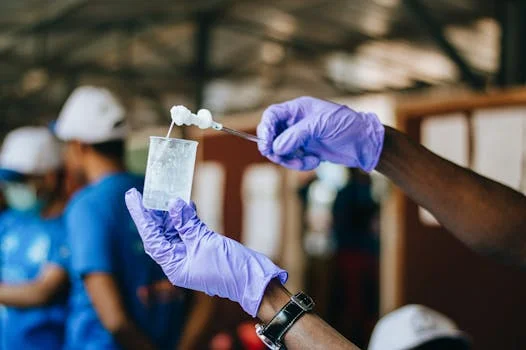
Uisce Éireann’s 2025 industrial discharge tariffs range from €2.50 to €5.00 per cubic meter, making on-site treatment financially viable for facilities with flows exceeding 100 m³/day. For a facility discharging 200 m³/day, the annual municipal disposal cost can exceed €250,000, excluding the "Mogden Formula" surcharges applied to high-strength COD and TSS loads. In contrast, on-site treatment using MBR vs extended aeration models shows that while CAPEX is higher for advanced systems, the OPEX typically falls between €0.50 and €1.50 per cubic meter, inclusive of energy and chemicals.
The decision framework for Dublin facilities hinges on a 3-year Total Cost of Ownership (TCO) model. A standard DAF system with a CAPEX of €150,000 can often pay for itself within 18 to 24 months by eliminating EPA fines and reducing municipal volumetric charges. as Dublin moves toward a circular economy, on-site treatment enables water reuse for non-potable applications like cooling towers or floor washing. Implementing RO systems for Dublin’s industrial water reuse projects can further reduce the reliance on the city’s strained potable water supply, providing a dual benefit of cost savings and environmental ESG compliance.
| Cost Component | Municipal Discharge (Per Annum) | On-Site Treatment (Per Annum) |
|---|---|---|
| Volumetric Fees (200 m³/day) | €182,500 – €365,000 | €0 (Discharge to Surface Water) |
| Surcharges (COD/TSS) | €20,000 – €60,000 | €0 |
| Operational Costs (Energy/Chem) | €0 | €36,500 – €75,000 |
| Maintenance & Labor | €0 | €15,000 – €25,000 |
| Total Estimated Yearly OPEX | €202,500 – €425,000 | €51,500 – €100,000 |
Engineering Specs for Dublin’s Top Industrial Wastewater Treatment Technologies
Dissolved Air Flotation (DAF) systems utilizing 30–50 μm micro-bubbles achieve up to 95% removal of Fats, Oils, and Grease (FOG) in industrial pretreatment applications. For Dublin’s food and dairy processors, the HydropureWater DAF line is engineered to handle hydraulic loads from 4 to 300 m³/h within a compact footprint of 10 to 50 m². This is critical for urban facilities in Dublin where space is at a premium. An engineering deep dive on DAF systems for Dublin’s industrial applications reveals that maintaining a recycle ratio of 15-20% is optimal for achieving the 10 mg/L FOG limit required for discharge to the Ringsend network.
For pharmaceutical and medical facilities, MBR systems provide a superior alternative to traditional clarifiers. Utilizing flat-sheet membranes with a 0.1 μm pore size, these systems achieve near-total removal of pathogens and suspended solids. Engineering data for medical wastewater treatment systems indicates an energy consumption profile of 0.6–1.2 kWh/m³, making them highly efficient for high-strength organic removal. Additionally, sludge management is a significant cost factor in Ireland; utilizing plate-frame filter presses can reduce sludge volume by 70-80%, resulting in a dry cake with 20-35% solids that is significantly cheaper to transport and dispose of at licensed waste facilities.
| Technology | Removal Efficiency (TSS) | Energy Use (kWh/m³) | Footprint Requirement |
|---|---|---|---|
| DAF | 92% – 96% | 0.2 – 0.5 | Low (15-40 m²) |
| MBR (DF Series) | >99% | 0.6 – 1.2 | Medium (30-80 m²) |
| Chemical Dosing | N/A (Pretreatment) | <0.1 | Minimal (<5 m²) |
| Filter Press | N/A (Sludge) | 0.3 – 0.6 | Medium (20-50 m²) |
Case Study: Dublin Food Processing Plant Cuts FOG Violations by 98% with On-Site DAF System
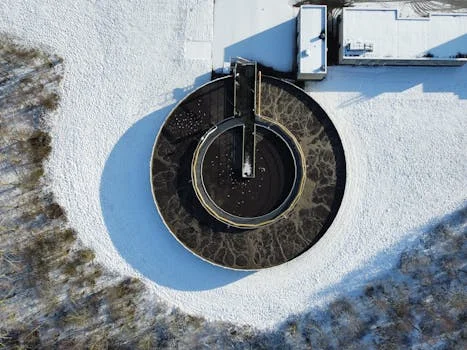
A Dublin-based brewery successfully reduced its municipal discharge surcharges by €90,000 annually following the installation of a high-efficiency pretreatment system. Prior to the project, the facility was discharging effluent with FOG levels exceeding 1,200 mg/L, resulting in frequent EPA warnings and daily fines that threatened their Industrial Emissions Licence (IEL). The facility’s engineering team evaluated several options but required a solution that could handle rapid surges in flow during tank cleaning cycles without requiring a massive equalization basin.
The solution involved installing a HydropureWater DAF-100 system, specifically designed for high-strength organic loads. The system included an integrated engineering deep dive on DAF systems which utilized automated pH adjustment and coagulant dosing to break stable emulsions. Post-commissioning results showed a 98% reduction in FOG (down to 24 mg/L) and a 95% reduction in TSS. With a CAPEX of €180,000, the brewery achieved a full ROI in just 2.2 years, solely through the elimination of municipal surcharges and EPA fines. This case study demonstrates that for Dublin’s industrial sector, on-site pretreatment is no longer just a compliance requirement but a significant financial strategy.
Equipment Selection Checklist: How to Choose the Right Industrial Wastewater System for Your Dublin Facility
Selecting an industrial wastewater system in Dublin requires a 5-step verification process that aligns local EPA permit requirements with facility-specific influent characteristics. Because discharge limits in the Greater Dublin Area are more stringent than in rural regions, engineers must ensure that any equipment purchased is rated for the specific 2025 EPA Ireland standards. The following checklist serves as a guide for procurement managers evaluating package sewage treatment plants for industrial use.
- Step 1: Characterize Influent: Conduct a 7-day composite sampling program to determine peak and average TSS, BOD, COD, FOG, and pH.
- Step 2: Cost-Benefit Analysis: Compare the 3-year TCO of municipal discharge (including surcharges) against the CAPEX/OPEX of an on-site DAF or MBR system.
- Step 3: Space & Utility Audit: Verify available footprint and power supply (e.g., ensuring the facility can support the 0.6-1.2 kWh/m³ requirement of an MBR).
- Step 4: Regulatory Verification: Ensure the equipment manufacturer provides performance guarantees that meet Uisce Éireann’s Section 16 discharge license requirements.
- Step 5: Pilot Testing: For complex pharmaceutical or chemical streams, request a 1-month mobile pilot unit trial to verify removal efficiencies before full-scale capital commitment.
Frequently Asked Questions
What are the industrial wastewater discharge limits in Dublin for 2025?
The standard limits for discharge to the Dublin municipal sewer are 30 mg/L for TSS, 25 mg/L for BOD, and 10 mg/L for FOG. However, these can vary based on your specific Industrial Emissions Licence (IEL) or Section 16 permit issued by Uisce Éireann.
How much does it cost to install an on-site DAF system in Dublin?
For typical industrial flows of 50–200 m³/day, CAPEX for a high-quality DAF system ranges from €80,000 to €250,000. This excludes civil works but includes the flotation unit, saturation system, and basic chemical dosing.
Can my facility discharge to Ringsend WWTP without pretreatment?
Only if your flow is less than 5 m³/day and your pollutant concentrations are below the baseline municipal limits. Most food processing and manufacturing plants exceed these thresholds and require at least primary screening and FOG removal.
What are the penalties for exceeding Dublin’s FOG limits?
The EPA can impose fines of up to €5,000 per day for permit violations. Additionally, Uisce Éireann may revoke your discharge license, effectively halting production until a compliance plan is implemented.
How do I apply for an industrial wastewater discharge permit in Dublin?
Applications are submitted through the Uisce Éireann "Connections and Developer Services" portal. You will need to provide a detailed site plan, water balance, and an effluent characterization report certified by an accredited laboratory.