Why Industrial Facilities Are Switching to Package Sewage Treatment Plants
The best package sewage treatment plant for industrial use depends on effluent characteristics, available footprint, and the discharge permit a facility must meet. MBR systems deliver reuse-quality effluent (<1 μm filtration) on a footprint about 60% smaller than conventional activated sludge, but consume 0.5–1.0 kWh/m³. DAF units remove 92–97% of TSS and FOG from food or petrochemical streams. SBRs use less energy (0.3–0.6 kWh/m³) and suit high-BOD, variable flows. The guidance below gives engineering specs, cost numbers, and a step-by-step selection framework.
Industrial wastewater management has moved from a back-office utility issue to a primary operational risk. In 2024, a food processing plant in Shandong cut TSS from 350 mg/L to under 30 mg/L with a skid-mounted MBR system and avoided roughly $250,000 in annual non-compliance fines (HydropureWater case study). Modular packaged systems are now replacing civil-engineered plants at many sites for exactly this reason.
Regulatory pressure is the main driver. China's GB 8978-1996 (Integrated Wastewater Discharge Standard), the EU Industrial Emissions Directive 2010/75/EU, and US EPA NPDES permits typically require 80–95% removal for COD, BOD, and TSS. Packaged units are built and tested in a factory to hit those numbers before they ship, which is hard to guarantee on a field-erected plant.
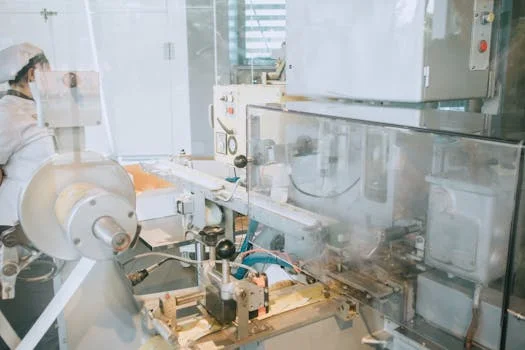
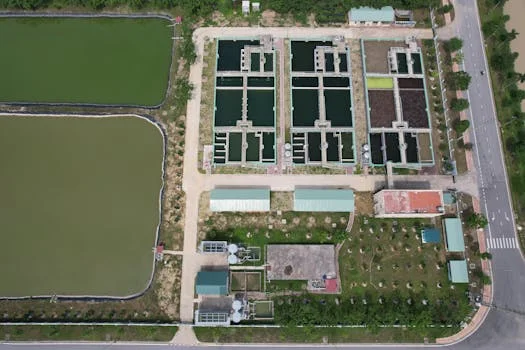
Space efficiency matters in urban industrial parks and brownfield retrofits. Manufacturer data show containerized sewage treatment plants need 50–70% less area than conventional activated sludge plants. Deployment is also faster: a pre-engineered unit is typically commissioned in 4–6 weeks, while a field-erected plant takes 6–12 months for design, permitting, and construction. Facilities with limited plot area may also evaluate an Underground Package Sewage Treatment Plant (WSZ Series) when above-ground space is the binding constraint.
How Package Sewage Treatment Plants Work: Core Technologies Explained
Membrane Bioreactor (MBR) technology sits at the top of the treatment chain for plants that need high-clarity discharge or water reuse. MBRs combine activated sludge biology with submerged PVDF membranes at 0.1 μm pore size. The membranes replace secondary clarifiers and produce TSS below 10 mg/L and BOD below 5 mg/L. To keep flux stable, the train needs continuous membrane scouring at 0.2–0.4 m³/m²/h and periodic Clean-In-Place (CIP) with sodium hypochlorite or citric acid. HydropureWater's MBR system for industrial reuse-quality effluent is built around those filtration demands.
Moving Bed Biofilm Reactor (MBBR) systems use plastic carriers at roughly 50–60% fill to host biofilm. No sludge recirculation is needed, which simplifies operation and helps it absorb toxic shocks and BOD swings common in pulp, paper, and dairy effluent. MBBRs reach 85–90% BOD removal but usually need a downstream clarifier to hit strict TSS limits.
Sequencing Batch Reactor (SBR) technology runs as a fill-and-draw batch in one tank. Four phases—fill, react, settle, decant—replace external clarifiers and return activated sludge (RAS) pumps, which is why SBR energy use sits at 0.3–0.6 kWh/m³. Plants with continuous discharge usually add an equalization tank to smooth flow before the batch cycle.
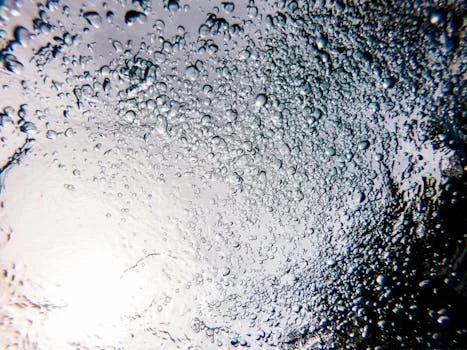
Dissolved Air Flotation (DAF) is a physical-chemical step for fast removal of insoluble contaminants. Micro-bubbles (10–80 μm) lift TSS and FOG to the surface for skimming. See how micro bubble flotation achieves 92–97% TSS removal in industrial wastewater, especially in food plants where influent TSS can exceed 1,000 mg/L. HydropureWater's DAF system for high-TSS industrial wastewater covers 4–300 m³/h and is typically dosed with coagulant or flocculant at 0.5–5 mg/L.
| Technology | Primary Mechanism | Key Advantage | Effluent Quality (TSS) |
|---|---|---|---|
| MBR | Biological + Membrane Filtration | Highest effluent quality; smallest footprint | <10 mg/L |
| MBBR | Biofilm on Moving Carriers | Resilient to organic shock loads | 30–50 mg/L (w/o filter) |
| SBR | Time-sequenced Batch Process | Low energy consumption; flexible | 20–40 mg/L |
| DAF | Micro-bubble Flotation | Excellent FOG and TSS removal | <50 mg/L (95% removal) |
Side-by-Side Comparison: MBR vs MBBR vs SBR vs DAF for Industrial Wastewater
Selecting the best package sewage treatment plant for industrial use comes down to a data-driven comparison of removal efficiency, OPEX, and footprint. MBR gives the best reuse performance, but its higher CAPEX and energy demand are hard to justify for plants that only need a basic discharge permit. DAF is the right pick for oily wastewater pre-treatment but cannot remove dissolved BOD/COD the way biological systems do.
| Metric | MBR | MBBR | SBR | DAF |
|---|---|---|---|---|
| Removal Efficiency (TSS/BOD) | >99% / >98% | 85-90% / 90-95% | 90-95% / 90-95% | 92-97% (TSS/FOG) |
| Footprint (m²/100 m³/day) | 0.8 m² | 1.0 m² | 1.2 m² | 0.6 m² |
| Energy Use (kWh/m³) | 0.5 – 1.0 | 0.3 – 0.5 | 0.3 – 0.6 | 0.1 – 0.3 |
| CAPEX ($/m³/day) | $2,500 – $4,000 | $1,800 – $3,000 | $1,500 – $2,800 | $1,200 – $2,500 |
| OPEX ($/m³) | $0.30 – $0.50 | $0.15 – $0.30 | $0.20 – $0.35 | $0.20 – $0.40 |
| Best For | Pharmaceutical, Reuse | Pulp/Paper, Dairy | General Mfg, Variable Flows | Food Processing, Oil/Gas |
These numbers come from HydropureWater product specifications and industry benchmarks from Alfa Laval and Veolia. MBR energy cost is dominated by membrane air scouring, but it saves downstream tertiary treatment cost. DAF OPEX is driven by coagulant and flocculant use; MBBR and SBR OPEX sit mainly on aeration and sludge handling.
Matching Technology to Your Industrial Effluent: A Step-by-Step Decision Framework
Choosing an industrial effluent treatment system is a multi-variable engineering decision. This framework keeps influent, regulation, and budget in one line of sight.
- Step 1: Characterize your effluent. Run a 24-hour composite sample for TSS, BOD, COD, FOG, pH, and temperature. If FOG exceeds 100 mg/L or TSS exceeds 500 mg/L, a DAF unit almost always belongs upstream to protect the biological stage.
- Step 2: Define your compliance targets. Read the local discharge permit. For tight limits like China's GB 8978-1996 (COD <60 mg/L, TSS <20 mg/L), MBR is the most reliable single-step option. For sewer-only discharge, SBR or MBBR is often enough.
- Step 3: Assess space and site constraints. On tight plots, MBR delivers the highest treatment density at about 0.8 m² per 100 m³/day. Where height is restricted, modular MBBR units can be laid out horizontally.
- Step 4: Evaluate energy and labor budget. SBR has the lowest energy footprint for biological treatment (0.3–0.6 kWh/m³). If the site has no dedicated wastewater operators, MBBR is often chosen because the biofilm process needs no sludge-recycling control.
- Step 5: Plan for future scalability. MBBR and SBR scale by adding carriers or adjusting cycle time. MBR scales by adding membrane modules, which can require upsized pumps and blowers at the start.
Cost Breakdown: CAPEX, OPEX, and ROI for Industrial Package Plants
Justifying a package sewage treatment plant means looking at total cost of ownership, not just the sticker price. See how regional compliance costs shape wastewater treatment budgets and feed into the final ROI. CAPEX sits between $1,500 and $4,000 per m³/day, with MBR at the high end and DAF or SBR at the lower end.
OPEX is energy plus chemicals plus labor plus maintenance. For MBR, energy is about 50% of OPEX. For DAF, coagulant and flocculant can be 60% of OPEX. Maintenance should also budget for membrane replacement every 5–8 years on MBR and periodic pump-seal work on DAF.
| Cost Component | Estimated Cost (100 m³/day System) | Notes |
|---|---|---|
| CAPEX (Equipment) | $150,000 – $400,000 | Varies by technology (SBR vs MBR) |
| Installation & Commissioning | $15,000 – $40,000 | 10% of CAPEX average |
| Annual Energy Cost | $10,000 – $22,000 | Based on $0.12/kWh |
| Annual Chemical Cost | $2,000 – $15,000 | Highest for DAF systems |
| Compliance Fines (Avoided) | $50,000 – $500,000 | The primary driver for ROI |
ROI Calculation Example: A textile plant installs a 50 m³/day DAF system for $120,000. It had been paying $150,000 a year in surcharges and fines for high TSS and dye discharge. With annual OPEX of $18,000, net annual savings come to $132,000 and the payback period is about 11 months—a clear signal that packaged industrial systems pay back quickly when fines are the baseline.
Case Studies: How Industrial Facilities Solved Their Wastewater Challenges
Real plants confirm the textbook numbers. In Shandong, a food processor facing shutdown for TSS violations installed a 300 m³/day MBR system and cut TSS from 350 mg/L to under 10 mg/L. The plant met GB 8978-1996 and reused the treated water for floor washing and landscape irrigation, cutting freshwater cost by 15% (HydropureWater field data).
In Jiangsu, a textile factory struggled with dye load and suspended solids. A 150 m³/day DAF unit was added as pre-treatment and removed 95% of dyes and TSS before discharge to the municipal sewer. The plant came into full compliance and saw its municipal "heavy loader" surcharge fall by 80%.
A pharmaceutical site in Zhejiang needed ultra-pure makeup water for cooling towers to hit its sustainability targets. It chose a 50 m³/day containerized MBR. The 0.1 μm membranes delivered water clean enough for cooling-tower makeup after minor disinfection, cutting freshwater intake by 70% and acting as a hedge against local scarcity and rising utility rates.
Who This Guide Is For and What to Do Next
Selection checklist for a procurement or engineering team:
- Confirm 24-hour composite data for TSS, BOD, COD, FOG, pH, and temperature.
- Pin down the discharge permit limits (COD, BOD, TSS, FOG) before sizing.
- Plot footprint and head-of-building constraints, then match against MBR / MBBR / SBR / DAF density.
- Set the OPEX ceiling in $/m³ and check it against the technology ranges above.
- Confirm chemical availability (coagulant, flocculant, NaOCl, citric acid) at site.
- Check ambient temperature range and decide on insulation or arctic-rating.
- Build a 5-year ROI using avoided fines, freshwater savings, and OPEX.
This guide suits plant engineers, EPC contractors, and procurement managers scoping a 50–500 m³/day industrial wastewater train with a 100–300 mg/L BOD range and moderate TSS. If your effluent is municipal-strength (BOD under 250 mg/L) with no FOG, a packaged MBBR or SBR is usually the lowest-OPEX match. If you need reuse-quality water at industrial scale, look at an MBR train with an upstream DAF guard. To request a sized proposal and CAPEX/OPEX summary for your specific flow and influent, send your influent data and discharge permit here and the engineering team will return a selection shortlist.
Frequently Asked Questions
What is the best package sewage treatment plant for high-TSS industrial wastewater?
DAF systems are the strongest primary choice when TSS exceeds 500 mg/L, with 92–97% removal efficiency on TSS and FOG. When the target is high-purity discharge under 10 mg/L TSS, MBR is the stronger choice. Both are standard in food processing, pulp and paper, and petrochemical plants.
How much does a packaged industrial sewage treatment plant cost?
CAPEX runs $1,500–$4,000 per m³/day of capacity. A 100 m³/day MBR equipment package typically lands between $250,000 and $400,000, with OPEX of $0.30–$0.50 per m³ treated at $0.12/kWh.
Can package plants handle variable industrial flows?
SBRs and MBBRs are naturally suited for variable flows but need equalization when flow swings exceed 20%. MBRs handle about ±10% variability without adjustment, and are more sensitive to flux changes outside that band.
What are the maintenance requirements for industrial package plants?
MBRs need monthly chemical CIP and membrane replacement every 5–8 years. DAFs need weekly skimmer inspection and quarterly dosing-pump calibration. MBBRs are the lowest-maintenance option, needing only periodic blower servicing.
Are containerized sewage treatment plants suitable for cold climates?
Yes, with specific modifications. Below 5 °C, containers need 50 mm rock wool or PU foam insulation plus internal space heaters to keep biomass active. Arctic-rated units operate down to -40 °C ambient.