Why Marrakech Hospitals Need Specialized Wastewater Treatment
Marrakech hospitals generate wastewater with COD levels of 300–1,200 mg/L and multi-resistant bacteria (e.g., E. coli, Pseudomonas), per a 2024 study of Mohammed VI Hospital. Morocco’s Water Law 36-15 mandates tertiary treatment, but local enforcement varies. Effective solutions include MBR systems (99% pathogen removal) or chlorine dioxide generators (50–20,000 g/h capacity), with costs ranging from MAD 500,000 for small clinics to MAD 5M+ for large hospitals. This guide provides engineering specs, compliance thresholds, and equipment selection frameworks tailored to Marrakech’s infrastructure.
The urgency for specialized treatment in Marrakech is driven by extreme water scarcity and the city's high hospital density. Traditional municipal systems are often overwhelmed by the specific chemical and biological loads of medical facilities. Data from the Mohammed VI Hospital study (2024) indicates that BOD levels range between 150 and 600 mg/L, significantly higher than standard domestic sewage. This effluent contains pathogens that have developed resistance to conventional chlorine-based disinfection, necessitating advanced oxidation or membrane-based filtration to prevent environmental contamination.
Moroccan Water Law 36-15 serves as the primary regulatory driver, requiring healthcare facilities to implement tertiary treatment protocols. In Marrakech, municipal discharge limits for Total Suspended Solids (TSS) and Biological Oxygen Demand (BOD) are strictly monitored by the Agence du Bassin Hydraulique du Tensift (ABHT). Given the region's arid climate, there is a growing push for wastewater reuse. Properly treated hospital effluent can be repurposed for urban landscaping or the irrigation of Marrakech’s numerous golf courses, provided it meets the stringent WHO standards for restricted irrigation. Failure to comply with these regulations results in financial penalties ranging from MAD 10,000 to MAD 50,000 per violation, alongside the risk of operational suspension.
Marrakech Hospital Wastewater Characteristics: Engineering Data from Mohammed VI Hospital
Engineering data from Marrakech’s Mohammed VI Hospital shows that influent COD levels often peak at 1,200 mg/L during high-occupancy periods, necessitating robust primary and secondary treatment stages. The wastewater profile in Marrakech is distinct due to the city's climate and social patterns. For instance, during Ramadan, organic loads often see a 15-25% increase in BOD and COD concentrations, likely due to shifts in dietary habits and cleaning schedules within the facilities. the presence of pharmaceutical residues—specifically antibiotics like ciprofloxacin and disinfectants like glutaraldehyde—requires treatment technologies capable of breaking down complex organic molecules.
| Parameter | Influent Range (mg/L) | Target Effluent (Law 36-15) | Removal Efficiency Required |
|---|---|---|---|
| Chemical Oxygen Demand (COD) | 300 – 1,200 | < 120 mg/L | 60 – 90% |
| Biochemical Oxygen Demand (BOD5) | 150 – 600 | < 25 mg/L | 83 – 95% |
| Total Suspended Solids (TSS) | 200 – 800 | < 30 mg/L | 85 – 96% |
| E. coli (CFU/100 mL) | 10^5 – 10^7 | < 1,000 CFU/100 mL | 99.99% |
| pH | 6.5 – 8.5 | 6.5 – 8.5 | N/A |
| Heavy Metals (Cr, Pb, Hg) | 0.1 – 2.0 | < 0.05 mg/L | 95% + |
Flow rates vary significantly across the Marrakech healthcare sector. Small private clinics typically generate 5–20 m³/day, while medium-sized regional hospitals range from 50–200 m³/day. The largest facilities, such as University Hospital Centers, can exceed 1,000 m³/day. These flow variations must be accounted for in the design of equalization tanks to prevent hydraulic surging, which can disrupt biological treatment processes. Understanding hospital wastewater treatment standards in other African cities can provide additional context for regional engineering benchmarks.
Treatment Stages for Marrakech Hospital Wastewater: Process Flow & Engineering Specs
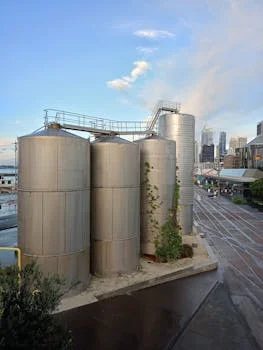
Multi-stage treatment for medical effluent in Marrakech requires a minimum of five distinct processes to meet tertiary standards and ensure the removal of resistant pathogens. The high ambient temperatures in Marrakech (frequently exceeding 40°C in summer) accelerate microbial activity in biological stages but also increase the rate of evaporation, which can concentrate pollutants if not managed through proper tank design.
Stage 1: Pretreatment involves mechanical screening and flow equalization. Utilizing a GX Series Rotary Mechanical Bar Screen with bar spacing of 6–10 mm and a flow rate capacity of 10–500 m³/h is critical for removing large solids like medical plastics and textiles that could damage downstream pumps. Equalization tanks should be sized for at least 8–12 hours of hydraulic retention time (HRT) to buffer the high-strength peaks identified in the Mohammed VI Hospital data.
Stage 2: Primary Treatment focuses on the removal of suspended solids and fats. In Marrakech, where space is often at a premium within hospital grounds, a high-efficiency sedimentation tank or lamella clarifier is preferred. These units operate at surface loading rates of 20–40 m/h, offering a significantly smaller footprint than conventional circular clarifiers. You can review DAF clarifier specs and selection criteria for hospital wastewater to determine if air flotation is necessary for high-fat loads from hospital kitchens.
Stage 3: Secondary Treatment utilizes biological processes to degrade organic matter. The WSZ Series underground integrated sewage treatment system employs an A/O (Anaerobic/Oxic) process, which is effective for nitrogen removal. However, for Marrakech facilities requiring the highest effluent quality for reuse, a MBR system for large Marrakech hospitals requiring high-quality effluent is recommended. MBR technology combines biological degradation with membrane filtration, effectively decoupling HRT from Solids Retention Time (SRT).
Stage 4: Tertiary Treatment is the disinfection phase. Given the prevalence of multi-resistant bacteria in Marrakech hospital effluent, chlorine dioxide disinfection for Marrakech hospital effluent is superior to standard liquid bleach. Chlorine dioxide maintains a longer residual effect and is more effective at penetrating biofilms. Technical studies demonstrate 99%+ kill rates for E. coli and Pseudomonas when dosing is maintained between 0.5 and 2.0 mg/L.
Stage 5: Sludge Management is the final step. A plate and frame filter press (1–500 m²) is used to dewater sludge to a dry cake (25-35% solids). In Marrakech, dewatered sludge must be transported to licensed landfills or incineration facilities, with disposal costs currently averaging MAD 400–800 per ton. Efficient dewatering is essential to minimize these operational expenses.
Technology Comparison: MBR vs. DAF vs. Chlorine Dioxide for Marrakech Hospitals
Membrane Bioreactor (MBR) technology achieves a 99% reduction in pathogenic bacteria compared to the 70-80% efficiency of standard activated sludge systems. Choosing the right technology depends on the hospital's specific effluent goals, available footprint, and operational budget. For Marrakech facilities, the decision matrix usually balances the high capex of advanced systems against the long-term benefits of water reuse and regulatory safety.
| Criteria | MBR (DF Series) | DAF | Chlorine Dioxide |
|---|---|---|---|
| Primary Function | Full Biological + Filtration | Solids/FOG Removal | Disinfection Only |
| Pathogen Removal | 99.9% (Physical Barrier) | 40 – 60% | 99.9% (Chemical Kill) |
| Footprint | Minimal (60% smaller) | Moderate | Very Small |
| Energy Use | High (Air Scouring) | Moderate | Low |
| Capex (MAD) | 1.5M – 5M+ | 800k – 2M | 200k – 1M |
| Opex (MAD/m³) | 120 – 150 | 70 – 100 | 20 – 50 |
| Maintenance | High (Cleaning/CIP) | Moderate | Low (Chemical Refill) |
| Effluent Quality | Reuse Standard | Discharge Standard | N/A (Add-on) |
| Marrakech Pro | Best for limited space | Handles kitchen grease | Scalable for all sizes |
| Marrakech Con | Membrane fouling in heat | Requires chemical dosing | Requires ClO2 monitoring |
For large hospitals in Marrakech, the MBR system is the gold standard. To understand the underlying technology, engineers should examine how flat sheet MBR membranes achieve 99% pathogen removal through physical exclusion. Conversely, a compact hospital wastewater treatment system for Marrakech clinics often combines a smaller biological unit with a chlorine dioxide generator to provide a cost-effective compliance path without the complexity of membrane management.
Compliance Checklist: Meeting Moroccan Water Law 36-15 in Marrakech
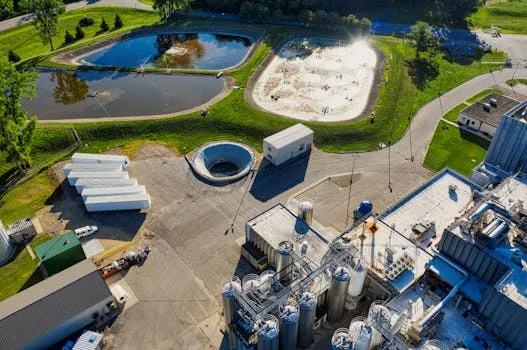
Moroccan Water Law 36-15 requires all healthcare facilities to treat wastewater to specific tertiary standards before discharge into municipal sewers or the environment. Compliance is not merely a technical requirement but a multi-step administrative process involving the Agence du Bassin Hydraulique du Tensift (ABHT) and local municipal authorities in Marrakech. The following checklist provides a roadmap for facility managers to ensure their systems remain in good standing.
- Step 1: Permitting and Documentation: Facilities must submit a comprehensive Environmental Impact Assessment (EIA) and a detailed Wastewater Treatment Plan (WWTP) to the ABHT. In Marrakech, the approval timeline typically spans 3 to 6 months.
- Step 2: Adherence to Discharge Limits: Systems must be designed to meet the specific municipal thresholds for Marrakech. These limits are often more stringent than national averages due to the city's reliance on groundwater.
- Step 3: Rigorous Monitoring: Law 36-15 mandates daily flow monitoring, weekly testing for BOD and COD, and monthly pathogen analysis. All testing must be performed by accredited laboratories located within the Marrakech-Safi region.
- Step 4: Reporting and Audits: Annual compliance reports must be submitted to the ABHT. Facilities should be prepared for unannounced audits, where common violations include inadequate disinfection residuals and improper sludge disposal records.
| Parameter | Marrakech Municipal Limit | Typical Violation Cause |
|---|---|---|
| TSS | < 30 mg/L | Clarifier overloading |
| BOD5 | < 25 mg/L | Insufficient aeration |
| Residual Chlorine | < 0.2 mg/L | Over-dosing without control |
| Pathogens | < 1,000 CFU/100 mL | Inadequate contact time |
Cost Breakdown: Hospital Wastewater Treatment in Marrakech (2025 Data)
Capital expenditure for a medium-sized hospital wastewater plant in Marrakech ranges from MAD 2 million to MAD 5 million based on 2025 market rates. These estimates include equipment procurement, civil engineering works, and professional installation. Operating expenses (Opex) are heavily influenced by Marrakech’s electricity rates, which average approximately MAD 1.20/kWh, and the cost of specialized labor required for system maintenance.
| Hospital Size | Capacity (m³/day) | Capex (MAD) | Opex (MAD/month) |
|---|---|---|---|
| Small Clinic | 5 – 20 | 500,000 – 1.5M | 15,000 – 35,000 |
| Medium Hospital | 50 – 200 | 2M – 5M | 60,000 – 150,000 |
| Large Hospital | 200 – 1,000 | 5M – 15M+ | 200,000 – 600,000 |
Funding for these projects can often be secured through government grants provided by the National Office of Electricity and Drinking Water (ONEE) or through Public-Private Partnership (PPP) models. The Return on Investment (ROI) for advanced systems like MBR is typically realized within 3 to 7 years. This is achieved through the total avoidance of non-compliance fines and significant savings on water procurement; by reusing treated effluent for cooling towers or irrigation, a large hospital in Marrakech can reduce its freshwater demand by up to 40%.
Frequently Asked Questions
What are the discharge limits for hospital wastewater in Marrakech?
Under Moroccan Water Law 36-15 and local Marrakech municipal regulations, discharge limits are typically TSS < 30 mg/L, BOD < 25 mg/L, and E. coli < 1,000 CFU/100 mL. Specific limits may vary based on whether the discharge is to a sewer or a natural water body.
How much does a hospital wastewater treatment plant cost in Marrakech?
Total project costs (Capex) range from MAD 500,000 for small clinics to over MAD 15M for large-scale hospitals. Operational costs (Opex) generally range from MAD 50 to MAD 150 per cubic meter of treated water.
What’s the best treatment technology for a small clinic in Marrakech?
For small clinics with limited budgets and staff, chlorine dioxide generators are often the best choice. They provide high-level disinfection with low capital expenditure and minimal daily maintenance requirements.
Can treated hospital wastewater be reused in Marrakech?
Yes. Treated effluent can be used for irrigation or cooling towers if it meets the reuse standards defined by the WHO and Moroccan authorities. MBR technology is the most reliable way to consistently hit these reuse benchmarks.
How long does it take to get a wastewater treatment permit in Marrakech?
The permitting process through the Agence du Bassin Hydraulique du Tensift (ABHT) usually takes between 3 and 6 months, depending on the complexity of the project and the quality of the environmental impact assessment submitted.