What hospital wastewater treatment in Yanbu must achieve under MARAFIQ rules
Hospital wastewater treatment in Yanbu targets 50–500 m³/day flows with raw COD often 300–1,200 mg/L. Design limits are TSS <30 mg/L, COD <125 mg/L, BOD <25 mg/L, and fecal coliform <1,000 CFU/100 mL. Pathogen spikes cause most failures when only primary settling is used.
pH should stay in the 6–9 band, with residual chlorine monitored at 0.5–2 mg/L after disinfection. Yanbu hospitals mix sanitary, laboratory, and laundry streams that raise COD and microbial counts within one day. Most plants we size in this flow band run equalization first, then biological polishing and dedicated disinfection. Mouwasat Hospital Yanbu upgraded pathogen control in 2024 after microbial limits were missed on routine samples. Older MARAFIQ enforcement notes cited fines of SAR 50,000–200,000 and temporary closure risk for repeated breaches.
MARAFIQ Compliance Checklist for Hospital Wastewater in Yanbu
MARAFIQ discharge planning for Yanbu hospitals starts with TSS (<30 mg/L), COD (<125 mg/L) and BOD (<25 mg/L). pH should stay at 6–9, fecal coliform <1,000 CFU/100 mL, and residual chlorine 0.5–2 mg/L. Prior MARAFIQ guidance notes daily TSS and COD checks, with weekly pathogen indicators. Pre-treatment usually uses 1–3 mm screening plus equalization tanks with 2–4 hours of retention to dampen laundry and kitchen peaks.
Disinfection must deliver about 99.9% pathogen kill on the treated stream. Chlorine dioxide leaves a residual that protects the outfall line. UV avoids chemical residual but adds CAPEX and gives no downstream protection.Disposal cost often rivals chemical OPEX on small sites.
| Parameter | MARAFIQ 2025 Limit | Typical Hospital Effluent (Yanbu) | Treatment Objective |
|---|---|---|---|
| TSS | < 30 mg/L | 100–500 mg/L | Removal via sedimentation, filtration, MBR |
| COD | < 125 mg/L | 300–1,200 mg/L | Removal via biological treatment, advanced oxidation |
| BOD | < 25 mg/L | 150–600 mg/L | Removal via biological treatment |
| pH | 6–9 | 5–10 | Neutralization |
| Fecal Coliform | < 1,000 CFU/100mL | 104–107 CFU/100mL | Disinfection (ClO₂, UV) |
| Residual Chlorine | 0.5–2 mg/L | N/A (post-disinfection) | Monitoring post-chlorination |
According to WHO health-care wastewater training guidance, municipal connection after pre-treatment is preferred when the plant has primary, secondary and tertiary stages. That plant should also remove >95% of bacteria, treat sludge to <1 helminth egg per litre, and meet local rules. Where those conditions are not met, WHO recommends on-site primary–secondary–tertiary treatment before discharge or reuse. For clinics and small hospitals needing a compact package, a Medical & Hospital Wastewater Treatment System is a practical baseline train.
Should a Yanbu hospital use on-site treatment or sewer discharge?
On-site treatment is required when the receiving sewer plant cannot meet tertiary and pathogen criteria. It is also required when infectious, pharmaceutical or laboratory wastes would overload that plant. WHO Module 23 states that large volumes of blood, cytotoxic residues, radioactive liquids and concentrated lab chemicals should not enter the ordinary sewer without segregated handling. Most private clinics we review in Yanbu still send only sanitary and laundry streams to Marafiq after screening and equalization.
WHO guidance on chlorination for wastewater cites a typical free chlorine residual near 0.5 mg/L after 0.5–1 hour contact. The Yanbu monitoring band listed above remains 0.5–2 mg/L residual chlorine at the compliance point. Chlorine dioxide is listed by WHO as an alternative where chlorination by-products or residual control are concerns. If Marafiq acceptance letters demand pathogen and residual proofs, keep disinfection and residual logging on site even when BOD polishing is outsourced.
MBR vs DAF vs chlorine dioxide for Yanbu hospitals
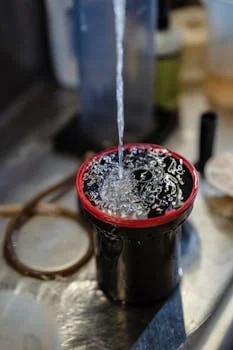
Membrane bioreactor (MBR) trains for hospital flows typically remove 95–98% COD and hold TSS below 5 mg/L when membranes are cleaned on schedule. CAPEX for MBR packages commonly falls in the $1,200–$2,500 per m³/day range, with energy near 0.8–1.2 kWh/m³. Dissolved air flotation (DAF) removes 90–95% TSS and up to 98% FOG. DAF CAPEX is about $600–$1,200/m³/day, and DAF alone does not meet pathogen limits. Chlorine dioxide generators add 99.9% kill at roughly $0.08–$0.15/m³ OPEX when precursor handling and gas detectors are in place.
| Technology | Typical COD Removal (%) | Typical TSS Removal (%) | Pathogen Control | CAPEX Range ($/m³/day) | OPEX Range ($/m³) | Energy (kWh/m³) | Footprint |
|---|---|---|---|---|---|---|---|
| MBR | 95–98 | >99 | Indirect (via TSS removal) | 1,200–2,500 | 0.50–1.00 | 0.8–1.2 | Compact |
| DAF | 40–60 | 90–95 | Minimal | 600–1,200 | 0.30–0.60 | 0.3–0.5 | Moderate |
| Chlorine Dioxide (ClO₂) | N/A (Disinfection only) | N/A | 99.9% kill | 300–800 (Generator cost) | 0.08–0.15 | 0.1–0.2 | Small (Generator) |
For high-strength clinical streams that must clear COD and TSS together, an MBR system is the usual secondary stage. Kitchen and laundry FOG spikes are better cut first with a Dissolved Air Flotation (DAF) machine. Final microbial compliance for Yanbu discharge letters is commonly closed with an on-site chlorine dioxide generator for hospital wastewater disinfection in Yanbu.
What are the main cost drivers for Yanbu hospital plants?
Capital cost for hospital wastewater treatment in Yanbu is often quoted as $120–$450 per m³/day for simplified package trains. MBR packages sit higher at $1,200–$2,500/m³/day, and DAF at $600–$1,200/m³/day. ClO₂ generator CAPEX is typically $300–$800 for the unit alone.Payback periods of 3–7 years appear when avoided fines, water reuse credits, and sludge haulage cuts are counted together.
| Cost Component | Range ($/m³/day) | Typical Contribution to OPEX (%) |
|---|---|---|
| MBR System CAPEX | 1,200–2,500 | N/A |
| DAF System CAPEX | 600–1,200 | N/A |
| ClO₂ Generator CAPEX | 300–800 | N/A |
| Energy | N/A | 40 |
| Chemicals | N/A | 25 |
| Labor | N/A | 15 |
| Maintenance & Consumables | N/A | 20 |
Use this selection checklist before issuing a purchase order. Confirm average and peak flow in m³/day, plus COD, BOD, TSS, FOG and fecal coliform on composites. Match Marafiq acceptance limits and sampling frequency. Check plant-room footprint and power, sludge haulage fees, operator skill for membrane or ClO₂ systems, and spare-parts lead time into Yanbu.
Equipment Checklist for Yanbu’s Hospitals: Mouwasat, King Fahad, and Private Clinics
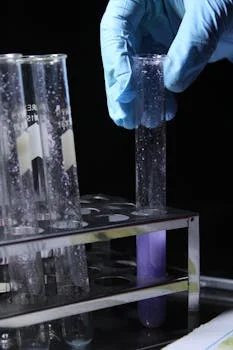
Equipment lists for Mouwasat, King Fahad-scale wards, and private clinics differ mainly by flow, not by process order. Pre-treatment needs rotary bar screens at 1–3 mm and equalization for 2–4 hours. Primary FOG control uses DAF in the 4–300 m³/h band. Secondary polishing uses MBR (10–2,000 m³/day) or activated sludge with 50–80% BOD removal before a polishing filter. Disinfection uses ClO₂ generators (50–20,000 g/h) or UV (30–1,000 m³/h). Dewatering uses plate-frame presses (1–500 m²) or centrifuges (0.5–50 m³/h).
- Pre-treatment: Rotary bar screens (1–3 mm), equalization tanks (2–4 hours retention), pH adjustment systems (6–9 range).
- Primary treatment: DAF systems (4–300 m³/h) for FOG removal.
- Secondary treatment: MBR systems (10–2,000 m³/day) or activated sludge (50–80% BOD removal).
- Disinfection: Chlorine dioxide generators (50–20,000 g/h) or UV systems (30–1,000 m³/h).
- Sludge handling: Plate-frame filter presses (1–500 m²) or centrifuges (0.5–50 m³/h).
For the headworks, a rotary mechanical bar screen keeps rags out of DAF and MBR. For cake solids in the 20–30% range, a plate-frame filter press remains the common Yanbu choice when power and footprint are limited.
Who this is for and next step
This guide is for facility engineers and EPC teams sizing or upgrading hospital effluent plants that discharge to Marafiq in Yanbu. It is not a substitute for a site-specific mass balance or for radioactive and cytotoxic waste permits. If you have flow and lab data ready, request a sized train and compliance review through our hospital wastewater treatment inquiry form.
Frequently Asked Questions
What are MARAFIQ discharge limits for hospitals in Yanbu?
Design targets for Marafiq-connected hospital plants are TSS <30 mg/L, COD <125 mg/L and BOD <25 mg/L. pH should stay at 6–9, with fecal coliform <1,000 CFU/100 mL and residual chlorine 0.5–2 mg/L. Prior guidance cites daily TSS and COD sampling with weekly pathogen checks. Confirm the acceptance letter for your plot before freezing equipment sizes.
What wastewater flow should a Yanbu hospital design for?
Most Yanbu hospitals fall between 50 and 500 m³/day average flow, with laundry and kitchen peaks that need 2–4 hours of equalization. Clinics at the low end often fit package MBR or extended aeration skids. Large wards should meter peak hourly flow before selecting DAF or membrane area.
How does MBR compare with DAF for hospital wastewater?
MBR typically removes 95–98% COD and keeps TSS below 5 mg/L, at CAPEX of about $1,200–$2,500/m³/day and higher energy use. DAF removes 90–95% TSS and up to 98% FOG at roughly $600–$1,200/m³/day but needs a separate disinfection stage. Many Yanbu trains use DAF ahead of biological treatment when kitchen FOG is high.
What drives cost for Yanbu hospital effluent systems?
Main drivers are technology choice (MBR vs DAF vs ClO₂), energy share near 40% of OPEX, chemical dose, sludge haulage, and operator skill. Package CAPEX often lands between $120 and $450 per m³/day for simpler trains, while full MBR packages sit higher. Payback of 3–7 years is common when avoided fines and reuse credits are included.
When is on-site treatment required instead of sewer discharge?
On-site treatment is required when the municipal plant cannot provide tertiary polishing and >95% bacteria removal, or when infectious and chemical wastes would breach sewer acceptance rules. WHO guidance favors municipal connection only after adequate pre-treatment and when local compliance is proven. Otherwise install primary, secondary, tertiary and disinfection on site.