Why Hawaii Municipal Plants Are Moving to Full Secondary Treatment
Hawaii municipal wastewater plants on Oahu are converting from primary to full secondary treatment under a 2010 U.S. EPA consent decree. According to US EPA, Honouliuli had to finish by June 1, 2024, and Sand Island must finish by December 31, 2035. The settlement also required a $1.6 million civil penalty after repeated Clean Water Act §301/402 and NPDES violations.
Honolulu’s two largest plants plus the island-wide sewer network are the focus. EPA estimates secondary treatment will cover about 100 million gallons per day and cut roughly 3 million pounds of TSS and 30 million pounds of BOD each year once both plants meet secondary standards. Collection-system injunctive work alone was estimated at about $3.5 billion; secondary treatment was estimated at more than $1.5 billion at settlement time. Sand Island may seek up to three extra years for documented financial hardship.
Island design constraints dominate equipment selection. Seawater intrusion often pushes sewer TDS above 20,000 ppm during high tides or storms, which can slow floc formation in conventional activated sludge. Hawaii power prices commonly run 2–3× mainland averages, so aeration energy is a first-order CapEx and OpEx driver. Compact trains such as MBR systems for secondary treatment in coastal environments and Aerobic Granular Sludge (AGS) are evaluated where land is scarce and effluent reuse is valuable.
City reporting after the Honouliuli upgrade cites an 85% reduction in marine nutrient loading from the 1.76-mile, 200-foot-deep ocean outfall. That result matters for Pacific island utilities that still rely on deep-ocean discharge. Primary clarification alone no longer satisfies secondary BOD/TSS expectations under the Clean Water Act.
Honouliuli Wastewater Treatment Plant: Engineering Specs and $536M Upgrade
The Honouliuli Wastewater Treatment Plant secondary upgrade cost $536 million and was commissioned in early 2024, ahead of the June 1, 2024 consent-decree deadline. City and County of Honolulu ENV describes aeration basins, turbo blowers, a mixed-liquor distribution box, secondary clarifiers, and a secondary process pump station on an approximately 10-acre expansion.
Most plants we size for saline coastal influent still target effluent TSS at or below 30 mg/L and BOD removal above 85% under dry-weather design. Honouliuli’s secondary train is configured for biological treatment with anoxic/aerobic zones, handling influent COD up to about 500 mg/L while holding effluent TSS ≤30 mg/L. Reported energy intensity for this activated-sludge class train is 0.4–0.6 kWh/m³—lower than many membrane-only flowsheets when land is available. Where land value is high, some Pacific utilities also compare underground integrated sewage treatment layouts to free surface area.
Sludge handling absorbed a material share of the $536M budget. The solids train uses anaerobic digestion plus high-efficiency dewatering aimed at about 20% dry solids to cut hauling cost on an island with limited landfill space. Belt presses remain common, but many owners now specify sludge dewatering for anaerobic digestion output with plate-and-frame presses when cake dryness drives disposal cost.
| Parameter | Pre-Upgrade (Primary) | Post-Upgrade (Secondary) | EPA Target/Benchmark |
|---|---|---|---|
| BOD Removal Efficiency | 30–40% | >90% | >85% (CWA Standard) |
| Effluent TSS | 80–120 mg/L | ≤30 mg/L | ≤30 mg/L |
| Energy Intensity | 0.1–0.2 kWh/m³ | 0.4–0.6 kWh/m³ | 0.5 kWh/m³ (Avg.) |
| Footprint | Original Site | +10 Acre Expansion | N/A |
| Disinfection Method | Minimal/None | Chlorine Dioxide | <200 Fecal Coliform/100mL |
City facility descriptions also list ultraviolet disinfection among completed secondary facilities. Chlorine dioxide generators remain a parallel municipal option when pathogen limits or by-product constraints drive chemical disinfection. Either path must still meet fecal-coliform limits near <200/100 mL under typical Hawaiian NPDES language.
Sand Island Wastewater Treatment Plant: MBR vs. AGS for Secondary Treatment
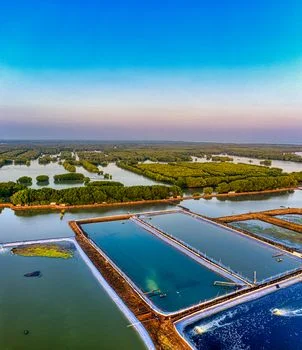
Sand Island Wastewater Treatment Plant is Honolulu’s largest facility and must reach full secondary treatment by December 31, 2035. City ENV describes a two-phase secondary program totaling about $2.5 billion. Phase 1 centers on a membrane bioreactor (MBR) facility sized at about 20 MGD, with completion targeted by December 30, 2026; Phase 1 construction cost is stated at about $700 million. Phase 2, estimated near $1.8 billion and still in planning, covers the remaining capacity through 2035.
MBR Phase 1 targets very low effluent solids (TSS <1 mg/L), which supports industrial reuse or landscape irrigation and reduces potable demand for non-drinking uses. Compact MBR membrane bioreactor modules fit the constrained Sand Island industrial corridor. Average plant flow is reported near 56 MGD, with total plant capacity described around 90 MGD in recent city planning updates.
AGS remains a frequent comparator for Phase 2 biological capacity because dense granules settle faster than floc and can shrink clarifier area. Relative to MBR, AGS often shows about 10–15% lower energy use because it avoids continuous membrane transmembrane-pressure pumping. Hybrid MBR-plus-AGS layouts can need roughly 20% more site area than pure MBR when peak-flow equalization for granules is included. Coastal TDS spikes toward 35,000 ppm stress both options: membranes tolerate salinity as a physical barrier but may need more chemical cleans; AGS needs gradual acclimatization or granules can break up. Stabilizing headworks and pre-treatment options for MBR/AGS systems reduce shock loads before the bioreactors.
| Feature | Membrane Bioreactor (MBR) | Aerobic Granular Sludge (AGS) |
|---|---|---|
| Effluent TSS | <1 mg/L | <10 mg/L |
| Energy Use | 0.8–1.2 kWh/m³ | 0.35–0.55 kWh/m³ |
| CapEx per MGD | $12M – $18M | $8M – $12M |
| Salinity Tolerance | High (Membrane Physical Barrier) | Moderate (Requires Acclimatization) |
| Footprint | Ultra-Compact | Compact (No Clarifiers) |
| Operational Complexity | High (Membrane Fouling Mgmt) | Moderate (SVI Monitoring) |
What Do Wastewater Treatment Plant Upgrades Cost?
Wastewater treatment plant upgrade costs on Oahu span civil works, secondary biology, solids handling, and power. Technology unit costs commonly fall between $8 million and $18 million per MGD for MBR versus AGS classes. Honouliuli’s completed secondary package was $536 million, reflecting a large activated-sludge civil footprint and the 10-acre expansion. Earlier public summaries often framed Sand Island secondary work as “$300M+”; City ENV now states about $700 million for Phase 1 and about $1.8 billion for Phase 2, or roughly $2.5 billion combined. For line-item CapEx/OpEx comparisons, see detailed Honolulu WWTP cost benchmarks.
OpEx separates the technologies over a 10–20 year horizon. Conventional activated sludge often lands near $0.30–$0.50/m³ when land is available. MBR typically runs $0.50–$0.70/m³ because of 0.8–1.2 kWh/m³ aeration/filtration energy and membrane replacement every 7–10 years under municipal duty. AGS usually sits between those bands when granule stability holds. Sand Island Phase 2 OpEx planning in earlier project notes pointed to roughly $2–$5 million per year for energy and membrane-related items on the membrane train alone.
Selection checklist for island secondary upgrades:
- Confirm NPDES BOD/TSS (typically ≤30 mg/L) and pathogen limits.
- Measure salinity peaks (ppm TDS) and storm I/I, not only average influent.
- Price land: CAS needs acreage; MBR/AGS buy footprint with higher equipment CapEx.
- Model power at local $/kWh, including standby generation.
- Budget solids: digestion, dewatering to ≥20% DS, and hauling distance.
- Hold a 9–15 year construction contingency for supply-chain and coastal geotech risk.
- Require SCADA diversion to equalization before any wet-weather bypass.
EPA Compliance Checklist for Clean Water Act §301/402
Clean Water Act §301 and §402 compliance for secondary plants centers on effluent BOD and TSS at or below 30 mg/L, plus pathogen limits in the NPDES permit. The 2010 consent decree is the enforcement schedule for Honolulu’s Hawaii municipal upgrades after SSO and effluent violations. Avoiding further penalties starts with a five-step program that covers pipes, biology, and reporting—not only the reactor technology.
- Step 1: Audit NPDES Permit Limits: Match current limits to secondary BOD/TSS (30 mg/L) and fecal coliform (<200/100 mL). An EPA-compliant disinfection for municipal effluent train is often selected when chemical disinfection is preferred over UV.
- Step 2: Collection System Assessment: Cut Sanitary Sewer Overflows. Honolulu’s Phase 1 program reported about a 95% overflow reduction through pipe rehab and pump-station work. A secondary plant cannot stay compliant if the network surcharges.
- Step 3: Technology Selection for Salinity: Choose MBR, AGS, or CAS against land and TDS profiles. Coastal biomass must tolerate 20,000+ ppm TDS without washout.
- Step 4: Budget 10-Year CapEx and OpEx: Include membrane replacement, power, and chemicals. Earlier Sand Island notes used $2–$5 million per year OpEx for membrane-heavy operation.
- Step 5: Engineering Report Timing: For the 2035 Sand Island deadline, final engineering packages are typically locked around 2026 so a full construction and commissioning window remains, including supply-chain contingency.
Bypass events in heavy rain and reporting lapses still trigger the largest fine risk. Real-time effluent SCADA with automatic diversion to equalization basins is the practical control layer when a membrane train fouls or a clarifier bulks.
Does Arsenic Sulfide Precipitation Apply Here?
Arsenic sulfide precipitation does not drive Oahu municipal secondary upgrades under the 2010 consent decree. That chemistry belongs to industrial arsenic or metals wastewater, not Honolulu sewage BOD/TSS secondary treatment. Municipal plants here size activated sludge, MBR, AGS, disinfection, and solids trains for CWA secondary standards; metals precipitation is a separate industrial pretreatment question.
Who This Is For and Next Step
This page is for municipal engineers, EPC firms, and procurement leads sizing coastal secondary upgrades under consent-decree or NPDES pressure. Look elsewhere if you need only potable RO polish or industrial arsenic metals removal. To match MBR, AGS, disinfection, or dewatering packages to your flow and salinity profile, request a technical quote with your MGD, TDS, and effluent limits.
Frequently Asked Questions
When must Honolulu finish secondary treatment upgrades?
Honouliuli had to complete secondary treatment by June 1, 2024, and Sand Island must finish by December 31, 2035. According to US EPA, Sand Island may seek up to three extra years for documented financial hardship. Phase 1 MBR work at Sand Island is scheduled toward a late-2026 completion window, with Phase 2 carrying capacity through 2035.
How much did the Honouliuli secondary upgrade cost?
The Honouliuli secondary upgrade cost $536 million. City ENV lists aeration basins, turbo blowers, secondary clarifiers, and related civil and SCADA work on roughly 10 acres. The plant was commissioned in early 2024 and turned over to operations before the consent-decree deadline.
What will Sand Island secondary treatment cost?
City ENV budgets about $2.5 billion for Sand Island secondary treatment in two phases. Phase 1 (about 20 MGD MBR) is stated near $700 million; Phase 2 is estimated near $1.8 billion. Earlier public summaries that cited “$300M+” understate the current city budget envelope.
Which secondary technology fits high-salinity island plants?
MBR fits tight sites and reuse-quality effluent (TSS <1 mg/L) but uses 0.8–1.2 kWh/m³ and higher membrane OpEx. AGS or conventional activated sludge can cut energy to about 0.35–0.6 kWh/m³ when land and salinity acclimatization allow. Measure peak TDS and power tariff before locking CapEx.
What effluent limits define secondary compliance in Hawaii?
Secondary compliance typically means BOD and TSS at or below 30 mg/L plus permit pathogen limits, often near <200 fecal coliform/100 mL. Clean Water Act §301/402 and the plant NPDES permit set the enforceable numbers. Disinfection may be UV or chlorine dioxide depending on the selected train and by-product constraints.