Why Healthcare Wastewater Requires Specialized Industrial Systems
The selection of the best healthcare wastewater system for industrial use in 2025 is driven by the increasing complexity of hospital effluent, which contains a volatile mix of high-strength organic matter, multi-drug resistant pathogens, and pharmaceutical residues. Unlike standard municipal sewage, healthcare wastewater often exhibits Chemical Oxygen Demand (COD) levels ranging from 500 to 2,000 mg/L and Biological Oxygen Demand (BOD) between 300 and 1,200 mg/L. These concentrations exceed the capacity of conventional activated sludge systems, which are prone to "bulking" and process failure when exposed to the antibiotic loads typical of medical facilities.
Regulatory scrutiny has intensified, with non-compliance leading to severe financial penalties. Under EPA 40 CFR Part 460 and the EU Urban Waste Water Directive 91/271/EEC, facilities can face fines reaching $50,000 per day for discharging untreated pathogens or exceeding chemical limits. A notable 2023 case in California saw a regional medical center penalized heavily for failing to neutralize disinfectant byproducts and pharmaceutical active ingredients (PAIs) before discharge into the municipal sewer, highlighting the need for robust, on-site industrial-grade treatment.
Beyond compliance, the engineering shift toward MBR systems for healthcare wastewater is motivated by resource recovery. Between 30% and 50% of treated healthcare effluent can be reclaimed for non-potable industrial uses such as cooling tower make-up water, landscape irrigation, or toilet flushing. This reuse potential translates to significant OPEX reduction, with municipal water savings estimated at $0.50 to $2.00 per cubic meter depending on local utility rates (HydropureWater field data, 2025).
| Parameter | Healthcare Effluent Range | Standard Municipal Sewage | Treatment Challenge |
|---|---|---|---|
| COD (mg/L) | 500 - 2,000 | 250 - 450 | High organic load requires advanced oxidation or MBR. |
| BOD (mg/L) | 300 - 1,200 | 150 - 300 | Rapid oxygen depletion; requires high-efficiency aeration. |
| Pathogens | High (E. coli, Viruses, ARBs) | Moderate | Requires 99.9% removal via chlorine dioxide or UV. |
| Pharmaceuticals | 0.1 - 50 μg/L | Trace amounts | Antibiotics inhibit biological treatment stability. |
Healthcare Wastewater Pollutants: Engineering Specifications and Treatment Targets
Engineering a system for healthcare industrial use requires precise targeting of recalcitrant pollutants that bypass standard filtration. Pharmaceutical residues, specifically ibuprofen (5-50 μg/L), carbamazepine (1-10 μg/L), and ciprofloxacin (0.1-5 μg/L), are particularly problematic due to their bio-accumulative nature. Effective removal requires advanced biological processes or membrane separation. For instance, MBR systems for healthcare wastewater achieve over 95% removal efficiency for these compounds by maintaining a high mixed liquor suspended solids (MLSS) concentration and long solids retention times (SRT).
Pathogen reduction remains the primary safety benchmark. To meet WHO 2024 guidelines for safe wastewater use, systems must achieve a 4-log reduction in enteric pathogens. Utilizing chlorine dioxide disinfection for hospital effluent provides a 99.99% kill rate for E. coli and 99.9% for viruses at a dosage of 1-2 mg/L, without the formation of harmful trihalomethanes (THMs) common with traditional chlorination.
healthcare facilities often generate high levels of Fats, Oils, and Grease (FOG) from cafeteria services and specialized labs. Standard clarifiers struggle with these buoyant pollutants. High-performance DAF systems for FOG and TSS removal are engineered to remove 90-98% of grease and suspended solids, preventing the clogging of downstream membrane units or biological reactors.
| Pollutant | Typical Concentration | EPA/EU Discharge Limit | WHO Reuse Standard | Required Efficiency |
|---|---|---|---|---|
| COD | 800 mg/L | <125 mg/L (EU) | <50 mg/L | >93% |
| TSS | 400 mg/L | <35 mg/L | <10 mg/L | >97% |
| Pathogens (E. coli) | 10^6 CFU/100mL | <200 CFU/100mL | <1,000 CFU/100mL | 99.99% |
| Antibiotics | 10 - 50 μg/L | Monitoring required | <1 μg/L | >95% |
MBR vs. DAF vs. Chlorine Dioxide: Side-by-Side Comparison for Healthcare Facilities
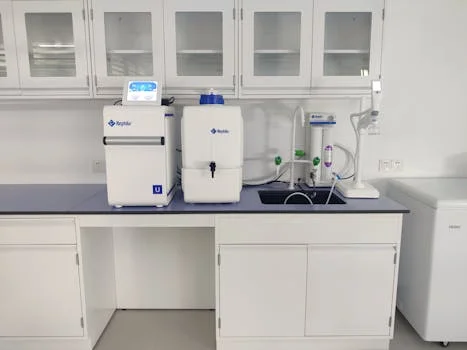
Selecting the optimal equipment configuration depends on the specific pollutant profile and space constraints of the facility. Membrane Bioreactors (MBR) combine biological degradation with membrane filtration (usually <0.1 μm pore size), effectively replacing the secondary clarifier and tertiary filtration stages. This results in a 60% footprint reduction compared to conventional activated sludge, making it the preferred choice for urban hospitals with limited land. HydropureWater MBR systems deliver effluent with turbidity <0.2 NTU, suitable for immediate reuse.
Dissolved Air Flotation (DAF) serves as a critical pre-treatment or primary treatment stage, especially in facilities where blood, oils, and high suspended solids are prevalent. By injecting micro-bubbles into the wastewater, solids are floated to the surface and skimmed off. While DAF is highly effective for TSS and FOG, it does not remove dissolved pharmaceuticals or pathogens to the level required for discharge, necessitating a secondary biological or chemical stage. For broader industrial applications of this technology, engineers may reference DAF systems for high-FOG wastewater.
Chlorine dioxide (ClO2) generators are the gold standard for final disinfection. Unlike chlorine gas or bleach, ClO2 is a selective oxidant that remains effective across a wide pH range (4 to 10) and does not react with ammonia. This is crucial for healthcare wastewater, which often contains fluctuating ammonia levels from cleaning agents and organic waste.
| System Type | Footprint | COD Removal | Pathogen Removal | CAPEX | Best Use Case |
|---|---|---|---|---|---|
| Integrated MBR | Compact (15-50 m²) | 95 - 99% | 99.9% | $150k - $400k | High pharmaceutical loads & reuse |
| DAF | Moderate (20-60 m²) | 40 - 60% | Low | $80k - $250k | High FOG and TSS pre-treatment |
| ClO2 | Small (<5 m²) | Negligible | 99.99% | $20k - $60k | Final disinfection & odor control |
Compliance Checklist: Meeting EPA, EU, and WHO Standards for Healthcare Wastewater
Compliance officers must ensure that the selected industrial wastewater system adheres to a multi-layered regulatory framework. In the United States, EPA 40 CFR Part 460 dictates stringent limits for hospital point-source discharges. To maintain compliance, systems must consistently achieve COD <30 mg/L and BOD <10 mg/L. fecal coliform must be maintained below 200 CFU/100 mL, a target easily met by combining MBR with chlorine dioxide disinfection for hospital effluent.
In the European Union, the Urban Waste Water Directive 91/271/EEC sets the standard for sensitive areas, requiring total nitrogen removal (<10 mg/L) and phosphorus control. MBR technology is particularly adept at nutrient removal due to the ability to maintain precise anoxic and aerobic zones within a single compact footprint. For international projects, it is also helpful to review regional adaptations, such as hospital wastewater compliance in North Africa or healthcare wastewater standards in South Asia.
The step-by-step compliance checklist for 2025 includes:
- Effluent Characterization: Conduct bi-weekly testing for COD, TSS, and specific pharmaceutical markers (e.g., Diclofenac).
- Disinfection Validation: Ensure a minimum contact time (CT value) for chlorine dioxide to guarantee 4-log pathogen reduction.
- Sludge Management: Healthcare sludge is often classified as hazardous; ensure the system includes a dewatering stage to reduce volume and disposal costs.
- Reuse Verification: If reclaiming water for irrigation, meet WHO standards of <1,000 E. coli per 100 mL and <1 intestinal nematode egg per liter.
Cost Breakdown: CAPEX, OPEX, and ROI for Healthcare Wastewater Systems
The financial evaluation of a healthcare wastewater system must account for both initial capital expenditure (CAPEX) and ongoing operational expenses (OPEX). For a facility processing 200 m³/day, an integrated MBR system typically requires a CAPEX of $220,000 to $280,000, inclusive of membranes and control systems. While MBR has a higher initial cost than traditional systems, the ROI is realized through the elimination of secondary clarifiers and the reduction in chemical sludge production.
OPEX for healthcare systems is dominated by energy consumption (0.5-1.5 kWh/m³ for membrane aeration) and chemical dosing. Using a DAF system for FOG and TSS removal as a pre-treatment can actually lower total OPEX by reducing the organic load on the MBR, thereby extending membrane life and reducing aeration energy. Membrane replacement typically occurs every 3 to 5 years, costing approximately $10,000 to $15,000 for a medium-sized facility.
| System Capacity | MBR Total CAPEX | DAF + ClO2 CAPEX | Avg. OPEX ($/m³) |
|---|---|---|---|
| 50 m³/day | $120,000 - $160,000 | $90,000 - $130,000 | $0.45 - $0.60 |
| 200 m³/day | $220,000 - $280,000 | $180,000 - $240,000 | $0.35 - $0.50 |
| 500 m³/day | $350,000 - $450,000 | $300,000 - $380,000 | $0.25 - $0.40 |
ROI Calculation: Payback is calculated as Total CAPEX / (Annual Penalty Avoidance + Annual Water Reuse Savings - Annual OPEX). Most healthcare facilities achieve a payback period of 3.2 to 4.8 years, particularly in regions with high water scarcity or aggressive environmental enforcement.
How to Select the Right System for Your Healthcare Facility
The selection process should follow a rigorous engineering decision framework. First, determine the primary goal: is it basic compliance for sewer discharge, or high-grade treatment for water reuse? For facilities where "unrestricted reuse" (e.g., irrigation of hospital grounds) is the objective, MBR is non-negotiable due to its superior pathogen and pharmaceutical removal capabilities.
Second, evaluate the influent characteristics. If the hospital has large laundry or kitchen facilities, a hybrid approach using a DAF system for FOG and TSS removal followed by an MBR is the most stable configuration. This prevents fats from coating the membranes, which is the leading cause of premature membrane failure in healthcare settings.
Third, consider the operational capacity of your staff. While MBR systems offer the best performance, they require specialized maintenance for membrane cleaning. If the facility lacks technical staff, a simpler automated chlorine dioxide disinfection system paired with a robust biological filter may be more sustainable, provided discharge limits are less stringent.
Decision Framework Summary:
- High Pharmaceutical/Virus Load: Select MBR + Chlorine Dioxide.
- High FOG/Blood Content: Select DAF + Biological Treatment.
- Small Footprint/Urban Site: Select Integrated MBR.
- Strict Budget/Low Compliance Risk: Select DAF + UV/Chlorine Disinfection.
Frequently Asked Questions
What is the best wastewater treatment system for a hospital with high pharmaceutical loads?
MBR systems are considered the best healthcare wastewater system for industrial use when pharmaceutical residues are a concern. Their ability to maintain high biomass concentrations allows for the biodegradation of complex organic molecules that standard systems miss. Adding chlorine dioxide disinfection for hospital effluent ensures that any remaining pathogens are neutralized.
How much does a healthcare wastewater treatment system cost?
CAPEX ranges from $80,000 for basic DAF units to over $400,000 for turnkey MBR systems with 500 m³/day capacity. Operational costs typically range from $0.10 to $0.60 per cubic meter, depending on energy rates and chemical consumption (HydropureWater field data, 2025).
What are the compliance standards for healthcare wastewater?
Key standards include EPA 40 CFR Part 460 (requiring COD <30 mg/L), the EU Urban Waste Water Directive (COD <125 mg/L), and WHO guidelines which mandate <1,000 E. coli per 100 mL for water reuse applications.
Can treated healthcare wastewater be reused?
Yes. With MBR and chlorine dioxide treatment, water quality often exceeds the requirements for cooling towers, irrigation, and toilet flushing, allowing facilities to reuse up to 50% of their effluent.
What maintenance is required for healthcare wastewater systems?
MBR systems require automated backwashing and periodic "Clean-In-Place" (CIP) cycles using citric acid or sodium hypochlorite every 3-6 months. DAF systems require daily checking of the skimmer mechanism and chemical dosing pumps.