Rhode Island hospitals must treat wastewater to meet RI DEM’s stringent discharge limits (e.g., <200 mg/L BOD, <200 mg/L TSS, and pathogen log reductions per 250-RICR-150-10-4) while addressing pharmaceutical residues and medical waste contaminants. With 19 major WWTFs treating 100M gallons/day statewide, onsite systems like MBR or chlorine dioxide disinfection are often required for healthcare facilities to comply with local sewer use ordinances and avoid surcharges. This guide provides 2025 engineering specs, cost benchmarks, and a supplier decision framework for Rhode Island hospitals.
Why Rhode Island Hospitals Need Specialized Wastewater Treatment
Hospital wastewater contains 2–10x higher concentrations of pharmaceuticals (e.g., antibiotics, chemotherapy drugs) than municipal sewage, posing unique challenges for treatment (per EPA 2023 data). These elevated concentrations, along with pathogens and disinfection byproducts (DBPs), necessitate specialized treatment beyond what typical municipal systems are designed to handle. For instance, Rhode Island's regulatory environment, specifically RI DEM’s 250-RICR-150-10-4, requires hospitals to pretreat wastewater if discharging to municipal systems to avoid significant surcharges. The Woonsocket WWTF’s 2024 rate, for example, imposes a surcharge of $0.08/gallon for BOD exceeding 300 mg/L, a limit frequently surpassed by untreated hospital effluent. A 2023 RI DEM inspection highlighted this issue, finding that 60% of sampled hospital effluents exceeded local limits for ciprofloxacin and acetaminophen, as detailed in the RI DOH Wastewater Monitoring Report.
Beyond chemical contamination, hospital wastewater carries a higher risk of infectious pathogens, requiring robust disinfection protocols to protect public health and the environment. The presence of these contaminants demands advanced treatment technologies, such as membrane bioreactors (MBR) or advanced oxidation processes, to effectively reduce their impact. Rhode Island’s cold climate significantly affects biological treatment efficiency. Anaerobic/Anoxic/Oxic (A/O) systems, for example, experience reduced microbial activity at lower temperatures, often requiring insulated tanks or heat exchangers to maintain optimal performance during winter months. This climatic factor adds another layer of complexity to designing effective hospital wastewater treatment in Rhode Island.
Rhode Island’s Regulatory Requirements for Hospital Wastewater
RI DEM’s 250-RICR-150-10-4 mandates pretreatment for hospitals discharging greater than 25,000 gallons/day to municipal systems, such as Providence’s Fields Point WWTF, to ensure compliance with local sewer use ordinances and state water quality standards. These regulations are designed to protect both the receiving municipal treatment plants and the natural environment from the unique contaminants found in healthcare wastewater. Beyond direct discharge limits, EPA 40 CFR Part 503 applies to sludge disposal, stipulating that Class A biosolids, suitable for unrestricted land application, must contain less than 1,000 MPN fecal coliforms/g TS; RI DEM actively enforces this standard for any land application in the state. Local sewer use ordinances, like those in Providence, further prohibit the discharge of ‘medical waste,’ specifically defined as effluent containing greater than 10^3 CFU/mL E. coli or greater than 10^2 CFU/mL Enterococcus, directly into the sewer system without prior treatment.
The RI DOH’s wastewater monitoring program, updated for 2025, now includes quarterly testing for SARS-CoV-2 and influenza A/B in hospital effluents, with data shared directly with the CDC’s National Wastewater Surveillance System. This initiative underscores the critical public health role of effective hospital wastewater management. For facilities planning new installations or upgrades, RI DEM’s Planning & Design program typically takes 6–8 weeks for plan review, as confirmed by Matt Puglia (401-537-4153), a key contact for wastewater facility planning. Understanding these timelines and specific contacts is crucial for navigating the permitting process efficiently.
| Parameter | RI DEM Discharge Limit (250-RICR-150-10-4) | Typical Untreated Hospital Effluent | RI-Specific Note |
|---|---|---|---|
| BOD (mg/L) | <200 mg/L (for pretreatment) | 250–500 mg/L | Exceedances incur surcharges (e.g., Woonsocket WWTF) |
| TSS (mg/L) | <200 mg/L (for pretreatment) | 200–400 mg/L | Impacts municipal plant performance and costs |
| Fecal Coliforms (MPN/100mL) | Pathogen log reductions (site-specific) | >105 MPN/100mL | Providence prohibits >103 CFU/mL E. coli |
| Ciprofloxacin (μg/L) | No direct limit, but local limits apply to overall toxicity | 50–500 μg/L | 60% of RI hospital effluents exceeded local limits in 2023 (RI DOH) |
Engineering Specifications for Hospital Wastewater Treatment Systems
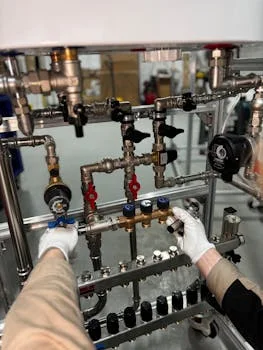
Disinfection systems for compact medical wastewater treatment systems for Rhode Island hospitals must account for cold-weather efficacy and disinfection byproduct (DBP) formation. Chlorine dioxide (ClO₂) is preferred in Rhode Island due to its superior cold-weather efficacy, achieving 99.99% pathogen kill at 2–4 mg/L with a 30-minute contact time, alongside lower DBP formation compared to traditional chlorine (per EPA 2024 benchmarks). Chlorine dioxide generators for cold-weather disinfection in Rhode Island are engineered to maintain consistent output even in sub-freezing conditions, critical for year-round compliance. For pharmaceutical removal, MBR systems for pharmaceutical removal in Rhode Island hospitals achieve 92–97% removal of challenging compounds like ciprofloxacin and carbamazepine, reducing influent concentrations from 50–500 μg/L to effluent levels below 10 μg/L, as demonstrated in a RI DEM 2023 pilot study.
Sludge handling is another critical component, especially for hospitals generating significant biomass. Plate and frame filter presses effectively reduce sludge volume by 70–80%, a method recommended by RI DEM’s Jack Segal (401-537-4168) for hospitals generating over 500 kg/month of sludge. This reduction minimizes disposal costs and logistical challenges. Cold-weather design considerations are paramount; underground integrated sewage treatment systems, like HydropureWater’s WSZ series, incorporate insulated tanks and heat tracing to ensure consistent biological activity and prevent freezing in Rhode Island’s average winter temperatures of -5°C to 2°C. A typical process flow for a Rhode Island hospital wastewater treatment system includes initial screening, equalization to buffer flow and load variations, followed by an A/O (Anaerobic/Anoxic/Oxic) biological treatment stage, an MBR for enhanced nutrient and pharmaceutical removal, ClO₂ disinfection, and finally, sludge dewatering to prepare solids for offsite disposal.
| Parameter | Specification | RI-Specific Note |
|---|---|---|
| Disinfection Efficacy (Pathogen Kill) | 99.99% log reduction (e.g., E. coli, Enterococcus) | ClO₂ preferred for cold-weather performance (2–4 mg/L, 30 min CT) |
| Pharmaceutical Removal (e.g., Ciprofloxacin) | 92–97% removal efficiency; effluent <10 μg/L | Achieved by MBR systems (RI DEM 2023 pilot study) |
| Sludge Volume Reduction | 70–80% for dewatered sludge cake | Plate and frame filter presses recommended for >500 kg/month |
| Operating Temperature Range (Biological) | Optimal 15–35°C; functional down to 5°C with insulation/heating | Insulated tanks and heat tracing critical for RI winters (-5°C to 2°C) |
| Effluent BOD/TSS | <10 mg/L (MBR output) | Exceeds RI DEM pretreatment limits for municipal discharge |
Cost Breakdown: Hospital Wastewater Treatment in Rhode Island
Capital costs for onsite hospital wastewater treatment systems in Rhode Island typically range from $120–$250 per gallon of daily treatment capacity, reflecting the complexity and advanced technology required for medical effluent. For a 10,000 GPD MBR system, this translates to an initial investment between $1.2 million and $2.5 million, which includes equipment, engineering, permitting, and installation tailored to Rhode Island’s specific environmental and construction standards. Operating and maintenance (O&M) costs generally fall between $0.05–$0.12 per gallon, with RI DEM’s 2024 O&M manual citing an average of $0.08/gallon specifically for chlorine dioxide disinfection, a common method in the state. These costs encompass energy consumption, chemical reagents, membrane cleaning, routine maintenance, and labor.
Permitting fees for a RI DEM Order of Approval range from $5,000–$15,000, varying based on the system’s size, complexity, and potential environmental impact assessment requirements. Hospitals discharging to municipal systems face significant surcharges for BOD/TSS exceedances, typically $0.05–$0.15 per gallon. Providence’s 2025 rate, for example, is $0.12/gallon for BOD exceeding 300 mg/L, making onsite pretreatment a financially prudent decision. A comprehensive cost-benefit analysis conducted by the RI Hospital Association in 2023 indicates that onsite systems can achieve a return on investment (ROI) within 3–5 years for hospitals generating over 50,000 gallons/day, primarily through avoided surcharges, reduced hauling costs, and enhanced regulatory compliance.
| Cost Category | Typical Range (USD) | RI-Specific Factors |
|---|---|---|
| Capital Costs (per GPD capacity) | $120–$250/gallon | Includes permitting, installation, cold-weather design |
| O&M Costs (per gallon) | $0.05–$0.12/gallon | Energy, chemicals, labor, membrane cleaning (e.g., $0.08/gallon for ClO₂) |
| Permitting Fees (RI DEM Order of Approval) | $5,000–$15,000 | Varies by system size and complexity |
| Surcharges (avoided, per gallon) | $0.05–$0.15/gallon (for BOD/TSS exceedances) | Providence 2025 rate: $0.12/gallon for BOD >300 mg/L |
| ROI (typical) | 3–5 years | For hospitals >50,000 GPD, driven by avoided surcharges and compliance |
Equipment Comparison: Top Systems for Rhode Island Hospitals
Evaluating MBR systems for pharmaceutical removal in Rhode Island hospitals against other technologies requires considering footprint, energy use, pharmaceutical removal efficacy, and cold-weather performance. MBR systems are highly advantageous for space-constrained hospitals due to their compact footprint, typically 0.5–1 m²/m³/day, offering superior effluent quality with high removal rates for pharmaceuticals and pathogens. However, they generally incur higher O&M costs, ranging from $0.10–$0.15/gallon, primarily due to membrane cleaning and aeration requirements. Alternatively, Dissolved Air Flotation (DAF) combined with chlorine dioxide generators for cold-weather disinfection in Rhode Island offers a lower capital cost, typically $80–$150/gallon, but demands a larger footprint (1.5–2 m²/m³/day) and requires dedicated space for chemical storage and handling for the dissolved air flotation machine.
Underground integrated systems, such as HydropureWater’s WSZ series, are ideal for rural Rhode Island hospitals like South County Hospital, where landscaping or aesthetic constraints are a priority. These systems are fully automated and can be discreetly installed, but their capacity is generally limited to less than 80 m³/h. When deciding on a system, a crucial decision point is sludge management: if your hospital generates over 100 kg/month of sludge, prioritizing systems equipped with plate and frame filter presses is essential for efficient dewatering and reduced disposal costs. This decision tree helps optimize both operational efficiency and compliance with Rhode Island’s stringent sludge disposal regulations.
| System Type | Footprint (m²/m³/day) | Key Advantages (RI) | Key Disadvantages (RI) | Pharmaceutical Removal | Cold-Weather Performance |
|---|---|---|---|---|---|
| MBR (Membrane Bioreactor) | 0.5–1 | Compact, high effluent quality, excellent for urban settings | Higher O&M costs, membrane fouling potential | Excellent (92–97%) | Good (requires insulation/heating below 5°C) |
| DAF + ClO₂ Disinfection | 1.5–2 | Lower capital cost, effective for TSS/FOG, robust disinfection | Larger footprint, chemical handling/storage, less pharmaceutical removal | Moderate (primarily particulate-bound) | Good (ClO₂ efficacy maintained) |
| Underground Integrated (e.g., WSZ) | 1–1.5 (hidden) | Aesthetic, automated, ideal for rural/landscaped areas | Limited capacity (<80 m³/h), access for maintenance | Good (with advanced biological stages) | Excellent (insulated, often heated) |
Supplier Decision Framework for Rhode Island Hospitals
Selecting a wastewater treatment supplier in Rhode Island requires a structured approach focused on local compliance, technical expertise, and support. Step 1 is to verify RI DEM compliance by requesting Order of Approval numbers for past Rhode Island projects completed by the supplier. This provides tangible proof of their ability to navigate the state’s regulatory landscape. Step 2 involves requesting detailed cold-weather performance data, such as MBR flux rates at 2°C or chlorine dioxide generator output at -5°C, to ensure the proposed system will operate effectively during Rhode Island’s winter months. Step 3 focuses on comparing local support, prioritizing suppliers with established Rhode Island-based service contracts and readily available technicians over out-of-state providers.
Step 4 necessitates evaluating the supplier’s sludge disposal partnerships, specifically ensuring they collaborate with RI DEM-approved haulers for Class A biosolids, which is critical for compliant and cost-effective waste management. Finally, Step 5 is to check for RI-specific training and certifications, such as alignment with RI DEM’s wastewater operator certification program, to ensure hospital staff can competently operate and maintain the system. Red flags during this process include suppliers unable to provide RI DEM-approved plans for previous projects or proposing systems that require more than 30% greater energy consumption than Rhode Island’s 2025 efficiency standards, indicating potential long-term operational and environmental liabilities.
Frequently Asked Questions
What are the primary challenges for hospital wastewater treatment in Rhode Island?
Rhode Island hospitals face unique challenges, primarily due to high concentrations of pharmaceuticals (e.g., antibiotics, chemotherapy drugs), infectious pathogens, and disinfection byproducts in their wastewater. Additionally, RI DEM’s stringent discharge limits (e.g., 250-RICR-150-10-4) and local sewer use ordinances require advanced pretreatment to avoid significant surcharges from municipal wastewater treatment facilities. The state's cold climate also impacts biological treatment efficiency, necessitating specialized engineering for insulation and heating.
How does RI DEM regulate hospital wastewater discharge?
RI DEM regulates hospital wastewater through its 250-RICR-150-10-4 regulations, mandating pretreatment for facilities discharging over 25,000 gallons/day to municipal systems. This ensures compliance with specific BOD, TSS, and pathogen reduction targets. RI DEM also enforces EPA 40 CFR Part 503 for sludge disposal, requiring Class A biosolids to meet strict fecal coliform limits for land application. The agency reviews and approves all treatment system plans through its Planning & Design program.
What are the best disinfection methods for hospital effluent in cold climates?
Chlorine dioxide (ClO₂) is widely considered the best disinfection method for hospital effluent in Rhode Island's cold climate. It maintains high pathogen kill efficacy (99.99%) even at low temperatures (2–4 mg/L, 30-minute contact time) and produces fewer harmful disinfection byproducts compared to traditional chlorine. UV disinfection can also be effective but may require higher intensity or longer contact times in cold, turbid water to achieve equivalent results.
What is the cost range for an onsite hospital wastewater treatment system in Rhode Island?
Capital costs for onsite hospital wastewater treatment systems in Rhode Island typically range from $120 to $250 per gallon of daily capacity, translating to $1.2M–$2.5M for a 10,000 GPD system, including installation and permitting. Operational and maintenance (O&M) costs generally run $0.05–$0.12 per gallon. Permitting fees for RI DEM's Order of Approval are an additional $5,000–$15,000. These costs are often offset by avoided municipal surcharges and potential ROI within 3-5 years for larger facilities.
How can hospitals ensure compliance with EPA 40 CFR Part 503 for sludge disposal in Rhode Island?
To comply with EPA 40 CFR Part 503 for sludge disposal in Rhode Island, hospitals must ensure their dewatered sludge meets Class A biosolids standards, requiring less than 1,000 MPN fecal coliforms/g TS. This often necessitates robust sludge treatment, such as anaerobic digestion or composting, followed by dewatering with equipment like plate and frame filter presses. Hospitals should partner with RI DEM-approved haulers and disposal facilities that adhere to these strict regulations for land application or other beneficial reuse options.