Maine’s industrial wastewater treatment regulations require facilities discharging 25,000+ gallons/day or 5%+ of dry weather flow to enroll in pretreatment programs (per Westbrook-Gorham and Bangor municipal codes). The Maine DEP enforces Title 38 MRSA Section 412-B, mandating plan submissions for new systems and technical reviews for expansions. Key compliance thresholds include TSS <30 mg/L, BOD <25 mg/L, and pH 6.0–9.0 (EPA 2024 benchmarks). This guide provides 2025 engineering specs, cost benchmarks, and equipment selection criteria tailored to Maine’s regulatory environment.
Maine’s Industrial Wastewater Treatment Regulatory Framework: What Facilities Need to Know
The Maine Department of Environmental Protection (DEP), specifically the Division of Water Quality Management, oversees all industrial discharges to ensure they do not compromise municipal infrastructure or state water quality. Under Title 38 MRSA Section 412-B, any facility planning a new drainage system, sewage treatment, or industrial waste disposal must submit comprehensive engineering plans for DEP review. This statute applies to both direct dischargers and those utilizing Publicly Owned Treatment Works (POTW).
For facilities discharging into municipal sewers, the "Significant Industrial User" (SIU) designation is a critical threshold. In Maine, the Industrial Pretreatment Program typically targets facilities that meet any of the following criteria: an average process wastewater flow of 25,000 gallons per day or more; a flow that contributes 5% or more of the average dry weather hydraulic or organic capacity of the receiving POTW; or a discharge designated as having a reasonable potential to adversely affect the POTW’s operation. To calculate dry weather flow, engineers must utilize the DEP’s Sewer Extension Report Form, comparing facility peak flows against the 7Q10 (the lowest 7-day average flow that occurs once every 10 years) of the receiving water body or the municipal plant's rated capacity.
Compliance is monitored through the EPA’s 2024 benchmarks, which Maine adopts to prevent interference and pass-through. Failure to meet these limits results in surcharges or enforcement actions. The following table outlines the primary pollutants of concern and their typical Maine-specific discharge limits:
| Parameter | Discharge Limit (Daily Max) | Regulatory Basis |
|---|---|---|
| Total Suspended Solids (TSS) | <30 mg/L | Maine DEP / EPA 2024 |
| Biochemical Oxygen Demand (BOD5) | <25 mg/L | Title 38 MRSA §412-B |
| pH Range | 6.0 – 9.0 S.U. | Standard Pretreatment |
| Oil & Grease (FOG) | <10 mg/L | Municipal Sewer Codes |
| Total Copper | <1.0 mg/L | EPA Priority Pollutant |
| Total Zinc | <2.0 mg/L | EPA Priority Pollutant |
The permitting process in Maine is rigorous. Plan submissions must occur 90 to 180 days before construction. Rejections often stem from incomplete hydraulic calculations or a failure to account for seasonal temperature fluctuations, which significantly impact biological treatment efficiency in Maine’s climate.
Engineering Specifications for Industrial Wastewater Treatment in Maine: Influent, Effluent, and Process Parameters
Designing an effective treatment system requires a precise understanding of the raw influent characteristics unique to Maine’s core industries. Food processing (blueberries, potatoes, seafood) and pulp and paper production generate high organic loads, while metalworking and textiles introduce heavy metals and synthetic dyes. According to 2023 EPA sector profiles, Maine food processing effluent can reach BOD levels of 5,000 mg/L, requiring significant pretreatment before municipal discharge.
To meet the narrative standards of "no visible sheen" and "no toxicity to aquatic life," engineers must focus on four primary process parameters: Hydraulic Retention Time (HRT), Sludge Retention Time (SRT), Food-to-Microorganism (F/M) ratio, and dissolved oxygen (DO) levels. In Maine, biological systems like Membrane Bioreactors (MBR) must be designed with an SRT of 15–30 days to ensure stable nitrification during winter months when water temperatures drop below 10°C.
Pretreatment starts with mechanical separation. Utilizing rotary mechanical bar screens is essential for removing large solids (e.g., potato peels, fiber clumps) that can clog downstream pumps. Following screening, equalization tanks must be sized to handle 1.5 to 2.0 times the average daily flow to buffer pH swings and chemical spikes. For chemical conditioning, PLC-controlled chemical dosing systems are required to precisely inject coagulants like ferric chloride or alum, especially in facilities where influent pH varies hourly.
| Industry Sector | Avg. Influent TSS (mg/L) | Avg. Influent BOD (mg/L) | Recommended Pretreatment |
|---|---|---|---|
| Food Processing | 800 – 2,500 | 1,500 – 5,000 | DAF + Biological (MBR) |
| Pulp & Paper | 500 – 2,000 | 300 – 1,000 | Screening + DAF |
| Metalworking | 100 – 500 | <100 (High COD) | Chemical Precipitation + DAF |
| Textiles | 200 – 600 | 500 – 1,200 | Color Removal + MBR |
Process flow for a typical Maine industrial facility includes: 1. Screening (GX Series) → 2. Equalization → 3. pH Adjustment (Automatic Dosing) → 4. Primary Treatment (DAF) → 5. Secondary Treatment (MBR, if required for direct discharge) → 6. Sludge Dewatering.
Treatment Technology Comparison: DAF vs. MBR vs. Chemical Dosing for Maine’s Industrial Wastewater
Selecting the right technology depends on the specific discharge goals—whether the facility aims for municipal sewer compliance or direct surface water discharge. Dissolved Air Flotation (DAF) is the industry standard in Maine for removing Fats, Oils, and Grease (FOG) and Total Suspended Solids (TSS). DAF systems for Maine’s industrial wastewater treatment needs achieve removal efficiencies of 92–97% for TSS and up to 99% for FOG. These systems are particularly effective for Maine’s seafood and dairy processors, where high-density solids must be floated and skimmed before the water enters a biological stage.
For facilities requiring high-quality effluent (TSS <1 mg/L, BOD <5 mg/L) or those with limited land area, integrated MBR systems for space-constrained Maine facilities offer a compact alternative to traditional clarifiers. MBRs combine biological degradation with membrane filtration. While energy-intensive (0.8–1.2 kWh/m³), the footprint reduction is significant for urban facilities in Portland or Bangor. Engineers must choose between flat-sheet membranes (easier to clean) and hollow-fiber membranes (higher packing density), with the latter often preferred for large-scale pulp and paper applications.
Chemical Dosing Systems are the backbone of any Maine pretreatment strategy. Because Maine’s raw water is often soft and slightly acidic, pH adjustment is critical for effective coagulation. Using PLC-controlled chemical dosing for Maine’s pretreatment programs allows for real-time adjustments based on influent sensors. In cold weather, coagulant doses (e.g., Polyaluminum Chloride) may need to increase by 15–20% to account for increased water viscosity and slower reaction kinetics. For complex waste streams, such as those found in Maine’s growing pharmaceutical sector, a hybrid approach—combining DAF for primary solids removal and MBR for secondary organic polishing—is the most robust solution for 2025 compliance.
| Technology | Primary Target | Removal Efficiency | Energy Use |
|---|---|---|---|
| DAF | TSS, FOG, Insoluble BOD | 90% - 98% | Low (0.3-0.5 kWh/m³) |
| MBR (Integrated) | Soluble BOD, Bacteria | >99% | High (0.8-1.2 kWh/m³) |
| Chemical Dosing | Heavy Metals, Phosphorus | 85% - 95% | Negligible |
Cost Breakdown for Industrial Wastewater Treatment in Maine: Equipment, Installation, and Compliance
Budgeting for wastewater upgrades in Maine involves more than the sticker price of the equipment. Procurement officers must account for specialized installation requirements and high operational expenses. A standard DAF system typically ranges from $50,000 to $300,000 depending on flow rate, while a full-scale MBR system for a large facility can exceed $1.2 million. On a per-gallon basis, treatment costs for DAF range from $0.50 to $2.00 per 1,000 gallons, primarily driven by chemical consumption.
Installation in Maine presents unique geographic challenges. Civil works must account for a frost depth of 42 to 48 inches, necessitating deeper excavation for piping and reinforced concrete foundations to prevent heaving. Labor costs for certified installers and electricians in the Northeast range from $80 to $120 per hour. the permitting timeline—often 6 to 12 months—can lead to "soft costs" in the form of interim disposal fees or production delays.
Operational expenses (OpEx) are dominated by energy, chemicals, and sludge disposal. In Maine, sludge disposal is a significant line item, with landfilling or incineration costs ranging from $100 to $300 per ton. To mitigate these costs, many facilities invest in sludge dewatering solutions for Maine’s industrial wastewater treatment to reduce sludge volume by 70–80% before transport. For more on cold-climate sludge management, see our guide on sludge dewatering best practices for cold climates.
| Expense Category | Estimated Cost (USD) | Maine-Specific Factor |
|---|---|---|
| DAF Equipment | $50,000 – $300,000 | Flow-dependent (10-500 m³/day) |
| MBR System (Integrated) | $200,000 – $1.2M | Footprint/Effluent quality needs |
| Installation & Civil Works | 40% – 60% of equip. cost | 48" Frost depth requirements |
| Sludge Disposal | $100 – $300 / ton | Landfill tipping fees |
| DEP Permitting Fees | $500 – $5,000 | Based on discharge volume |
Non-compliance is the most expensive "cost" of all. Per 2024 EPA guidelines, fines for violating pretreatment standards can reach $25,000 per day per violation. For a detailed comparison of regional costs, refer to our analysis of wastewater treatment plant costs and ROI.
Maine DEP Compliance Checklist: Step-by-Step Guide for Industrial Facilities
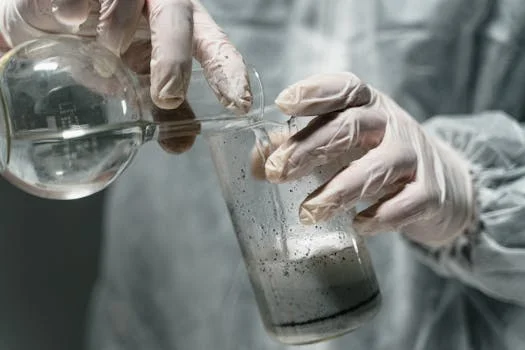
Navigating the path to a fully compliant treatment system requires a structured approach. Follow these six steps to ensure your facility meets both state and local mandates:
- Determine Applicability: Calculate your average daily discharge. If you exceed 25,000 gallons per day or 5% of the local POTW's dry weather flow, you must enroll in an Industrial Pretreatment Program. Consult the DEP’s Sewer Extension Report Form for baseline calculations.
- Conduct Wastewater Characterization: Perform a 7-day composite sampling of your raw influent. Analyze for TSS, BOD, COD, pH, FOG, and heavy metals. All testing must be performed by a laboratory certified under the Maine Environmental Laboratory Accreditation Program (ELAP).
- Select and Design Technology: Match your treatment system to the characterization data. Ensure the design includes redundancy for critical components (e.g., dual dosing pumps) and account for Maine’s temperature extremes by insulating outdoor tanks.
- Submit Plans to DEP: File your engineering drawings and process flow diagrams under Title 38 MRSA Section 412-B. Include calculations for HRT and chemical dosing rates. Address sludge handling and disposal routes explicitly to avoid rejection.
- Permitting and Construction: Allow 90–180 days for DEP review. During construction, implement best practices for erosion control and ensure all underground piping is below the 48-inch frost line.
- Startup and NetDMR Reporting: Upon commissioning, train operators on the chemical selection guide for Maine’s industrial pretreatment programs. All discharge data must be reported monthly through the Maine DEP NetDMR system.
Frequently Asked Questions
What are the penalties for non-compliance with Maine’s industrial pretreatment program? Penalties include fines up to $25,000 per day per violation, as established by EPA 2024 guidelines and enforced by Maine DEP. Persistent violators may face permit revocation, mandatory facility shutdowns, or court-ordered upgrades. Recent enforcement actions in Maine have targeted facilities for unmonitored pH excursions and exceeding heavy metal limits.
Can small industrial facilities in Maine discharge directly to surface water? Only if they obtain an individual NPDES (National Pollutant Discharge Elimination System) permit, which requires meeting effluent limits far stricter than those for municipal sewer discharge. Most facilities discharging under 25,000 gallons/day find it more cost-effective to utilize municipal-industrial wastewater treatment partnerships to avoid the high costs of direct-discharge monitoring and liability.
How does Maine’s cold climate affect wastewater treatment system design? Cold water increases viscosity, slowing down chemical reactions and settling rates. Biological systems like MBR require insulated tanks or heat tracing to maintain an operating temperature of at least 10–15°C for microbial activity. Chemical dosing systems may require 10–20% higher coagulant dosages in winter to achieve the same TSS removal efficiency as in summer.
What funding or grants are available for industrial wastewater treatment upgrades in Maine? The Maine DEP’s Clean Water State Revolving Fund (CWSRF) offers low-interest loans (typically 2–3%) for compliance-related upgrades. While primarily for municipalities, certain industrial-municipal partnerships qualify. Additionally, the EPA provides technical assistance grants for facilities implementing pollution prevention (P2) technologies.
How do I choose between a DAF system and an MBR for my Maine facility? Choose DAF if your primary concern is removing FOG and suspended solids (e.g., food processing) before discharging to a sewer. Choose MBR if you need to meet very low BOD/TSS limits for direct discharge or if you have limited space. DAF has lower capital costs but higher chemical costs, while MBR has higher capital and energy costs but produces superior effluent quality.