Wastewater Treatment Plant Cost in Nebraska 2026: Engineering Breakdown with Local Data, Compliance & ROI Calculator
In Nebraska, wastewater treatment plant costs in 2026 range from about $9 million for small-city renovations (for example, Norfolk's $9.378M project) to $411 million for a large expansion contract (Omaha's Papillion Creek McCarthy GMP). City reporting places the broader Papillion Creek capital plan near $547–$565 million. Costs track capacity, technology, and permit limits. Conventional plants often land at $3–$8 per gallon of daily capacity; advanced MBR or DAF builds can reach $10–$15 per gallon. Nebraska's Clean Water State Revolving Fund (CWSRF) and federal EPA grants can offset 30–70% of CAPEX.Projects must still meet NPDES permits and Nebraska nutrient targets cited in planning work as 3 mg/L total nitrogen (TN) and 1 mg/L total phosphorus (TP).
Why Nebraska's Wastewater Treatment Costs Are Rising in 2026
Nebraska's 500+ wastewater treatment plants serve about 1.9 million residents and face rising costs from aging assets, growth, and tighter permits. An estimated 60% of the state's wastewater infrastructure is over 30 years old, as per a Nebraska DEQ 2023 report, so many systems need major upgrades. Omaha's $411 million Papillion Creek expansion agreement—the McCarthy guaranteed maximum price inside a larger capital plan reported near $547–$565 million—moved through City Council review in 2026 after a September 2024 pre-construction award. Growth in Douglas County, reported at about 2.1% per year, adds flow. Smaller cities carry heavy renovation bills too. Norfolk's $9.378 million renovation in 2024 targeted an aging system that saw 12 overflow events in 2023, according to the Norfolk Daily News.
Nebraska nutrient reduction targets of 3 mg/L TN and 1 mg/L TP also push capital higher. Meeting those levels often needs MBR, DAF, or biological nutrient removal, which can raise CAPEX 20–40% versus conventional activated sludge. The 2019 floods exposed capacity and resilience gaps. Ethanol and meatpacking growth add high-strength industrial loads that force stronger pretreatment and higher unit costs at both municipal and industrial plants.
Wastewater Treatment Plant Cost Breakdown: CAPEX vs. OPEX in Nebraska
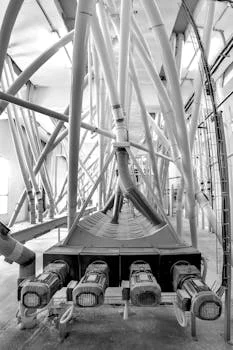
Nebraska budgets split cleanly into CAPEX and OPEX. CAPEX for 2026 typically runs $3–$15 per gallon of daily capacity. Conventional activated sludge often costs $3–$5 per gallon; MBR systems can reach $10–$15 per gallon. Norfolk's $9.378 million renovation, per its contract documents, put about 40% into equipment (pumps, aerators), 30% into civil works (tanks, piping), 20% into electrical and controls, and 10% into permitting and engineering.
OPEX in Nebraska averages $0.20–$0.50 per 1,000 gallons treated. Energy, labor, and chemicals dominate. According to EPA 2024 benchmarks, energy is about 30% of OPEX, labor 25%, and chemicals 20%. Omaha's Papillion Creek plant reports about $12 million annual OPEX, with $4.5 million for energy (mostly aeration) and $3 million for biosolids disposal, as detailed in its 2023 annual report. Cold winters raise digester heating and freeze protection costs. Rural plants also pay more to haul chemicals and sludge.
| Cost Category | Description | Typical Range (Nebraska, 2026) | Example (Norfolk's $9.378M Renovation) |
|---|---|---|---|
| CAPEX (Capital Expenditure) | One-time costs for design, construction, and equipment acquisition. | $3–$15 per gallon of daily capacity |
|
| OPEX (Operational Expenditure) | Ongoing costs for energy, labor, chemicals, maintenance, and disposal. | $0.20–$0.50 per 1,000 gallons treated |
|
Cost by Plant Size: Nebraska Benchmarks for Municipal and Industrial Projects
Plant capacity sets the first cost band for Nebraska municipal and industrial projects. Small municipal plants at 0.1–0.5 MGD typically need $2–$8 million CAPEX and $0.30–$0.60 per 1,000 gallons OPEX. Seward's proposed $5 million plant for 0.3 MGD sits in that band. Medium plants at 1–5 MGD usually need $15–$50 million CAPEX and $0.20–$0.40 per 1,000 gallons OPEX. Norfolk's 2.5 MGD plant and $9.378 million renovation show upgrade costs inside the medium range. Large plants above 10 MGD run $100–$411 million CAPEX and $0.15–$0.30 per 1,000 gallons OPEX, as with Omaha's 120 MGD Papillion Creek plant at the $411 million expansion contract level.
Industrial plants serving ethanol or meatpacking face high-strength influent and different economics. Typical industrial CAPEX runs $5–$30 million, with OPEX at $0.40–$1.00 per 1,000 gallons. Tyson Foods' $12 million plant in Dakota City is one Nebraska industrial benchmark. Build Nebraska-specific contingencies into the estimate: remote sites can add about +15% for transport and logistics, and cold-climate insulation and heating can add about +10%, especially when comparing containerized and permanent wastewater plants.
| Plant Size/Type | Daily Capacity (MGD) | Estimated CAPEX (Nebraska, 2026) | Estimated OPEX (per 1,000 gallons) | Nebraska Example |
|---|---|---|---|---|
| Small Municipal | 0.1–0.5 | $2M–$8M | $0.30–$0.60 | Seward (0.3 MGD proposed, $5M) |
| Medium Municipal | 1–5 | $15M–$50M | $0.20–$0.40 | Norfolk (2.5 MGD renovation, $9.378M) |
| Large Municipal | 10+ | $100M–$411M | $0.15–$0.30 | Omaha Papillion Creek (120 MGD expansion, $411M) |
| Industrial (High-Strength) | Varies (typically 0.5–10) | $5M–$30M | $0.40–$1.00 | Tyson Foods, Dakota City ($12M plant) |
Treatment Technology Cost Comparison: MBR vs. DAF vs. Conventional Systems in Nebraska
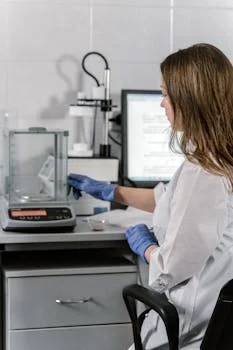
Technology choice in Nebraska turns on CAPEX, OPEX, and whether the plant can hit nutrient limits. Conventional activated sludge remains the baseline at about $3–$5 per gallon of daily capacity. It often reaches 85–92% BOD removal, yet many plants still need added denitrification to approach a 3 mg/L TN target.
MBR systems cost more—about $10–$15 per gallon—but deliver 95–99% BOD removal and can meet TN and TP limits without a separate tertiary train. That profile fits nutrient-driven upgrades such as Lincoln's Theresa Street plant. Nebraska's 2025 nutrient limits favor MBR systems for 99% pathogen removal and compact footprints over conventional trains despite 2–3x higher CAPEX, as noted in 2024 DEQ guidance.
DAF systems at about $6–$10 per gallon fit meatpacking and ethanol pretreatment with high FOG and TSS. DAF systems remove 90–98% of FOG/TSS, making them cost-effective for Nebraska's meatpacking and ethanol plants. Cargill's DAF system in Schuyler reports about 97% TSS removal. Omaha's ongoing advanced-process upgrade shows the municipal path when pathogen removal and nutrient compliance drive design.
| Technology | CAPEX (per gallon of daily capacity) | Key Advantages | Typical Removal Efficiency (BOD/TSS) | Nebraska DEQ Compliance Suitability |
|---|---|---|---|---|
| Conventional Activated Sludge | $3–$5 | Lower initial cost, established technology | 85–92% | Requires additional denitrification for 3 mg/L TN limit |
| Membrane Bioreactor (MBR) | $10–$15 | High effluent quality, compact footprint, meets TN/TP limits | 95–99% | Excellent for 3 mg/L TN, 1 mg/L TP compliance |
| Dissolved Air Flotation (DAF) | $6–$10 | Effective for high FOG/TSS industrial wastewater | 90–98% (FOG/TSS) | Ideal for industrial pretreatment to meet categorical limits |
Funding and Financing Options for Nebraska Wastewater Projects
Nebraska funding can cut net CAPEX for both municipalities and industry. The Nebraska CWSRF is the core tool. Earlier summaries often list a flat 1.5% rate and 20-year repayment covering 100% of eligible costs. The NDWEE SFY 2026 Intended Use Plan instead sets combined interest and fees between 1.5% and 2.5%, with repayment terms up to 30 years. Seward secured a $5 million CWSRF loan for its proposed plant. Federal EPA grants can cover up to 75% for qualifying small and rural projects, such as Grand Island's $2.15 million property-acquisition grant.
USDA Rural Development grants fund 45–75% for towns under 10,000 residents; Sidney's 2023 upgrade used a $1.2 million USDA grant. Nebraska's Water Infrastructure Improvement Act, enacted as LB1014, allocates $50 million annually for 2025–2027 and prioritizes disadvantaged communities. Industrial owners often use private financing or tax-exempt bonds, as with Tyson Foods' $12 million plant financed at 3.2%. Stacking a CWSRF loan with an EPA or USDA grant works when applicants meet NDWEE deadlines and eligibility rules.
| Funding Source | Type of Aid | Typical Coverage/Terms | Eligibility (Nebraska) | Nebraska Example |
|---|---|---|---|---|
| Nebraska Clean Water State Revolving Fund (CWSRF) | Low-interest loan | 1.5% interest, 100% eligible costs, 20-year repayment | Municipalities, public entities | Seward ($5M loan for 0.3 MGD plant) |
| EPA Grants | Grant | Up to 75% funding | Small/rural communities, specific project types | Grand Island ($2.15M for property acquisition) |
| USDA Rural Development Grants | Grant | 45–75% funding | Towns <10,000 residents | Sidney ($1.2M for 2023 upgrade) |
| Nebraska Water Infrastructure Improvement Act (LB1014) | Grant | $50M/year (2025–2027) | Prioritizes disadvantaged communities | State-wide competitive funding |
| Private Financing (e.g., Bonds) | Loan/Bond | Variable interest, tax-exempt options | Industrial facilities, larger municipalities | Tyson Foods ($12M plant at 3.2% interest) |
Nebraska-Specific Compliance Requirements and Cost Implications
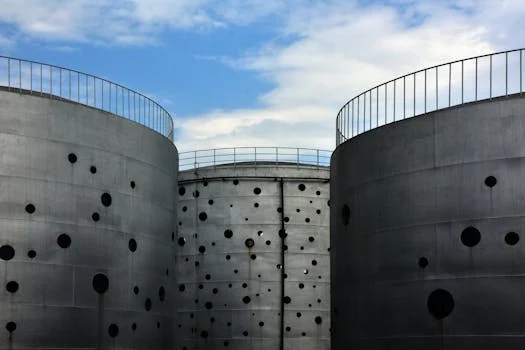
Nebraska compliance rules drive process selection and CAPEX. NPDES permits cover every discharge. State permits can be tighter than federal baselines, including a 3 mg/L TN target versus a common federal planning reference near 10 mg/L. Those limits push plants toward advanced nutrient removal and higher capital spend.
Nutrient targets of 3 mg/L TN and 1 mg/L TP by 2027, as outlined in NE DEQ 2025 guidance, remain a major cost driver. Meeting them usually means BNR, MBR, or DAF-plus-biological trains with higher CAPEX and OPEX. Meatpacking and ethanol plants must also hit categorical pretreatment limits (for example, 100 mg/L BOD for meat processing). That pretreatment step can add $1–$5 million CAPEX, according to EPA 2024 data.
Biosolids rules also matter. Nebraska restricts Class B land application without specific DEQ approval, so many plants move to Class A production or alternate disposal. Omaha spends about $3 million per year on Class A biosolids disposal. Unauthorized discharges or overflows can trigger consent decrees—such as the driver behind Omaha's $411 million project—and fines from $10,000 to $500,000 per violation. Budget continuous monitoring, reporting, and upgrades such as compact ozone disinfection systems to meet Nebraska DEQ's pathogen limits.
ROI Calculator: How to Justify Wastewater Treatment Plant Costs in Nebraska
Nebraska ROI cases mix direct OPEX savings, avoided fines, and grant matches. Municipal CAPEX payback often falls in a 5–15 year band when funding and avoided penalties are included. Norfolk's $9.378 million renovation is projected to save about $1.2 million per year by avoiding overflow fines and remediation.
OPEX savings matter as much as CAPEX. MBR can cut energy use by up to 30% versus older conventional aeration. Lincoln's Theresa Street plant cut aeration costs by about $400,000 per year after its MBR upgrade. Avoided DEQ fines also change the math: violations can run $10,000–$500,000 each, including Omaha's $250,000 fine for a 2020 overflow event.
State and federal matches shrink net CAPEX. EPA and USDA grants can offset 30–70% of capital. Grand Island's $2.15 million property purchase with a 75% grant left a net outlay just over $500,000. A simple Nebraska payback check is:
Payback Period (Years) = (Total CAPEX - Total Grants) / (Annual OPEX Savings + Annual Avoided Fines)
Worked example for a hypothetical 1 MGD municipal plant:
- Total CAPEX: $20,000,000 (for example, an MBR system)
- Total Grants Secured: $6,000,000 (30% of CAPEX from CWSRF/EPA)
- Annual OPEX Savings: $300,000 (energy efficiency of new tech)
- Annual Avoided Fines: $200,000 (preventing two major violations per year)
Payback Period = ($20,000,000 - $6,000,000) / ($300,000 + $200,000)
Payback Period = $14,000,000 / $500,000
Payback Period = 28 years
Use that framework with your real grant stack and fine exposure. For a broader view, see how Indiana's industrial wastewater treatment costs compare to Nebraska's benchmarks.
| ROI Component | Description | Typical Impact (Nebraska) | Example |
|---|---|---|---|
| CAPEX Payback Period | Time to recover initial investment through savings. | 5–15 years for municipal; longer for industrial. | Norfolk's $9.378M project saves $1.2M/year in avoided fines. |
| OPEX Savings | Reduction in annual operational costs. | MBR can reduce energy by 30% vs. conventional. | Lincoln's MBR upgrade cut aeration costs by $400K/year. |
| Avoided Fines | Financial penalties avoided by compliance. | $10K–$500K per violation by NE DEQ. | Omaha's 2020 overflow fine: $250K. |
| Funding Matches | Grants/loans reducing net CAPEX. | 30–70% reduction in net CAPEX. | Grand Island's $2.15M property acquired with 75% grant. |
Who This Is For, Who Should Look Elsewhere, and Next Step
This guide serves municipal utility directors, plant engineers at Nebraska facilities handling 0.1–120 MGD, and industrial pretreatment managers in meatpacking, ethanol, and food processing. It is not a fit for septic-only residential sites, stormwater-only projects, or out-of-state facilities—those should consult local state agencies instead. For Nebraska-specific design, costing, or a side-by-side MBR vs. DAF comparison for your influent, request a tailored engineering quotation with your flow rate, influent BOD/TSS/TN/TP, and target effluent limits.
Frequently Asked Questions
How much does it cost to set up a small wastewater treatment plant in Nebraska?
A small Nebraska plant at 0.1–0.5 MGD typically costs $2–$8 million in CAPEX, depending on technology and site conditions. Seward's proposed 0.3 MGD plant is budgeted at $5 million. Remote logistics and cold-climate insulation can push a project toward the high end of that band.
What are the ongoing costs of running a wastewater treatment plant in Nebraska?
Ongoing OPEX in Nebraska averages $0.20–$0.50 per 1,000 gallons treated. Energy, chemicals, and labor are the largest line items. Omaha's Papillion Creek plant spends about $12 million per year on OPEX, with large shares going to aeration energy and biosolids disposal.
Can Nebraska municipalities get funding for wastewater treatment plant upgrades?
Yes. Nebraska municipalities can use CWSRF loans, EPA grants up to 75%, and USDA Rural Development grants at 45–75% for towns under 10,000. Earlier summaries cite a flat 1.5% CWSRF rate; the SFY 2026 IUP sets combined interest and fees at 1.5%–2.5%. Seward secured a $5 million CWSRF loan in 2025. For comparison, explore how Florida's package plant costs and regulations differ from Nebraska's.
What are Nebraska's wastewater treatment plant compliance requirements?
Nebraska plants must hold NPDES permits and meet nutrient reduction targets of 3 mg/L TN and 1 mg/L TP by 2027, plus state biosolids rules. Noncompliance can bring large penalties. Omaha's $411 million Papillion Creek project was driven in part by a consent decree tied to system and nutrient compliance pressure.
How do I choose between MBR and conventional wastewater treatment for my Nebraska project?
Choose MBR when you must hit 3 mg/L TN without a large tertiary add-on and can fund $10–$15 per gallon CAPEX. Choose conventional at $3–$5 per gallon when budget is tight and you can add denitrification later. Lincoln's Theresa Street MBR upgrade, reported at $12 million, shows the nutrient-compliance path many Nebraska plants now evaluate.