In Hyderabad, wastewater treatment plant costs vary widely based on capacity, technology, and sector. For a 5000 LPH residential plant using Activated Sludge Process (ASP), expect ₹8–12 lakhs CAPEX with ₹1.2–1.8 lakhs/year OPEX. Municipal plants scale to ₹3866 crore for city-wide systems (Hyderabad’s 2025 target). Key cost drivers include PCB compliance (₹2–5 lakhs for noise/smell-proofing), energy consumption (0.3–0.6 kWh/m³), and sludge disposal (₹500–1200/ton). This guide breaks down costs by sector, technology, and compliance requirements to help you calculate ROI and select the right solution.
Why Wastewater Treatment Plant Costs in Hyderabad Are Rising in 2025
Hyderabad’s population grew 32% from 2011 to 2023, increasing sewage generation to an estimated 1,950 MLD according to the Hyderabad Metropolitan Water Supply and Sewerage Board (HMWSSB) 2024 reports. This rapid urbanization has outpaced existing infrastructure, forcing the municipal government and private developers to invest in high-capacity, decentralized treatment solutions. The scale of this challenge is reflected in the city's 2025 target to treat 100% of its daily sewage, a project estimated at ₹3866.41 crore. For private developers and industrial engineers, this means stricter enforcement of discharge standards and higher entry costs for compliant systems.
Regulatory pressure is a primary driver of rising costs. In 2024, the Pollution Control Board (PCB) Hyderabad began enforcing stricter noise limits (less than 55 dB) and odor limits (less than 10 OU/m³). Meeting these standards often requires the addition of acoustic enclosures for blowers and advanced biofiltration systems for odor control, which typically adds ₹2–5 lakhs to the base CAPEX of a standard sewage treatment plant (STP). with 50% groundwater depletion in urban zones like Hitech City and Gachibowli, there is a technical shift toward "reuse-grade" effluent. Transitioning from secondary treatment to tertiary systems involving Ultrafiltration (UF) or Membrane Bioreactors (MBR) increases initial investment by 20–30%.
Land valuation also plays a critical role in engineering decisions. With industrial land costs in Hyderabad ranging from ₹12,000 to ₹25,000 per square meter, the footprint of a treatment plant becomes a significant financial liability. This has led to a surge in demand for a compact underground STP for Hyderabad’s space-constrained sites, which, while 15–25% more expensive than conventional surface-level designs due to excavation and reinforced concrete requirements, offers a higher long-term value by freeing up surface area for parking or landscaping.
Wastewater Treatment Plant Cost Breakdown by Sector: Residential, Commercial, and Municipal
Residential wastewater treatment plants in Hyderabad, particularly for gated communities and apartment complexes, are typically sized between 5 KLD and 20 KLD. For these projects, the Activated Sludge Process (ASP) or Sequential Batch Reactor (SBR) technologies are standard. A 5–20 KLD plant generally requires a CAPEX of ₹8–15 lakhs. The primary cost drivers in the residential sector are noise and odor mitigation (₹2–4 lakhs), automation to reduce manual labor (₹1–2 lakhs), and annual sludge handling, which can cost between ₹50,000 and ₹1 lakh depending on the disposal frequency and local municipal charges.
Commercial sectors, including hotels, hospitals, and malls, face higher costs due to more complex influent characteristics. For a 20–100 KLD plant, CAPEX ranges from ₹15–40 lakhs. Hospitals, in particular, must comply with stringent guidelines for medical waste, often requiring specialized PCB-compliant medical wastewater treatment for Hyderabad’s hospitals. These systems incorporate advanced disinfection stages, such as ozone or UV, adding ₹3–7 lakhs to the project. Malls and hotels often require DAF pre-treatment for Hyderabad’s high-FOG industrial wastewater to handle high concentrations of fats, oils, and grease (FOG) from food courts and kitchens, which adds approximately ₹2–5 lakhs to the pre-treatment phase.
Municipal projects represent the highest expenditure tier, ranging from ₹50 lakhs for small community plants to several thousand crores for city-wide infrastructure. These projects are heavily influenced by land acquisition costs (₹50–200 crores for major hubs) and extensive pipeline networks (₹200–500 crores). Tertiary treatment for municipal reuse, including Reverse Osmosis (RO), can add ₹100–300 crores to large-scale MLD projects. The engineering complexity is further increased by varying influent Biochemical Oxygen Demand (BOD) and Total Suspended Solids (TSS) levels across different city zones.
| Sector | Typical Capacity | Technology Used | Estimated CAPEX (INR) | Primary Cost Driver |
|---|---|---|---|---|
| Residential | 5–50 KLD | ASP / SBR | ₹8L – ₹25L | Odor & Noise Compliance |
| Commercial | 20–200 KLD | MBR / DAF + ASP | ₹15L – ₹60L | Tertiary Treatment / FOG Removal |
| Industrial | 50–500 KLD | MBR / RO / ETP | ₹40L – ₹1.5Cr | Chemical Oxygen Demand (COD) Loading |
| Municipal | 1–1000 MLD | SBR / MBR / ASP | ₹50L – ₹3866Cr | Land Acquisition & Pipeline Networks |
Technology Comparison: CAPEX and OPEX for ASP, MBR, and DAF Systems in Hyderabad
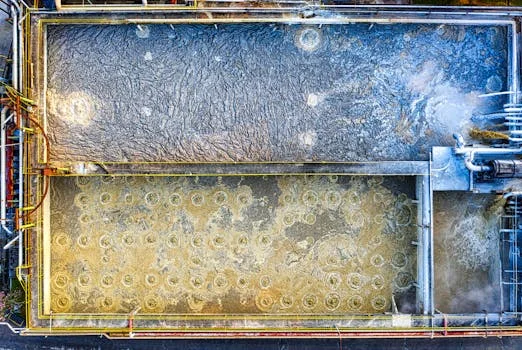
The Activated Sludge Process (ASP) remains the most common choice for low-budget projects in Hyderabad due to its relatively low CAPEX of ₹10–20 lakhs for 5–50 KLD systems. Annual OPEX for ASP is typically between ₹0.8 and ₹1.5 lakhs. However, engineers must account for its large footprint (1.5–2.5 sq. meter/KLD) and the necessity of biofilters to manage odors, which are often a point of contention in densely populated areas like Banjara Hills. Energy consumption for ASP in Hyderabad, given the local tariff of ₹7–9/kWh, remains a significant portion of the OPEX.
For projects requiring high-quality effluent and a small footprint, the Membrane Bioreactor (MBR) is the superior engineering choice. An integrated MBR system for reuse-grade effluent in Hyderabad’s water-scarce areas costs between ₹25 and ₹50 lakhs for a 5–50 KLD capacity. While the CAPEX is higher, the footprint is reduced to 0.5–1 sq. meter/KLD. The primary OPEX concern for MBR is membrane replacement, which occurs every 5–7 years and costs approximately ₹3–5 lakhs. Despite this, the ability to produce effluent with BOD <10 mg/L makes it ideal for toilet flushing and cooling tower make-up water.
Dissolved Air Flotation (DAF) is primarily utilized as a pre-treatment technology for industrial or commercial wastewater with high oil content. A 5–50 KLD DAF system costs ₹15–30 lakhs CAPEX. It is highly effective at removing 90–95% of FOG, thereby protecting downstream biological systems from fouling. When comparing sludge dewatering cost comparison for Hyderabad’s industrial plants, DAF systems often produce a more concentrated sludge, potentially reducing disposal volumes and costs.
| Technology | CAPEX (50 KLD) | Annual OPEX | Footprint Req. | Effluent Quality (BOD) |
|---|---|---|---|---|
| ASP | ₹12L – ₹18L | ₹1.2L – ₹1.8L | High (100-120 sqm) | <30 mg/L |
| MBR | ₹30L – ₹45L | ₹2.5L – ₹3.5L | Low (40-50 sqm) | <5 mg/L |
| DAF (Pre-treatment) | ₹18L – ₹25L | ₹1.5L – ₹2.0L | Medium (60-80 sqm) | N/A (FOG focused) |
Hyderabad PCB and CPCB Compliance: Costs and Engineering Requirements
The Hyderabad Pollution Control Board (PCB) enforces specific localized standards that go beyond the general Central Pollution Control Board (CPCB) norms. For instance, any new STP installation within the Hyderabad Metropolitan Development Authority (HMDA) limits must adhere to noise limits of <55 dB during the day and <45 dB at night. Achieving these levels often requires the installation of twin-lobe blowers within acoustic chambers, adding roughly ₹1.5 lakhs to the mechanical budget. Odor control is equally scrutinized, with bio-scrubbers or activated carbon filters becoming mandatory for plants near residential balconies.
CPCB’s 2024 updated norms require all plants with a capacity greater than 10 KLD to include tertiary treatment stages, such as Pressure Sand Filters (PSF) and Activated Carbon Filters (ACF), followed by disinfection. For medical facilities, the requirements are even stricter, necessitating 99% pathogen removal. This is typically achieved through UV sterilizers or chlorine dioxide generators. You can compare how hospital wastewater treatment costs compare to alternatives like MBR and DAF to determine the most cost-effective compliance path for healthcare projects.
The administrative cost of compliance includes the Consent-to-Establish (CTE) and Consent-to-Operate (CTO) fees, which range from ₹50,000 to ₹2 lakhs depending on the project's capital investment. Failure to comply with these norms in Hyderabad can result in heavy penalties, ranging from ₹1 lakh to ₹5 lakhs per violation, and in extreme cases, the disconnection of electricity and water services. Sludge management is another critical compliance area; industrial sludge must be disposed of at TSDF (Treatment, Storage, and Disposal Facilities) at costs of ₹500–1200 per ton, whereas treated organic sludge can sometimes be repurposed as manure.
ROI Calculator: How to Justify Wastewater Treatment Plant Costs in Hyderabad
The return on investment (ROI) for wastewater treatment in Hyderabad is primarily driven by the high cost of freshwater and the avoidance of regulatory fines. With municipal water tariffs ranging from ₹20 to ₹60 per KL and private water tankers costing upwards of ₹150 per KL during peak summer months, recycling water provides immediate financial relief. A 50 KLD plant that recycles 80% of its water can save approximately ₹4.3 lakhs annually (assuming ₹30/KL average cost). When compared to Andhra Pradesh’s 2025 wastewater treatment cost benchmarks, Hyderabad’s higher water tariffs actually lead to a faster payback period.
To calculate the payback period, use the following formula:
ROI Formula: (Annual Savings from Water Reuse + Annual Penalty Avoidance + Revenue from Treated Water Sales) / (CAPEX + Annual OPEX) = Payback Period in Years.
For example, a 50 KLD MBR plant with a CAPEX of ₹35 lakhs and an OPEX of ₹2.5 lakhs/year might save ₹12 lakhs in water costs and avoid potential PCB fines of ₹2 lakhs/year. The payback period would be approximately 3.3 years. commercial entities can generate revenue by selling excess treated water to nearby construction sites or industrial units for ₹10–30 per KL. Government subsidies under schemes like AMRUT 2.0 or the Swachh Bharat Mission can also reduce the initial CAPEX by 20–40% for eligible municipal and community-led projects in the Telangana region.
How to Select the Right Wastewater Treatment Plant Vendor in Hyderabad
Vendor selection in the Hyderabad market requires a rigorous evaluation of technical competence and local regulatory familiarity. A critical first step is verifying that the vendor’s technology is PCB-approved. Many suppliers offer "low-cost" solutions that fail to meet the <10 OU/m³ odor threshold, leading to litigation from neighbors and eventual plant closure. Ask for specific case studies within Hyderabad, such as the Amberpet STP or projects handled by established firms like Inhibeo Water Solutions, to gauge their ability to handle local influent conditions and soil types.
After-sales support is the most significant long-term cost factor. Annual Maintenance Contracts (AMC) in Hyderabad typically range from ₹50,000 to ₹2 lakhs. Ensure the vendor guarantees a response time of 24–48 hours, as a non-functional STP can lead to sewage backups and immediate PCB intervention. Warranties should be a minimum of 1 year for mechanical equipment and 5–10 years for membrane components in MBR systems. Red flags during the procurement process include a lack of site visits, vague quotes that do not specify equipment brands (e.g., Grundfos pumps or Siemens PLCs), and the absence of pilot testing for plants exceeding 50 KLD.
- Check Certifications: Ensure the vendor provides ISO-certified equipment and has valid CTE/CTO documentation for their designs.
- Evaluate Footprint: For urban Hyderabad, prioritize vendors who specialize in containerized or underground integrated systems.
- Sludge Strategy: Choose a vendor that offers integrated dewatering solutions to minimize disposal costs.
- Energy Efficiency: Request data on specific energy consumption (kWh per m³ of water treated).
Frequently Asked Questions
Q: How much does it cost to set up a sewage treatment plant in Hyderabad?
A: For a 5000 LPH (approx. 120 KLD) residential plant, CAPEX ranges from ₹8–12 lakhs for ASP technology to ₹25–35 lakhs for MBR. OPEX is typically ₹1.2–3 lakhs per year. Municipal-scale plants for the city can cost upwards of ₹50 lakhs for small clusters to ₹3866 crore for city-wide infrastructure.
Q: Are wastewater treatment plants profitable in Hyderabad?
A: Yes, particularly for commercial and industrial users. By replacing expensive tanker water (₹150/KL) with treated effluent (costing roughly ₹15-25/KL to produce), most commercial plants achieve a payback within 2.5 to 4 years. Residential plants are usually cost centers but are necessary to avoid PCB fines of ₹1–5 lakhs.
Q: What are the PCB compliance requirements for STPs in Hyderabad?
A: Key requirements include noise levels below 55 dB, odor levels below 10 OU/m³, and effluent parameters such as BOD <30 mg/L and TSS <100 mg/L. Medical facilities must also ensure 99% pathogen removal through advanced disinfection.
Q: How long does it take to install a sewage treatment plant in Hyderabad?
A: Smaller residential or commercial package plants (5–100 KLD) can be installed in 4–12 weeks. Large municipal projects take 12–36 months due to land acquisition and extensive pipeline work. Integrated or containerized systems can reduce installation time by up to 50%.
Q: What is the cost of sludge disposal for a wastewater treatment plant in Hyderabad?
A: Landfill disposal costs between ₹500 and ₹1200 per ton. Investing in on-site dewatering equipment like a filter press can reduce these costs to ₹200–500 per ton, although it requires an initial CAPEX of ₹5–10 lakhs.