Wastewater Treatment Plant Cost in Guayaquil 2025: Engineering Breakdown with Local Data, ROI & Equipment Selection
In Guayaquil, wastewater treatment plant costs in 2025 range from US$1.2M–$5M for industrial systems (50–500 m³/day) to $50M–$310M for municipal plants (10,000–1.5M population equivalent). Key drivers include treatment technology (e.g., MBR vs. conventional), local compliance costs (e.g., Ecuador’s Decreto 1215 discharge standards), and site-specific factors like land availability and sludge disposal. This guide provides engineering-level cost breakdowns, ROI benchmarks, and a supplier checklist tailored to Guayaquil’s regulatory and economic context.
Why Guayaquil Needs Wastewater Treatment Plants: Costs of Non-Compliance vs. Investment
Guayaquil is currently undergoing a massive infrastructure shift as municipal authorities and environmental regulators tighten enforcement of discharge standards. For industrial facility managers, the financial risk of inaction now outweighs the capital investment of a modern wastewater treatment plant (WWTP). Under Ecuador’s Decreto 1215 (2001), which remains the cornerstone of environmental regulation, municipal and industrial discharges must meet strict limits: BOD < 30 mg/L, TSS < 35 mg/L, and fecal coliform < 1,000 MPN/100mL. Failure to meet these parameters often results in aggressive enforcement by Interagua, the city's water utility, with fines ranging from $5,000 to $50,000 per year for recurring industrial non-compliance.
The cost of non-compliance is best illustrated by a recent case in Guayaquil’s industrial sector. A local textile factory, struggling with high organic loads, paid approximately $120,000 in environmental fines over an 18-month period in 2023. By investing $1.8M in a 200 m³/day MBR system, the facility not only eliminated fines but also achieved a 3.2-year ROI through water reuse and reduced discharge fees. This transition is critical because, as of 2023 municipal reports, nearly 80% of Guayaquil’s wastewater historically entered the Guayas River untreated or with only primary screening. This lack of treatment has been linked by WHO data to periodic cholera and dengue outbreaks, prompting the city to mandate secondary and tertiary treatment for all new developments.
Wastewater Treatment Plant Costs in Guayaquil: 2025 Benchmarks by Project Scale
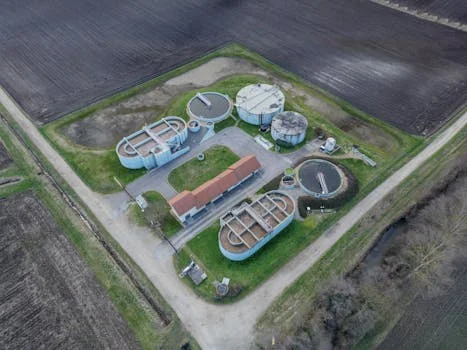
Estimating the cost of a WWTP in Guayaquil requires distinguishing between municipal-scale public works and decentralized industrial systems. Municipal WWTP costs generally range from $15 to $30 per population equivalent (PE). For example, a mid-sized municipal plant serving 100,000 PE typically requires a $15M–$20M investment, whereas large-scale projects like those managed by ACCIONA for 1.5M PE can reach $310M depending on the inclusion of advanced sludge digestion and energy recovery systems.
For industrial applications, costs are calculated per m³/day of capacity, typically falling between $2,000 and $10,000 per m³/day. A small-scale food processing plant (50 m³/day) might see a project cost of $1.2M, while a larger industrial park system (500 m³/day) can exceed $5M. These figures include the standard engineering stages: Preliminary (5–10%), Primary (10–15%), Secondary (30–40%), Tertiary (20–30%), and Sludge Management (15–20%).
| Project Scale | Capacity Metric | Estimated CAPEX (USD) | Primary Cost Driver |
|---|---|---|---|
| Small Industrial | 50 m³/day | $1.2M – $1.5M | Technology Selection (e.g., MBR) |
| Large Industrial | 500 m³/day | $4.5M – $5.5M | Automated Sludge Management |
| Small Municipal | 100,000 PE | $15M – $25M | Land Acquisition & Civil Works |
| Large Municipal | 1.5M PE | $280M – $310M | Advanced Tertiary & Energy Recovery |
Specific cost drivers in Guayaquil include high industrial land costs, which range from $50 to $150 per m² in zones like Vía a Daule, and import tariffs of 15–25% on specialized mechanical equipment. Additionally, Interagua connection fees for industrial users can add $2,000 to $10,000 to the initial budget.
CAPEX Breakdown: Cost per Treatment Stage and Technology in Guayaquil
Capital expenditure (CAPEX) is heavily influenced by the required effluent quality. If the goal is simple discharge to the sewer, primary treatment may suffice; however, for river discharge or reuse, advanced secondary and tertiary stages are mandatory.
- Preliminary Treatment ($50,000–$200,000): Includes automated bar screens, grit chambers, and flow equalization. This stage is critical for protecting downstream pumps from Guayaquil’s high-grit wastewater.
- Primary Treatment ($100,000–$500,000): Utilizing sedimentation tanks or lamella clarifiers. These systems achieve 50–70% TSS removal. For high-fat industrial waste, DAF systems for Guayaquil’s industrial FOG and TSS removal are the standard choice.
- Secondary Treatment ($500,000–$2M): Conventional activated sludge (CAS) costs roughly $3–$5/m³/day, whereas MBR systems for Guayaquil’s high-efficiency wastewater treatment needs cost $5–$8/m³/day but provide 85–95% COD removal and a much smaller footprint.
- Tertiary Treatment ($200,000–$1M): To meet fecal coliform standards, UV systems ($2–$5/m³) or chlorine dioxide disinfection for Guayaquil’s municipal and industrial WWTPs ($1–$3/m³) are employed.
- Sludge Management ($150,000–$800,000): A sludge dewatering solution for Guayaquil’s WWTPs is essential to reduce disposal volumes, with plate-and-frame presses achieving 20–35% solids concentration.
| Treatment Stage | Technology Option | Cost Range (USD) | Guayaquil Adjustment |
|---|---|---|---|
| Secondary | Conventional Activated Sludge | $500k – $1.2M | +10% for Seismic Design |
| Secondary | MBR (Membrane Bioreactor) | $800k – $2.0M | +20% Import Duties |
| Tertiary | Chlorine Dioxide (ClO₂) | $150k – $350k | Lower OPEX vs. Chlorine |
| Sludge | Screw Press / Filter Press | $200k – $600k | Reduces Disposal Fees 60% |
Engineering plans in Guayaquil must also account for a 5–10% CAPEX increase for seismic design compliance, as the region is prone to significant tectonic activity. global cost-per-gallon benchmarks for wastewater treatment suggest that Guayaquil’s logistical costs often place it at the higher end of the Latin American average.
OPEX Analysis: Annual Costs for Municipal vs. Industrial WWTPs in Guayaquil
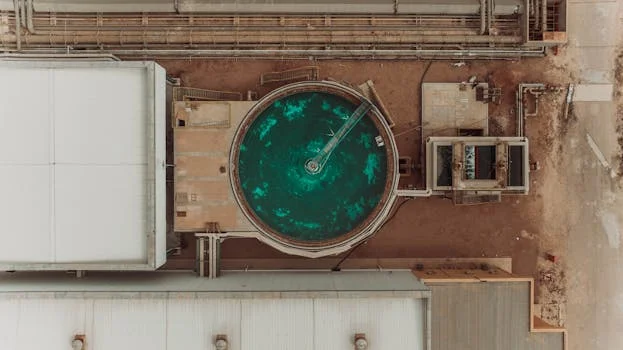
Operating expenditure (OPEX) is often overlooked during procurement but represents the largest lifecycle cost. In Guayaquil, municipal OPEX typically ranges from $0.10 to $0.30/m³. This budget is dominated by energy (40–50%) and chemicals (20–30%). For a plant treating 10,000 m³/day, this equates to roughly $1.5M per year.
Industrial OPEX is significantly higher, ranging from $0.50 to $2.00/m³, due to the complexity of chemical dosing and higher energy requirements for MBR or DAF systems. A food processing plant treating 500 m³/day can expect annual OPEX of $180,000. Key local drivers include electricity rates, which fluctuate between $0.12 and $0.18/kWh, and sludge disposal fees that have risen to $50–$150 per ton at authorized municipal landfills.
| OPEX Component | Municipal % | Industrial % | Local Cost Factor |
|---|---|---|---|
| Energy | 45% | 35% | $0.15/kWh average |
| Chemicals | 25% | 35% | 15% Import Tariff |
| Labor | 20% | 15% | Local technical expertise |
| Sludge Disposal | 10% | 15% | Distance to landfill |
Optimization is possible. One Guayaquil-based food processing plant reduced its chemical costs by 30% by replacing bulk liquid chlorine with a chlorine dioxide generator, which proved more effective at lower dosages for high-organic-load water. Additionally, implementing an automatic chemical dosing system can prevent the 10-15% chemical waste common in manual operations.
Compliance Costs in Guayaquil: Permitting, Discharge Standards, and Hidden Fees
Navigating the regulatory landscape in Guayaquil adds a layer of "hidden" costs that can derail a project budget if not anticipated. Beyond the equipment, the environmental permitting process costs between $20,000 and $100,000. This includes the Environmental Impact Assessment (EIA), which ranges from $10,000 to $50,000 depending on the project's complexity, and the operational license from the Ministry of Environment, Water and Ecological Transition (MAATE).
Local enforcement by Interagua and the Municipal Environment Department involves periodic inspections. Facilities must budget $5,000 to $30,000 annually for laboratory monitoring and compliance audits. Guayaquil’s urban planning regulations often require buffer zones of 10–20 meters from residential boundaries, which can significantly increase land acquisition costs or reduce the usable footprint of a factory. Odor control systems, necessary for compliance in urban industrial zones, typically add $50,000 to $200,000 to the CAPEX. Comparing how Latin American compliance standards compare to Ecuador’s shows that Guayaquil is becoming one of the most strictly regulated cities in the Andean region.
ROI and Payback Period: When Does a WWTP in Guayaquil Pay Off?
The ROI for a WWTP in Guayaquil is driven by three factors: avoided fines, reduced water procurement costs, and lower discharge fees. For municipal projects, the ROI is long-term—typically 10–20 years. These projects are often justified by public health improvements and the avoidance of massive state-level environmental fines. A $50M plant serving 100,000 PE can save the municipality $3M/year in environmental penalties and health-related costs, leading to a 16.7-year payback.
For industrial users, the ROI is much more attractive, often falling between 2 and 7 years. In a city where water scarcity and rising utility rates are common, the value of treated water for reuse (cooling towers, irrigation, or floor washing) is estimated at $0.50–$1.50/m³. A textile factory installing an $1.8M MBR system can save $500,000 annually by avoiding Interagua fines and reducing fresh water consumption, resulting in a 3.6-year payback.
| Project Type | CAPEX | Annual Savings/Revenue | Payback Period |
|---|---|---|---|
| Industrial MBR | $1.8M | $500,000 | 3.6 Years |
| Industrial DAF | $800k | $220,000 | 3.6 Years |
| Municipal (Secondary) | $20M | $1.5M | 13.3 Years |
Financing options in Ecuador, such as IDB loans with 3–5% interest rates or government grants for municipal infrastructure, can further improve the financial viability of these investments. Private-public partnerships (PPPs) are also becoming a popular vehicle for large-scale Guayaquil water projects, as seen with the Las Esclusas and Los Merinos developments.
Supplier Selection Checklist: How to Choose a WWTP Contractor in Guayaquil
Selecting the right contractor in Guayaquil requires balancing technical proficiency with local logistical knowledge. Because much of the specialized equipment is imported, a contractor without a clear customs and logistics plan can cause months of delays. When evaluating MBR system cost and performance benchmarks in water-scarce regions, it is clear that after-sales support is the primary differentiator between successful and failed projects.
| Evaluation Criterion | Requirement | Yes/No |
|---|---|---|
| Local Compliance | Proven track record with Decreto 1215 and Interagua | |
| Seismic Design | Compliance with Ecuadorian Construction Code (NEC) | |
| Import Logistics | Fixed-price contract including customs and tariffs | |
| Support | 24/7 local service and spare parts inventory | |
| Performance Bond | Guarantee of effluent quality (BOD/TSS/Coliform) | |
| References | At least 3 operational plants in Guayas province |
Red Flags to Watch For:
- Vague Compliance Guarantees: If a contractor cannot specify how they will meet the 1,000 MPN/100mL coliform limit, avoid them.
- Unrealistic Timelines: A 10,000 m³/day plant cannot be properly commissioned in Guayaquil in under 12 months due to permitting and import lead times.
- Lack of Local Presence: Without a Guayaquil-based technical team, a minor pump failure can lead to weeks of downtime and thousands in fines.
Frequently Asked Questions
How much does it cost to set up a sewage treatment plant in Guayaquil?For industrial applications (50–500 m³/day), costs range from $1.2M to $5M. For municipal projects, costs range from $15M for 100,000 PE to over $310M for city-wide systems (1.5M PE). Total cost depends heavily on the technology used (MBR vs. CAS) and the required discharge standards.
How much does it cost to install a water treatment plant in Guayaquil?The unit cost typically ranges from $2,000 to $10,000 per m³/day of capacity. A 200 m³/day MBR system, which is common for Guayaquil’s industrial reuse needs, costs approximately $1.8M when including civil works, import duties, and commissioning.
Do wastewater treatment plants make money in Guayaquil?Yes, especially for industrial facilities. By avoiding Interagua fines ($5k–$50k/year) and reusing treated water ($0.50–$1.50/m³), industrial plants see a 2–7 year ROI. Municipal plants generally do not "make money" directly but save the city millions in public health costs and environmental penalties.
What is the cost of a 1 MLD (1,000 m³/day) water treatment plant in Guayaquil?A 1 MLD plant ranges from $2M to $4M. A conventional activated sludge system is at the lower end ($2M), while a high-efficiency MBR system for water reuse is at the higher end ($3.5M–$4M), including advanced tertiary disinfection.
What are the hidden costs of a WWTP in Guayaquil?Significant hidden costs include environmental permitting ($20k–$100k), import tariffs on machinery (15–25%), seismic reinforcement for civil structures (5–10% of CAPEX), and mandatory odor control systems for plants near residential or commercial zones ($50k–$200k).