Hospital wastewater in Accra requires advanced treatment to combat multidrug-resistant bacteria (55.4% prevalence in Korle Bu samples) and meet Ghana EPA discharge limits (e.g., <30 mg/L BOD, <50 mg/L TSS). Effective systems combine primary screening (e.g., rotary bar screens), biological treatment (e.g., MBR or A/O processes), and tertiary disinfection (e.g., chlorine dioxide or ozone). Costs range from $50K for small clinics to $2M+ for teaching hospitals, with payback periods of 3–7 years via avoided fines and water reuse savings. This guide provides engineering specs, compliance checklists, and equipment selection criteria for Accra’s unique challenges.
Why Hospital Wastewater in Accra Demands Specialized Treatment
Microbiological surveillance at the Korle Bu Teaching Hospital (KBTH) reveals that 55.4% of bacterial isolates in hospital wastewater are multidrug-resistant, creating a significant public health risk if discharged into municipal sewers or surface waters without specialized treatment. A longitudinal study of the Maternity and Child Health Units at KBTH identified 294 bacterial isolates across 23 types, all of which were Gram-negative. The study found a high prevalence of Escherichia coli (30.6%) and a 15.6% prevalence of extended-spectrum beta-lactamase (ESBL) producers. These pathogens are frequently resistant to common antibiotics, including ciprofloxacin and third-generation cephalosporins, necessitating treatment systems that go beyond standard municipal sewage protocols.
The Ghana Environmental Protection Agency (EPA) 2023 guidelines mandate strict effluent standards for healthcare facilities to mitigate these risks. Current discharge limits require Biochemical Oxygen Demand (BOD) to be below 30 mg/L and Total Suspended Solids (TSS) below 50 mg/L. fecal coliform counts must remain under 1,000 CFU/100mL. These standards align closely with international benchmarks such as the EU Urban Waste Water Directive 91/271/EEC, yet the presence of antimicrobial resistance (AMR) in Accra’s effluent often requires even more stringent control than basic regulatory compliance suggests. The 2024 WHO report on AMR in African wastewater highlights that untreated hospital effluent is a primary vector for the spread of resistance genes into local ecosystems, such as the Korle Lagoon and the Gulf of Guinea.
Economic risks for Accra-based hospitals are substantial. Under the Ghana EPA 2023 framework, fines for non-compliance range from GHS 50,000 to GHS 500,000 per violation. Beyond direct financial penalties, facilities face severe reputational damage and the risk of operational shutdowns. For instance, the 2022 temporary closure of certain medical wards in the region due to sanitation failures underscores the necessity of robust wastewater infrastructure. Investing in compliant systems is not merely a regulatory hurdle but a critical component of institutional risk management and public safety.
Hospital Wastewater Characteristics in Accra: What You’re Treating

Influent parameters for Accra’s hospitals vary significantly between large teaching institutions and private clinics, but typically exhibit high concentrations of organic matter and pharmaceutical residues. Engineers must design systems capable of handling Chemical Oxygen Demand (COD) levels ranging from 300 to 1,200 mg/L and BOD levels between 150 and 600 mg/L. These concentrations are often higher than domestic sewage due to the concentrated nature of medical waste and lower per-capita water usage in some local facilities. The following table outlines the typical raw influent characteristics encountered in Accra’s medical sector.
| Parameter | Private Clinics (Small) | Teaching Hospitals (Large) | Ghana EPA Limit |
|---|---|---|---|
| COD (mg/L) | 300 – 500 | 600 – 1,200 | <250 |
| BOD (mg/L) | 150 – 250 | 300 – 600 | <30 |
| TSS (mg/L) | 200 – 400 | 400 – 800 | <50 |
| pH | 6.5 – 8.5 | 6.0 – 9.0 | 6.0 – 9.0 |
| Fecal Coliform (CFU/100mL) | 10^5 – 10^6 | 10^6 – 10^8 | <1,000 |
Pharmaceutical contaminants represent a unique challenge for Accra’s environmental engineers. Effluent from facilities like KBTH contains significant traces of antibiotics (ciprofloxacin, metronidazole), disinfectants like glutaraldehyde, and heavy metals such as mercury from older dental equipment. These substances are not only toxic but also inhibit the biological activity of standard activated sludge systems. flow patterns in Accra hospitals show extreme diurnal variations. Peak hours typically occur between 7–9 AM and 5–7 PM, where flow rates can reach 2 to 3 times the average daily flow. Seasonal fluctuations, particularly during the rainy season, can lead to significant dilution, requiring flexible aeration and dosing controls to maintain treatment efficiency.
Treatment Process Design: Step-by-Step Engineering for Accra Hospitals
Designing a treatment train for Accra’s medical facilities requires a modular approach that prioritizes AMR destruction and operational reliability amidst fluctuating power supplies. The process begins with preliminary treatment using rotary bar screens for hospital wastewater pretreatment. These mechanical screens (e.g., GX Series) utilize 6–10 mm openings to remove rags, plastics, and surgical debris that would otherwise foul downstream pumps. Grit chambers follow, designed to remove 90% of inorganic particles larger than 0.2 mm, such as sand and glass fragments common in the local environment.
Primary treatment focuses on solids reduction and pH stabilization. While traditional tanks are an option, lamella clarifiers for space-constrained hospitals in Accra offer a smaller footprint with high surface loading rates of 1.5–2.5 m/h. Chemical dosing with Polyaluminum Chloride (PAC) is often integrated here to enhance the removal of suspended solids and phosphorus, achieving up to 40% COD reduction before the biological stage.
Secondary treatment is the core of the system, where engineers must choose between Anoxic/Oxic (A/O) processes or Membrane Bioreactors (MBR). For high-performance AMR control, MBR systems for hospital wastewater in Accra are preferred. MBRs operate at a high Mixed Liquor Suspended Solids (MLSS) concentration of 8–12 g/L and utilize 0.1 μm filtration, which physically blocks most bacteria and large viruses. This results in 95–98% COD removal and significant reduction in antibiotic-resistant genes. In contrast, conventional A/O systems require larger footprints and achieve lower removal rates (85–92%), making them more suitable for facilities with ample land and lower effluent requirements.
| Process Stage | Equipment Type | Key Spec / Parameter | Objective |
|---|---|---|---|
| Preliminary | GX Rotary Screen | 6mm spacing | Protect downstream pumps |
| Primary | Lamella Clarifier | HRT: 1.5 - 2.5 hours | SS & FOG reduction |
| Secondary | MBR (Integrated) | MLSS: 8,000 - 12,000 mg/L | Organic removal & filtration |
| Tertiary | ClO2 Generator | Dosage: 1 - 3 mg/L | AMR & Pathogen kill |
| Sludge | Filter Press | 25% Dry solids | Volume reduction for disposal |
Tertiary treatment is mandatory for AMR control in Accra. Utilizing chlorine dioxide disinfection for multidrug-resistant bacteria provides a 99.9% kill rate for ESBL producers with a 30-minute contact time. Unlike chlorine gas, chlorine dioxide does not produce harmful trihalomethanes and maintains a residual effect that prevents bacterial regrowth in the discharge pipes. Finally, sludge management is handled via a plate and frame filter press, which dewaters sludge to 20–30% dry solids, significantly reducing the cost of transport to Accra’s designated landfill or incineration sites.
Technology Comparison: MBR vs. DAF vs. Conventional Systems for Accra Hospitals
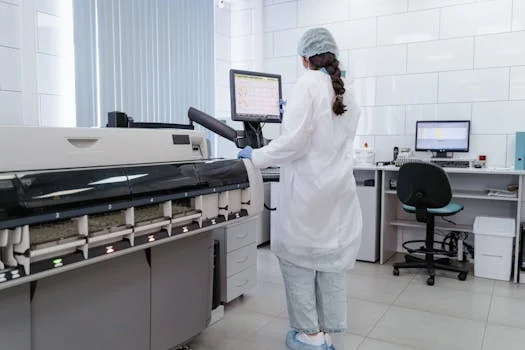
Selecting the appropriate technology depends on the hospital's specific effluent goals, available space, and budget. Membrane Bioreactors (MBR) have become the gold standard for Accra’s teaching hospitals because they combine biological treatment and ultrafiltration in a single unit. This technology is particularly effective at removing antibiotic-resistant bacteria that are often missed by conventional settling tanks. When considering how Johannesburg hospitals tackle AMR in wastewater, MBR adoption has shown a marked decrease in downstream environmental contamination, a trend now being mirrored in Accra’s high-end medical facilities.
| Criteria | MBR (Integrated) | DAF (Dissolved Air) | Conventional A/O |
|---|---|---|---|
| Footprint (m²/m³) | 0.2 – 0.4 | 0.3 – 0.5 | 0.8 – 1.2 |
| Capex ($/m³/day) | $2,000 – $4,000 | $1,000 – $2,500 | $800 – $1,500 |
| COD Removal (%) | 95% – 98% | 70% – 85% (FOG Focus) | 85% – 92% |
| AMR Control | High (Physical Barrier) | Low (Requires Tertiary) | Moderate |
| Compliance | Exceeds EPA/WHO | Meets EPA with Tertiary | Meets EPA |
Dissolved Air Flotation (DAF) is an alternative often used in clinics with high concentrations of oils, greases, or dental laboratory waste. While DAF is excellent at removing fats, oils, and grease (FOG) and suspended solids, it provides limited protection against microbiological threats. For these facilities, a DAF system must be paired with aggressive tertiary disinfection. Conventional A/O systems, like the WSZ underground integrated sewage treatment, offer a lower-cost entry point for budget-constrained facilities. However, their larger footprint and lower AMR removal efficiency mean they may require future upgrades as Ghana’s environmental laws tighten.
Compliance Checklist: Meeting Ghana EPA and International Standards
To ensure continuous operation and avoid the heavy fines mentioned previously, hospital administrators in Accra should follow a standardized compliance framework. This checklist incorporates the latest Ghana EPA 2023 requirements and international best practices for healthcare effluent management.
- Discharge Limit Verification: Ensure daily effluent testing for BOD (<30 mg/L), TSS (<50 mg/L), and pH (6.0–9.0). Monthly microbiological audits must confirm fecal coliforms are <1,000 CFU/100mL.
- AMR Monitoring: Although not yet a strict EPA mandate, following WHO 2023 recommendations for <10 CFU/100mL of ESBL-producing E. coli is advised to future-proof the facility against upcoming AMR regulations.
- Sampling Protocols: Establish fixed sampling points at the influent, post-biological stage, and final discharge point. Samples should be analyzed by an ISO 17025 accredited laboratory in Accra.
- Permitting and Documentation: Maintain an active Ghana EPA Form 10 permit. Keep a minimum of three years of operation logs, including chemical consumption, sludge disposal manifests, and power consumption records.
- Emergency Response: Documented bypass procedures must be in place for system failures. Per EPA guidelines, any bypass event must be reported within 24 hours to avoid "negligent discharge" penalties.
- International Benchmarks: For facilities seeking international accreditation (e.g., JCI), systems should be evaluated against Arequipa’s hospital wastewater treatment standards or EU 91/271/EEC to ensure global compliance.
Cost Breakdown: Budgeting for Hospital Wastewater Treatment in Accra

Budgeting for a hospital wastewater system in Accra requires an analysis of both initial capital expenditure (Capex) and ongoing operational expenditure (Opex). Capex is heavily influenced by the volume of wastewater and the required level of AMR control. For a medium-sized facility in Accra (100 m³/day), equipment typically accounts for 60% of the budget, while civil works and installation make up 35%. The remaining 5% covers permitting and environmental impact assessments required by the Ghana EPA.
| Facility Scale | Daily Flow (m³) | Estimated Capex (USD) | Estimated Opex ($/m³) |
|---|---|---|---|
| Small Clinic | 10 | $50,000 – $150,000 | $1.50 – $2.00 |
| Medium Hospital | 100 | $500,000 – $1.2M | $0.80 – $1.20 |
| Teaching Hospital | 500+ | $2.0M – $4.0M | $0.50 – $0.80 |
Operational costs in Accra are primarily driven by electricity (approximately GHS 0.80/kWh) and chemical consumables. For MBR systems, energy accounts for 40% of Opex due to the aeration required for membrane scouring. However, the ROI for these systems is often realized through water reuse. With municipal water rates in Accra rising, reusing treated effluent for irrigation, cooling towers, or toilet flushing can save a facility GHS 10–20 per cubic meter. For a large hospital like Korle Bu, which reuses a portion of its effluent, the payback period for advanced treatment infrastructure is typically 3 to 7 years when factoring in avoided fines and reduced water bills. Financing options, such as green loans from the Ghana EXIM Bank or infrastructure funds from the African Development Bank (AfDB), are increasingly available for hospitals upgrading to compliant, sustainable systems.
Frequently Asked Questions
Q: What are the penalties for non-compliance with Ghana EPA hospital wastewater standards?
A: Fines range from GHS 50,000 to GHS 500,000 per violation, with potential facility shutdowns for repeat offenses under the Ghana EPA 2023 guidelines. Korle Bu was famously fined GHS 200,000 in 2022 for effluent violations that impacted local water bodies.
Q: How do I choose between MBR and DAF for my hospital in Accra?
A: MBR is best for Korle Bu-scale hospitals needing reuse-quality water and high AMR control due to its physical filtration barrier. DAF is more suitable for smaller clinics or specialized dental labs with high concentrations of fats, oils, and grease (FOG). See the technology comparison table for a detailed performance breakdown.
Q: What disinfection method is most effective against multidrug-resistant bacteria in hospital wastewater?
A: Chlorine dioxide is highly effective, offering a 99.9% kill rate for ESBL producers at dosages of 1–3 mg/L. While UV is effective for protozoa, it lacks the residual effect necessary to prevent bacterial regrowth in Accra’s long hospital piping networks, making chlorine dioxide or ozone safer choices for AMR control.
Q: Can treated hospital wastewater be reused in Accra?
A: Yes, provided it meets WHO reuse guidelines, which include fecal coliform counts <10 CFU/100mL and BOD <10 mg/L. MBR systems combined with chlorine dioxide disinfection are capable of reaching these standards, allowing for safe reuse in landscape irrigation and non-potable facility needs.
Q: How often should hospital wastewater treatment systems be maintained in Accra?
A: Daily maintenance includes checking flow rates and chemical residuals. Weekly tasks involve cleaning primary screens and testing BOD/TSS. Monthly, a full microbiological audit is required. For MBR systems, membranes typically require chemical cleaning every 1 to 3 months depending on the organic load.