Confirm the Kano discharge route and design basis
The route and design basis must be confirmed before selecting an effluent treatment plant in Kano. A municipal-sewer connection, direct surface-water discharge and reuse application require different evidence. Effluent Guidelines are described by the US EPA as national regulatory standards for wastewater discharged to surface waters and municipal sewage treatment plants; they provide international regulatory context, not Kano limits (S3). The buyer should obtain the applicable Kano and Nigerian permit conditions, sector requirements, receiving-water criteria or reuse specification from the responsible authority before equipment selection.
Ask the site environmental manager for the signed permit, sewer acceptance conditions, or receiving-water and reuse requirements. Those documents should be attached to the design basis and used to define final effluent targets. The supplied evidence does not establish numerical Kano discharge limits.
For sizing and layout, request average and hourly peak flow, operating schedule, available footprint, power supply, water and chemical connections, drainage provisions, sludge-handling route and future expansion requirements. Request representative raw-effluent samples for COD, BOD5, TSS, pH, colour, oil and grease, sulfides, ammonia, TDS and relevant metals. The laboratory report should identify sampling locations, sampling times, analytical methods and whether samples represent normal production, start-up, shutdown and cleaning discharges.
Match the dominant effluent problems to the process
Process selection depends on the contaminant that controls performance. DAF is the leading candidate when oil, grease, FOG or floatable material dominates; MBR addresses biodegradable treatment with membrane solids separation; UF is generally a downstream polishing or pretreatment barrier rather than a substitute for upstream removal.
| Discharge route or influent problem | Governing rule or process option | What data settles it |
|---|---|---|
| Municipal sewer | Obtain the sewer authority’s acceptance criteria before selecting equipment. | Permit, sewer conditions, prohibited discharges, flow profile and any local pretreatment requirement. |
| Surface-water discharge | Define final limits for the receiving water and applicable sector rule; S3 is context, not a Kano limit. | Written Kano and Nigerian permit conditions, receiving-water assessment and sampling and monitoring requirements. |
| Oil, grease, FOG or floatable material | Evaluate a DAF system for industrial effluent pretreatment. | Representative samples showing oil and grease, TSS, settleable solids, pH and anticipated peak load, plus relevant pilot or site data. |
| Biodegradable COD and BOD with membrane solids separation required | Evaluate an integrated MBR wastewater treatment system where footprint and pretreatment make it suitable. | COD, BOD5, TSS, ammonia, sulfides, pH, flow profile, biodegradability and membrane-fouling indicators. |
| Particulate removal or effluent polishing after upstream treatment | Evaluate UF only after the upstream quality and membrane compatibility are established. | Final turbidity or TSS basis, upstream solids loading, particle characteristics, required finish and cleaning strategy. |
The need for broad characterization is demonstrated by a tannery study from the Savar Tannery Industrial Zone. It reported mean COD, BOD, TSS and Cr concentrations of 337, 97.5, 209 and 6.1 mg/L, respectively (S2). These values are site-specific evidence from Bangladesh, not Kano limits, but they show why a generic package cannot be sized from flow alone. The same study reported a removal efficiency of 51% for the values described as far above the applicable limit (S2).
Colour may require a separate design duty. A study of five textile mills in Kaduna found that colour intensity exceeded the compared limit in all five mills by about 350 folds on average (S5). Because the compared limit and discharge context are not supplied as Kano criteria, use this result to justify colour testing and a dedicated treatment review—not to import a numerical discharge limit.
Select the discharge, treatment and reuse route
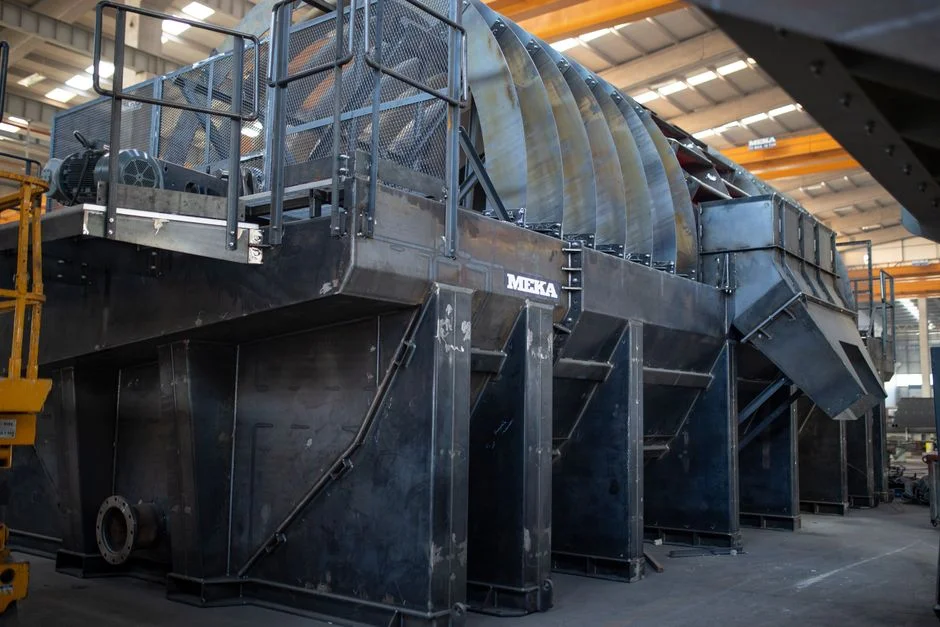
Proper wastewater management requires segregating clean streams, equalizing variable industrial flows and treating the resulting wastewater train as one design basis. This prevents dilution from lowering treatment concentrations or increasing hydraulic loading while leaving the contaminant load unchanged.
- Segregate streams by process and exclude clean cooling or stormwater where practicable.
- Equalize the retained industrial wastewater and remove materials that can damage downstream equipment.
- Use DAF where floatable material and suspended solids are central targets. Include a rotary mechanical bar screen where screening is required by the confirmed wastewater profile.
- Route the clarified stream to biological treatment when biodegradable COD and BOD require it.
- Use MBR where biological treatment and membrane solids separation provide a suitable space and operating solution.
- Use UF or nanofiltration for polishing or reuse only after upstream loads and compatibility have been established.
S1 identifies nanofiltration as a technique for polishing wastewater-treatment-plant effluent and assessing effluent reclamation. It does not establish that nanofiltration is required for every Kano discharge. The buyer must first define the reuse specification and verify that the proposed upstream process can protect the membrane.
Where suspended solids require clarification before a downstream biological or polishing stage, request a duty-specific sedimentation-tank proposal with the expected feed condition and solids handling route. For a broader comparison of treatment combinations, compare DAF, MBR and reuse routes for high-COD wastewater, but verify every proposed duty against Kano characterization and permit conditions.
Turn the selection into an RFQ and acceptance plan
A comparable RFQ should require a signed process basis, a measurable performance guarantee and a clear verification protocol. Ask each supplier to return the same information so their quotations can be assessed against the same effluent, discharge route and operating conditions.
| Quote line item | Technical scope to specify | Red flags to check before signing |
|---|---|---|
| Design basis and mass balance | Flow profile, analysis results, treatment objectives, receiving route, utilities, footprint and expansion assumptions. | Unnamed influent, omitted peak flow or performance guarantees based on generic wastewater data. |
| Characterization and sampling plan | COD, BOD5, TSS, colour, oil and grease, sulfides, ammonia and relevant metals, with sampling points and analysis methods. | No sampling plan, use of effluent-only data, or unclear laboratory accreditation and chain of custody. |
| Pilot or equivalent performance evidence | Evidence for the proposed duty, or a documented explanation of why pilot testing is unnecessary. | Performance transferred without justification from a different wastewater profile. |
| Factory and site acceptance | Documented tests, representative influent, sampling frequency, analytical laboratory, instrumentation checks and agreed acceptance criteria. | Unclear test methods, selective sampling dates or no remedy where a guarantee is not met. |
| Chemical dosing and controls | Duty-based automatic chemical dosing system scope, storage, calibration, interlocks and operator controls. | Equipment listed without chemical demand, dose limits, control logic or hazardous-area requirements. |
| Residues and operating costs | Sludge production, membrane residue, chemical use, cleaning requirements, replacement schedule and disposal route. | No route for residues, omitted membrane-replacement cost or a sludge assumption unsupported by the waste profile. |
| Handover and support | Commissioning records, operating manuals, training, spare parts, warranty, monitoring plan and document handover. | Training or documentation omitted, or warranty defined without operating and influent conditions. |
Include a plate-frame filter press in the RFQ only if the confirmed sludge characteristics support mechanical dewatering. To evaluate that duty, request the sludge dewatering equipment selection guide for textile effluent and require the supplier to state the assumptions behind feed concentration, cake target and operating cycle.
Before award, require each bidder to identify pilot-test evidence relevant to the proposed duty or justify why pilot testing is unnecessary. Define factory and site acceptance tests, guarantee conditions, representative influent, sampling frequency, analytical laboratories, instrumentation, training, documentation and warranty. Also price the sludge or membrane-residue handling route and replacement obligations. An industrial effluent plant and DAF selection guide may support the procurement structure, but it does not replace Kano site data or local compliance evidence.
Related Equipment
- DAF system for industrial effluent pretreatment — specifications, capacity range, and technical data
Further Reading
- compare DAF, MBR and reuse routes for high-COD wastewater
- industrial effluent plant and DAF selection guide
- select sludge dewatering equipment for textile effluent
Frequently Asked Questions
Should we select DAF, MBR or UF for industrial wastewater in Kano?
Select DAF when oil, grease, FOG and floatable material control the design; use MBR when biological treatment with membrane solids separation is required and the wastewater is suitable; place UF after upstream treatment when it is needed for polishing or reuse. Request representative characterization before fixing the train.
What site data is needed to size an industrial wastewater treatment plant?
Request average and hourly peak flow, operating schedule, representative laboratory results, pH, TSS, COD, BOD5, colour, oil and grease, sulfides, ammonia, TDS, relevant metals, footprint, utilities and sludge-disposal route. Confirm whether the supplier’s guarantee is tied to these inputs.
What evidence should be included in the RFQ?
Require a signed design basis, mass balance, sampling and analytical methods, proposed process description, pilot evidence or justification for omitting pilot testing, factory and site acceptance tests, performance guarantees, residual handling, commissioning plan, training, documentation and warranty. Exclude claims based only on generic effluent data.
How will Kano compliance and supplier performance be verified?
Requirement for verification involves having the supplier sign an acceptance schedule that lists the applicable Kano and Nigerian permit or reuse criteria, the agreed sampling points and methods, the laboratory, sampling frequency, pass conditions and remedy for failed tests. Do not accept the Effluent Guidelines identified by S3 as substitutes for Kano-specific conditions.