
Match the Industrial Effluent Treatment Route to the Wastewater
Choose an industrial effluent treatment plant and DAF system in Eritrea by matching the wastewater to the treatment objectives before requesting equipment. DAF is a clarification step: pressurized air is released as tiny bubbles that attach to suspended matter, oil, grease and other floatable material, which is then skimmed from the tank (S3). It is widely used in refineries, chemical plants, paper mills and similar facilities, but its scope depends on wastewater characteristics, peak flow, required removal performance and downstream treatment. The practical output is a site-input and RFQ checklist covering influent tests, treatment route, DAF configuration, accessories, acceptance criteria and delivery exclusions.
Decide whether DAF is the primary stage by identifying what the wastewater contains and what the receiving route requires. DAF physically separates suspended matter and floatable material: dissolved air is released as fine bubbles, the bubbles lift particles to a skimmable froth, and clarified effluent leaves the flotation basin (S3). It does not, by itself, remove dissolved salts or reliably treat biodegradable organic load that requires biological processing.
| Discharge route or influent problem | Governing rule or process option | What data settles it |
|---|---|---|
| Oil, grease and floatable solids | DAF is a candidate clarification and oil-and-grease removal stage, following screening and solids control where needed. For dairy guidance, screens precede flotation and excessive solids can foul or clog the flotation pressurization tank (S5). | Representative oil-and-grease, suspended-solids and flow samples; screen size; the fate of recovered scum and sludge. |
| Colloidal or finely suspended solids | Coagulation, flocculation and pH adjustment may be needed before DAF. The supplied DAF description states that feed is often dosed with coagulant or flocculant, but the required chemical duty must be established from the wastewater analysis rather than assumed (S3). | Jar or pilot tests, pH range, turbidity, suspended solids and process-specific contaminant results. |
| High biodegradable organic load | Use DAF for floatable and suspended material, then evaluate biological treatment. Dairy guidance identifies biological treatment after fats, oils and suspended solids are separated because excessive oils and fats reduce biological treatment effectiveness (S5). | COD, BOD5, nutrient data, biological treatability assessment and the intended effluent target. |
| Dissolved salts or reuse requirements | DAF clarification is not a substitute for salt removal or a defined reuse-treatment train. Ultrafiltration may be considered after physicochemical treatment where the reuse objective requires it; an integrated MBR treatment option may be relevant for biological treatment and reuse. | TDS, conductivity, intended reuse quality, downstream membrane or filtration requirements and the receiving authority’s conditions. |
Confirm screening, equalization, pH control and chemical dosing as separate scope items. Do not let “DAF complete” hide an unverified pretreatment requirement. Use the DAF system engineering specifications to identify the mechanical arrangement and accessories required for the actual wastewater duty.
Collect the Site Data That Determines DAF Sizing
Request a complete operating profile, not only a daily wastewater volume. A supplier cannot size an industrial DAF system reliably from average flow when batch discharges, clean-in-place operations or shock loads create higher instantaneous loads.
- Ask the site team for average and peak hourly flow, batch-discharge timing, operating hours, minimum flow, future expansion and the expected operating envelope.
- Obtain representative influent results for COD, BOD5, suspended solids, oil and grease, pH, turbidity, TDS and contaminants specific to the production process.
- Obtain the final effluent limits and the discharge or reuse destination from the responsible authority or project owner.
- Provide the available footprint, utilities, power supply, access, installation constraints and the party responsible for civil works.
For wastewater testing, use the best DAF unit selection framework to connect influent results, peak flow and solids loading to the proposed equipment. Request the laboratory’s sample dates, sampling points, flow-weighted coverage and analytical methods. A single grab sample cannot establish the full operating envelope unless the discharge is demonstrably continuous and stable.
Operating history can support process assessment, but it does not replace project-specific sampling. A case study used COD, pH, turbidity and TDS measurements from an equalization-tank effluent collected during an 8-hour monitoring period within a year as model inputs (S1). Its authors also note that static and dynamic models behaved differently under shock loads and that time lags affected predictions. Use that evidence to request temporal data alongside routine influent tests, not as a universal sampling protocol.
Compare DAF Configurations by Separation and Operating Requirements
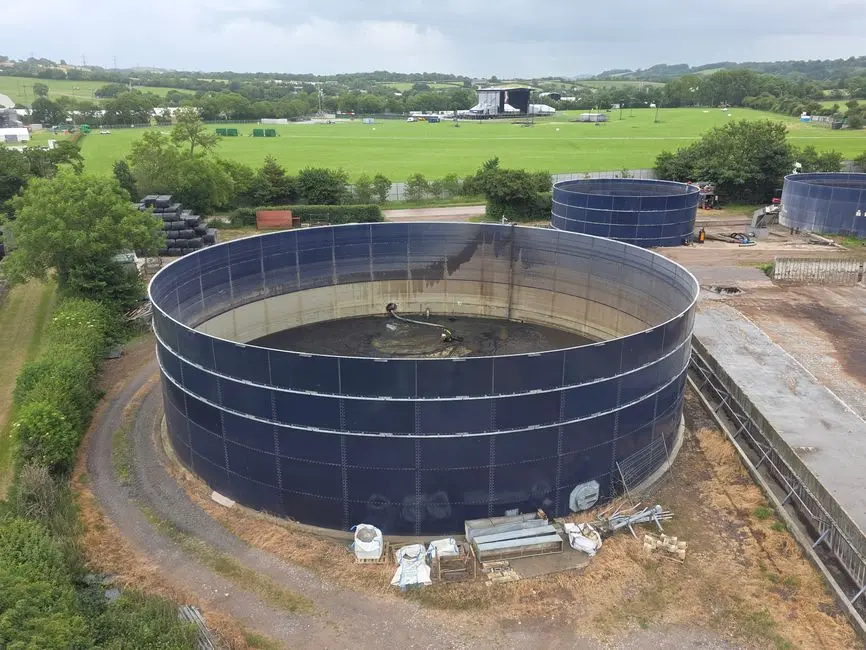
Require each supplier to explain the pressure-saturation, recycle and bubble-release arrangement for the proposed wastewater. The supplied description identifies a recirculation route in which clarified effluent is pressurized, saturated with compressed air and returned to the flotation tank, where pressure reduction releases tiny bubbles (S3). Ask the supplier to define the DAF recycle system, its control logic and the design duty behind the selected equipment.
Do not treat published configuration figures as universal design rules. One DAF description assigns just 3 minutes to the circular configuration and 20 to 30 minutes to the rectangular configuration, describing the latter as providing more residence time (S3). Request the calculation basis, applicable flow, loading, operating temperature and treatment objective behind any residence-time statement before including it in the specification.
Confirm whether parallel-plate packing is proposed to add separation surface (S3), and identify whether the arrangement is required for the expected solids load or simply offered as an option. For oil-industry applications where air could create an explosion risk, the same description states that dissolved gas flotation may use nitrogen instead of air (S3). That requires a project-specific hazard review rather than an assumed inclusion of an inert-gas system.
The operational scope should also specify automatic skimming, control logic, local instruments, sludge or scum discharge, maintenance access and the utilities required for startup and normal operation. These items determine whether the quoted DAF is a functional machine or merely a tank with a flotation mechanism.
Define the DAF Plant Scope and Downstream Treatment
Separate the flotation machine from the complete industrial wastewater treatment plant. A quotation should identify which party supplies equalization, pumping, screening, chemical dosing, DAF, downstream treatment, sludge handling, electricals, controls, commissioning and site infrastructure. If biological treatment, filtration or disinfection is required, include it as a defined process stage rather than assuming that clarified DAF effluent is the final discharge.
| Quote line item | Technical scope to specify | Red flags to check before signing |
|---|---|---|
| Equalization and pumping | Required flow envelope, buffer volume, pumping duty, controls, standby provision and the interface between the site’s collection system and treatment. | Buffer volume is omitted; only average flow is used; pump duty is not tied to peak discharge or operating hours. |
| Screening and solids control | Screen type, duty, solids removal point, screenings container and the interface with DAF feed and sludge handling. | Screening is treated as a free option; excess solids are sent directly to the flotation pressurization tank without a defined control response. |
| Chemical dosing | Coagulant and flocculant selection from wastewater tests, pH adjustment, storage, metering, mixers, controls and reagent supply arrangements. A PLC-controlled chemical dosing system may be specified where automatic dosing is justified. | Chemicals are not included or are included without dose ranges; compatibility, duty, storage and operator controls are undefined. |
| DAF unit | Design flow, wastewater duty, treated-effluent target, tank configuration, recycle arrangement, pressure-saturation system, bubble release, skimming, packing, instruments and materials. | Headline capacity is unsupported by wastewater analysis; no peak-flow basis; performance is promised without agreed influent conditions. |
| Downstream treatment and reuse | Clarified-effluent destination, biological treatment, filtration or ultrafiltration, disinfection and the required reuse quality, where applicable. | DAF is priced as a complete treatment plant despite unresolved COD, BOD5, TDS or reuse requirements. |
| Sludge and scum handling | Removal point, storage, thickening, dewatering, transport and final disposal responsibility; include interfaces with the selected downstream process. | No disposal route; concentrated scum or sludge is left without containment, labour or disposal responsibility. |
| Electricals, controls and commissioning | Supply boundary, power supply, PLC or local control requirements, alarms, local instruments, training, trial runs and performance acceptance responsibilities. | Foundations, cable routes, utilities, installation, training or commissioning are excluded without a stated allowance or schedule. |
Assign missing inputs before quotation: the site owner should provide the flow profile, utilities and operating requirements; the laboratory should provide representative analyses; the civil contractor should confirm foundations, containment and access; the electrical contractor should confirm power and site distribution; and the equipment supplier should define process guarantees, drawings, controls and commissioning deliverables.
Where reuse or further solids separation is required, confirm whether ultrafiltration is needed after physicochemical treatment. Dairy guidance identifies ultrafiltration as a possible downstream stage after physicochemical treatment, while an MBR installation can replace a secondary clarifier or flotation unit in an aerobic biological process (S5). These are conditional routes, not automatic additions to an Eritrean project quotation.
Use the RFQ Checklist to Compare Offers and Acceptance Tests
Ask every supplier to state the design flow, wastewater duty, treated-effluent target, DAF configuration, recycle arrangement, materials, controls, utilities, accessories, exclusions and responsibility matrix. The commercial offer and technical schedule should use the same terms. This prevents a supplier from combining a nominal treatment capacity with a different wastewater assumption.
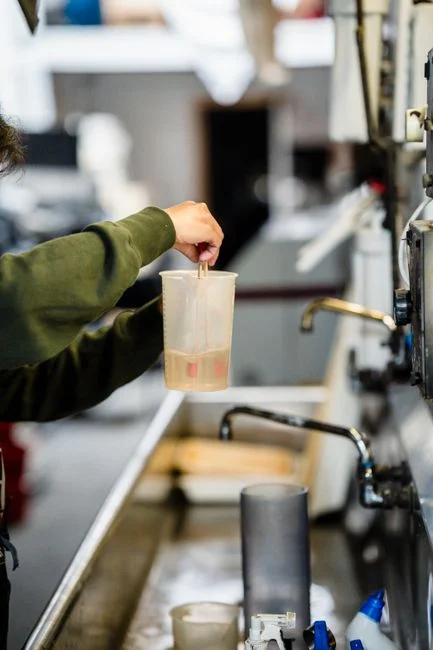
Define the performance acceptance test before signature. It should identify the agreed influent conditions, sampling points, test methods, test duration, operating responsibilities and acceptance criteria. A generic removal percentage is not a complete guarantee because the result depends on the incoming wastewater, chemical dosing, hydraulic loading and equipment operating as specified.
- Review the process basis: flow, contaminants, treatment objective and proposed route.
- Check the mechanical scope: DAF, recycle, chemicals, skimming, sludge handling, controls and utilities.
- Resolve exclusions: foundations, buildings, electrical supply, installation, site works, chemicals and waste disposal.
- Agree the acceptance protocol and identify who samples, witnesses, operates and certifies it.
- Record commercial and delivery commitments: Incoterm, shipment date, commissioning sequence, documents, spares, training, warranty, local support and responsibility for delays.
Treat unsupported capacity, undefined sludge disposal, missing peak-flow calculations, unspecified chemical compatibility and absent commissioning responsibility as pre-signature red flags. Delivery dates should follow approved drawings, site readiness and agreed technical submittals rather than an unsupported calendar entered before those dependencies are resolved.
Request shipment terms, electrical schematics, operating manuals, material information, spare-parts lists, training records, test certificates and the final performance-test report. Ask who provides local service support and whether that support is contractual. The DAF system engineering specifications can help structure the technical review, but the supplier must remain accountable for the submitted duty and guarantees.
Frequently Asked Questions
How should an industrial effluent treatment plant and DAF system in Eritrea be sized?
Size the plant from average and peak flow, batch-discharge profiles, operating hours, representative COD, BOD5, suspended solids, oil and grease, pH, turbidity and TDS, plus the required discharge or reuse target. Require the supplier to show its hydraulic and contaminant-loading basis and identify how shock loads are handled. Do not accept a DAF capacity stated only as treatment volume per hour.
Which wastewater tests and discharge information must be included in an RFQ?
Include representative analytical results for COD, BOD5, suspended solids, oil and grease, pH, turbidity, TDS and process-specific contaminants, with sampling dates, methods and locations. Also provide the receiving or reuse route and the applicable final effluent conditions. If these are unavailable, request a documented sampling and investigation plan before accepting a performance guarantee.
What should be included in a DAF-system price and delivery quotation?
Request separate pricing for the DAF unit, recycle and pressure-saturation equipment, skimming, controls, chemical dosing, equalization, pumping, downstream treatment, sludge handling, electricals, installation, commissioning, training, documentation, spares, warranty and local service. State the shipment terms, supply responsibility, proposed delivery sequence and all exclusions. Do not rely on a single total price without a line-by-line scope and commercial schedule.
How can a buyer compare DAF suppliers and verify acceptance?
Compare suppliers using the same wastewater basis, technical schedule, exclusions and acceptance protocol. Check that each offer states the DAF configuration, recycle arrangement, materials, utilities, accessories and treated-effluent target. Verify acceptance through agreed influent conditions, sampling points, test methods, duration and criteria, with supplier and site responsibilities documented before signature.