Confirm the wastewater route and design basis
Practical decision-making for a Gabonese hotel involves choosing between a municipal sewer connection, an underground A/O package plant, or an MBR system for high-quality effluent and reuse. Start with average and peak wastewater flow, occupancy, greywater proportions, required discharge point, available land, and reuse objectives. Hotel water use is substantial: S2 reports 100–200 GPD per occupied room and 36,500–73,000 gallons per room annually. The supplied research does not establish Gabon-specific discharge limits, so permit conditions and site data must be verified before selecting or pricing equipment.
Record the intended route before requesting equipment: municipal sewer connection, on-site treatment with permitted discharge, or a planned reuse loop. Ask the hotel’s food-and-beverage operator for kitchen wastewater flow, and ask facilities staff to identify floor drains, roof or grounds drainage connections, and any stormwater entry points. Separate greywater and blackwater estimates should be recorded because they affect process selection, hydraulic loading, and reuse design.
Request the discharge point and written permit conditions from the responsible Gabonese authority or the site’s permit file. Research does not establish a Gabon-specific effluent limit, so a supplier should not be allowed to substitute an assumed limit for the actual approval condition. A sewer connection also requires written confirmation of location, connection interface, capacity, and acceptance conditions; the existence of a sewer nearby is not enough.
Use S2’s benchmark of 100–200 GPD per occupied room and 36,500–73,000 gallons per room annually only as a screening reference. This is a hotel water-use benchmark, not a verified flow measurement for this property or a final wastewater plant sizing factor. Obtain measured flow data or a defensible site-specific estimate before issuing a quotation request.
For related route-selection context, see the hotel sewage treatment comparison for Congo and the Croatia sewer, A/O plant and MBR comparison.
Compare sewer, A/O package and MBR routes
Choosing the correct route depends on verifying connection availability, capacity, and acceptance conditions. Select the sewer only when a verified connection exists; otherwise, compare on-site treatment against the required discharge and reuse objectives. A buried A/O package plant may suit a site with limited above-ground space, but it introduces excavation, access, and sludge-handling requirements. An integrated MBR membrane bioreactor may be relevant where tighter effluent quality or reuse is required, but the supplier must demonstrate that its proposed process, footprint, and operating arrangements meet the verified site conditions.
Modularity is a design consideration, not proof of suitability for this hotel. S4 states that up to nine BIOROCK units can be installed in parallel, with a flow-control chamber distributing wastewater among the units. That statement supports a scaling concept for larger establishments, but it does not establish that the configuration is appropriate for the target hotel, its flow range, or its receiving environment.
| Discharge route or influent problem | Governing rule or process option | What data settles it |
|---|---|---|
| No verified municipal sewer connection | Compare a buried A/O package treatment plant with an MBR hotel wastewater system; neither is justified without a defined discharge or reuse route. | Written confirmation of sewer availability, connection capacity and acceptance conditions from the authority or utility. |
| Limited above-ground footprint | Evaluate an underground WSZ A/O package treatment plant, subject to verified excavation depth, soil, groundwater and access conditions. | Surveyed footprint, installation depth, soil report, groundwater level and equipment-delivery route. |
| Higher-quality effluent or water reuse required | Evaluate an integrated MBR membrane bioreactor and define the permitted reuse application before specifying the required treatment performance. | Verified effluent specification, reuse objective, public-health requirements and site-specific flows. |
| Stormwater or kitchen flow enters the sewage stream | Separate or exclude unintended inflows where practicable; define treatment stages and pretreatment requirements from the actual influent. | Floor-drain plan, rainfall or groundwater assessment, kitchen discharge characteristics and flow measurements. |
For packaged treatment options relevant to hotel projects, review packaged sewage treatment options for hotels in Chad and the Congo packaged sewage treatment project.
Match capacity and treatment objectives
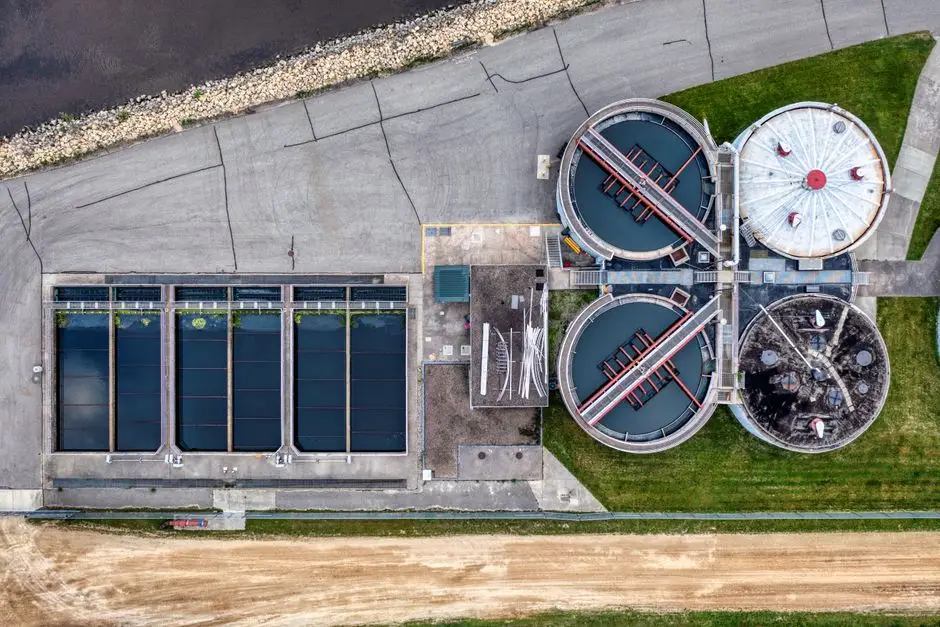
Wastewater plant sizing must follow documented generation, measured peak conditions, and stream contributions rather than a universal occupancy factor. Calculate the design flow from average flow, the observed or justified peak factor, kitchen wastewater, laundry flow, and separate greywater or blackwater contributions. State whether the quoted capacity is daily average, peak-hour, peak-day, or maximum instantaneous flow; these are different design bases.
Confirm the intended output before selecting a process. Compliant discharge, irrigation, toilet flushing, laundry, or another reuse application imposes different treatment and control requirements. S2 identifies hotel laundry greywater, food-service wastewater, bathroom-fixture water, and separate stormwater streams as possible reuse candidates, but it does not establish that any particular stream can be reused at the Gabonese site. Each proposed loop requires public-health, agronomic, equipment-compatibility, and permit verification.
Separate treatment capacity from effluent quality. A plant can have adequate hydraulic capacity yet still lack the process steps, redundancy, or controls required for the intended reuse. Require the supplier to identify the receiving point, intended reuse, treatment stages, disinfection, or reuse provisions where required, and the documents that demonstrate compliance with the applicable local approval.
The comparison of greywater recycling technologies provides useful context for defining reuse objectives, but it should not replace site-specific verification in Gabon.
Build an RFQ scope with acceptance criteria
A comparable RFQ must define the design basis, installation boundary, and acceptance test before suppliers price the work. Require each bidder to state design flow, average and peak duty, process stages, duty cycle, equipment sizing, civil works, utilities, and installation exclusions. Guarantees for final effluent quality should apply only to the verified discharge or reuse specification; do not create unsupported numerical limits in the tender document.
Assign responsibility for inputs clearly. The hotel should provide occupancy, flow, occupancy pattern, utilities, and site access information. The authority or permit file should provide discharge conditions. The supplier should provide process sizing, calculations, drawings, equipment schedules, and the proposed acceptance protocol. Define commissioning, training, controls, alarms, remote monitoring, spare parts, maintenance, sludge handling, and warranty responsibilities in the quotation.
| Quote line item | Technical scope to specify | Red flags to check before signing |
|---|---|---|
| Design basis and equipment sizing | Average and peak wastewater flow, seasonal occupancy, stream proportions, process stages, duty cycle and equipment schedule. | Capacity expressed only as rooms occupied, an unqualified daily figure or a factor without supporting site data. |
| Installation and civil works | Excavation, installation depth, pipework, access covers, connections, electrical works, drainage and landscaping reinstatement. | Unclear boundary where the supplier’s equipment stops and hotel civil works begin. |
| Controls and operation | Local or remote controls, alarm functions, operating displays, training, maintenance schedule and support responsibility. | Alarm list and operator training are omitted, or operation is assumed to be included without confirming responsibility. |
| Sludge and residuals | Sludge generation estimate, removal interval, storage arrangement, access, transport and final disposal responsibility. | Treatment performance is guaranteed without any sludge-handling or disposal route. |
| Commissioning and acceptance | Agreed design flow, sample location, test period, parameters, test method and responsible testing party, followed by training and handover. | Acceptance is tied to an undefined permit limit, uncontrolled sample conditions or an untested peak condition. |
| Warranty and spares | Warranty scope, exclusions, response responsibility, recommended spares, consumables and documentation. | General verbal assurances replace written terms, or membrane, pump and control consumables are excluded without a lifecycle explanation. |
For a further reference on packaged plant sizing, see the containerized sewage treatment plant sizing in Eritrea.
Check site and operating constraints before ordering
Confirm that the selected route can be installed and operated at the property. Request a surveyed footprint, excavation depth, soil and groundwater report, access route for delivery, and confirmation of whether landscaping can remain above a buried installation. An underground A/O package plant is not just a smaller equipment footprint: excavation, tank access, lifting, pipework, and future maintenance determine whether the concept is practical.
Verify electrical supply, backup-power arrangements, operator access, remote-monitoring requirements, and local maintenance capability. For an integrated MBR membrane bioreactor, ask specifically about membrane cleaning, replacement planning, spare-part availability, and technical support. The supplier should identify what the hotel must provide and what remains a supplier obligation.
Define sludge removal frequency, storage arrangement, and final disposal route in the scope. Biological treatment performance cannot be assessed independently from sludge handling because the solids management arrangement affects operation and maintenance access. For an underground installation, provide a means of removing retained sludge without disrupting hotel operations or landscaping.
Use the Gabon supplier excerpt, “Tell us about your plant, your equipment and your timeline,” as evidence that plant, equipment, and schedule information are required for local utility-project planning. Apply that instruction to the RFQ: identify the proposed plant, equipment package, and required delivery or installation schedule. See the context in the decentralized wastewater treatment project planning article.
Related Equipment
- underground WSZ A/O package treatment plant — specifications, capacity range, and technical data
- integrated MBR membrane bioreactor — specifications, capacity range, and technical data
Frequently Asked Questions
Should a Gabonese hotel connect to the municipal sewer or install on-site treatment?
Choose the sewer only if the authority or utility confirms a usable connection, adequate capacity, and applicable acceptance conditions. If there is no verified connection, or if greywater reuse is a defined objective, compare a buried A/O package treatment plant with an MBR hotel wastewater system. The deciding documents are the sewer confirmation, permit conditions, site footprint survey, and documented reuse requirements; do not assume that proximity to a sewer means capacity is available.
How should the hotel sewage treatment plant in Gabon be sized?
Size it from measured or defensibly estimated average and peak wastewater flow, not simply the number of occupied rooms. Request occupancy and seasonal patterns, separate greywater and blackwater estimates, kitchen wastewater, floor-drain information, stormwater entry points, and flow records. S2’s 100–200 GPD per occupied room benchmark is useful only for initial screening because it is not a substitute for site flow data or a justified peak factor.
What should a supplier quotation include for on-site hotel wastewater treatment?
Require separate line items for process equipment, civil works, installation, pipework, electrical works, controls, commissioning, operator training, preventive maintenance, sludge removal, spare parts, consumables, documentation, and warranty. Each quotation should also state the design flow, average and peak duty, installation boundary, delivery schedule, and exclusions. For price comparison, ask suppliers to quote against the same verified site data and scope; the available research contains no defensible equipment price for this hotel.
How should treatment plant commissioning and acceptance criteria be defined?
Tie acceptance to the agreed design basis and verified discharge or reuse specification. The contract should identify sample location, test period, parameters, sampling method, operating condition, and responsible testing party. State whether performance is demonstrated at average flow, an agreed peak condition, or both, and require non-conformity procedures that distinguish process performance from utility interruptions or incomplete operator training. Numerical effluent limits should come from the permit file or confirmed reuse requirement, not from an assumed generic standard.