Choose the legal route before choosing equipment
On a septic-system site in Costa Rica, greywater generally cannot be piped untreated to a garden; it must enter the septic tank unless an approved treatment-and-reuse route is confirmed. Decree 42075-S-MINAE governs disposal of ordinary household wastewater, while Decree 33601-MINAE-S governs reuse of treated wastewater. Reuse must match an applicable category, cannot involve human consumption, and requires an approved system with monitoring and operational reporting. Equipment selection therefore follows the legal route: identify the disposal point, reuse category, required approvals and monitoring duties before comparing UF, MBR or package-plant equipment.
| Discharge route or influent problem | Governing rule or process option | What data settles it |
|---|---|---|
| Site served by a septic tank | Decree 42075-S-MINAE requires ordinary household wastewater to enter the septic tank; untreated diversion to the garden is not an assumed legal route. | Exact project location, current septic layout and confirmation from the approving authority of whether greywater may be segregated. |
| Proposed reuse of treated wastewater | Decree 33601-MINAE-S applies according to the reuse category, applicable quality limits, approved-system requirements and operational reporting. | Intended use, whether the area has public contact, proposed treatment train and the authority’s written approval and monitoring path. |
| Single-family reuse proposal | The regulatory route is not described as a simplified single-house process; confirmation should occur during design. | Written confirmation from the Ministry of Health covering approval, monitoring, sampling and responsible parties. |
| Sanitary sewer available | Separate treatment equipment does not replace the obligation to route household wastewater to the available sanitary sewer. | Utility or authority confirmation of sewer availability, connection requirements and any restriction on on-site reuse. |
Use commercial greywater treatment route selection as a practical comparison framework, but keep regulatory verification separate from the equipment supplier’s technical scope. For a commercial greywater treatment project, the supplier should not be asked to decide whether a reuse route is legally acceptable; that responsibility must be identified and assigned before quotation.
Define the influent and intended reuse
Define the source streams before defining the equipment because kitchen wastewater can introduce grease and food solids, while shower, bathroom-sink and laundry flows have different generation and contaminant profiles. A review by the Department of Chemical Engineering at Kumasi Technical University notes that generation rates vary with lifestyle, fixtures and climatic conditions, and that contaminants also depend on detergents and household practices. Consequently, a total daily flow alone is not a sufficient design basis.
Prepare a stream-by-stream schedule for shower, bathroom sink, laundry, kitchen and toilet flows. State explicitly which streams enter the recycling system, which enter the septic tank or sewer, and why. If kitchen wastewater is proposed, obtain a written decision on its exclusion or inclusion rather than allowing the supplier to infer the basis from the total flow.
The RFQ should also state average daily flow, peak flow, operating hours, the reuse duration and the dry-season versus wet-season demand profile. Treated wastewater reuse may not match irrigation demand throughout the year; surplus capacity therefore needs a documented destination or storage strategy. Further sizing inputs are available in constructed wetland capacity and sizing, although the selected treatment route must still meet the regulatory reuse category.
Identify the intended use—such as landscape irrigation, toilet flushing or construction—and whether public contact is possible. Then request representative influent and treated-water data. The supplier should state which analyses are needed for design, which are needed for acceptance, and who owns sampling, laboratory and reporting responsibilities.
Match UF, MBR and package plants to the duty
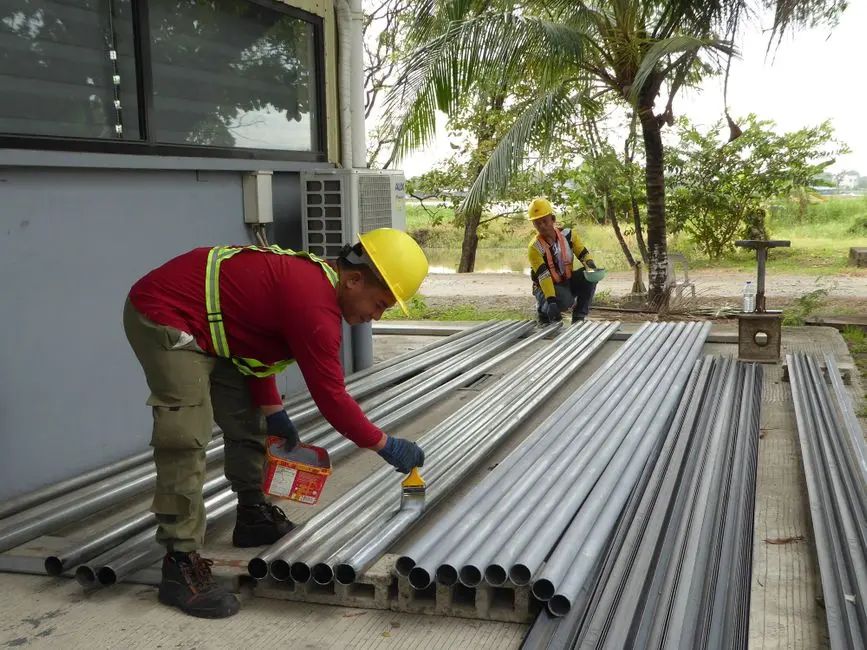
Select UF, MBR or a package plant only after the legal category, included streams, effluent requirements, flow profile, footprint and operator capability are known. UF is principally a solids-removal and filtration step, so it does not by itself establish a complete biological treatment train. An ultrafiltration wastewater treatment system may be relevant as pretreatment or as one defined stage in a broader process. An MBR membrane bioreactor wastewater treatment system combines biological treatment with membrane separation, while an integrated package sewage treatment plant can combine biological treatment, sedimentation and disinfection within a supplied package.
| Discharge route or influent problem | Governing rule or process option | What data settles it |
|---|---|---|
| Treatment must remove solids before a specified downstream stage | UF route, with the required pretreatment and backwashing or cleaning provisions identified in the process flow diagram. | Required solids-removal objective, raw-water characteristics, flow profile and confirmed treatment sequence. |
| Reuse category requires biological treatment and membrane separation | MBR route, with membrane configuration, cleaning strategy and standby or bypass provisions defined. | Applicable effluent limits, daily load, operating schedule, footprint and operator capability. |
| Project needs an integrated biological, settling and disinfection train | Package sewage treatment plant route, provided its supplied treatment sequence matches the approved reuse category. | Process guarantees, package boundaries, civil interfaces, utilities, controls and installation constraints. |
| Excluded kitchen wastewater or high grease load | Correct the treatment route or provide dedicated pretreatment; do not credit the equipment for removals outside its defined scope. | Stream segregation plan, grease and solids data, maintenance access and the effect of excluding the load from hydraulic calculations. |
For a broader technical view, compare the process boundaries in Daf, MBR, UF or RO equipment options. The commercial quotation should describe the selected route by function—biological treatment, membrane separation, sedimentation, filtration and disinfection—rather than rely only on product labels.
Build a quotation-ready site worksheet
Make the quotation measurable by fixing the design basis before asking for a price. Require average and peak flow, included source streams, reuse category, applicable effluent limits, operating schedule, duty-cycle assumptions and the method used to balance seasonal supply with demand. State whether the quoted capacity refers to each stream, the combined daily average or another basis; ask the supplier to resolve any ambiguity in its quotation.
Require a process flow diagram, hydraulic calculations, equipment list, control philosophy, utility demand, performance guarantees, commissioning plan and operator training. Identify access, sludge or residual handling, chemical consumption, membrane cleaning, laboratory support, operating reports and verification tasks. Equipment delivery is not the same as regulatory approval, so require the supplier to state precisely which permits, sampling, monitoring, reporting and authority liaison tasks it will perform.
Before signature, resolve undefined source streams, an unstated capacity basis, excluded civil works, unclear laboratory or testing responsibilities, and unspecified delivery, commissioning, training or warranty boundaries. A packaged-project approach can help identify those interfaces, as shown in the packaged sewage treatment plant procurement example.
| Quote line item | Technical scope to specify | Red flags to check before signing |
|---|---|---|
| Design basis and capacity | Included streams, average and peak flow, operating hours, duty cycle, seasonal reuse balance and governing calculation method. | “Suitable capacity” without a calculation basis, or no stated method for surplus treated water. |
| Process and equipment | Functional process diagram, biological treatment, membrane or filtration stage, sedimentation, disinfection, residuals and pretreatment. | UF presented as complete treatment, omitted grease controls, or performance promised outside the stated influent envelope. |
| Quality and compliance | Applicable reuse category, required limits, guarantee conditions, sampling methods, laboratory responsibility and reporting route. | No responsible party for permits, monitoring or operational reports; “approval” included without defining the scope. |
| Installation and utilities | Civil interfaces, foundations, power, drain, controls, access, commissioning, training and handover documents. | Equipment price excludes site works, electrical work, connections or consumables without being listed. |
| Delivery and warranty | Delivery point, schedule, shipping responsibility, installation start, acceptance test, warranty period, exclusions and spare parts. | Unstated delivery terms, warranty start event, or exclusions for membrane cleaning, chemicals, operator error and abnormal loads. |
Further Reading
Frequently Asked Questions
What is the first step before comparing UF, MBR and package-plant prices?
Confirm the legal route and intended reuse category before requesting equipment pricing. Prepare the exact site location, source-stream list, flow data, reuse description and proposed authority contact. Then require each bidder to quote against that same documented basis so that prices represent comparable treatment and approval scopes.
How should I check the cost of a greywater recycling system in Costa Rica?
Request an itemized quotation separating equipment, freight, taxes, civil works, electrical and plumbing connections, controls, installation, commissioning, training, consumables, maintenance, monitoring and regulatory support. No supported quotation is available from the research, so obtain a project-specific price using the completed worksheet rather than comparing headline equipment prices.
Which treatment route should I choose if kitchen wastewater is excluded?
First document the exclusion in writing and recalculate hydraulic and contaminant loading from the remaining streams. UF may suit a defined solids-removal stage, MBR may suit biological treatment with membrane separation, and a package plant may suit an integrated biological-settling-disinfection duty. The choice still depends on the reuse category, required quality, flow profile and site constraints.
What supplier and approval risks should be resolved before signing?
Require the supplier to identify who is responsible for the process design, authority liaison, permits, sampling, laboratory testing, operating reports, delivery, commissioning and warranty. For a single-family proposal, the research specifically advises confirming the approval and monitoring path with the Ministry of Health during design rather than assuming a simplified route.