Start with the hotel's wastewater and reuse requirements
The practical choice for a hotel in Eritrea is between municipal sewer discharge, a buried A/O package plant, and an MBR system. Capacity depends on occupancy and actual wastewater flows, while technology depends on wastewater quality, reuse targets, footprint, and the confirmed discharge route. Fluence reports that each occupied hotel room uses between 100 and 200 GPD of drinking water, with an annual average of 36,500 to 73,000 gallons per room, but this is not a plant design flow. Obtain site testing, peak-flow data, and applicable permit conditions before requesting a quotation; the available guidance does not establish Eritrea-specific discharge limits.
Begin by separating wastewater streams rather than treating the hotel as one uniform load. Guest-room wastewater should be distinguished from kitchens, food-service areas, laundries, toilets, roof runoff, and other high-organic or high-strength sources. The hotel’s intended outcome must also be defined: sewer discharge, environmental discharge, or non-potable reuse for toilet flushing, landscaping, or cooling.
Request average and peak daily flow, occupancy forecasts, and room-equivalent wastewater-generation factors. Ask for influent testing covering BOD, COD, suspended solids, oil and grease, pH, and temperature, with sampling locations and dates identified. These inputs are needed to size the treatment train and determine whether equalization, grease removal, primary treatment, or separate pretreatment is required. See containerized sewage treatment plant sizing in Eritrea for the distinction between nominal equipment capacity and site flow.
Compare sewer discharge, buried A/O and MBR
The confirmed discharge and reuse destination is the primary factor in selecting the correct treatment route. Sewer discharge is viable only after the sewer connection, permitted route, required pretreatment, and applicable conditions are confirmed in writing. The available research does not establish Eritrean connection requirements, so a supplier’s assumption that a sewer exists is not an acceptable basis for pricing.
For on-site treatment, distinguish treatment stages from final effluent claims. Unistar Aquatech states that primary treatment typically removes about 50–60% of suspended solids and reduces BOD by 30–40%, while secondary treatment typically removes about 80–90% of organic solids. Those stage descriptions do not establish the final effluent quality or compliance of an Eritrean installation.
The same source identifies MBBR, SBR, and MBR as biological options and states that treated water may be reused for gardening, flushing, cooling systems, and other non-potable applications, subject to project requirements. Use that as a route-selection point, not as a guarantee for a particular reuse application.
| Discharge route or influent problem | Governing rule or process option | What data settles it |
|---|---|---|
| Confirmed municipal sewer is available | Sewer discharge may avoid a dedicated treatment plant, subject to connection acceptance and any required pretreatment. | Written connection confirmation, receiving authority requirements, required pretreatment and tariff or connection charges. |
| No confirmed sewer or an unavailable discharge route | Evaluate a packaged sewage treatment system; compare a buried A/O treatment plant with an MBR wastewater treatment system. | Average and peak flow, wastewater analysis, footprint, reuse targets, power availability and the confirmed receiving route. |
| Kitchen, food-service or laundry flows are high in oil, grease or organics | Evaluate separate collection and pretreatment before the common biological treatment train. | Stream-by-stream flow and sampling, including oil and grease, BOD, COD and suspended solids. |
| Treated water is intended for non-potable reuse | MBR is one candidate, but the treatment train must be matched to the intended application and monitoring requirements. | Water-quality target by reuse point, exposure assessment, cross-connection controls, monitoring plan and local approval route. |
For a closer comparison of the route logic, review hotel sewer versus A/O and MBR treatment. The geographic case study may explain treatment concepts, but it cannot establish Eritrea’s regulatory obligations.
Match treatment capacity to site conditions
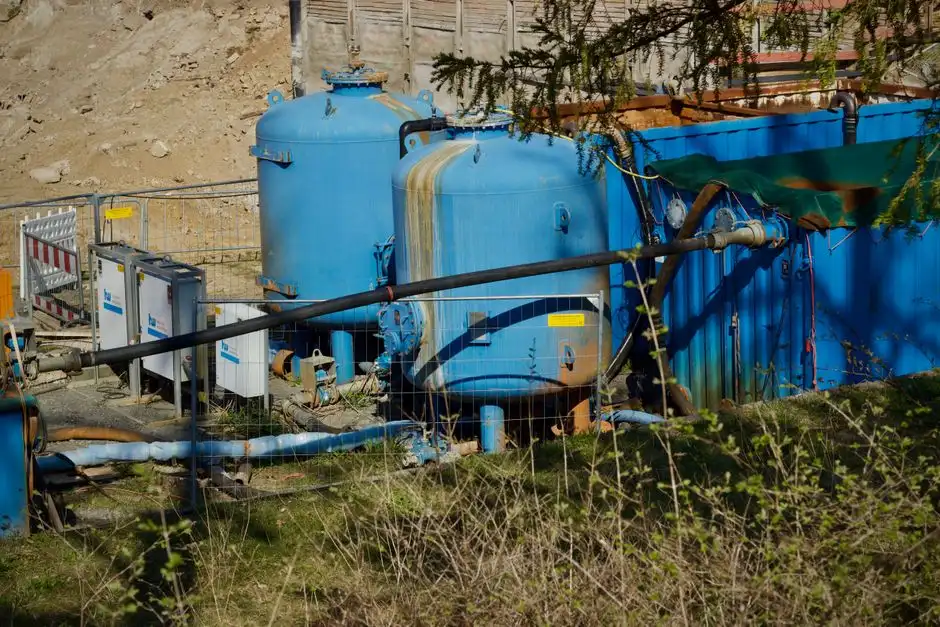
Plant capacity must be sized from measured or credibly estimated peak flow, not from the 100–200 GPD per occupied room consumption benchmark alone. Water consumption is not wastewater generation: leakage, fixture use, occupancy variation, laundry output, kitchen discharge, and retained water can change the relationship. The quotation basis should show both the selected design flow and the method used to derive it.
BIOROCK describes its MULTIROCK system for 60–300 people and states that up to nine BIOROCK units can be installed in parallel, with a flow-control chamber distributing wastewater between units. These are supplier-specific capacity statements, not proof that the same scale applies to the hotel’s wastewater or effluent requirements.
Confirm available footprint, burial depth, groundwater level, access for maintenance, electrical supply, odor controls, and the ability to distribute flow between treatment units. A buried A/O package sewage treatment plant may fit a constrained site, but inaccessible tanks, unsuitable ground conditions, or unavailable service access can change the installation scope. Compare those site constraints with the footprint, membrane-maintenance access, and monitoring requirements of an MBR wastewater treatment system.
Use the project-specific packaged sewage treatment options for hotels only as a route-comparison reference; final sizing must use the hotel’s own flow and wastewater data.
Confirm discharge, reuse and compliance inputs
No treatment route should be finalized until the competent Eritrean authority and the receiving route are identified. Request the applicable permit, discharge authorization, connection approval, and correspondence with the receiving authority, then put the resulting conditions into the quotation basis. The available guidance identifies no Eritrean permit procedure or numerical effluent limit, so international examples must not be presented as local obligations.
Define each reuse application separately. Toilet flushing, landscaping, and cooling do not have identical exposure, treatment, monitoring, and operational requirements. Ask the supplier to state the proposed water-quality parameters, test methods, sampling frequency, treatment objectives, public-health controls, and cross-connection protections for each intended use.
Fluence identifies toilet flushing, landscaping, laundry, and food-service wastewater among hotel streams that may be suitable for treatment and reuse. Request operating assumptions, replacement costs, energy demand, maintenance, consumables, and monitoring obligations rather than accepting an unspecified reuse claim.
Build an RFQ scope before comparing prices
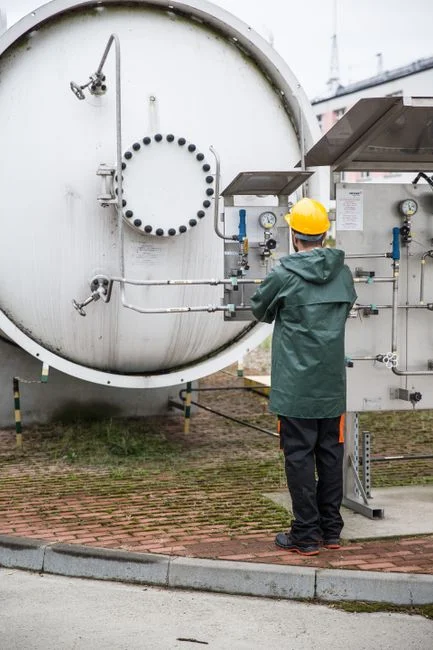
A comparable quotation requires the same design basis, performance test, and commercial boundaries from every supplier. Include average and peak flow, wastewater analysis, treatment capacity, treatment train, effluent and reuse targets, footprint, utility requirements, and site data. Then require suppliers to price civil works, installation, power supply, commissioning, training, spare parts, maintenance support, monitoring, and documentation as separate line items.
Tie acceptance to the confirmed discharge or reuse requirement. Specify the parameter, test method, sample condition, sampling frequency, and witnessing arrangement; a general statement that the system produces “clean water” is not an acceptance criterion. Require the supplier to disclose exclusions, assumptions, civil interfaces, utilities, delivery responsibility, commissioning prerequisites, local support, and compliance risks.
| Quote line item | Technical scope to specify | Red flags to check before signing |
|---|---|---|
| Design basis | Average and peak daily flow, occupancy basis, wastewater analysis, flow-balancing method and selected treatment capacity. | Capacity based only on room count, water-consumption benchmark or “people served” without a stated wastewater basis. |
| Treatment equipment and civil interfaces | Treatment train, pretreatment, tanks, access covers, lifting or pumping, installation, excavation, backfill, drainage and connections. | Civil works, groundwater control, odor control or abnormal-ground conditions left unpriced. |
| Utilities and site services | Electrical supply, power requirements, potable-water demand, sludge or waste handling, chemicals and site access. | Supplier excludes the power upgrade, transformer, switchgear, wiring or fuel and consumables. |
| Commissioning and training | Installation supervision, water filling, start-up, process stabilization, operator training, competency records and handover documents. | Commissioning begins only after an undefined buyer civil scope is complete, with no acceptance procedure. |
| Performance and warranty | Confirmed effluent or reuse parameters, test methods, sample conditions, witnessing, defect correction and warranty period. | Performance is promised without a sample point, duration, parameter or remedy for failure. |
| Operations and commercial boundary | Maintenance scope, monitoring, spare parts, consumables, remote support, training, delivery, installation, taxes, duties and local support. | “Delivered” is used without stating installation, commissioning, customs, taxes, exclusions or ongoing service costs. |
Use containerized sewage treatment plant sizing in Djibouti to check whether a quotation actually distinguishes equipment supply from the wider site scope. The country-specific example should not be used as evidence of Eritrean prices or approval requirements.
Related Equipment
- buried A/O package sewage treatment plant — specifications, capacity range, and technical data
Further Reading
Frequently Asked Questions
How should a hotel sewage treatment plant in Eritrea be sized?
Use measured or credibly estimated average and peak wastewater flow, supported by occupancy and stream-by-stream data. Ask the supplier to show how the selected capacity relates to those flows. The 100–200 GPD per occupied room drinking-water benchmark reported by Fluence is useful for checking consumption assumptions, but it is not a wastewater design flow.
Should the hotel select sewer discharge, a buried A/O plant or an MBR system?
Select sewer discharge only after the connection, permitted route, and any pretreatment are confirmed. Compare a buried A/O treatment plant with an MBR wastewater treatment system using wastewater quality, hydraulic peaks, footprint, maintenance access, reuse objectives, and the confirmed receiving route. Ask each supplier to identify the site conditions that would change its recommended train.
What should a supplier quote so the prices are comparable?
Request one technical schedule covering design flow, wastewater analysis, treatment train, effluent and reuse targets, capacity, utilities, civil interfaces, installation, commissioning, training, maintenance, monitoring, documentation, delivery, and exclusions. Require separate prices for each item. A lower equipment-only quotation is not comparable if civil work, electrical supply, commissioning, or site services are omitted.
How should a buyer assess supplier compliance and acceptance risk?
Request the supplier’s compliance basis and an acceptance protocol linked to the confirmed permit or reuse requirement. The protocol should name every parameter, test method, sample condition, sampling frequency, witness responsibility, and failure remedy. If the supplier cannot identify the applicable Eritrean approval route or define the test basis, obtain clarification in writing and obtain local authority confirmation before accepting the performance guarantee.