Define the Treatment Objective Before Selecting Equipment
Identify whether each Congo effluent stream needs discharge pretreatment, transfer to an authorized treatment system, broader treatment, or internal reuse before selecting an industrial effluent treatment plant and DAF system in Congo. Confirm the applicable discharge or reuse requirements, map each stream to its destination, establish average and peak flow with COD, BOD, TSS, oil and grease, pH, turbidity, temperature and TDS loads, and define the sludge-disposal route. DAF is appropriate only where its solids and oil-removal function contributes to the selected treatment objective.
Make four separate procurement decisions: the governing destination, hydraulic and contaminant design basis, treatment-stage boundary, and fate of the generated sludge. The available documentation does not establish Congo-specific discharge limits, reuse standards, receiving-water classification or the responsible authority. Request the applicable permit conditions, reuse requirements, receiving-water context and required compliance documents from the project owner or the relevant Congo environmental authority. Do not infer a direct-discharge limit from a sewer-connection rule.
Use the documented meat-processing plant only as a configuration example. Its 6 ML/d capacity and 42 t COD/d load applied to that facility; they are not design values for Congo. In that example, DAF replaced gravity sedimentation ahead of activated-sludge treatment and anaerobic digestion of primary sludge. The best DAF unit selection framework can then be applied to the verified project basis rather than to generic flow assumptions.
Test Whether DAF Fits the Wastewater
Select DAF when the required outcome includes removal of suspended solids, oil and grease, FOG or colloidal material before biological or reuse stages. Dissolved air flotation clarifies wastewater by releasing tiny bubbles that attach to suspended matter, carry it to the surface and permit a skimming device to remove it. Coagulant or flocculant dosing may be needed for colloidal material, but the chemical decision should follow wastewater testing rather than a standard reagent list.
For a high-flow stream containing solids, oils and fats, the meat-processing example uses micro air bubble flotation in the 30 to 50 micron range, followed by activated-sludge treatment and sludge digestion, according to SIGMADAF clarifiers. That arrangement demonstrates how DAF can protect downstream biological treatment; it does not demonstrate that every Congo wastewater requires the same train.
| Discharge route or influent problem | Governing rule or process option | What data settles it |
|---|---|---|
| Suspended solids, oil and grease, FOG or colloidal material must be removed before further treatment | Test DAF as front-end clarification within the complete effluent treatment train | Flow profile; TSS; oil and grease; COD; BOD; turbidity; pH; temperature; required solids and oil-removal outcome |
| Organic load remains after solids removal | Compare DAF plus biological treatment against other complete routes using the same influent and effluent requirements | COD and BOD after DAF; biodegradability evidence; footprint; utilities; sludge route; required effluent quality |
| Treated water must meet an internal reuse specification | Add downstream barriers according to the intended reuse rather than treating DAF effluent as reusable by default | Reuse application; required reuse parameters; source-water risk; treatment-stage boundaries; monitoring plan |
| High-flow stream with solids, oils and fats | Consider micro-bubble flotation ahead of biological treatment or another downstream stage | Verified flow and contaminant loads, oil characteristics, temperature, available footprint and comparison against the documented meat-processing configuration |
Use the DAF engineering specifications to assess equipment functions, and review industrial effluent treatment route and RFQ checklist before comparing biological, MBR, UF and RO additions. An industrial DAF system should remain a treatment stage within a defined train, not the entire compliance strategy by default.
Build the Design Basis from Flow and Load
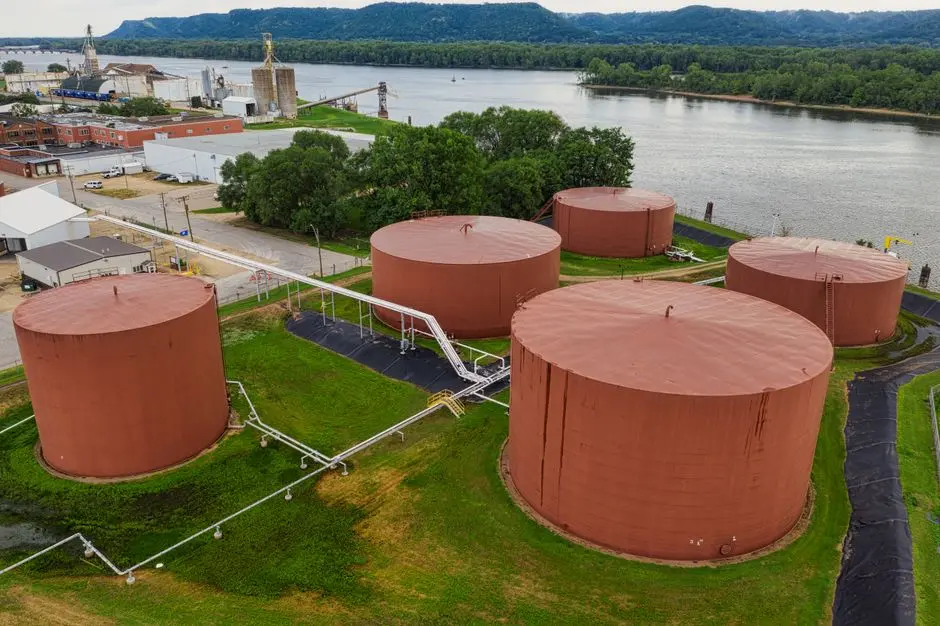
Base equipment sizing on measured flow and load behavior, not a single daily average. Obtain continuous-flow records covering normal production, peak production, batch dumps, cleaning cycles and shutdown periods. These records should distinguish regulated process streams, stormwater inputs and other inflows so that the supplier does not size around an average that conceals hydraulic peaks.
Document the sampling basis for each regulated stream: COD, BOD, TSS, oil and grease, pH, turbidity, temperature and flow, including variation during the production cycle. A Research Square preprint by Milad Abouzari, Parham Pahlavani and Hossein Ahmadi provides one example of temporal sampling: COD, pH, turbidity and TDS from equalization-tank effluent were collected during an 8-hour monitoring period over a year. Because that study was a non-peer-reviewed preprint and concerned one plant, its monitoring approach is not a Congo design basis.
Separate three hydraulic quantities in the RFQ: forward feed flow, recirculation flow and combined flow through the flotation contact zone. A recirculation pump is part of the DAF mechanism, but its duty must not be confused with plant production capacity. Require bidders to state which flow each equipment rating refers to and which flow determines tank, pump and hydraulic-loading selection.
Before requesting prices, confirm the available footprint, installation location, civil-work constraints, power supply, utilities, operator competence and proposed route for flotated sludge. The DAF machine specifications guide is useful for converting the verified basis into a technical schedule, provided no generic specification replaces project data.
Compare Complete Treatment Routes
Compare complete routes against the same wastewater data, footprint and required final quality. DAF-only clarification may be sufficient only when the governing objective is limited and the resulting effluent has an authorized destination. DAF plus biological treatment addresses a route where biodegradable organic load remains after flotation. DAF plus biological or tertiary membrane treatment may be needed for more demanding reuse requirements, but MBR, UF and RO should be selected by their required separation function rather than added without a water-quality or reuse driver.
A general DAF reference describes circular systems as requiring just 3 minutes and rectangular systems as requiring 20 to 30 minutes. Treat those figures as geometry context, not guaranteed hydraulic residence times for a Congo installation. Project-specific separation area, loading, wastewater characteristics, recycle arrangement and supplier design determine the installed duty.
For each route, ask vendors to identify its treatment-stage boundary, chemical demand, energy demand, generated sludge, maintenance burden, control strategy and final disposal route. Review the industrial effluent treatment route comparison and the industrial wastewater reuse options as decision aids, not as substitutes for Congo requirements. The purchasable result is an agreed treatment train, not a collection of named technologies.
Issue a Comparable RFQ and Acceptance Schedule
Issue one common RFQ package with identical site data, destination requirements and quotation boundaries. Require each bidder to state design flow, treatment duty, feed assumptions, DAF configuration, recirculation arrangement, solids-capture method, instruments, utilities and downstream treatment boundaries. Include civil works, utilities, installation, commissioning, operator training, sludge removal, chemical dosing, spares, documentation and long-term support as separately priced lines so omissions do not distort comparison.
| Quote line item | Technical scope to specify | Red flags to check before signing |
|---|---|---|
| Design basis and DAF equipment | Average and peak forward flow; contaminant loads; recycle flow; tank duty; flotation configuration; recirculation pump; air saturation; and solids-capture method | Daily average used without peak evidence; treatment duty stated only in residence time; recycle flow omitted or presented as plant capacity |
| Chemical and solids handling | Coagulant or flocculant duty; PLC-controlled chemical dosing system; dissolved chemicals; and removal, containment or recovery of flotated sludge | Chemicals excluded from supply; no working volume or access provision; sludge destination unpriced or unapproved |
| Mechanical and control scope | Compressors, saturators, aeration, piping, valves, instrumentation, controls, local displays, alarms and power requirements | Instrument list incomplete; controls boundary unclear; site power, compressed air and drainage omitted |
| Civil works and installation | Tank foundations, bunding, access platforms, lifting, local pipes, electrical installation, drainage and interfaces with civil works | “Complete package” hides major site works; interfaces and connection points are undefined |
| Commissioning, training and handover | Wet commissioning, agreed influent and effluent tests, operator training, manuals, spare parts, documentation and support responsibilities | Performance guarantee omits feed assumptions; acceptance uses undefined samples or parameters; training and spares excluded |
Use the installation documented by SIGMADAF clarifiers as a scope check: its listed equipment included floated-sludge collectors, recirculation pumps, compressors, saturators, aeration, stainless-steel piping, valves, instrumentation, controls, spares and documentation. Ask bidders to price each item rather than assuming the reference installation matches Congo site conditions.
Define performance tests using agreed influent and effluent parameters, sampling points, test methods, operating conditions and acceptance periods. The available research establishes no universal removal percentage or Congo discharge limit. Before signature, assign the owner’s responsibilities for site data, permits, power, civil works, operating staff, chemicals, sludge removal, sampling and access; assign the supplier’s responsibilities for design, equipment, installation, testing, training and handover. The DAF operating-cost breakdown can structure the request for operating-cost inputs, but quotations should reflect the verified route and local utility assumptions.
Further Reading
Frequently Asked Questions
What inputs are needed to request a quotation for an industrial effluent treatment plant and DAF system in Congo?
Ask the supplier for a quotation only after compiling the regulated-stream flow profile, COD, BOD, TSS, oil and grease, pH, turbidity, temperature and TDS data; the discharge or reuse destination; applicable Congo requirements; available footprint and utilities; and the sludge-disposal route. Also require the RFQ to distinguish forward flow, recirculation flow and combined treatment flow. These inputs allow bidders to size the DAF and downstream stages consistently.
How much does a DAF-based industrial effluent treatment plant cost?
No defensible price can be stated without the verified design flow, contaminant loads, treatment route, civil-work condition and supply boundary. Request separate quotations for DAF equipment, downstream biological or membrane treatment, chemical dosing, sludge handling, electrical and instrumentation, civil works, installation, commissioning, training, spares and long-term support. Also request operating-cost inputs based on the proposed equipment and locally confirmed utility conditions.
Is DAF sufficient by itself for industrial wastewater reuse?
Not automatically. DAF primarily removes suspended material, oil and grease, FOG and colloidal material; it does not by itself establish compliance with an unspecified reuse specification. First obtain the intended reuse application and its required parameters, then identify whether biological treatment, MBR, UF, RO or another barrier is needed. Do not describe DAF effluent as reusable until the specified quality and local authority requirements are met.
How should suppliers be selected for a Congo project?
Compare bidders against the same treatment duty, design-flow basis, feed assumptions, equipment scope, utility requirements, acceptance tests and documentation package. Check whether each offer defines the downstream boundary and prices civil works, installation, commissioning, operator training, chemicals, sludge removal, spares and support separately. Request references only for equipment and configurations comparable to the proposed route, and require clarification of any unresolved local permit or site-interface responsibility before award.