Set the reuse objective before choosing equipment
For an Estonian industrial project, choose the treatment route only after separating each wastewater stream from its intended destination: compliant discharge, production reuse or another specified reclaimed-water application. An Estonian industrial recycling project at Kohila can purify and reuse up to 25,000 cubic metres of water annually and is expected to reuse 70% of production-process water, showing that reuse is practical locally. That example does not determine a new plant’s design. MBR, UF and RO should be assigned only after reviewing flow, water analyses, reuse quality, available space, sludge handling and authorization requirements.
A complete water balance identifies hourly and seasonal flow, discharge points, intended reuse applications, water-quality specifications and operational constraints for every stream. Separate process wastewater from clean stormwater, cooling water and washing streams because dilution, composition and reuse destinations may differ. The National Academies review identifies industrial process water among the potential reclaimed-water uses evaluated, but it also treats suitability as dependent on the quality and quantity of processed wastewater (National Academies Press).
Regulation EU-2020/741 provides a framework for reclaimed-water quality, health protection and environmental protection, but the applicable Estonian route and site conditions must be verified before design. Request the proposed reuse classification, permit or authorization pathway, sampling requirements and responsible authorities from the project’s environmental or regulatory adviser; the available project evidence does not establish a site-specific discharge limit or reuse permit.
Use the Kohila project as a feasibility precedent, not a sizing rule. Lindström and Spacedrip state that their Kohila system can purify and reuse up to 25,000 cubic metres annually (Lindström Group). The more detailed route-selection considerations are also summarized in sustainable industrial water-waste reduction for Estonian projects.
Match the wastewater stream to a treatment route
Select equipment by the contaminant removal duty it must perform, then verify that duty against the intended reuse specification. Biological treatment, MBR, UF and RO are not interchangeable product categories: each removes different constituents and creates a different residual stream. A supplier’s selected route should follow from the wastewater analysis and water-quality target, not from a preference for one technology.
| Discharge route or influent problem | Governing rule or process option | What data settles it |
|---|---|---|
| Wastewater discharged under an applicable authorization | Define the permitted receiving route and required discharge treatment; do not assume that reuse treatment automatically satisfies discharge conditions. | Permit conditions, receiving-water route, hourly and seasonal flow, influent analysis and locally applicable analytical methods. |
| Wastewater requiring biological treatment before membrane separation | An integrated MBR wastewater treatment system combines biological treatment with membrane separation; it is not automatically suitable for every reuse application. | Flow, COD, BOD, suspended solids, nutrients, process-specific constituents and the required product-water quality. |
| Pretreated water requiring removal of suspended solids, colloids or bacteria | An UF water treatment system may provide the specified filtration objective. UF does not by itself establish removal of dissolved contaminants. | Feed characteristics, required filtration outcome, feed temperature and cleaning or maintenance requirements. |
| Reuse application requiring removal of dissolved contaminants | Industrial reverse osmosis can form the polishing stage when the permeate target justifies it, but its feasibility depends on feed chemistry and concentrate handling. | Permeate specification, complete feed analysis, scaling constituents, recovery approach and authorized concentrate route. |
| Every selected treatment stage | Record the residual route alongside the product-water route. | Expected sludge or concentrate characteristics, collection method, storage, transport or disposal responsibility, and the applicable permit. |
For MBR, request representative flow and water-quality data rather than relying on the word “integrated.” The supplier should explain which biological functions the unit performs, what membrane separation contributes, and which contaminants remain in the treated water. For UF, require the filtration objective and feed characterization to match the proposed duty; it removes bacteria, colloids and suspended solids without coagulant chemicals, but that physical role does not demonstrate suitability for dissolved contaminants.
Use RO only after defining the permeate target, analyzing the feed and identifying a concentrate-disposal solution. A higher-grade application requires a product-water specification; otherwise, “high-quality reuse” is not an acceptance condition. To choose between discharge pretreatment and RO reuse, ask the supplier to identify which contaminant determines the need for RO and why the proposed pretreatment is adequate.
The broader comparison of UF, MBR and package-plant recycling routes can help frame technology roles, but the feed analysis and Estonian discharge or reuse route must still control the decision.
Use the Kohila project to test business expectations
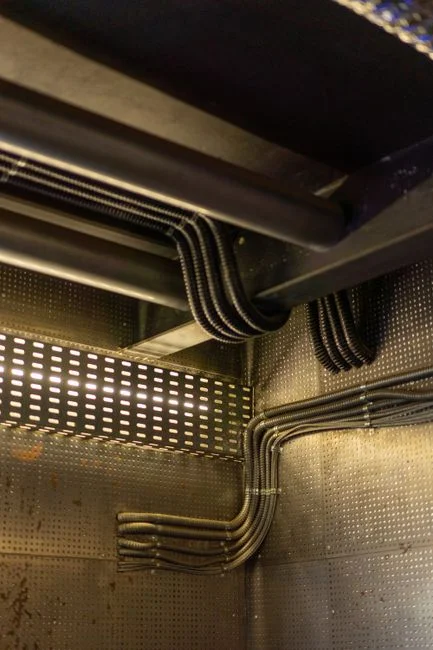
The Kohila case supports a business case for industrial water reuse, but its figures must remain attached to that facility. Lindström describes the Lindström and Spacedrip installation at Kohila as one of Estonia’s largest industrial water-recycling projects (Lindström Group). Its stated purification and reuse potential is up to 25,000 cubic metres annually, and the operating target is 70% reuse of water generated during production processes (Lindström Group).
The project uses a bioreactor in which microbes purify the water. Automatic filters and a control system support the biological process and monitor water quality in real time (Lindström Group). That configuration supports a buyer question: how much monitoring and operator intervention are required to maintain the promised reuse rate as incoming wastewater quality changes?
Do not transfer Kohila’s operating target into a new project’s commercial model. Calculate the project’s own water balance, then test whether reuse reduces purchases of an alternative water supply without restricting production, increasing residual handling or creating permit obligations. Request a site-specific model showing the baseline supply, recovered-water yield, production losses, downtime assumptions and residual costs. The Kohila account links reuse with reduced reliance on groundwater, operational continuity and resource efficiency, but it does not supply a universal financial return.
Build a quotation scope that can be accepted
Require quotations to use the same measured basis. Each offer should state design flow, treated-water target, operating mode, feed-water limits, automation, utilities, civil works, installation, commissioning and training. A water-treatment equipment RFQ checklist provides a useful structure, but industrial reuse bids must also identify the selected stream and residual route.
| Quote line item | Technical scope to specify | Red flags to check before signing |
|---|---|---|
| Design basis and treated-water target | Design flow, operating pattern, feed limits, intended reuse application and every required water-quality parameter. | No reuse application, incomplete feed limits or reuse quality promised without an acceptance criterion. |
| Process stages and residuals | Selected treatment route, stage-by-stage duty, pretreatment requirements, sludge or concentrate generation and authorized destination. | UF or RO is shown without confirming the feed; residual disposal is omitted from scope. |
| Performance guarantee | Agreed sample points, test methods, operating conditions, test duration and procedure for resolving deviations. | Guarantee depends on an unstated feed quality or excludes the periods needed to demonstrate performance. |
| Equipment, utilities and site works | Equipment scope, utility demands, civil works, installation, controls, commissioning, training, maintenance and spare parts. | Civil, electrical or utility connections are left as undefined assumptions or omitted from the price. |
| Customer inputs and approvals | Named responsibility for wastewater analysis, flow records, utility capacities, permits, residual handling and site access. | Supplier relies on data the buyer has not supplied, or approval and site-work obligations have no owner. |
| Commercial and delivery terms | Price basis, payment milestones, delivery scope, schedule assumptions, warranty conditions and remedy for failed acceptance. | Price excludes key scope, delivery date lacks a defined site readiness condition, or remedy is only a repair obligation. |
Assign missing inputs before signature. The buyer should provide confirmed flow data, influent and effluent analyses, utility capacities, site access information and the proposed discharge or reuse authorization route. The supplier should provide equipment feed limits, drawings, utilities, performance criteria, testing procedures and residual-management requirements. The National Academies review identifies treatment performance, energy use, cost and environmental impact as core issues when comparing reuse options (National Academies Press), so a comparison that prices only the skid is incomplete.
Plan commissioning and performance verification
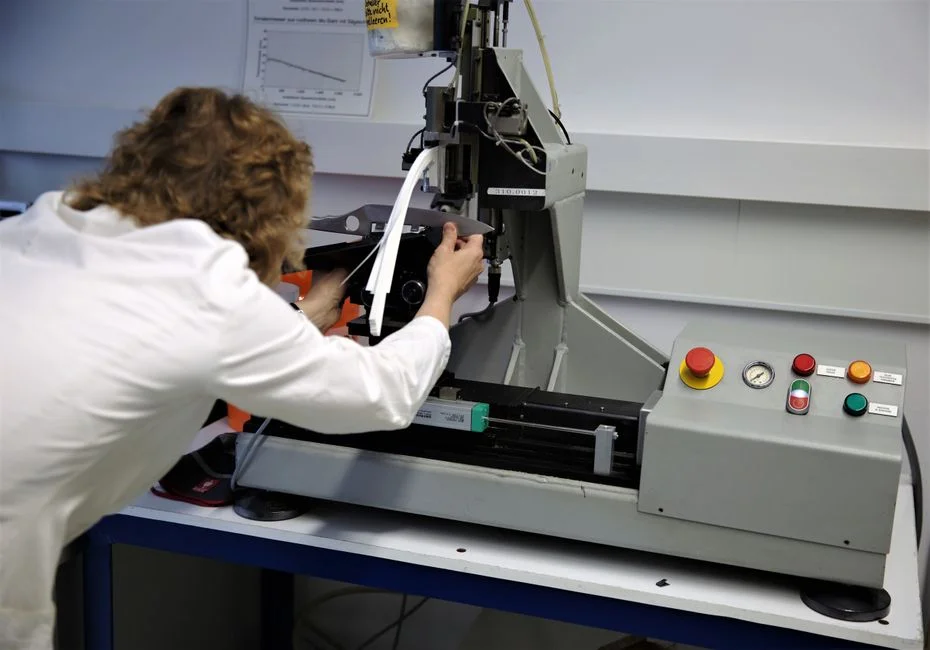
Make acceptance conditional on verifiable site prerequisites. Before start-up, confirm the wastewater characteristics, utilities, trained operators, safety procedures, calibrated instruments and agreed sampling points. Identify who confirms each item and retain that evidence in the commissioning record. Do not authorize performance testing while the feed still differs materially from the design basis.
Define how performance will be demonstrated across the agreed operating conditions and how deviations will be corrected. Each test should specify the sample point, parameter, method, operating condition and acceptance requirement. Record simultaneous flow and treated-water results; otherwise, a compliant sample cannot demonstrate the plant’s capacity or recovery performance.
Include the required monitoring, alarms, control-system access, maintenance intervals, spare parts and operator training. The final handover should cover operating procedures, maintenance tasks, laboratory or online instruments, calibration, spare-parts records and escalation responsibilities. Document the residual or concentrate destination before the performance test because it affects both operability and permitability.
For operational readiness, use reverse-osmosis troubleshooting field guidance to identify which monitoring and maintenance evidence the supplier must hand over. That guidance should inform the training and aftercare scope, not substitute for site-specific acceptance tests.
Frequently Asked Questions
Should an Estonian reuse project choose MBR, UF or RO?
Choose MBR where biological treatment and membrane separation are required, UF where the confirmed duty is removal of suspended solids, colloids or bacteria, and RO where the reuse specification requires removal of dissolved constituents that the preceding stages cannot meet. The deciding documents are the representative wastewater analysis, product-water specification and residual-handling plan. A technology named in a supplier’s offer is not evidence of suitability until those inputs are attached to the duty.
How much does an industrial wastewater reuse system cost?
Do not accept a price without a defined scope. Request separate quotations for equipment, pretreatment, membranes, tanks and pumps, controls, civil works, utilities, installation, commissioning, training, maintenance, residual handling and performance testing. Also request the operating assumptions behind any energy or consumables price. The available project evidence does not provide a quotation for an Estonian industrial reuse system, so a defensible price requires the site flow, analyses, reuse target and supplier scope.
How should treatment capacity be sized?
Size from the site-specific water balance, not from the Kohila precedent. Request hourly and seasonal wastewater flows for each stream, anticipated production changes, required storage and operating continuity conditions, then reconcile those inputs with the reuse target and equipment duty cycle. The Kohila system’s stated capacity of up to 25,000 cubic metres annually and 70% reuse target belong to that project and cannot be used as default assumptions for another facility.
Which supplier acceptance and delivery terms should be included?
Require feed limits, a stage-by-stage process description, performance guarantees with named sample points and test methods, utility and civil-work exclusions, residual responsibilities, commissioning prerequisites, delivery assumptions, training, warranty and a remedy for failed acceptance. Ask the supplier to identify who supplies the wastewater analysis, flow data, utility capacities, approvals and site access. A delivery date should also state the site-readiness conditions on which it depends.