Quick-Scan Diagnostic Tree: 5 Measurements in 10 Minutes
Start by checking normalized permeate flow: if drop >15% and conductivity rise >10% versus baseline, suspect membrane fouling or scaling. Isolate each pressure vessel, record ΔP; clean CIP if ΔP >0.3 bar or SDI15 >5. This fixes 70% of industrial RO alarms within 45 min. When a midnight alarm triggers a "Permeate Low" alert, the immediate instinct of many technicians is to increase feed pressure. However, without normalizing for temperature and Net Driving Pressure (NDP), you may be masking a critical fouling event that could lead to irreversible membrane compaction.
To diagnose the system accurately, record permeate flow, concentrate flow, pump pressure, and inlet/outlet ΔP across each stage. Industrial 8-inch membranes typically operate with a ΔP limit of 0.6 to 1.0 bar per housing; exceeding this suggests severe mechanical stress on the spacer. If feed pressure rises >5% while flow drops, suspect particulate fouling; clean the multimedia filter or RO pre-filter first before touching the membranes. (HydropureWater field data, 2025).
| Parameter | Baseline (Commissioning) | Alarm Trigger (Action Required) | Probable Root Cause |
|---|---|---|---|
| Normalized Permeate Flow | 100 m³/h | <85 m³/h (>15% decline) | Biofouling or Colloidal accumulation |
| Permeate Conductivity | 15 µS/cm | >17 µS/cm (>10% rise) | O-ring leak or Membrane scaling |
| Differential Pressure (ΔP) | 1.2 bar (per stage) | >1.5 bar (>15% increase) | Particulate fouling or Scaling |
| Silt Density Index (SDI15) | <3.0 | >5.0 | Pretreatment breakthrough (MMF/DAF) |
| Feed Pressure | 8.5 bar | >9.5 bar | Compensating for fouling/low temp |
Membrane Fouling vs Scaling: Spot the Difference with SDI and ΔP
Differentiating between organic fouling and mineral scaling is the primary factor in determining whether to use a low-pH or high-pH Cleaning In Place (CIP) protocol. Colloidal fouling, often characterized by an SDI15 between 3 and 5 and a gradual ΔP rise over weeks, requires a high-pH surfactant-based cleaning to emulsify organic matter. Conversely, a ΔP spike >0.5 bar occurring within days, coupled with stable permeate TDS, indicates mineral scaling—typically calcium carbonate or sulfate—which necessitates a citric acid recirculating wash at pH 2.
According to ESP Water data, roughly 80% of residential fouling is colloidal, but in industrial settings, scaling risks rise exponentially as systems approach 90-95% recovery. If the first stage shows high ΔP, it is likely particulate or biofouling; if the last stage (tail elements) shows high ΔP, it is almost certainly mineral scaling due to the concentration of salts. Using the wrong chemistry—such as applying acid to a bio-fouled membrane—can fix the foulant in place, making it nearly impossible to remove later.
| Foulant Type | Primary Location | SDI/LSI Indicators | ΔP Trend | Corrective Chemistry |
|---|---|---|---|---|
| Metal Oxides (Iron) | 1st Stage (Lead elements) | SDI >5; reddish tint | Rapid increase | Citric Acid (pH 2.0 - 3.0) |
| Calcium Carbonate | Last Stage (Tail elements) | LSI >0; stable SDI | Moderate increase | Hydrochloric or Citric Acid |
| Biofouling/Slime | 1st Stage | High TOC; variable SDI | Very rapid rise | Sodium Hydroxide (pH 11.0 - 12.0) |
| Silica Scaling | Last Stage | Silica >150 ppm in concentrate | Gradual but stubborn | Specialized high-pH cleaners |
Valve & Pump Issues: 3 Silent Killers of Recovery
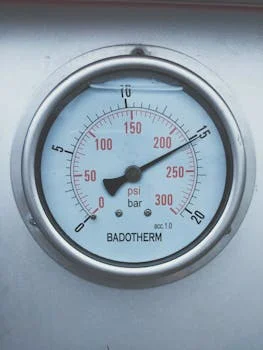
Mechanical failures in the concentrate throttling valve or VFD ramp settings can cause 15-20% losses in system recovery without triggering a direct membrane alarm. A concentrate valve stuck at 30% open can drop recovery from a target 75% down to 60%, drastically increasing water waste and energy consumption per cubic meter of permeate. Technicians should use an ultrasonic flow clamp to verify PLC flow meter readings, as scaling inside the concentrate line often causes magnetic flow meters to drift.
Check-valve seat wear is another common "silent killer" that creates permeate back-pressure; if permeate pressure exceeds 0.2 bar during standby, the membranes risk mechanical delamination. VFD ramp times are critical for membrane longevity. A VFD ramp set >15 seconds can trigger a low-pressure nuisance alarm during startup, whereas a ramp set too fast (<1 second) creates a water hammer effect that can telescope 8-inch elements. For industrial RO systems with 95% recovery, a ramp-up time of 3-5 seconds is optimal to maintain a steady 8 bar feed pressure without hydraulic shock.
Pretreatment Links: When DAF or Multimedia Filters Fail RO
Upstream pretreatment failures, specifically in Dissolved Air Flotation (DAF) or Multi-Media Filters (MMF), account for over 50% of premature RO membrane replacements. If DAF effluent oil levels exceed 2 ppm, it leads to irreversible hydrophobic fouling of the RO membrane surface, which cannot be restored via standard CIP. Maintaining oil levels <1 ppm via a coagulant dose of 30-50 mg/L is mandatory for plants processing food and beverage wastewater. You can find specific technical benchmarks in our guide on High Efficiency Sedimentation Tank Troubleshooting: 7 Expert Fixes.
Similarly, when an MMF backwash interval exceeds 24 hours, "mudball" formation occurs within the media bed, leading to channeling. This channeling allows large particulates to bypass the filter, causing the RO SDI to rise above 5. If this occurs, the RO membranes must be cleaned within 48 hours to prevent the particulates from becoming embedded in the feed spacers. Integrating an online SDI meter between the MMF and the RO unit, with an alarm set at 4.0, allows for automated backwash triggers or real-time polymer adjustment. For high-turbidity feed water, ensuring the DAF machine is optimized for solids removal is the first line of defense for the RO stage, often supported by multi-media filter systems for final polishing.
Cleaning In Place (CIP) Protocol: 8 Steps to Restore 97% Flux
A successful CIP protocol must strictly adhere to temperature and pH limits to avoid voiding membrane warranties while achieving maximum foulant removal. Start by heating the permeate to a maximum of 30°C; higher temperatures improve solubility but risk element structural integrity if combined with extreme pH. The standard sequence involves a low-pH recirculating wash for 20 minutes followed by a 40-minute soak to dissolve mineral scales, followed by a high-pH surfactant wash to address organic matter.
Flow rates during CIP are critical: for 8-inch vessels, maintain a flow of 8-10 m³/h per vessel to ensure a cross-flow velocity of approximately 0.1 m/s. This velocity is high enough to dislodge foulants through shear force but low enough to prevent membrane telescoping. Always rinse the system with RO permeate until the effluent conductivity is <100 µS/cm above the feed water conductivity. Validate the cleaning effectiveness via a 30-minute flush test to ensure normalized flux has returned to >95% of the baseline.
| CIP Step | Action | Target Parameter | Duration |
|---|---|---|---|
| 1. Low-pH Wash | Recirculate Citric Acid | pH 2.0 - 3.0 | 20 - 60 min |
| 2. Soak | Static Soak | Maintain Temp 30°C | 30 - 60 min |
| 3. High-pH Wash | Recirculate NaOH/Surfactant | pH 11.0 - 12.0 | 30 - 60 min |
| 4. Final Flush | Permeate Rinse | <100 µS/cm over feed | 20 min |
Spare Parts Decision Matrix: Replace Membrane or O-Ring?
The decision to replace a membrane element versus a simple O-ring can be the difference between a ¥1,000 fix and a ¥10,000 unnecessary expense. An 8-inch RO element typically costs between ¥800 and ¥1,200, but the labor and downtime associated with a full vessel swap can exceed 4 hours. If salt rejection drops below 97% even after a successful CIP, the membrane is likely chemically damaged or compacted and requires replacement. However, a sudden 2-3% jump in permeate TDS is often just a nicked O-ring in the permeate coupler; rebuilding the seal kit costs only 5% of a new membrane and should always be the first troubleshooting step.
Maintain a 5% safety stock of RO elements and a 100% stock of O-ring and seal kits, as lead times from major suppliers often stretch to 6-8 weeks. When comparing technologies, see RO versus nanofiltration performance metrics to determine if your current membrane chemistry is still the most cost-effective for your specific feed water profile. For automated chemical management, PLC-controlled antiscalant dosing packages can further extend the life of these parts by preventing the very scaling that leads to replacement.
| Component | Failure Sign | Repair Cost (Est.) | Replacement Trigger |
|---|---|---|---|
| RO Element (8") | Flux <80% after CIP | ¥800 - ¥1,200 | Irreversible fouling/compaction |
| Interconnector O-ring | Localized TDS spike | ¥20 - ¥50 | Visual wear or bypass leak |
| Concentrate Valve | Erratic recovery % | ¥500 - ¥1,500 | Actuator failure or seat erosion |
| 5µm Cartridge Filter | ΔP >0.1 bar | ¥10 - ¥30 | Pressure drop threshold met |
Prevention Checklist: Cut Yearly Cleaning from 6 to 2

Reducing the frequency of CIP cycles from six times per year to just two can extend membrane life by up to 24 months and save thousands in chemical costs. Log NDP-normalized flux weekly; a trend slope exceeding 0.5% per week is an early warning sign that triggers an investigation into pretreatment performance. Technicians should calibrate the antiscalant pump monthly and verify that the dosing remains between 2-4 mg/L depending on the LSI of the concentrate stream. Finally, replace the 5 µm cartridge filters whenever ΔP exceeds 0.1 bar, and always keep a spare set on the shelf to prevent the temptation of "running blind" during a filter bypass event.
Frequently Asked Questions
How do I know if my RO membrane is fouled or scaled? Check the ΔP and the location. Fouling usually hits the lead elements and shows high SDI. Scaling hits the tail elements (last stage) and is often linked to high recovery rates and positive LSI values in the concentrate.
What is the maximum SDI allowed for industrial RO? While manufacturers suggest an SDI15 < 5.0, most high-recovery industrial plants aim for < 3.0. An SDI > 5.0 will cause rapid ΔP increase and requires immediate pretreatment adjustment to avoid membrane damage.
When should I replace RO membranes instead of cleaning them? Replace the membranes if the salt rejection stays below 97% or if the normalized flux does not recover to within 10% of the baseline after two consecutive, correctly performed CIP cycles.
Can I use bleach to clean my RO membranes? No. Most thin-film composite (TFC) membranes are irreversibly damaged by chlorine. Even 1 ppm of free chlorine can cause oxidation, leading to a permanent loss of salt rejection. Use sodium bisulfite for dechlorination.