Define the El Salvador blowdown decision
For an El Salvador data center, the immediate choice is whether cooling-tower blowdown should be discharged, reused after suitable treatment, or sent through a higher-recovery membrane train. A 2016 Chulalongkorn University study evaluated nanofiltration and reverse osmosis for cooling-tower blowdown in a Thai power plant, supporting membrane reuse as a candidate route but not proving performance in El Salvador. Site-specific water analyses, cooling configuration, future expansion, and discharge conditions must determine the selection. A practical comparison should then translate the chosen route into equipment scope, acceptance criteria, instrumentation, operator requirements, and RFQ items.
Separate cooling-tower blowdown from sanitary wastewater and other data-center process streams before preparing a treatment basis. Each stream can carry different contaminants, flow variability, and reuse restrictions, so a combined analysis can obscure the constraints that govern the cooling-water route.
Establish whether the facility has an approved discharge route, a mandatory water-reuse objective, or both. Request the cooling-system configuration, current disposal route, expansion plan, and written El Salvador permit or receiving-system criteria from the facility’s environmental manager and the authority or utility responsible for the receiving system. Without that confirmation, the project remains a preliminary treatment concept rather than a compliance-controlled discharge design.
Use the Office of Scientific and Technical Information’s Regional Issue Identification and Assessment Program methodology as an analytical framework. It provides a method for analyzing cooling-tower blowdown water-quality impacts. Pair that framework with representative analyses covering suspended solids, turbidity, hardness, conductivity, pH, oil and grease, chlorides, and microbiological indicators. The completed assessment should identify the impact of each discharge or reuse option before equipment is selected.
Compare discharge and reuse routes against site conditions
Matching the obligation and source-water condition to the available treatment and receiving infrastructure determines the route. Direct discharge remains an option only after the receiving-system requirements are confirmed; reuse routes require a defined water-quality target and a compatible cooling configuration.
| Discharge route or influent problem | Governing rule or process option | What data settles it |
|---|---|---|
| Uncharacterized cooling-tower blowdown | Complete source-water and blowdown characterization before selecting pretreatment or a discharge route. | Representative analyses, flow records, current disposal route and cooling-system operating data. |
| Direct discharge or controlled discharge | Compare against the applicable permit conditions and receiving-system limits; do not assume that discharge is permitted because a route exists. | Discharge destination, written authority requirements, receiving-system criteria and monitoring obligations. |
| Cooling-water reuse | Assess whether the cooling configuration can accept treated water and whether repeated reuse would degrade water quality. | Cooling configuration, operating temperature, cycles of concentration, reuse percentage target and expansion plan. |
| Membrane-based reuse | Screen nanofiltration and reverse osmosis as candidate routes, then confirm local feed-water behavior through duty calculation and, where material, trial work. | Flow, analysis, required recovery, permeate target, energy constraint, footprint and operator staffing. |
| Advanced recovery | Assess zero-liquid-discharge concepts only against the residual waste, recovery requirements, disposal route and site constraints. | Site waste character, recovery target, disposal acceptance criteria, available utilities and planned expansion. |
The Chulalongkorn University study evaluated nanofiltration and reverse osmosis for recycling blowdown in a Thai power-plant setting. It supports membrane reuse as a candidate, but it does not establish treatment performance, recovery, or compliance in El Salvador. A local duty calculation and representative trial are the appropriate means of resolving that uncertainty.
Ramboll identifies recycled wastewater and harvested rainwater as possible data-center supply sources and states that enhanced treatment can enable repeated reuse without degrading quality. It also identifies treating and reusing spent cooling-tower blowdown as a route toward zero liquid discharge. Neither concept removes the need to assess site waste, recovery, energy, and disposal constraints.
Use water use effectiveness, expressed in litres per kilowatt-hour (L/kWh), to compare cooling-water efficiency; lower WUE indicates better water efficiency. Evaluate PUE with WUE because Ramboll identifies a trade-off between energy efficiency and water efficiency. Treat any regulatory register as a verification list, not as proof of El Salvador obligations, because the available material does not identify the local rules, authority, or permit pathway.
Match the treatment train to the source water
Feed-water characteristics and reuse targets dictate the treatment train, not flow rate alone. A representative analysis should establish whether suspended solids, colloids, turbidity, hardness, salinity, organics, or microbiological constituents will constrain the cooling loop or downstream membranes.
Use filtration and an UF blowdown pretreatment system where suspended solids, colloids, or turbidity could compromise downstream membrane performance. Confirm the required pretreatment through filtrate criteria and membrane-manufacturer limits rather than assuming UF is necessary for every feed.
Evaluate an industrial reverse osmosis system where permeate quality, recovery, automated operation, and a controlled process-water stream are priorities. The Chulalongkorn study evaluated both nanofiltration and reverse osmosis for blowdown recycling; the choice between them requires local feed-water data, a duty calculation, and a pilot where uncertainty is material.
Where hardness reduction is needed for cooling duty or RO pretreatment, obtain the hardness and scaling data before considering an industrial water softener system. Include an automatic chemical dosing system where the validated process requires pH adjustment, coagulation, or antiscalant control. Chemical selection, storage, dosing range, and residual monitoring must remain process-specific rather than being inferred from general equipment options.
Turn the selected route into an RFQ and acceptance scope
Requiring bidders to state the design basis, source-water assumptions, treatment objective, recovery definition, and excluded works prevents misaligned proposals. Without those statements, offers can appear equivalent while relying on different feed-water envelopes, recovery definitions, and client-side responsibilities.
| Quote line item | Technical scope to specify | Red flags to check before signing |
|---|---|---|
| Design basis and exclusions | Cooling configuration, measured blowdown flow and variability, representative analyses, discharge or reuse objective, expansion allowance and operating schedule. | Bid relies on “typical” water, omits future expansion, or leaves source-water changes and permit conditions with the buyer. |
| Treatment equipment | Define pretreatment, UF, NF or RO selection basis, equipment arrangement, capacities and controls tied to the agreed duty. | Equipment is selected from flow alone, with no stated water-quality envelope, recovery calculation or treatment objective. |
| Acceptance testing | Agree feed-water and permeate parameters, test methods, sampling points, test duration and consequences of nonconformance before signature. | Generic performance claims lack an agreed test protocol or refer to water outside the site envelope. |
| Controls and monitoring | Scope flow, pressure, conductivity, pH and turbidity monitoring, plus any additional parameters justified by the selected process and permit requirements. | Controls, alarms, data recording or fail-safe operating logic are omitted from the scope. |
| Maintenance and lifecycle support | State membrane cleaning, backwash, maintenance access, spare parts, documentation, operator training and commissioning support as separate line items. | “Installation and commissioning” is offered without defining validation, training, after-sales support or replacement-part responsibility. |
| Commercial responsibilities | Separate delivery, installation, commissioning, validation, training, maintenance and performance-guarantee responsibilities. | The quotation does not identify who performs each activity, who bears utility or disposal costs, or when performance testing occurs. |
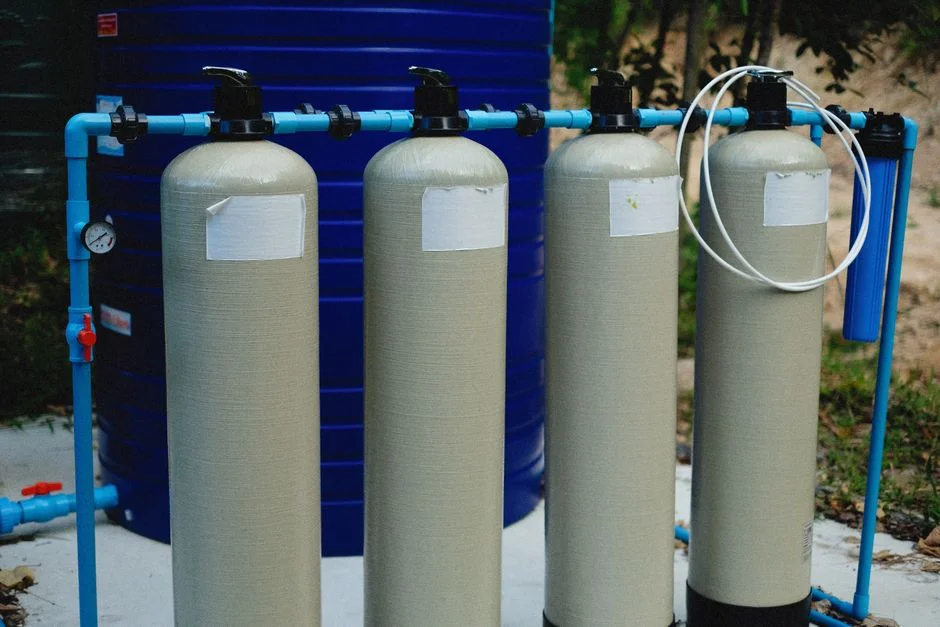
| Valves and treatment parts | List required valves, filter media and treatment components with materials, duties and service accessibility confirmed against the selected train. | Parts are shown only by generic descriptions, with compatibility or maintenance access left undefined. |
Use the treatment-parts, valves and filter-media specification to identify omissions and service constraints. Treat any guaranteed recovery rate or guaranteed water quality without a defined protocol and feed-water envelope as a pre-signature risk. The guarantee should identify the test method, test condition, sampling location, acceptance criterion, and remedy for nonconformance.
Plan verification and performance monitoring
Verifying the compliance route with the responsible El Salvador authority, the discharge operator or utility, and the client’s environmental manager is a prerequisite for project success. Obtain the applicable permit path, discharge point, receiving-system limits, and monitoring requirements in writing. Equipment selection does not establish whether discharge, reuse, or residual disposal is compliant at the site.
Use representative site data and, where scale or water-quality uncertainty could materially change recovery, equipment selection, or operating cost, conduct a trial before fixing membrane recovery or performance guarantees. The trial should use the proposed feed-water condition and demonstrate the selected operating sequence.
Track PUE and WUE together during commissioning and operation. The treatment system must remain aligned with the actual cooling and data-center operating schedule, including alarm, cleaning, backwash, membrane-replacement, and downtime procedures.
Review the treatment and reuse strategy whenever the data center expands, the cooling configuration changes, or the blowdown profile shifts. The initial route matrix and RFQ basis should then be revised rather than carried forward as an unverified assumption.
Further Reading
- regional cooling-tower blowdown treatment comparison
- discharge, softening-RO and high-recovery options
- data-center wastewater and cooling-blowdown engineering guide
Frequently Asked Questions
Which site inputs control treatment selection and equipment sizing?
The controlling inputs are the cooling-tower configuration and duty, measured blowdown flow and variability, raw-water and blowdown analyses, required recovery, treated-water quality, discharge or reuse conditions, expansion plan, utilities, and operator availability. Obtain current operating records and representative laboratory analyses before requesting equipment sizing; do not permit a bidder to substitute generic feed-water assumptions.
What must a water-recovery guarantee define?
It must define the feed-water envelope, system boundary, calculation method, test period, sampling points, test methods, acceptance criteria, and remedy for nonconformance. Recovery should not be presented as a stand-alone percentage without stating whether and how upstream losses and off-specification discharges are treated.
Which deliverables should the quotation include?
Require the design basis, process calculations, equipment schedule, controls and alarm list, monitoring scope, test protocol, utilities, maintenance plan, spare parts, documentation, training, commissioning, validation, and warranty as separate line items. Also list exclusions and client responsibilities, including source-water changes, permits, disposal interfaces, and site utilities.
How should equipment supply be separated from El Salvador compliance?
Ask the supplier to confirm equipment capability against the agreed design basis, while the client’s environmental team obtains the permit, discharge-point, and receiving-system requirements from the responsible authority or utility. A technical submittal can demonstrate process performance under defined inputs, but it cannot establish local discharge or reuse obligations.