Define the Blowdown Destination Before Choosing Equipment
The practical choice is usually between pretreatment alone, membrane recovery for reuse, and a discharge or zero-liquid-discharge route. Cooling-tower blowdown requires source-specific treatment because contaminants can cause scaling, corrosion, fouling, and biofilm growth, while RO and nanofiltration are identified as blowdown-recovery technologies [S1][S3]. For a Costa Rican data center, first define whether the treated stream becomes cooling makeup or must be discharged, then obtain flow and complete water analyses, required recovery, concentrate disposition, and applicable permit conditions. The supplied evidence is technical guidance rather than proof of Costa Rican discharge requirements, so the final route and acceptance criteria need local verification.
Start by separating incoming source-water treatment from blowdown recovery. The water entering the facility must be conditioned before it enters a cooling loop because minerals, dissolved solids, and organics can contribute to scaling, corrosion, fouling, and biofilm growth [S3]. Blowdown recovery is a different application: the stream has already participated in cooling-system operation, so its chemistry, chemical dosing history, temperature, and variability must be assessed before a recovery train is selected.
The destination governs the equipment train. A reuse project must define the required quality of cooling tower makeup water and how the treated stream will be blended or returned to the loop. A discharge project must define the receiving route and applicable permit conditions. A zero-liquid-discharge project must establish how the concentrate will be converted or managed; treatment alone does not remove that obligation. Ramboll identifies reuse and zero-liquid-discharge concepts, as well as constructed wetlands, as potential strategies, but suitability depends on site analysis and local acceptance [S5].
Before issuing an equipment request, obtain:
- Cooling-tower blowdown flow rate and operating variability;
- Cycles of concentration and required cooling tower makeup water quality;
- Influent and blowdown analyses covering conductivity, TDS, hardness, alkalinity, pH, TSS, silica, chloride, sulfate, and relevant treatment chemicals;
- The data-center cooling configuration and its permitted chemistry limits;
- The intended route: cooling makeup, pretreatment, controlled discharge, or zero liquid discharge;
- Required recovery rate and the proposed disposition of reverse-osmosis concentrate; and
- The applicable Costa Rican permit and receiving requirements, confirmed with the responsible authority or client compliance team.
Use cooling tower blowdown RO recovery and concentrate planning to structure the water balance, and distinguish data-center water reuse after biological treatment from recovery of the blowdown stream itself.
Match the Treatment Route to the Water Problem
Select the process that addresses the contaminant confirmed by analysis, not a universal treatment train. Nanofiltration or reverse osmosis is relevant where dissolved-solute reduction is required. The academic comparison of these membrane technologies was conducted on cooling-tower blowdown from a cogeneration power plant in Thailand, not a Costa Rican data center, so its results cannot be transferred directly without site-specific work [S1].
| Discharge route or influent problem | Governing rule or process option | What data settles it |
|---|---|---|
| Blowdown is intended for cooling tower makeup reuse | Treat the stream against the cooling-loop chemistry envelope; evaluate NF or RO where dissolved-solute reduction is required, with industrial reverse osmosis as a recovery option. | Required makeup-water chemistry, blowdown analysis, recovery target, temperature, and the cooling specialist’s blending and operating limits |
| Hardness is confirmed as the scaling risk | Use softening before membrane treatment rather than adding an unneeded softener to every project. | Hardness, alkalinity, pH, temperature, and the relevant scaling assessment for the actual blowdown |
| Suspended solids or particulate fouling threaten the membrane train | Evaluate ultrafiltration pretreatment for RO when the analysis supports a solids-removal barrier. | TSS, turbidity where measured, filterability, and the membrane supplier’s feed-water limits |
| Treated water is to be discharged | Define the required treatment and monitoring from the verified permit and receiving conditions; do not infer a Costa Rican limit from general guidance. | Confirmed authority requirements, discharge point, receiving-system conditions, client specifications, and any required residual treatment |
Softening should follow the water analysis. An industrial softener may be relevant where hardness is the confirmed issue and may serve as pretreatment for RO, but it does not remove every dissolved contaminant or establish the quality of the final reuse stream. Similarly, UF is principally a pretreatment barrier; it does not by itself establish that the permeate will meet cooling-loop chemistry requirements.
Treat RO permeate as a reuse candidate only after the cooling specialist confirms its chemistry, temperature, and blending arrangement against the data-center cooling system. The supplier should identify which pretreatment steps are required to protect the membranes, while the cooling designer remains responsible for the operating envelope of the returned water.
Build the Water Balance and Concentrate Plan
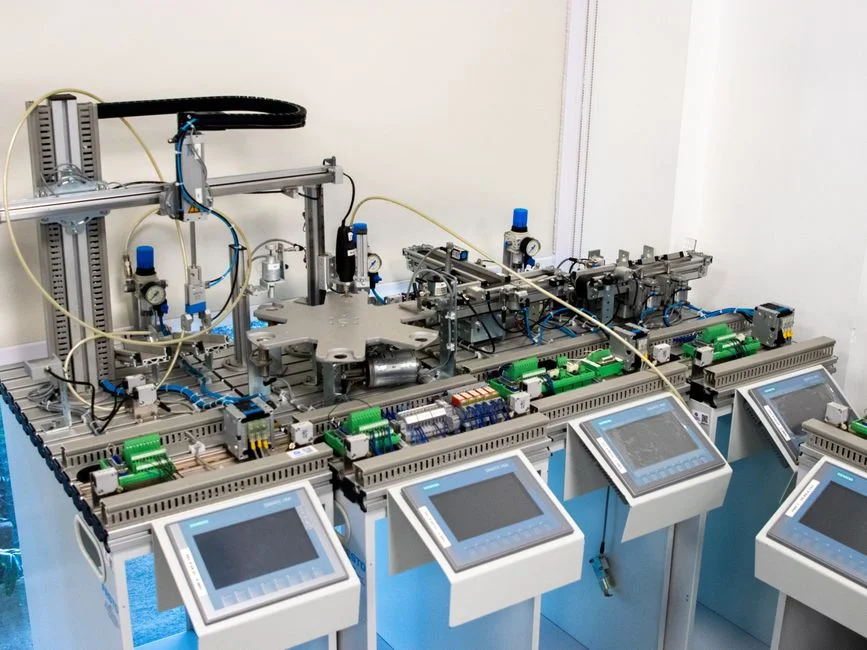
Require the bid to show a complete water balance rather than compare nominal permeate capacity alone. Define the blowdown feed flow, treatment recovery, concentrate flow, reuse flow, and any final discharge stream under the project’s operating basis. Changes in blowdown flow, feed salinity, recovery, or cooling demand can alter every downstream result, so the supplier must state its assumptions and how the system responds when they change.
Connect treatment performance to facility-level water performance. Ramboll defines WUE as annual cooling-water use relative to energy consumed, expressed in litres per kilowatt-hour, while PUE measures total building energy relative to IT-equipment energy [S5]. A cooling change can improve one metric while worsening the other, so route selection should be reviewed by the water-treatment engineer and cooling designer together.
Do not defer the concentrate decision until after equipment selection. A recovery route creates a concentrated residual stream whose volume and chemistry depend on the feed, recovery, treatment process, and operating conditions. Ask each bidder to provide:
- The recovery basis and expected concentrate flow;
- The predicted concentrate analysis at the stated operating basis;
- The proposed concentrate destination and any collection or transfer equipment;
- The chemical-additive inventory carried into the concentrate;
- The membrane-cleaning method and resulting cleaning-stream disposition;
- The operating response to changes in feed salinity; and
- The utility, chemical, labor, and disposal assumptions used in the offer.
Constructed wetlands and reuse or zero-liquid-discharge concepts are potential routes identified by Ramboll, not automatic selections [S5]. Their suitability depends on site analysis, hydraulics, climate, land availability, receiving conditions, and local acceptance. Expand the recovery discussion using cooling tower blowdown RO recovery and concentrate planning, and test cooling-architecture effects against liquid-cooling data-center water-use considerations.
Turn Site Data into a Comparable RFQ
Make quotations comparable by requiring separate flow and analysis sheets for source water, cooling-tower concentrate or blowdown, treated permeate, and final discharge or concentrate. The request should use the same stream definitions, sampling points, units, and operating basis across bidders. Missing data should be marked as bidder assumptions, not silently replaced with generic values.
| Quote line item | Technical scope to specify | Red flags to check before signing |
|---|---|---|
| Feed and permeate flow | State design basis, operating variability, recovery calculation, test points, and treatment train capacity | Capacity is stated only as nominal permeate output, with no feed-flow or operating-basis definition |
| Water analyses and feed-water limits | Require the analyses used in design and the supplier’s permitted feed-water envelope | Analysis list is incomplete, samples are undated, or acceptance depends on unspecified future sampling |
| Pretreatment | Identify filtration, softening, or other barriers required for the confirmed water problem and their sequence | Equipment is included without a stated purpose, or required pretreatment appears only as an exclusion |
| Controls and monitoring | List instruments, control actions, data outputs, alarm functions, and integration requirements | Real-time monitoring or control interfaces are promised verbally but omitted from the scope |
| Membrane cleaning | Define cleaning trigger, method, frequency basis, chemicals, recovery, and cleaning-stream handling | Cleaning frequency, chemical use, and waste disposition are excluded from price or performance guarantees |
| Concentrate handling | Specify flow, analysis basis, collection method, destination, and the party responsible for final disposition | “Zero liquid discharge” is claimed without defining the concentrate route or who owns its operation |
| Installation and acceptance | Separate equipment, foundations, utilities, electrical work, installation, commissioning, training, and regulatory support | Total installed scope excludes site works, tie-ins, spares, startup consumables, or permits |
Require each bidder to identify which items are measured, which are guaranteed, and which remain exclusions in the total installed scope. Real-time monitoring should be included as part of the operating strategy because treatment performance and cooling reliability depend on responding to changes in water chemistry [S3]. Use the data-center water treatment RFQ checklist to expand the request, then add the project-specific Costa Rican verification items.
Set Acceptance Criteria Before Signing
Convert the selected route into testable conditions before contract signature. Define flow-rate and product-water test points, instrument ranges, control sequences, cleaning requirements, data-delivery expectations, and responsibilities for sampling and analysis. A performance guarantee should state the test method, test duration, feed-water basis, calculation, corrective-action process, and consequences of noncompliance.
For membrane equipment, require the supplier to define feed-water limits, expected recovery under the stated basis, concentrate output, membrane-cleaning arrangements, and reject-water handling. Request the full predicted water balance with each offer and make incompatibility with the selected route an explicit exception to price acceptance.
For reuse into cooling systems, require the water-treatment supplier and cooling specialist to approve the final chemistry and operating envelope. The acceptance record should identify the permitted ranges for the relevant chemistry parameters, the effect of temperature, the blending method, control actions, and responsibility for chemical additions. This is an interface obligation, not a presumption that RO permeate is automatically suitable for reuse.
Keep discharge compliance acceptance conditional. Confirm the applicable Costa Rican discharge route, permit conditions, receiving requirements, and client specifications with the responsible authority or project compliance team. Do not turn a general treatment objective into a local limit, and do not accept a discharge guarantee until the receiving route is documented.
Frequently Asked Questions
When should cooling-tower blowdown use UF, softening, NF, or RO?
Use UF when the analysis shows that suspended solids or particulates require removal before a downstream membrane process. Use softening when hardness is confirmed as the relevant scaling risk. Consider NF or RO when dissolved-solute reduction is needed for reuse or a verified discharge route. The process sequence should follow the actual analyses and the required final-water chemistry, not a preset treatment train.
Which flow and analysis data are required to size the system?
Request the cooling-tower blowdown flow and operating variability, cycles of concentration, required cooling tower makeup water quality, and complete source-water and blowdown analyses. The analysis request should cover conductivity, TDS, hardness, alkalinity, pH, TSS, silica, chloride, sulfate, and relevant treatment chemicals. Also obtain the recovery target, cooling configuration, and concentrate disposition because these inputs determine the train and final water balance.
What must a comparable quotation include before signature?
Require each quotation to separate equipment, pretreatment, controls, monitoring, membrane cleaning, utilities, installation, commissioning, and concentrate handling. Ask the bidder to identify measured performance, guaranteed performance, assumptions, and exclusions. Resolve any omission of feed-water limits, sample analysis, recovery basis, concentrate destination, cleaning-stream disposition, site works, startup consumables, and data delivery before accepting the commercial offer.
Which Costa Rican compliance items should be verified?
Verify the applicable discharge authorization, receiving-system conditions, residual-discharge monitoring, permit application requirements, and the responsible authority with the project’s compliance team or a confirmed Costa Rican regulator. The technical guidance does not establish a jurisdiction-specific discharge limit, so request the governing permit or written authority determination rather than