Define the discharge route and reuse objective
An industrial effluent treatment plant in Sri Lanka should be selected based on the wastewater profile and required discharge or reuse outcome, rather than a generic package. Oil, solids, or colloidal loads may justify DAF pretreatment; an MBR may suit compact biological treatment and low suspended solids; UF or nanofiltration may be justified for reuse. A 2020 Noakhali study reported BOD5 of 105–190 mg/L and COD of 485–512 mg/L at two food-sector points. The specification also needs confirmed flow, peak demand, limits, reuse targets, land, sludge route, and approvals.
Start with a one-page discharge definition. Record the receiving route, intended reuse, expected reuse volume, operating hours, and the authority or client receiving each design input. Confirm with the relevant Sri Lankan authority which discharge conditions, reuse permissions, and environmental approvals apply to the specific site and industry. Do not assume that a package advertised for sewage treatment automatically satisfies an industrial effluent duty.
International membrane research can inform process selection without becoming a Sri Lankan regulatory specification. The University of Twente thesis Direct nanofiltration of wastewater treatment plant effluent assessed nanofiltration as a polishing process for producing effluent aligned with EU Water Framework Directive criteria for agricultural or indirect potable uses. That is international process evidence, not evidence of a Sri Lankan reuse requirement.
Similarly, the Bangladesh Noakhali study used Bangladesh Department of Environment values of pH 6–9, TDS 2,100 mg/L, chloride 600 mg/L, BOD5 50 mg/L, and COD 200 mg/L. Do not copy these into a Sri Lankan specification. Use them only to identify parameters requiring local verification. A practical worksheet should therefore leave the applicable discharge or reuse criteria blank until the responsible Sri Lankan authority or client confirms them. The effluent treatment plant buyer’s engineering guide provides a useful structure for separating route, process, performance, and commissioning decisions.
Map wastewater characteristics to treatment equipment
Wastewater analysis determines the treatment train, while a generic technology list does not. Obtain representative samples across normal production, cleaning, batch discharge, and upset conditions. Request pH, BOD5, COD, TSS, oil and grease, TDS, electrical conductivity, chloride, and dissolved oxygen, then add contaminants specific to the process, such as color, surfactants, phenols, ammonia, or metals where relevant. The BOD versus COD treatment guide explains why organic-load measurements need to accompany the proposed process design.
The Noakhali study illustrates the decision signal without setting Sri Lankan limits. In its 2020 results, BOD5 and COD exceeded the study’s criteria at food-sector sampling points S-6 and S-7, while measured TDS remained below the study’s 2,100 mg/L benchmark. The reported BOD5 values were 105 mg/L at S-6 and 190 mg/L at S-7; COD was 512 and 485 mg/L, respectively. This combination points toward an organic-load assessment and biological treatment. It does not establish the loading, flow, or treatment capacity for a Sri Lankan plant.
Use if–then matching to select components. If oil, grease, suspended solids, or colloidal material could overload biological treatment or interfere with membranes, evaluate DAF pretreatment. If compact biological treatment and low suspended solids are priorities, evaluate MBR. If solids removal or protection of downstream membranes is required, evaluate UF after the required upstream treatment. Polishing beyond UF should follow a defined reuse objective rather than being added because it appears on another supplier’s list.
| Buyer signal | Equipment question | Published reference point | Information still required |
|---|---|---|---|
| Oil, grease, solids or colloidal load | Is DAF pretreatment needed before biological treatment? | HydropureWater DAF systems: 4–300 m³/h for industrial pretreatment duties | Influent load, flow profile, flotation performance and sludge route |
| Compact biological treatment and low suspended solids | Does an MBR provide a better fit than the proposed conventional process? | HydropureWater MBR: 10–2,000 m³/day; effluent filtration below 1 μm | Organic and hydraulic loading, reuse target and membrane operating strategy |
| Solids control before a sensitive downstream process | Is UF required, and what pretreatment protects the membrane? | HydropureWater UF: 2,000–40,000 L/h; 0.03 μm PVDF membranes; turbidity up to 300 ppm | Feed-water chemistry, membrane flux basis and cleaning requirements |
The relevant product options are an industrial DAF pretreatment system and an integrated MBR effluent treatment system. Their published ranges are comparison inputs, not automatic selections. Ask each supplier to demonstrate how the selected equipment handles the verified wastewater analysis, peak flow, and effluent obligation.
Size the plant from peak flow and operating variability
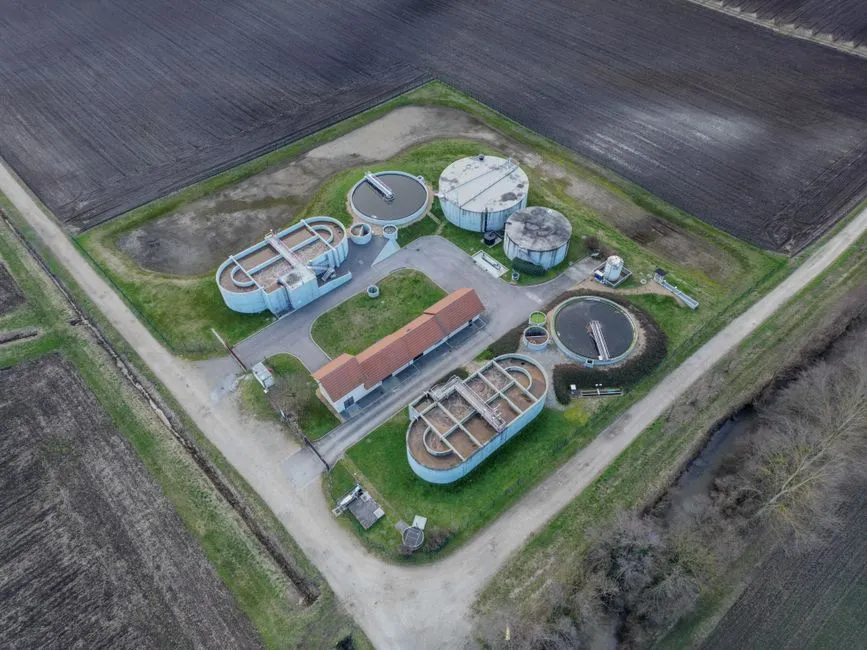
Hydraulic capacity and contaminant loading are separate design checks that must be calculated individually. Before requesting proposals, collect average daily flow, peak hourly flow, batch-discharge profile, operating hours, required retention time, future expansion, and any equalisation requirements. A supplier quoting only daily capacity has not shown how the plant behaves during the plant’s most demanding discharge.
Use this sequence for comparable sizing:
- Build a flow envelope from metered or production data, including batch releases and future expansion.
- Define representative influent concentrations and variability for every significant discharge condition.
- Compare hydraulic capacity, biological loading, and pretreatment removal duties separately.
- Check equalisation, duty cycle, redundancy, controls, and power demand against that envelope.
- Require the proposed footprint, utilities, consumables, and performance basis in the same quotation format.
Published equipment ranges provide useful boundaries for market comparison. HydropureWater lists MBR capacity from 10–2,000 m³/day. The research also identifies WSZ package sewage treatment from 1–80 m³/h where its A/O process and application scope fit the project. Neither range proves suitability: sewage-treatment capacity cannot be transferred to an industrial wastewater duty without checking the wastewater profile and applicable process basis. The Sri Lankan comparison in the sewer or package-plant assessment also points to route and application fit rather than headline capacity.
Put the missing data into the tender request. Each bid should state the design influent, average and peak hydraulic basis, biological loading assumption, pretreatment duty, equalisation strategy, redundancy, power demand, footprint, utilities, controls, performance guarantees, and operating assumptions. Where a supplier relies on a packaged sewage process, ask it to explain how variable industrial loads, inhibitory contaminants, and batch discharges are managed.
Plan sludge, monitoring and commissioning as part of the ETP
Sludge, monitoring, and commissioning determine whether the selected equipment can be operated and verified after handover. Include sludge generation, separation, storage, disposal or reuse, odour control, and site drainage in the process design. The Noakhali study found that only 30% of surveyed industries used their ETPs and another 30% did not have ETP facilities. Those 2021 publication figures describe Bangladesh survey conditions, not Sri Lankan plant availability.
Specify the monitoring plan as part of the performance contract. Unless verified Sri Lankan requirements define a different plan, request monitoring for pH, flow, BOD5, COD, dissolved oxygen, TDS, electrical conductivity, and chloride. Define whether each parameter is measured online, by laboratory sampling, or both, together with sampling locations, frequency, calibration, record retention, and responsibility for data review. This turns effluent quality monitoring into an operating control rather than a final certificate.
For sludge dewatering, verify the waste characteristics before selecting a machine. Where the route requires mechanical solid–liquid separation, evaluate automatic chemical dosing for coagulants, flocculants, and pH adjustment and a plate-and-frame filter press. The wastewater plant O&M outsourcing comparison is useful when deciding whether routine operation, maintenance, and laboratory work remain with the owner or transfer to a contractor.
Make acceptance conditional and measurable. Agree the influent and effluent criteria, analytical methods, sampling points, test duration, operating conditions, and responsibility for deficiencies before the performance test. Do not use the Bangladesh study’s discharge values as Sri Lankan acceptance limits. Define what happens if the test cannot proceed because the plant receives wastewater outside the agreed design envelope.
At handover, require process drawings, operating procedures, chemical and membrane data, maintenance schedules, spare-parts lists, calibration records, training evidence, test certificates, and a named contact for technical support. Commissioning is complete only when the plant can demonstrate the agreed route and operating envelope, not merely when equipment starts.
Compare supplier scopes and acceptance criteria

Equipment-only and turnkey bids are not comparable unless their boundaries are stated. Require each bidder to identify the design influent, guaranteed effluent basis, treatment route, equipment, civil works, installation, commissioning, training, O&M, and consumables. Also ask which party supplies missing design data, resolves authority comments, trains operators, and remains responsible during the performance test.
| Procurement check | Evidence to request | Reason for the check |
|---|---|---|
| Comparable project experience | References for comparable flow, industry, wastewater profile and reuse objective | Checks relevance rather than general delivery experience |
| Local delivery and support | Responsible local entity, installation resources, spare-parts route and O&M response plan | Tests long-term operability and service accountability |
| Performance commitment | Guaranteed effluent parameters, design influent, test methods and operating conditions | Creates an enforceable basis for comparison |
| Acceptance gates | FAT, site SAT, performance test and documentation handover | Separates manufacturing, installation and operating verification |
| Total commercial scope | Itemised CAPEX and OPEX, exclusions, utilities, chemicals, membranes, sludge handling and commissioning | Prevents concealed scope and lifetime-cost differences |
Sri Lankan supplier pages describe project delivery and O&M support, but marketing statements are not independent performance evidence. UTE Ecologic, for example, describes custom-engineered ETP systems, MBR and sludge-dewatering plants, and O&M support; its site also states a standard one-year warranty that is extendable to five years. Verify the applicable warranty and service terms in the quotation rather than treating them as universal.
Require the supplier to state who owns each design input and each acceptance obligation. A complete proposal should identify the FAT, site SAT, performance test, and documentation handover as separate gates. It should also show how deficiencies are corrected and how sustained operation will be verified. The scope framework can be read alongside the Sri Lankan package-plant and sewer comparison, while remembering that the reuse route—not technology branding—drives the decision.
Frequently Asked Questions
How should an industrial ETP be sized in Sri Lanka?
Use verified average and peak flows together with the representative wastewater analysis, organic and hydraulic loading, required discharge or reuse criteria, batch-discharge pattern, and future expansion. Do not size from flow alone. Ask each bidder to state its design envelope and show how pretreatment, biological treatment, and polishing duties are calculated.
What should a buyer request when comparing ETP prices?
Request itemised CAPEX and OPEX bids covering equipment, civil work, installation, power, chemicals, membranes, sludge handling, maintenance, commissioning, training, and disposal. The supplied research does not establish a verified Sri Lankan ETP price, so do not use an unverified online price as a budget baseline.
How should suppliers be selected beyond headline removal efficiency?
Compare guaranteed process performance, relevant references, local delivery capability, O&M support, spare-parts arrangements, acceptance tests, and the supplier’s responsibility for missing design inputs. Treat general marketing claims as statements to verify, not proof that the proposed process will meet the site’s wastewater conditions.