Define the Belarusian Project Route First
For a wastewater treatment and water reuse project in Belarus, the practical choice is usually between an underground WSZ package plant for decentralized domestic sewage, an MBR system for compact reuse-oriented treatment, and pretreatment such as DAF for industrial wastewater containing oil, grease or suspended solids. The correct route depends on flow, wastewater characteristics, the intended reuse application, land availability and sludge-handling arrangements. Belarus reported a sevenfold reduction in poorly treated wastewater discharge over 20 years, showing that improved treatment is an established policy priority, but plants still need project-specific design and acceptance criteria.
Start by fixing the destination of the water. Compliant discharge, decentralized domestic sewage treatment, industrial process-water supply, irrigation and non-potable urban reuse are different project routes, not interchangeable descriptions of “water reuse.” The National Academies’ Water Reuse study framework treats industrial process water, irrigation, non-potable urban uses, drinking water, groundwater recharge and environmental restoration as distinct reuse categories, with different treatment and regulatory questions (National Academies Press).
Before requesting quotations, assemble the design flow and hourly peak, wastewater composition, existing discharge route, available footprint, utility connections and required reuse volume. For an industrial project, use the industrial wastewater due-diligence checklist to test whether the proposed route can handle variable production, cleaning cycles and contaminated drains rather than only an averaged laboratory sample.
Belarus’s national results provide context, not site-level acceptance criteria. Zviazda, reporting on 2025-08-12, cited a nearly sevenfold reduction in poorly treated wastewater entering surface-water bodies and a 25% reduction in freshwater use over the previous 20 years. Neither figure demonstrates that a proposed package will meet a particular permit, nor does it establish the reuse-water quality required for a specific application.
| Project route | Primary objective | Inputs to fix before selection | Key decision |
|---|---|---|---|
| Compliant discharge | Meet the applicable discharge conditions at the point of release | Design flow, peak flow, wastewater analysis, permit and receiving-water route | Select the treatment process that reliably meets the permit |
| Decentralized domestic sewage treatment | Treat decentralized sewage with a compact installation | Household flow, seasonal loading, soil/groundwater conditions, available land | Assess WSZ package treatment against sewer connection |
| Industrial process-water reuse | Replace part of the freshwater demand | Process-stream flow, contaminant variability, required process-water quality | Define pretreatment, biological treatment and final polishing |
| Irrigation or non-potable reuse | Deliver water to a defined non-discharge use | Reuse volume, application, public-health and environmental requirements | Confirm reuse quality and approval with the relevant authority |
Match the Wastewater Profile to the Treatment Route
Wastewater characteristics determine whether biological treatment alone is credible, membrane separation is required, or upstream removal of solids, oil and grease is indispensable. The decision sequence is: establish the flow and loading; identify regulated and process-critical contaminants; remove materials that inhibit biology or foul equipment; then select the biological and polishing stages needed for the intended use.
For decentralized domestic sewage, the underground WSZ package sewage treatment plant combines integrated A/O biological contact oxidation, sedimentation and disinfection in a catalogue flow envelope of 1–80 m³/h. It is a candidate where decentralized treatment, a compact buried installation and that flow range fit the site; it is not a substitute for an industrial pretreatment design.
For reuse-oriented separation, the catalogue for the integrated MBR wastewater treatment system combines activated sludge with submerged PVDF filtration, filtration below 1 μm and a capacity envelope of 10–2,000 m³/day. MBR should be considered when compactness and solids separation are central requirements, but the buyer still needs to establish the required effluent quality, membrane maintenance provisions and residual-handling route.
Industrial pretreatment should be used where wastewater contains suspended solids, free oil and grease, colloids or other material that can impair biological treatment. The listed dissolved air flotation equipment range covers 4–300 m³/h across 13 standard models. DAF is not automatically the complete treatment route; it is normally an upstream stage whose required performance depends on the contaminants, the downstream process and the reuse specification.
Do not use an experimental irrigation study as automatic reuse approval. Applied Water Science reported that magnetized wastewater improved crop and soil indicators in its experimental agricultural setup, but those findings do not establish Belarusian reuse limits or site performance for an industrial or municipal project.
| Wastewater condition | First route decision | Equipment basis | Evidence still required |
|---|---|---|---|
| Domestic sewage suitable for biological treatment | Use a decentralized package route where sewer extension is unsuitable | WSZ: A/O contact oxidation, sedimentation and disinfection; 1–80 m³/h catalogue range | Peak domestic loading, installation conditions and permit performance |
| Biologically treatable wastewater requiring compact solids separation | Assess MBR where footprint and reuse-oriented effluent quality drive selection | MBR: activated sludge plus submerged PVDF filtration below 1 μm; 10–2,000 m³/day catalogue range | Effluent specification, membrane design, maintenance and backups |
| Industrial wastewater with solids, FOG, oil and grease or colloids | Define pretreatment before biological or membrane treatment | DAF: 4–300 m³/h across 13 standard models | Contaminant analysis, separation performance and downstream compatibility |
Compare MBR and Package Plants Against Project Constraints
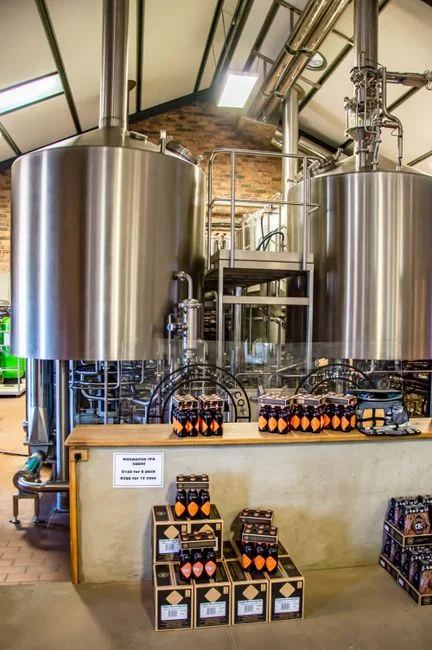
The WSZ and MBR catalogue envelopes serve different project scales and arrangements: WSZ is listed at 1–80 m³/h with integrated A/O, sedimentation and disinfection, while MBR is listed at 10–2,000 m³/day with submerged PVDF filtration below 1 μm. That comparison is a starting point only; the selected train must also cover the verified flow, peak load and contaminant concentrations.
Physical arrangement can influence site feasibility. WSZ units can be installed below grade with landscaping above or mounted on a trailer for mobile deployment. The MBR is presented as a compact, fully automated reuse option. For a Belarusian site, compare excavation and civil works, access for maintenance, odour controls, above-ground utilities and future module removal—not only the quoted treatment footprint.
Residual management belongs in the commercial comparison. Calculate expected sludge production, thickening and sludge dewatering requirements, odour controls, transport and disposal. The Baranovichi project provides evidence that residual management can change plant performance: Smart Water Magazine reported a 10-fold decrease in sludge volume after improved sewage management (2019-01-17). That project-specific result demonstrates the importance of the residual route, but it does not provide a universal sludge yield for Belarusian package plants or MBR systems.
Energy and operating resources must also be stated. The same Baranovichi report describes treatment as energy intensive while biogas recovery made the plant 70% energy self-sufficient (Smart Water Magazine, 2019-01-17). A buyer should therefore request electrical demand, biogas potential, chemical consumption, operator attendance, control strategy and backup arrangements for each proposed route.
Use compare sewer and package treatment routes to test decentralized treatment against network connection, and use the MBR and activated-sl sludge comparison to examine biological-process trade-offs. Neither comparison replaces a site-specific Belarusian design.
| Criterion | WSZ package plant | MBR | Pretreatment, including DAF |
|---|---|---|---|
| Core treatment | A/O biological contact oxidation, sedimentation and disinfection | Activated sludge with submerged PVDF filtration | Physical separation ahead of downstream treatment |
| Catalogue capacity | 1–80 m³/h | 10–2,000 m³/day | 4–300 m³/h across 13 standard models |
| Arrangement | Below grade with landscaping above, or trailer-mounted | Compact, fully automated reuse configuration | Must be integrated with the complete treatment train |
| Main site question | Can decentralized treatment fit the domestic flow, land and permit? | Does membrane separation justify its footprint, controls and maintenance? | Does the wastewater require solids or FOG removal before biology? |
| Residual and operating risk | Include sludge dewatering, odour, media and operator requirements | Include membrane cleaning or replacement, sludge and control-system maintenance | Include recovered solids, chemical use and downstream loading |
Build a Reuse and Compliance Verification Package
A procurement-ready quotation should distinguish verified inputs, design assumptions, supplier guarantees and buyer responsibilities. The National Academies framework identifies treatment performance, cost, energy use, infrastructure requirements, monitoring and regulatory assurance as central comparison criteria (National Academies Press). A catalogue description answers only part of the purchase.
Request a filled-in verification package containing the design flow and peak basis; wastewater analyses and their sampling dates; treatment-process drawings; hydraulic and process calculations; equipment datasheets; control narratives; maintenance access; alarm and backup arrangements; membrane or media life assumptions; chemical and utility demand; residual balance; monitoring provisions; commissioning responsibilities; and proposed performance tests.
Require the supplier and buyer to define the reuse quality target jointly with the relevant authority. The supplied research does not establish a universal Belarusian reuse limit for industrial process water, irrigation, non-potable use or another application. Generic claims that a system produces “reclaimed process water” do not establish suitability for a specific process, public exposure, discharge point or product-contact requirement.
Make responsibilities explicit. The buyer should identify which flow records, wastewater analysis, permit requirements, utility availability, residual-disposal arrangements and acceptance-test duties remain its responsibility. The supplier should identify all assumptions, exclusions, guarantees and conditions that could change price or performance.
Performance testing should name methods, sampling points, operating conditions and acceptance criteria. Cover commissioning, steady-state operation and representative variability; record effluent results, energy consumption, residual quantities and control response. Do not accept removal percentages alone unless influent conditions, test method and operating state are stated.
| Verification item | Supplier must state | Buyer must provide or verify |
|---|---|---|
| Design basis | Flow, peak load, process calculations and equipment sizing | Flow records, operating scenarios and wastewater analyses |
| Treatment and reuse quality | Proposed guarantees tied to test methods and operating conditions | Permit and reuse-application quality requirements |
| Equipment lifecycle | Membrane or media life, cleaning, replacement and spare-parts strategy | Acceptable intervention frequency and maintenance access |
| Residuals | Sludge and reject balance, handling and dewatering requirements | Disposal route, transport and receiving arrangements |
| Energy and monitoring | Expected demand, controls, alarms, backups and instrumentation | Utility availability, reporting and operational staffing |
| Acceptance | Commissioning and performance-test protocol | Named acceptance authority, sampling plan and sign-off responsibilities |
Plan Budget, Delivery and Lifecycle Ownership
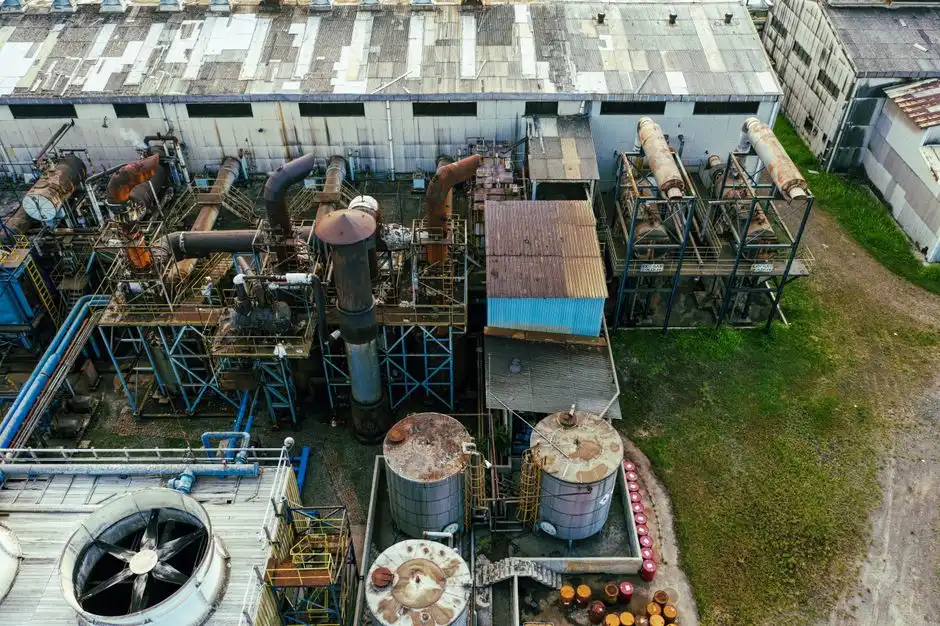
Compare quotations over the same lifecycle scope rather than ranking them by the price of the treatment equipment. The commercial schedule should cover equipment, installation, civil works, piping, controls, commissioning, training, initial spares, chemicals, membrane or media replacement, energy, sludge handling and monitoring. Any line omitted from the quotation should be identified as excluded, provisional or buyer-supplied.
Implementation support and capital expenditure are separate categories. The Baranovichi financing package reported by Smart Water Magazine (2019-01-17) included a €2.9 million sovereign loan, a €1.4 million capital-expenditure grant and a €0.8 million project-implementation consultancy grant. These historical figures illustrate the distinction between financing support and implementation assistance; they are not current Belarus project funding and cannot be used to estimate the price of a new system.
Obtain current supplier quotations and, where relevant, financing offers. Before award, ask each bidder to identify delivery assumptions, site-access requirements, electrical and civil interfaces, utility connections, commissioning duration, warranty boundaries, spare-part availability, operator training, performance-test costs and future replacement obligations.
Also price residual logistics and energy exposure. Sludge transport, media replacement and membrane cleaning can alter operating cost, while an energy-intensive route can offset the value of reclaimed water. The correct comparison is therefore the cost per verified service outcome, supported by a clear responsibility schedule.
| Budget category | What the quotation should identify | Buyer check |
|---|---|---|
| Capital installation | Equipment, civil works, installation, piping, controls and utilities | Are site-specific interfaces and civil works included? |
| Commissioning and training | Testing, handover, documentation, training and acceptance support | Are duties, costs and signatories defined? |
| Operations | Energy, chemicals, operator time, media or membrane replacement and monitoring | Which costs are firm and which depend on final design inputs? |
| Residuals | Sludge handling, dewatering, transport and disposal | Who owns and pays for each disposal step? |
| Financing and support | Current capital, concessional funding and implementation support | Does any cited historical Belarus package still apply? |
Frequently Asked Questions
Can a wastewater treatment and water reuse system in Belarus be selected from the country name alone?
No. Final sizing requires the design flow and hourly peak, wastewater composition, required reuse application, land availability, utility connections and residual-disposal route. The route matrix then determines whether decentralized package treatment, MBR, pretreatment or a combination should be quoted.
What should a supplier include in an MBR or package-plant quotation?
Require the design basis, wastewater and effluent assumptions, treatment drawings, controls, utility and chemical demand, maintenance access, membrane or media replacement plan, sludge-handling provisions, commissioning scope and a performance-test protocol. Also require a schedule identifying which inputs and obligations remain with the buyer.
Which supplier and compliance check matters most before ordering?
Check whether the supplier can provide project-specific performance evidence for the stated wastewater and reuse application, and whether the proposed test protocol has defined methods, sampling points and acceptance criteria. Confirm the reuse quality requirement with the relevant Belarusian authority because the supplied research does not establish a universal Belarusian limit for the proposed application.
How should MBR and package-treatment costs be compared?
Compare the same scope: treatment equipment, civil works, installation, controls, commissioning, training, utilities, chemicals, membrane or media replacement, energy, monitoring and sludge dewatering and disposal. Historical Baranovichi funding figures should not be used as a current price estimate; request current quotations with exclusions and lifecycle assumptions stated.