Screen the three wastewater routes
For a Liechtenstein hotel, compare a public sewer connection, HydropureWater’s WSZ A/O package plant, and an MBR system. WSZ combines anoxic/aerobic biological contact oxidation, sedimentation and disinfection in one automated buried unit, with capacities from 1–80 m³/h. MBR is appropriate where compactness or advanced effluent reuse is important, with catalogued capacities from 10–2,000 m³/day and less-than-1-μm filtration. Hotel wastewater is highly seasonal and may contain kitchen grease, so the final choice must use peak-flow, land, reuse and permit data. The supplied research does not verify Liechtenstein-specific discharge limits, so those must be confirmed with the authority.
Screen the sewer first: it remains the baseline route where a compliant public network is available and the connection is technically and commercially feasible. Do not treat network proximity as sufficient evidence; confirm the available connection point, required pumping, construction responsibility, connection conditions and permitted discharge route.
Use decentralized wastewater treatment when dependable sewer access is absent or an on-site route is required. Hotel wastewater can vary substantially with occupancy and tourism seasons; Seven Seas Water identifies fluctuating demand and peak-season spikes as a common hotel-treatment issue and recommends flexible or scalable capacity (Seven Seas Water, undated research supplied in 2026).
Use MBR when advanced effluent quality, a specific reuse application or a compact footprint is an explicit project requirement. The same source identifies membrane bioreactors as capable of producing high-quality effluent for reuse such as landscape irrigation and dust control, while noting their compact modular design and expansion potential (Seven Seas Water, undated research supplied in 2026). For a Liechtenstein site review, see the Liechtenstein wastewater planning guide.
| Decision test | Public sewer | WSZ A/O package plant | MBR system |
|---|---|---|---|
| Basic selection condition | Compliant public network is available and connection is feasible | Dependable sewer access is absent or a compact on-site route is required | Advanced effluent quality, defined reuse or compact footprint is required |
| Principal project checks | Connection point, commercial conditions, pumping, permit and discharge route | Peak and average flow, land, seasonal loading, grease control and effluent targets | Same hydraulic basis plus reuse application, membrane performance and expansion provisions |
| Supplier evidence required | Written network and connection requirements | Site-specific design flow, process stages, guaranteed performance and commissioning criteria | Site-specific process selection, membrane guarantees, controls, testing and O&M scope |
Do not approve any route until the project basis records peak and average flow, available land, reuse requirements, discharge point and permitting responsibility. These are the screening inputs for comparing a sewer versus package-plant assessment, not optional details added after equipment selection.
Compare WSZ A/O and MBR performance
WSZ integrates A/O biological contact oxidation, sedimentation and disinfection in a single underground package unit, so its evaluation should focus on hydraulic fit, seasonal loading and whole-system integration. The verified HydropureWater product catalogue lists a capacity range of 1–80 m³/h, full automation with no operator required, installation below grade, and mounting on a trailer for mobile deployment (HydropureWater verified product catalog, 2026).
The WSZ process is therefore relevant where the hotel needs an installed, largely automated biological treatment route without separating the principal treatment stages into multiple surface units. “No operator required” describes the equipment configuration; it does not remove the need for scheduled inspection, maintenance, alarm response and permit compliance. Those responsibilities still need an owner.
HydropureWater’s integrated MBR membrane bioreactor uses submerged PVDF membrane filtration with less-than-1-μm filtration. Its catalogue capacity is 10–2,000 m³/day, and the product information states a 60% smaller footprint than conventional systems (HydropureWater verified product catalog, 2026). Those are catalog attributes, not a conclusion that MBR is smaller or more economical at every hotel site. The comparison must use the selected configuration and the project’s land, reuse and treatment objectives.
BIOROCK provides a useful modular reference: its hotel and restaurant system links and scales units through a flow-control chamber, with up to nine units installed in parallel (BIOROCK, undated research supplied in 2026). This illustrates how modularity can address changing demand; it does not establish a required configuration for a Liechtenstein hotel.
| Parameter | WSZ A/O | MBR | Procurement implication |
|---|---|---|---|
| Catalog capacity | 1–80 m³/h | 10–2,000 m³/day | Convert the project flow basis consistently before comparing; do not select from catalog range alone |
| Biological treatment | Anoxic/aerobic biological contact oxidation | Biological treatment combined with membrane filtration | Ask each supplier to identify the complete process train and its treatment basis |
| Solids handling | Sedimentation within the integrated WSZ unit | MBR does not require a conventional clarifier | Confirm the supplier’s solids-removal, sludge-handling and maintenance boundary |
| Filtration | No membrane-filtration claim stated in the supplied WSZ catalogue | Submerged PVDF membrane; less-than-1-μm filtration | Request guaranteed effluent parameters rather than inferring performance from process type |
| Configuration | Single buried package; trailer mounting available for mobile deployment | Compact modular system | Check civil interfaces, access, expansion, redundancy and installation constraints |
| Stated footprint claim | No comparative footprint figure in the supplied catalogue | 60% smaller footprint than conventional systems | Require the comparison basis and site-specific drawing |
Request evidence for the required effluent parameters rather than selecting a process solely by footprint or nominal capacity. Compare the WSZ underground A/O package sewage treatment plant with the integrated MBR membrane bioreactor only after the discharge or reuse targets have been confirmed.
Build the hotel design basis
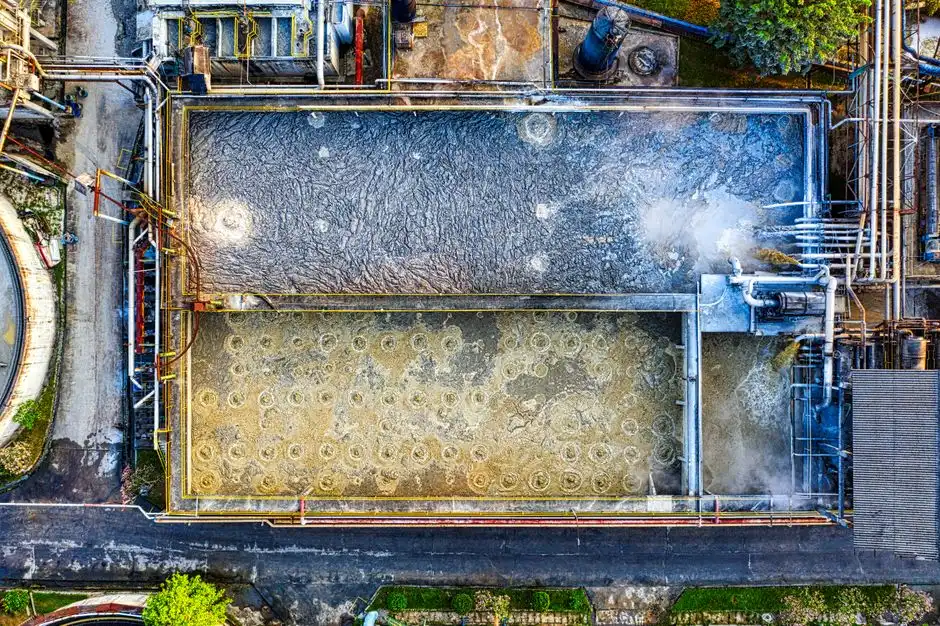
A hotel treatment system must be designed from identifiable wastewater streams and seasonal operating conditions, not from guest-room count alone. Hotel wastewater can include bathrooms, kitchens, bars, laundry, gyms and swimming pools; Biocell Water lists these as contributing streams and warns that excessive grease and oils can interfere with treatment performance (Biocell Water, undated research supplied in 2026).
Record peak daily flow, average flow and the operating profile across high- and low-season periods. Seven Seas Water specifically identifies peak tourist seasons as periods of increased wastewater production and recommends capacity that can accommodate peaks through additional capacity or modular expansion (Seven Seas Water, undated research supplied in 2026). Use the WSZ versus MBR hotel wastewater decision to structure that comparison, but populate it with this hotel’s data.
Complete a grease-control assessment and define the pretreatment responsibility. Kitchen and restaurant flows require an appropriately maintained grease-control arrangement; Biocell Water states that grease and oils can clog pipes, create odour and interfere with the treatment process (Biocell Water, undated research supplied in 2026). Record whether the grease trap, solids removal, sampling and servicing are hotel, civil-contractor or treatment-supplier obligations.
Treat the WSZ range of 1–80 m³/h and MBR range of 10–2,000 m³/day as catalogue capacities, not project-sizing conclusions (HydropureWater verified product catalog, 2026). Assign an owner to every input so that missing information becomes an explicit procurement action rather than an unsupported assumption.
| Fillable project input | Entry required | Responsible owner | Use in decision |
|---|---|---|---|
| Hotel occupancy and event use | Rooms, occupancy profile, functions and event periods | Hotel operator | Establishes the operating basis |
| Average and peak flow | Average flow, peak daily flow and any identified short-duration peak | Design engineer with hotel operator | Hydraulic selection and peak treatment assessment |
| Wastewater streams | Bathrooms, kitchen, bar, laundry, gym, pool and other connections | Hotel operator and design engineer | Defines influent characteristics and pretreatment |
| Land and installation area | Available footprint, access, burial depth, utilities and future expansion area | Designer and developer | Checks WSZ or MBR physical fit |
| Reuse objective | Intended reuse application, quality requirement and demand | Developer and hotel operator | Determines whether advanced treatment is justified |
| Discharge point | Receiving location, route and connection responsibilities | Developer with relevant authority | Defines regulatory and engineering constraints |
| Treatment process | Selected process, proposed stages and performance basis | Design engineer and supplier | Provides the technical proposal |
| Permit route | Authority contact, application scope and information owner | Developer or designated consultant | Identifies the approval pathway |
| Maintenance capacity | Responsible operator, inspection regime, alarm response and spares access | Hotel operator and supplier | Tests whether the operating model is credible |
| Supplier data | Design flow, guarantees, controls, installation, commissioning and O&M scope | Tender coordinator and engineer | Allows comparable bids |
Confirm permits and acceptance criteria
The supplied Liechtenstein country guide does not establish country-specific discharge limits; it states that country-specific standards and cost guides are being prepared and asks for flow, influent data and discharge targets for a compliance check (HydropureWater country guide, undated research supplied in 2026). Do not present unverified local limits as established requirements or treat international figures as substitutes.
Ask the relevant Liechtenstein authority to confirm the discharge route, applicable effluent requirements, sampling requirements and permit conditions. The permit review should also settle whether a sewer connection, direct discharge or another route is permitted at the site. Use the Liechtenstein wastewater compliance guide as the starting point, but obtain the authority’s written project response before freezing the specification.
Each supplier should state the design flow, complete process stages, guaranteed effluent parameters, test method, control philosophy, installation boundary, commissioning tests and O&M scope. If reuse is intended, identify the application and applicable quality requirement. Seven Seas Water supports reuse for landscape irrigation and dust control as possible design objectives, not as a universal Liechtenstein requirement (Seven Seas Water, undated research supplied in 2026). The hotel wastewater sizing checklist can structure supplier questions, but it does not establish the project’s local acceptance values.
| Bid or acceptance field | Required response | Responsible party |
|---|---|---|
| Permit route | Named authority, proposed route, application scope and permit conditions | Developer and authority |
| Design basis | Average flow, peak daily flow, seasonal profile and influent data | Engineer and supplier |
| Process | Every treatment stage, flow path and sludge or solids-management boundary | Supplier |
| Performance guarantee | Guaranteed effluent parameters and applicable test method | Supplier |
| Controls | Automation, alarms, data logging, access and remote-support provisions | Supplier |
| Installation | Equipment, civil interfaces, utilities, access, testing and commissioning responsibilities | Supplier and civil contractor |
| Acceptance | Commissioning samples, test protocol, acceptance criteria and rectification process | Engineer, supplier and owner |
| O&M | Inspection, maintenance, consumables, response times, training and recordkeeping | Supplier and hotel operator |
| Reuse | Intended application and required quality basis, if applicable | Developer and authority |
Frequently Asked Questions
What data is needed to size a packaged sewage treatment plant for a hotel in Liechtenstein?
Request average flow, peak daily flow, the seasonal operating profile, wastewater sources, influent characteristics, available land, discharge point and reuse requirement. Ask the supplier to identify the proposed treatment process, design flow, hydraulic loading basis, guaranteed effluent parameters, controls and commissioning acceptance criteria. Catalog capacity is only a screening reference; the selected plant must be justified against the hotel’s measured and forecast demand.
How should an owner select between WSZ and MBR for a hotel project?
Choose WSZ when the project needs an integrated biological treatment route and the supplier can demonstrate that its A/O configuration, sedimentation and disinfection stages fit the site and seasonal load. Choose MBR when defined reuse or advanced effluent quality justifies membrane filtration. Request a site-specific proposal covering process selection, civil interfaces, installation, commissioning, training, O&M and permit support, and compare bids using the same design and acceptance basis.
What is the compliance risk if Liechtenstein discharge limits are not stated in the tender?
Obtain written confirmation from the relevant Liechtenstein authority of the discharge route, applicable effluent requirements, sampling requirements and permit conditions before accepting an equipment bid. The supplied country guide says local standards are still being prepared, so an unverified limit could create redesign, acceptance and operating risk. Make permit confirmation and incorporation of its conditions into the contract explicit procurement actions.
How should the buyer compare the cost of a sewer connection, WSZ and MBR?
Request itemized quotations rather than a total plant price alone. For each route, ask for equipment, freight, civil works, connection or pumping, installation, controls, commissioning, consumables, maintenance, operator training and permit-support costs. For WSZ and MBR, also price the O&M responsibility and any performance-guarantee obligations. If the authority or supplier has not provided a quotation, require the inputs needed to price it: flow, influent data, land, discharge route, reuse target and the proposed supplier scope.
Related Equipment
- WSZ underground A/O package sewage treatment plant — specifications, capacity range, and technical data