Define the greywater project before selecting equipment
A greywater treatment plant in the Philippines should be selected around the actual wastewater source, peak flow, required effluent quality and intended reuse—not a generic package size. Research shows why treatment is necessary: one Makassar study measured greywater BOD at 49.98–54.88 mg/L, COD at 509–655 mg/L and TSS at 404.40–464.65 mg/L, above the source’s referenced WHO wastewater-quality threshold. A practical project should map these inputs, compare biological, membrane and constructed-wetland routes, then require the supplier to demonstrate treatment of the proposed duty and confirm the applicable Philippine discharge or reuse requirements.
Start by drawing the project boundary. Domestic greywater is defined in the Sustainability source as wastewater from domestic activities that does not contain fecal contamination. List every generating activity included or excluded: showers, hand basins, baths and laundry may form one greywater stream, while toilet waste belongs in the sewage or blackwater stream. Kitchen waste requires separate consideration because it can materially change the contaminant load and process selection. Do not allow a supplier to redefine the boundary after quotations are opened.
Next, record the daily average flow, peak flow, operating hours, seasonal variation, storage requirements and planned expansion. The supplied research does not provide a universal Philippine sizing formula, so these values must come from metering, occupancy records, operating schedules or a designer’s documented basis. The packaged wastewater treatment system selection guide explains how flow and treatment objectives should be connected, but it does not replace project measurements.
Define the endpoint before identifying equipment. For toilet flushing, irrigation or another application, identify who will receive the treated water and under what operating conditions. The WHO South-East Asia Journal of Public Health states that wastewater reuse requires adequate treatment and protective measures because unsafe use can affect human health and the environment. Therefore, the client and designer must identify the applicable Philippine discharge or reuse requirement with the relevant authority before ordering.
| Project input | What to record | Responsible party | Acceptance check |
|---|---|---|---|
| Wastewater boundary | Included and excluded fixtures, kitchen waste and toilet discharge | Client and designer | Agreed in the basis-of-design document |
| Flow | Daily average, peak, operating hours, seasonal variation and future expansion | Client or metering contractor | Data identifies the actual and design duty |
| Reuse endpoint | Irrigation, toilet flushing, discharge or another defined use | Client | Receiving use and exposure conditions documented |
| Applicable requirements | Philippine discharge or reuse criteria and authority consultation | Designer and local authority | Requirement cited in the tender and purchase specification |
| Storage | Required holding time, operating strategy and overflow provision | Designer | Storage response included in process design |
Use measured wastewater characteristics to set the treatment goals
Untreated greywater cannot be assumed suitable for reuse because organic loading and suspended solids vary between sources and operating conditions. Request representative analysis for pH, turbidity, BOD, COD and TSS—the five parameters measured in the supplied Sustainability study. Use the laboratory results to define pretreatment needs, biological loading, solids separation, polishing requirements and the sampling program for acceptance testing.
The numerical evidence must retain its original scope. In the Makassar study, BOD was 49.98–54.88 mg/L, COD was 509–655 mg/L and TSS was 404.40–464.65 mg/L. The Sustainability source states that these measured BOD, COD and TSS values exceeded its referenced WHO wastewater-quality threshold. These results characterize that study’s greywater; they are not Philippine limits, not universal design values and not a substitute for analysis of the proposed project.
Require the designer or licensed laboratory to provide the sampling method, sampling dates, flow conditions represented by each sample and project-specific results. The supplied research does not establish a universal Philippine greywater profile. A sample taken during low occupancy, while excluding kitchen waste or under an unrepresentative laundry schedule may not describe the duty the equipment must handle.
Then convert the data into acceptance criteria. Define which parameters must be monitored, their sampling frequency, the averaging basis where applicable, the laboratory method and the consequences of noncompliance. For reuse, also address microbiological suitability and exposure controls; turbidity or solids removal alone should not be treated as proof of safe use.
| Parameter | Evidence from the Makassar study | Project-specific use | Required record |
|---|---|---|---|
| pH | Measured by the study | Confirm treatment and reuse compatibility | Method, date and result |
| Turbidity | Measured by the study | Assess solids separation and polishing needs | Method, date and result |
| BOD | 49.98–54.88 mg/L | Set the organic-removal basis; not a Philippine limit | Representative influent and effluent data |
| COD | 509–655 mg/L | Check treatment loading; not a Philippine limit | Representative influent and effluent data |
| TSS | 404.40–464.65 mg/L | Define solids handling and pretreatment needs; not a Philippine limit | Representative influent and effluent data |
Where preliminary wastewater characterization is needed for early budgeting, obtain quotations for the dissolved air flotation equipment route, but require the supplier to confirm that the proposed application matches the measured wastewater and treatment objective. Published equipment capability is not a project guarantee.
Compare biological, membrane and constructed-wetland routes
No single route is suitable for every greywater source, reuse endpoint or site constraint. Compare each option using the same five questions: Does it address the measured organic and solids load? Can it handle the actual peak-flow behavior? Does it meet the identified Philippine requirement? What operating attention and footprint can the site sustain? How will residual solids be handled?
For decentralized sites without centralized sewer coverage, the American Chemical Society study identifies constructed wetlands as a cost-effective, sustainable solution and describes them as artificial wetland systems. A constructed wetland route may therefore suit an appropriate decentralized site, but the study does not provide a universal Philippine footprint, price or performance guarantee. The buyer must obtain a site-specific hydraulic design, land requirement, climate basis, bypass and solids-maintenance plan.
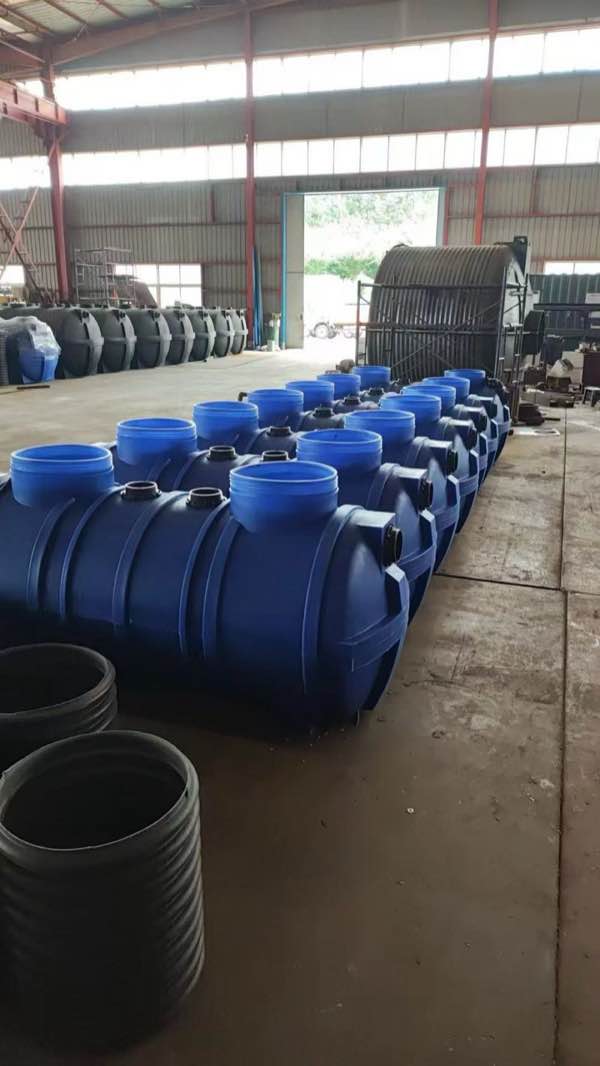
For packaged biological treatment, the published WSZ system combines anoxic and aerobic contact oxidation, sedimentation and disinfection. Its stated capacity is 1–80 m³/h and it is intended for sewage-bearing domestic flows. These facts support route evaluation, but they do not establish automatic suitability for the proposed Philippine greywater project. The designer must confirm source compatibility, hydraulic loading, solids removal, disinfection and the applicable Philippine compliance basis.
For membrane applications, the published integrated MBR wastewater treatment system combines activated-sludge treatment with submerged PVDF membrane filtration and states a capacity of 10–2,000 m³/day. That range is published equipment capability, not automatic project sizing. The UF polishing system removes bacteria, colloids and suspended solids without chemicals, accepts turbidity up to 300 ppm and uses automatic backwash and air scour. These are useful published specifications for route evaluation, but they do not prove that either system can treat raw greywater alone.
| Decision condition | Route to investigate | Published evidence | Buyer must verify |
|---|---|---|---|
| Decentralized site without centralized sewer coverage | Constructed wetland | ACS study identifies constructed wetlands as artificial wetland systems and a cost-effective, sustainable solution for the studied context | Site-specific footprint, hydraulics, climate basis, solids maintenance and Philippine acceptance criteria |
| Packages biological treatment with solids separation and disinfection are required | Packaged biological plant | WSZ system combines anoxic/aerobic contact oxidation, sedimentation and disinfection; published capacity is 1–80 m³/h | Greywater compatibility, peak loading, effluent targets and evidence applicable to Philippine conditions |
| A compact biological process with membrane separation is proposed | Integrated MBR | Published system combines activated sludge with submerged PVDF membranes and states 10–2,000 m³/day capacity | Actual design duty, pretreatment, membrane maintenance, solids handling and tested effluent performance |
| Polishing or solids removal after upstream treatment is required | UF | Published system removes bacteria, colloids and suspended solids without chemicals; turbidity limit is 300 ppm; automatic backwash and air scour are stated | Upstream process, actual feed turbidity, microbiological endpoint, recovery, cleaning and residual-sludge handling |
Use a simple decision sequence: choose biological treatment when the measured organic load and site operating conditions support it; add membrane or UF polishing when the reuse objective requires it; investigate constructed wetlands where land, decentralized service and maintenance conditions fit. This is a route-selection framework, not a ranked Philippine recommendation, because the supplied research contains no Philippine cost comparison or universal site-performance result.
Build the procurement worksheet and assign missing inputs
A procurement worksheet should expose missing information before it becomes a pricing dispute. Give every input a project value, evidence source, responsible party, acceptance check and approval status. This separates a confirmed project fact from a supplier assumption and shows which decisions remain open.
Assign flow records and wastewater characterization to the client or licensed laboratory. Give treatment objectives, applicable Philippine requirements and process design to the designer or relevant authority. Require the supplier to commit to equipment guarantees, test methods, commissioning criteria, operating information and exclusions. The packaged wastewater treatment system selection guide provides a useful structure for asking suppliers to connect flow, process and effluent requirements.
- List the design flow, peak-flow assumptions, wastewater analysis, source boundary and reuse endpoint.
- Attach the evidence behind each value and identify who supplied it.
- Describe the proposed process stages, pretreatment, controls, footprint and utilities.
- Define the treatment target, test method, influent used for verification and acceptance condition.
- Record solids handling, maintenance access, operator training, manuals and commissioning tests.
- Reject any offer whose guarantee cannot be tied to representative project conditions.
| Input | Project value | Evidence source | Responsible party | Acceptance check | Status |
|---|---|---|---|---|---|
| Average and peak flow | Client entry | Metering or occupancy records | Client | Matches design basis | Open/approved |
| Wastewater analysis | Laboratory entry | Report with dates and methods | Licensed laboratory | Representative of agreed source | Open/approved |
| Treatment objective | Designer entry | Philippine requirement and reuse assessment | Designer or authority | Referenced in specification | Open/approved |
| Process and pretreatment | Supplier entry | Design narrative and drawings | Supplier | Matches measured influent | Open/approved |
| Performance guarantee | Agreed target | Test protocol and representative influent | Supplier and designer | Objective acceptance method | Open/approved |
| Installation boundary | Supplier entry | General arrangement and site plan | Supplier | Interfaces and utilities identified | Open/approved |
| Solids handling and maintenance | Supplier entry | O&M manual and procedure | Supplier | Residual stream has a destination | Open/approved |
Ask each bidder to state materials of construction, process stages, pretreatment requirements, controls, footprint, utilities, solids removal, installation exclusions and commissioning tests. A proposed guarantee should identify the agreed method, parameter, test duration and representative influent. Do not accept a generic claim that a unit will meet Philippine reuse or discharge conditions without an identified criterion and verification method.
Verify suppliers and performance before the purchase order
Compare proposals by process suitability and verifiable commitments, not by headline capacity. The review should cover design flow, peak-load behavior, pretreatment, treatment targets, monitoring, controls, maintenance access, utilities and solids handling. Published capacities describe equipment offered; they do not demonstrate that the proposed train will perform at the client’s site.
Request reference projects with comparable wastewater characteristics and operating conditions. Ask how the reference flow was measured, what pretreatment was installed, what effluent was tested, which method was used and whether the unit served the intended reuse endpoint. The supplied research contains no HydropureWater project references from which Philippine performance can be inferred, so reference checks must be completed independently.
Make the purchase order conditional on agreed acceptance tests, commissioning criteria, operator training, manuals, spare-parts availability and explicit performance exclusions. Require clarification of who owns sampling, who bears retesting costs and what happens when a result falls outside the agreed acceptance condition.
For reuse applications, address the safe-use context described by the WHO South-East Asia Journal of Public Health. Equipment selection cannot replace protective measures, controlled application or an assessment of the receiving environment and users. Review field troubleshooting and operating failures using the accompanying field troubleshooting guidance, then require the supplier to explain how its controls and maintenance procedures address those failure modes.
Frequently Asked Questions
What information is required before sizing a greywater treatment plant in the Philippines?
Obtain average and peak flows, operating schedules, seasonal variation, representative wastewater analysis, the source boundary, site constraints and intended reuse. These inputs define the treatment duty; the supplied research does not support a universal plant size.
How much should a greywater treatment plant cost?
The supplied evidence cannot support a universal Philippine price. Require each supplier to itemize equipment, pretreatment, installation, civil works, controls, utilities, commissioning, training, maintenance, solids handling and exclusions, so offers use the same scope.
Which supplier commitments should be checked before selecting a greywater recycling system?
Check comparable reference projects, the proposed process design, materials, pretreatment, operating controls, maintenance provisions and an acceptance test linked to representative influent. Verify that capacity claims describe equipment rather than an untested site duty.
Which Philippine requirement governs discharge or greywater reuse?
Confirm the applicable discharge or reuse requirement with the relevant Philippine authority and document the result in the procurement specification. The supplied research identifies no specific Philippine limit, so the buyer must obtain and verify it before finalizing treatment targets.