Define the hotel's treatment route before sizing equipment
For a Cape Verde hotel, the practical decision is whether to connect to an available municipal sewer, deploy a WSZ underground package plant, or specify an MBR system where tighter treatment, water reuse or land constraints justify added complexity. The choice should follow confirmed sewer access, site-specific flow and peak demand, available footprint, reuse objectives, discharge constraints and local permits. Equipment selection should begin only after those inputs are documented.
Start the decision with three routes: municipal sewer connection, onsite sewage treatment, or a combination in which an onsite system handles part of the flow. The evidence does not establish that any one route is suitable for every Cape Verde resort, but provides a method for testing options against the hotel’s verified conditions.
Record daily wastewater flow, hourly peak flow, seasonal occupancy, kitchen and laundry contributions, available footprint, receiving-water conditions, reuse objectives, power supply and maintenance access. These are project inputs, not general assumptions about Cape Verde. The WSZ and MBR product ranges can then be checked against the design basis rather than used as substitutes for flow data.
Municipal access is a utility item that must be confirmed at the individual site. SustAgua Cape Verde, published by the Export Initiative for Environmental Protection, reported ten municipal sewage treatment plants across Cape Verde; that does not establish that a particular hotel can connect, or that receiving capacity is available. Separately, the MCC’s 2017 Cabo Verde sanitation article records a Santa Maria hotel operator linking untreated wastewater with beach contamination risk and Blue Flag considerations. Treat that as project motivation, not as a universal permit rule.
| Decision gate | Evidence to obtain | Route implication |
|---|---|---|
| Municipal access | Connection availability, authority approval, easements, receiving capacity and connection location | Progress the sewer option only after written confirmation |
| Design flow | Daily average, hourly peak, seasonal occupancy and wastewater contributions | Establish the sizing basis before requesting equipment |
| Site and reuse | Footprint, access, power, discharge route, receiving-water sensitivity and reuse standard | Distinguish standard treatment from compact or reuse-oriented systems |
| Compliance | Permit authority, applicable route, sampling and discharge or reuse requirements | Prevent an equipment proposal from assuming unverified requirements |
Check whether a municipal sewer connection is viable
A municipal sewer connection should be pursued only after the relevant authority confirms both network availability and treatment capacity. Ask for the connection point, required easements, connection approval, capacity allocation and the party responsible for collection, treatment and discharge. “A treatment plant exists nearby” is not proof that the hotel has a feasible route.
The connection proposal should also be technically checked. Confirm whether the proposed sewer reaches an operating treatment system with adequate hydraulic and treatment capacity for the hotel’s committed flow and peak demand. The buyer should identify any private sewer line, pumping station or connection works required between the property boundary and the authority’s network.
Compare the complete pathway rather than the connection fee alone. Collection infrastructure, connection works, treatment responsibility, discharge monitoring, ownership, operating cost and tariff exposure should be evaluated against an onsite package solution. Request both capital and operating-cost quotations on a common scope. No defensible cost comparison can be made without a confirmed municipal proposal or supplier quotation.
Cape Verde’s Santa Maria rehabilitation shows why access must be treated as a project variable rather than an assumption. The MCC’s 2017 article reports a US$1.9 million rehabilitation of the Santa Maria Wastewater Treatment Plant within a US$66 million Compact signed in 2012. It also describes subsidized sewage lines extending service in the town. Municipal capacity and service arrangements can materially change the preferred route.
Match WSZ and MBR to the site's operating requirements
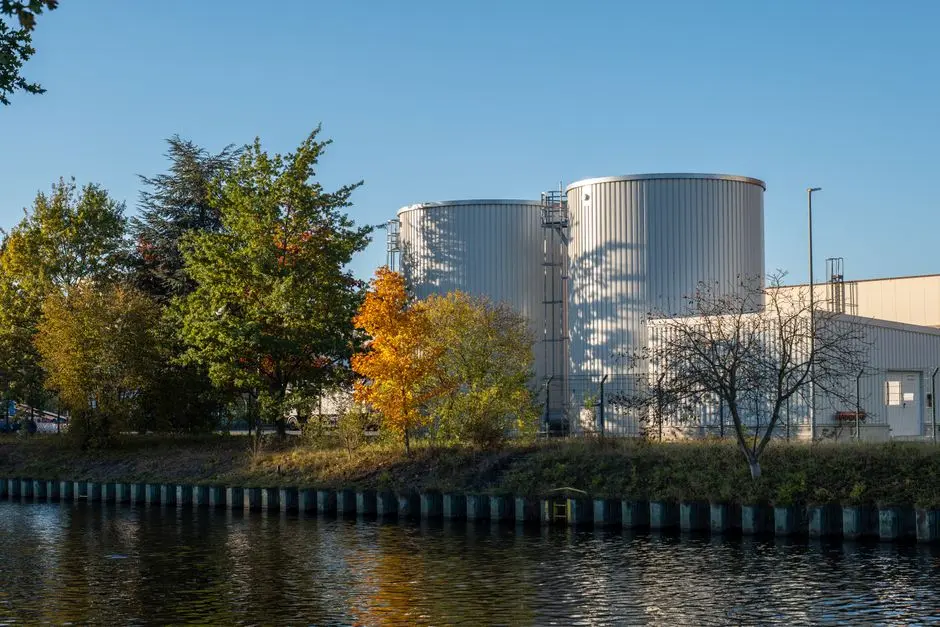
WSZ and MBR should be selected against treatment objectives, verified flow and installation constraints rather than by headline capacity. WSZ uses an integrated buried-package arrangement; MBR uses membrane filtration and suits projects with more demanding effluent or footprint requirements. Both require a project-specific design basis.
The HydropureWater verified product catalog states that the WSZ series combines anoxic/aerobic biological contact oxidation, sedimentation and disinfection in one buried package unit. It is fully automated, has a stated capacity range of 1–80 m³/h and can be installed below grade or mounted on a trailer. This format may suit an onsite sewage treatment route where the hotel needs an integrated A/O biological treatment package and the design flow falls within the stated range.
The HydropureWater product catalog describes the MBR membrane bioreactor system as combining activated sludge with submerged PVDF membrane filtration. It states effluent quality near reuse quality, filtration below 1 μm and a footprint 60% smaller than conventional systems. Those are supplier catalog claims, not site acceptance values. They make MBR a candidate where the specified treatment objective or restricted footprint supports that added complexity.
Neither catalog range establishes the correct model. Obtain occupancy-based wastewater flow, hourly and seasonal peaks, kitchen and laundry discharges, infiltration assumptions, reuse targets and local approval criteria. For reference, the WSZ versus MBR decision for a hotel shows how treatment needs and site conditions can drive the choice; the hotel wastewater sizing and equipment-selection framework provides a separate reference for developing the design inputs.
| Selection factor | WSZ underground package sewage treatment plant | MBR membrane bioreactor system |
|---|---|---|
| Stated treatment configuration | Anoxic/aerobic biological contact oxidation, sedimentation and disinfection in one buried package unit | Activated sludge with submerged PVDF membrane filtration |
| Stated capacity range | 1–80 m³/h | 10–2,000 m³/day |
| Stated effluent or space characteristic | Integrated A/O biological treatment package | Near-reuse-quality effluent stated as below 1 μm filtration; footprint stated as 60% smaller than conventional systems |
| Installation decision | Use where the integrated package and stated capacity match the verified duty | Use where the stated treatment route or compact footprint justifies added complexity |
| Common requirement | Confirm project flow, peak performance, effluent duties, utilities, maintenance access, permits and acceptance tests before model selection | |
Build a site-input and supplier-brief worksheet
A usable supplier brief separates verified inputs from commercial assumptions. Give every bidder the same wastewater, site, compliance and commercial information, then require each proposal to respond to the same measurable items. This prevents a package plant, MBR system and sewer connection from being compared on inconsistent scopes.
Use the worksheet below as the procurement baseline. Do not ask suppliers to fill gaps with generic assumptions. Mark each missing input as “to be confirmed,” assign responsibility for closing it and require the selected proposal to state how it handled the uncertainty.
| Worksheet group | Inputs to request | Required supplier response |
|---|---|---|
| Wastewater | Daily average flow, hourly peak, seasonal occupancy, kitchen wastewater, laundry discharge, groundwater infiltration and any process streams | Treatment basis, duty flow, peak treatment performance and treatment train |
| Site | Available land, burial depth, maintenance access, soil and groundwater conditions, flood exposure, power and odor-control requirements | Footprint, installation method, utilities, access clearances and civil works |
| Compliance | Discharge or reuse route, receiving-water sensitivity, permit authority, sampling requirements and applicable reuse standard | Permit assumptions, monitoring scope, required documentation and responsible parties |
| Commercial | Design flow, guarantees, commissioning, training, maintenance, spare parts, solids handling, monitoring and delivery schedule | Itemized price, exclusions, schedule, warranty, service scope and consumables |
For the onsite alternatives, include the WSZ underground package sewage treatment plant and the MBR route in the same invitation. Ask each bidder to identify maintainable components, automatic controls, alarms, media or membrane replacement intervals, solids handling, operator training, commissioning tests and as-built documentation.
Commercial completeness matters as much as headline capacity. Treat routine service access, membrane or media replacement, used consumables and sludge or solids handling as defined work packages. If these remain excluded or unpriced, the lifecycle comparison will be incomplete.
Confirm local evidence, permit risks and project acceptance
Acceptance criteria must be agreed before equipment is ordered, and local compliance must be demonstrated for the specific discharge or reuse route. The research establishes a Cabo Verde sanitation context, but it does not establish a universal Cape Verde effluent limit for hotels.
The MCC’s 2017 Santa Maria article records a hotel operator saying that untreated wastewater creates a risk of beach contamination, while the rehabilitation was presented as supporting better sanitation and tourism. This is relevant to the hotel’s environmental objective. It does not replace a site-specific permit assessment or define the effluent parameters that the selected system must meet.
Request a compliance memorandum covering the receiving environment, discharge or reuse route, responsible authority, permit conditions, monitoring, sampling, reporting and handover responsibilities. The hotel’s environmental adviser or the relevant authority should confirm the requirements. Ask bidders to respond to those confirmed requirements rather than offer a generic “Cape Verde-compliant” statement.
Define acceptance around the treated duty flow, agreed sampling points, agreed test parameters, equipment availability, automatic controls, alarm behavior, operator training and complete as-built documentation. Specify who conducts each test, what constitutes a pass and what remedy applies if performance is not demonstrated. Include membrane or media replacement, service access and solids handling in the commercial work packages rather than treating them as optional details.
Frequently Asked Questions
Should a Cape Verde hotel choose WSZ or MBR?
Choose WSZ when the verified duty matches its stated integrated A/O package range and a standard treatment route meets the project objectives. Consider MBR when the confirmed effluent or reuse requirement, or the available footprint, supports its stated compact membrane treatment configuration. Neither catalog range replaces site-specific sizing.
What information is needed to size a packaged sewage treatment plant?
Request daily average flow, hourly peak, seasonal occupancy, kitchen and laundry contributions, infiltration, land, utilities, maintenance access, discharge route, permit criteria and reuse requirements. Require the supplier to identify the treatment basis and peak performance used for its selected model.
How should hotel wastewater suppliers be compared?
Issue one brief with identical inputs and require itemized pricing, flow basis, footprint, utilities, automation, commissioning, training, maintenance, spare parts, consumables, solids handling, monitoring, delivery schedule and acceptance tests. This supports a like-for-like commercial and technical comparison.
What compliance risks should be confirmed before ordering?
Obtain a site-specific memorandum from the hotel’s environmental adviser or relevant authority confirming the discharge or reuse route, permit authority, applicable parameters, sampling, monitoring and handover duties. The research does not establish a universal Cape Verde effluent limit, so do not accept a generic compliance statement.
When is a municipal sewer connection more practical than an onsite plant?
A sewer connection may be more practical when the authority confirms network access, easements, capacity allocation and treatment capacity and the delivered pathway offers acceptable cost and operating responsibility. Compare collection, connection, treatment, discharge, monitoring and ownership in the quotation; if any of these remain unverified, retain onsite alternatives until the authority provides a written basis.