Define the Required Effluent Outcome
An effluent treatment plant in Toulouse should be selected from the required final-water outcome, not from a generic equipment list. First define the wastewater collection point, final destination, required quality, reuse application and sludge route. Then map pretreatment, biological treatment, polishing, disinfection and sludge handling against those requirements. Current Toulouse discharge limits, sewer-authority requirements and permits must be verified for the specific site because the supplied research does not establish a universal Toulouse compliance threshold.
Record the destination as municipal sewer discharge, direct environmental discharge, process-water reuse, irrigation, another defined reuse application, or a combination of discharge and reuse. For each route, obtain the applicable French requirements and the limits imposed by the receiving authority. These may control whether equalisation, biological treatment, membrane polishing or disinfection is required. The industrial effluent treatment plant selection method provides a comparable workflow, but its local requirements must be replaced with project-specific Toulouse inputs.
Two documented outcomes can help frame the selection. University of Twente research identifies nanofiltration as a technology for polishing wastewater-treatment-plant effluent to EU Water Framework Directive standards and producing effluent suitable for agricultural or direct or indirect potable use; the exact application still depends on feed analysis and the defined end use (University of Twente, PhD thesis Direct nanofiltration of wastewater treatment plant effluent). Separately, Wageningen University and Research studied constructed wetlands for micropollutant removal from treatment-plant effluent, with the thesis published on 23 September 2022. Neither source establishes that either route is required for an industrial site in Toulouse.
The procurement consequence is straightforward: state the required outcome before selecting equipment, and reserve final sizing and compliance claims until the receiving authority and site data have been checked.
Build the Influent and Flow Dataset
Flow variability and pollutant loading determine whether the proposed industrial ETP design has enough equalisation, pretreatment and treatment capacity. A single average flow does not define the design basis.
Request average flow, peak flow, production schedule, batch-discharge pattern, rainfall or stormwater contribution, recirculating industrial streams and the required equalisation volume. Confirm whether clean cooling or storm water enters the same collection point. Record the sampling location and operating period behind every concentration because production conditions can change the composition of the wastewater.
Request concentrations and loads for COD, BOD, suspended solids, oil and grease, pH and nutrients, together with sector-specific contaminants. ScienceDirect’s effluent-treatment overview states that industrial treatment methods must match contaminant type and load and that physical, chemical and biological methods are often combined; it also notes that biological treatment alone may not consistently meet release standards for textile and dye effluent (ScienceDirect, Effluent Treatment). That conclusion is relevant as a selection principle, not as evidence that every industrial wastewater requires the same train.
Document temperature, toxicity, salinity, foaming risk, colour, surfactants, solvents and recirculation. These inputs determine whether equalisation, pH correction, toxicity control, oil removal or biological acclimatisation is needed. Use the wastewater monitoring analyzer selection guide to define the parameters needed during sampling and performance testing.
| Design input | Buyer must provide | Decision affected |
|---|---|---|
| Hydraulics | Average and peak flow, production schedule, batch discharges, stormwater contribution and recirculation | Equalisation, pretreatment and treatment capacity |
| Organic load | COD and BOD concentrations and loads, with the sampling period | Biological loading and equalisation |
| Solids and oils | Suspended solids, oil and grease, FOG and settleable solids | Screening, DAF, clarification and filtration |
| Chemical condition | pH, temperature, salinity, toxicity, colour and foaming tendency | Pre-treatment, biological suitability and materials |
| Site-specific contaminants | Sector-relevant substances and their concentrations or loads | Source control, biological inhibition and polishing |
| Outcomes | Discharge route, reuse target, sludge destination and monitoring requirements | Treatment sequence and guarantees |
Missing data is a procurement risk, not a blank field for the supplier to fill invisibly. The University of Twente membrane study states a treatment objective but does not provide a universal Toulouse flow or loading design basis. Require bidders to identify every assumption used to fill a gap and explain the resulting equipment or compliance risk.
Select Pretreatment by the Contaminant
Pretreatment should remove materials that would obstruct, poison or overload the selected biological or membrane process. The correct choice follows the contaminant inventory rather than a fixed sequence.
- If rags, plastics or fibrous debris are present, use screening to protect downstream pumps, valves and biological processes. The HydropureWater GX rotary mechanical bar screen is specified for continuous-duty municipal and industrial headworks.
- If suspended solids, oil and grease, FOG or colloidal material are significant, consider a DAF system for industrial wastewater pretreatment. The product catalogue lists 13 standard models covering 4–300 m³/h.
- If compact separation with sludge recirculation is required, consider lamella clarification. The catalogue reports surface loading rates of 20–40 m/h and chemical-consumption reduction of up to 30%.
- If the next stage is UF or RO, protect the membrane from suspended solids and colloidal material. In one ScienceDirect example, clarified effluent passes through pressure sand and multigrade filters before UF, with a 5% antiscalant solution dosed at about 3–5 mg/L. These are example values from the ScienceDirect overview, not Toulouse defaults.
| Site condition | Conditional pretreatment choice | Question for the supplier |
|---|---|---|
| Rags, plastics or fibrous material | Mechanical screening | What screen type, duty and solids-disposal arrangement match the incoming material? |
| Oil, grease, FOG or floatable solids | DAF, potentially preceded by an oil-removal stage | What flow and contaminant basis determines the selected DAF model, and how is scum handled? |
| Colloidal or settleable solids requiring compact separation | Lamella clarification | How are surface loading, recirculation and chemical demand verified for the supplied wastewater? |
| Membrane-feed protection | Sand and multigrade filtration, or another validated pretreatment train | What feed-water specification protects the membrane under worst-case operating conditions? |
Do not use catalogue capacity to select a DAF or clarifier. Match the proposed unit to measured peak flow and the contaminant load that the unit must remove, then confirm downstream treatment limits. The ScienceDirect membrane values should be used only as a precedent to interrogate the design, not copied into a Toulouse specification without site analysis.
Choose Biological Treatment or Membrane Bioreactors
Biological treatment is appropriate when the wastewater is amenable to biodegradation and the required final quality does not justify a higher-standard membrane separation. Physical, chemical and biological pretreatment may still be needed to make the biological stage workable.
For a compact integrated route, consider the WSZ integrated sewage plant for smaller flows from 1–80 m³/h. The product catalogue describes anoxic and aerobic biological contact oxidation, sedimentation and disinfection within one buried package. This configuration may suit sites with a suitable footprint and installation conditions, but final selection still depends on the actual flow, load, biodegradability and required effluent quality.
Consider an integrated MBR wastewater treatment system where low suspended solids or separation close to a reuse target has operational value. The catalogue lists capacities from 10–2,000 m³/day, filtration below 1 μm and a footprint stated as 60% smaller than conventional systems. Those are product-catalogue claims, not guaranteed outcomes for an unspecified Toulouse effluent.
Use the A/O package plant versus MBR comparison to frame the comparison around treatment objectives, footprint and operating obligations rather than a universal preference. The University of Twente study supports nanofiltration as an option for polishing treatment-plant effluent for reclamation, but it does not justify specifying nanofiltration without a defined reuse application and feed analysis.
| Decision condition | Preferred route to investigate | Information required before selection |
|---|---|---|
| Biodegradable wastewater and conventional discharge objective | Biological treatment with clarification | Biodegradability, load variation, nutrients, pH, temperature and required effluent quality |
| Small flow seeking a compact integrated installation | Packaged anoxic/aerobic treatment with clarification and disinfection | Average and peak flow, load, available footprint, installation access and utilities |
| Low suspended solids or separation close to the defined reuse target | MBR followed by any required polishing | Target quality, membrane feed conditions, fouling risk, cleaning method and residual-sludge route |
| Defined reclamation application | Assess whether NF or another polishing stage is justified | Reuse target, feed analysis, relevant water-quality criteria and pilot or validation needs |
Ask each bidder to explain which contaminants the biological stage removes, which remain for downstream treatment, and how changes in flow or load affect the guarantee. That prevents a generic biological-process description from being mistaken for a complete treatment train.
Design Polishing, Disinfection and Sludge Handling
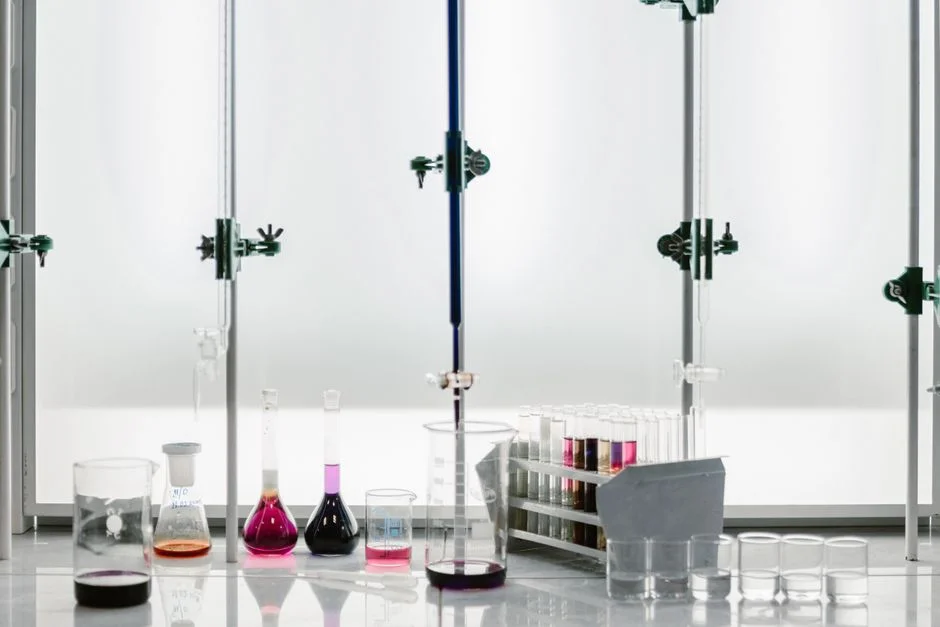
Water treatment and residual-sludge management must be designed together because each affects plant footprint, operating labour and disposal obligations. ScienceDirect identifies desired effluent quality, sludge treatment, available disposal alternatives and future sludge-management requirements as plant-design considerations.
Add UF or RO where solids removal, RO protection or a defined reuse quality requires it. The HydropureWater product catalogue lists UF capacities of 2,000–40,000 L/h, 0.03 μm PVDF membranes and a feed specification of up to 300 ppm turbidity. These are catalogue boundaries; the selected unit still needs to be checked against the actual feed and required duty.
Use UV for chemical-free disinfection where its application and reactor configuration are appropriate. Consider chlorine dioxide where on-site generation and the required microbial-control duty are suitable. In either case, require a defined disinfection objective, dose or validation basis, contact conditions and residual-control provisions; the supplied research does not provide a Toulouse default.
For a DAF-based route, include sludge dewatering where required. The HydropureWater product catalogue offers plate and frame filter presses with filtration areas from 1 m² to 500 m². Require the supplier to define the expected dry-solids production, polymer demand if used, filtrate-return arrangement and final disposal route. The buyer must also confirm how the future sludge-management requirement will be met; ScienceDirect expressly calls for this design consideration.
Do not leave sludge outside the equipment scope. A quoted effluent guarantee has limited value if the resulting sludge has no practical treatment or disposal route.
Issue a Comparable ETP Request for Proposal
Comparable bids require every supplier to use the same site data, final-use target and acceptance criteria. A list of equipment prices is not enough to compare treatment trains.
Require each bidder to state the design flow and treated-flow range, pollutant-loading basis, treatment sequence, final-use target, utilities, chemical consumption, sludge output, monitoring plan and operating assumptions. Require a design narrative explaining the purpose of each stage rather than merely listing equipment.
Define guarantee points by parameter, sample point, averaging method and applicable operating condition. A statement that the system produces “reuse quality” is not comparable unless the intended reuse, analytical method, sampling protocol and operating envelope are identified. Ask each bidder to list missing data, assumptions, pretreatment limits and the downstream consequence of an exceedance.
Use execution and lifecycle information as commercial acceptance criteria: local commissioning support, operator training, spare-parts availability, maintenance access, service-response terms and ownership of process-control documentation. Require clarification of who handles sampling, analytical equipment, hazardous chemicals, sludge transport and final disposal.
RevenueBase reported 62 exact-match French operator-company records for “effluent treatment plant operators” as of November 2026. Treat that as a market-screening signal only: RevenueBase states that the matches reflect business-description terminology, not individual similarity or quality scores. It does not establish regulatory standing or supplier performance.
| Bid criterion | Required bidder response | Buyer acceptance test |
|---|---|---|
| Design basis | Flow range, pollutant loads, source data and assumptions | Uses the issued site dataset or identifies each departure |
| Treatment sequence | Stage-by-stage purpose, duty and operating limits | Every stage has a measurable process function |
| Effluent performance | Parameter, sample point, averaging method and operating condition | All bidders address the same guarantee points |
| Sludge | Generation basis, treatment, filtrate return and disposal route | Residual stream has an identified destination |
| Operations | Utilities, chemicals, controls, maintenance, training and service | Lifecycle obligations are separately priced and assigned |
| Compliance | Permit, authority and commissioning obligations | Local items are assigned and visibly verified |
Issue clarifications against the same numbered criteria, then normalise quotations for exclusions, civil works, installation, taxes, utilities, chemical supply, sludge disposal and commissioning. This creates a comparison based on delivered performance rather than the completeness of each supplier’s initial scope.
Frequently Asked Questions
Which information must the site provide before an industrial wastewater treatment plant in Toulouse can be sized?
The site must provide the collection-point boundary, average and peak flows, production and batch-discharge schedules, stormwater contribution, pollutant concentrations and loads, pH, temperature, toxicity, salinity, oil and grease content, and sector-specific contaminants. The buyer must also define the final destination or reuse target and the sludge route. The supplied academic research explains treatment objectives and mechanisms, but it does not provide a universal Toulouse flow or loading basis, so final sizing cannot be inferred from generic equipment ranges.
How should I compare the cost and budget of different ETP proposals?
Ask each supplier for a capital and operating-cost breakdown that uses the same influent dataset, final-use target, utilities, chemical assumptions, civil scope and sludge-disposal route. Require exclusions to be priced or listed explicitly. The supplied evidence contains no Toulouse equipment or installation prices, so any budget must be built from site-specific quantities and supplier quotations rather than an assumed generic cost.
Which pretreatment equipment should be selected before biological treatment or MBR?
Select screening for rags, plastics or fibrous debris; DAF where oil, grease, FOG, suspended solids or colloidal material require their removal; and clarification where compact solids separation with sludge recirculation is needed. Protect UF or RO with validated filtration based on feed analysis. The catalogue values are equipment-selection limits or design information, not permission to bypass site sampling and contaminant testing.
What should I check when selecting and sizing an ETP supplier?
Check the supplier’s treatment-sequence design, reference conditions for the proposed capacity, guarantee method, membrane or biological operating envelope, commissioning plan, operator training, maintenance access, spare-parts availability and local service arrangements. Also verify site-specific permits, sewer approvals and the receiving authority’s current limits. A market list of French operators cannot substitute for technical evidence or project-specific compliance review.