Why Moscow’s Wastewater Treatment Costs Are Rising in 2025
Moscow’s wastewater infrastructure faces a critical juncture in 2025, with over 50% of the city’s treatment facilities built between 1950 and 1990 now requiring immediate modernization to meet updated environmental mandates (per MDPI’s 2024 sustainability study). The cost of a wastewater treatment plant in Moscow varies widely based on capacity, technology, and compliance requirements. For a 100 KLD municipal plant, expect capital costs of $1.2M–$2.5M (2025 USD), with operational expenses of $0.15–$0.30 per m³ treated. Industrial plants (e.g., food processing) may require advanced systems like MBR or DAF, increasing costs by 30–50% but improving effluent quality to meet Russia’s stringent SanPiN 2.1.3684-21 standards. Modernization of existing plants can reduce costs by 20–40% compared to greenfield projects, offering a more sustainable pathway for municipal planners. To understand the global context of these expenditures, engineers often analyze how Moscow’s WWTP costs compare to other emerging markets where regulatory pressures are similarly evolving.
The primary driver behind rising budgets is the enforcement of the SanPiN 2.1.3684-21 standards, which mandate rigorous nitrogen and phosphorus removal to protect the Moscow River catchment area. Regulatory deadlines are tightening; Moscow’s 2025–2027 modernization plan targets 80% compliance with standards that are now equivalent to EU discharge limits (as cited in the WEDC market intelligence report). For industrial operators, the stakes are high: non-compliance penalties can reach up to 5 million RUB ($55,000) per violation, making the industrial wastewater treatment cost Russia mandates a necessary capital investment rather than a discretionary expense.
Market trends also show a 15% annual growth in demand for private WWTPs, particularly for decentralized cottage communities and mini-hotels on the city’s outskirts. This shift is driven by Moscow’s decentralization policies and the high cost of connecting to aging centralized sewers. Large-scale examples, such as the 2024 upgrade of Moscow’s Lyublino WWTP, which cost approximately $65 million for a 500,000 m³/day capacity, highlight the massive scale of investment required for tertiary treatment and sludge management. Lessons from lessons from decentralized WWTP projects for Moscow’s cottage communities suggest that modular, pre-engineered systems often provide the best balance of cost and compliance for these smaller-scale applications.
Wastewater Treatment Plant Cost Breakdown: Moscow-Specific Factors
Capital expenditures for Moscow wastewater treatment projects are heavily influenced by urban land scarcity and specific soil stabilization requirements, with civil works typically accounting for 20% to 30% of the total project budget. Unlike rural installations, Moscow projects often require underground or semi-underground configurations to minimize footprint and odor impact, which can drive civil costs to $300–$500 per m². Equipment remains the largest single cost component, ranging from 40% to 60% of the total investment, especially when high-performance membranes or automated control systems are specified.
Operational costs (OPEX) in Moscow are dictated by regional utility rates and labor markets. Industrial electricity rates currently sit at approximately 6.5 RUB/kWh, making energy efficiency a top priority for procurement managers. Labor costs are also higher than the national average, with a qualified wastewater operator in Moscow earning roughly 80,000 RUB per month. Moscow sludge disposal costs have risen to $50–$150 per ton due to stricter landfill regulations and the transition toward thermal drying and energy recovery systems.
| Cost Component | Percentage of CAPEX | Moscow 2025 Average (100 KLD Plant) | Key Driver |
|---|---|---|---|
| Equipment | 40–60% | $800,000 – $1,500,000 | Automation & Membrane quality |
| Civil Works | 20–30% | $400,000 – $750,000 | Soil conditions & Urban excavation |
| Permitting & Design | 10–15% | $100,000 – $300,000 | SanPiN 2.1.3684-21 approvals |
| Land Acquisition | 5–10% | $100,000 – $250,000 | Proximity to MKAD (Moscow Ring Road) |
| Installation & Commissioning | 5–10% | $100,000 – $200,000 | Winter construction requirements |
Hidden costs often overlooked during the initial municipal sewage treatment plant budget phase include odor control systems—mandatory for plants located within 500 meters of residential zones—and remote monitoring hardware. Moscow’s 2025 digitalization policy now mandates that all new facilities provide real-time data feeds to the Department of Natural Resources, adding roughly 3–5% to the initial instrumentation budget.
How Plant Capacity Affects Cost: Moscow’s 2025 Cost Benchmarks
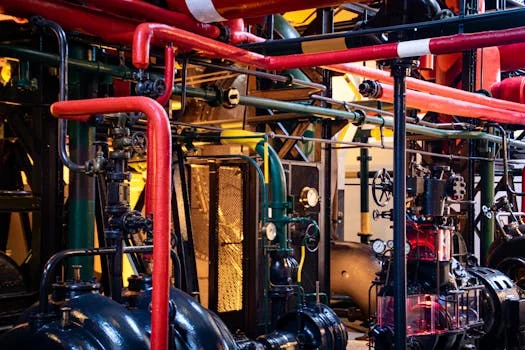
The economies of scale in Moscow’s wastewater sector dictate that a 10,000 KLD municipal facility can achieve a capital cost per cubic meter that is nearly 60% lower than a 50 KLD decentralized system. For small-scale applications like cottage communities or boutique hotels, the cost per KLD (kiloliters per day) ranges from $25,000 to $40,000. As capacity increases to municipal levels (1,000+ KLD), this figure drops significantly to $12,000–$20,000 per KLD due to shared infrastructure and bulk equipment procurement.
Moscow-specific environmental factors necessitate several adjustments to standard cost models. The region’s cold climate, with average winter temperatures of -10°C, requires all biological reactors to be insulated or housed within heated structures, adding 10–15% to the total cost. if the influent strength is high—common in Moscow’s food processing and pharmaceutical hubs—advanced treatment stages like MBR or DAF are required, which can increase the budget by up to 40% to handle higher biological oxygen demand (BOD) and total suspended solids (TSS).
| Plant Capacity (KLD) | CAPEX Range (USD/KLD) | Total Estimated CAPEX (Moscow) | Typical Application |
|---|---|---|---|
| 50 KLD | $25,000 – $40,000 | $1.25M – $2.0M | Cottage communities / Mini-hotels |
| 100 KLD | $20,000 – $35,000 | $2.0M – $3.5M | Small factories / Residential complexes |
| 1,000 KLD | $12,000 – $20,000 | $12M – $20M | District municipal plants |
| 10,000 KLD | $8,000 – $15,000 | $80M – $150M | Large municipal hubs |
For example, a 500 KLD municipal plant in a Moscow suburb typically costs between $8M and $12M, whereas a similar plant in rural Russia might only require $6M to $9M due to lower land costs, less stringent odor control requirements, and simpler permitting processes. Engineers must factor in these regional premiums early in the feasibility stage to avoid mid-project budget shortfalls.
Choosing the Right Technology: Cost vs. Compliance Trade-offs in Moscow
Compliance with Moscow’s SanPiN 2.1.3684-21 standards requires effluent BOD₅ levels to remain below 3 mg/L, a threshold that necessitates the integration of tertiary treatment or membrane-based technologies. Conventional activated sludge (CAS) systems, while having the lowest initial capital cost ($10K–$20K/KLD), often fail to meet these strict nitrogen and phosphorus limits without significant chemical dosing and a large physical footprint. For urban sites where land is at a premium, an MBR system for Moscow’s strict effluent standards is often the most cost-effective long-term solution, offering a compact footprint and superior effluent quality that facilitates water reuse.
Industrial sectors in Moscow, particularly food and beverage processing, frequently deal with high fats, oils, and grease (FOG) concentrations. In these scenarios, a DAF system for Moscow’s industrial wastewater treatment serves as a critical pre-treatment step, removing 90–98% of suspended solids before the biological stage. Understanding the why Moscow’s 2025 standards require tertiary treatment is essential for engineers to justify the higher initial cost of MBR or DAF systems by demonstrating the reduction in chemical consumption and sludge production.
| Technology Type | CAPEX (USD/KLD) | OPEX (USD/m³) | Compliance Capability |
|---|---|---|---|
| Conventional Activated Sludge | $10,000 – $20,000 | $0.20 – $0.35 | Basic (Requires tertiary for SanPiN) |
| MBR (Membrane Bioreactor) | $25,000 – $40,000 | $0.15 – $0.25 | High (Exceeds SanPiN standards) |
| DAF (Dissolved Air Flotation) | $15,000 – $30,000 | $0.18 – $0.28 | Specialized (Industrial pre-treatment) |
| Tertiary (UV + Sand Filter) | +$5,000 – $10,000 | +$0.05 – $0.10 | Mandatory for most Moscow discharge |
The selection process should follow a use-case matching framework: municipal sewage is best served by CAS combined with tertiary filtration, while high-strength industrial waste requires a combination of DAF and MBR. Pharmaceutical facilities in Moscow are increasingly adopting MBR coupled with advanced oxidation processes to remove micropollutants, a growing concern for the Moscow Department of Natural Resources.
ROI and Payback Period: Calculating the Financial Viability of Your Moscow WWTP
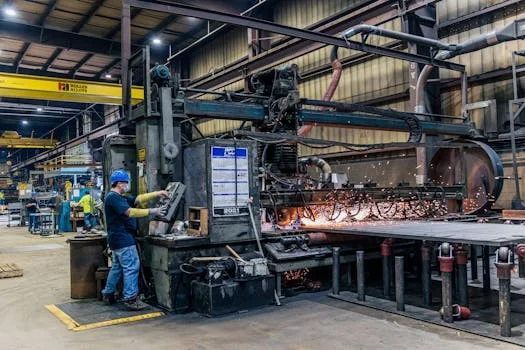
Financial viability for private wastewater projects in Moscow is increasingly driven by water reuse savings and the avoidance of non-compliance penalties, which can reach 5 million RUB per violation under current federal law. Moscow’s 2025 water reuse targets aim for 20% of treated effluent to be recycled for irrigation or industrial cooling, which can generate savings of $0.50–$1.50 per m³ compared to purchasing potable water. Additionally, modernizing sludge management with a high-efficiency filter press can reduce disposal volumes by 70%, significantly lowering the annual OPEX associated with sludge transport.
The wastewater treatment ROI calculator for a Moscow facility must also account for energy efficiency. Modern MBR plants can reduce energy consumption by up to 50% compared to legacy aeration systems. Moscow’s 2025 green infrastructure grants cover 20–30% of capital costs for plants that meet specific energy efficiency or water reuse targets, effectively shortening the payback period for advanced technologies. To ensure disinfection compliance without high chemical costs, many operators are integrating chlorine dioxide disinfection for Moscow’s tertiary treatment, which offers a more stable and cost-effective alternative to traditional chlorination.
| ROI Factor | Annual Savings/Revenue | 5-Year Impact (100 KLD Plant) |
|---|---|---|
| Penalty Avoidance | $55,000 – $110,000 | $275,000 – $550,000 |
| Water Reuse Revenue | $18,000 – $54,000 | $90,000 – $270,000 |
| Energy Efficiency Savings | $12,000 – $25,000 | $60,000 – $125,000 |
| Sludge Reduction | $15,000 – $40,000 | $75,000 – $200,000 |
For a typical $5M MBR plant serving a Moscow food processing facility, the combined annual savings from energy, chemicals, and penalty avoidance often total $800,000. When including revenue from water reuse, the payback period is approximately 5 years. This duration can be reduced further if the project qualifies for the Russian Development Bank’s low-interest loans (6–8% APR) reserved for municipal and environmental infrastructure.
Step-by-Step Guide: Planning Your Moscow Wastewater Treatment Plant in 2025
The planning cycle for a wastewater treatment facility in Moscow spans 18 to 36 months, with the permitting and environmental impact assessment (EIA) phase often representing the most significant bottleneck for project timelines. For urban projects, an underground package sewage treatment plant for Moscow’s urban sites can streamline the civil works phase, as these systems are pre-engineered to fit within tight footprints and simplify the local zoning approval process.
- Feasibility Study (3–6 Months): Conduct comprehensive wastewater characterization (BOD, TSS, pH, heavy metals) and assess site-specific soil conditions. Review SanPiN 2.1.3684-21 requirements relative to the specific discharge point.
- Permitting (6–12 Months): Submit an Environmental Impact Assessment (EIA) to the Moscow Department of Natural Resources. This stage requires detailed engineering drawings and an odor mitigation plan for plants over 100 KLD.
- Design & Engineering (4–8 Months): Select technology based on the cost-compliance trade-offs identified earlier. Ensure the design accounts for Moscow’s seismic zone 2 requirements, necessitating reinforced concrete structures.
- Procurement (3–6 Months): Balance local vs. imported equipment. While European membranes may offer longer warranties, local or Asian-sourced high-performance equipment can reduce capital costs by 20–30% without sacrificing effluent quality.
- Construction (6–18 Months): Factor in a 15% cost premium for winter construction if the schedule requires concrete pouring between November and March. Urban sites must also budget for traffic management and noise restrictions.
- Commissioning (2–3 Months): Perform rigorous performance testing to obtain compliance certification. Moscow’s 2025 digitalization policy mandates that operators undergo specific training for remote monitoring and automated reporting systems.
Frequently Asked Questions
Q: How much does it cost to set up a sewage treatment plant in Moscow?
A: For a 100 KLD municipal plant, capital costs range from $2M–$3.5M (2025 USD), including equipment, civil works, and permitting. Industrial plants (e.g., food processing) may cost 30–50% more due to advanced treatment needs like DAF or MBR to meet strict discharge limits.
Q: What is the cost of a 100 KLD sewage treatment plant in Moscow?
A: A 100 KLD plant costs $2M–$3.5M for conventional activated sludge with tertiary treatment. For MBR technology, costs rise to $2.5M–$4M but offer a smaller footprint and higher effluent quality (BOD <3 mg/L). Moscow’s land costs and permitting add 20–30% compared to rural Russia.
Q: How much does it cost to install a sewage treatment plant in Moscow?
A: Installation costs (excluding equipment) range from $500K–$1.5M for a 100 KLD plant. Urban sites require deeper excavation and noise mitigation, increasing costs by 30–50%. Winter installation adds approximately 15% for heating and insulation.
Q: What are the ongoing costs of a wastewater treatment plant in Moscow?
A: Annual operational costs for a 100 KLD plant average $70K–$120K (2025 USD), or $0.20–$0.35 per m³ treated. Key cost drivers include energy ($0.05–$0.12/m³), chemicals ($0.03–$0.08/m³), labor ($0.02–$0.05/m³), and sludge disposal ($50–$150/ton).
Q: Are there financing options for wastewater treatment plants in Moscow?
A: Yes. Moscow’s 2025 green infrastructure grants cover 20–30% of capital costs for plants meeting reuse or energy efficiency targets. The Russian Development Bank also offers low-interest loans (6–8% APR) specifically for municipal environmental projects.