Define the Pharmaceutical Sludge Dewatering Duty
Screw press dewatering for pharmaceutical sludge is effective when the selected machine matches the sludge’s solids characteristics, required throughput, chemical-conditioning needs, and containment requirements. A multi-plate screw press compresses sludge as a slow-rotating screw moves it toward discharge, while an enclosed design reduces exposure and odour. Published C-Press models cover 20–1,300 kg dry solids per hour and 1–96 m³/h feed capacity, but these figures are manufacturer-specific rather than pharmaceutical guarantees. Procurement should begin with a measured duty basis and disclosed test conditions.
Do not issue a feed-capacity requirement as a complete performance specification. State feed flow and required dry-solids throughput separately, then identify the solids concentration, source, production pattern, and conditioning assumptions behind each figure. The academic assessment of multi-plate screw presses by the International Journal of Advanced Research identifies sludge dewatering as a factor in determining the amount and quality of sludge produced, but the supplied research does not establish universal pharmaceutical-sludge values.
Request samples or test data covering the sludge source, batch or campaign type, solids concentration, particle description, and expected variability. Identify whether pharmaceutical active ingredients, solvents, salts, or cleaning chemicals may change conditioning demand; the supplied evidence does not quantify those effects, so supplier performance claims must be checked against representative sludge. For control-system context, see PLC controls for pharmaceutical wastewater treatment.
| Procurement input | Information required | Why it must be defined |
|---|---|---|
| Sludge origin | Production stream, batch or campaign, upstream treatment and sampling period | Pharmaceutical sludge can vary with the production programme; no universal composition is established in the supplied research. |
| Solids description | Feed solids concentration, test method, particle description and variability | Supports comparison of feed capacity with dry-solids throughput. |
| Capacity | Required feed flow and required dry solids per hour, stated separately | Feed capacity alone does not establish dewatering duty. |
| Conditioning | Polymer type, dose, mixing method and preconditioning assumptions | Every performance figure must disclose the feed and conditioning basis. |
| Operation | Continuous or batch duty, operating hours and campaign-change requirements | Determines whether continuous enclosed pressing or flexible batch dewatering is appropriate. |
| Upstream thickening | Whether a thickener will be installed and its operating interface | BDP Industries reported 200% increased throughput with pre-thickeners at the Suffern, New York installation; that site-specific result is not a general performance guarantee. |
Ask bidders to state the solids basis, analytical method, feed condition, preconditioning, and test duration behind every performance figure. The operating principle is explained in how screw press sludge dewatering works.
Match Screw Press Design to Site Requirements
The suitable architecture matches the compression, feed handling, cleaning, and containment functions to the defined pharmaceutical duty. In the ANDRITZ C-Press, flocculated sludge enters the press and a slow-rotating screw conveys it through a conical shaft; mechanical compression and pneumatic counter-pressure increase separation (ANDRITZ, 2026). This principle necessitates establishing how the proposed machine handles the plant’s actual sludge.
ANDRITZ’s published C-Press range extends from 20 to 1,300 kg dry solids per hour and from 1 to 96 m³/h feed capacity. The manufacturer specifies stainless-steel wetted parts, an enclosed design, and operation below 60 dB(A) (ANDRITZ, 2026). These figures describe that equipment family; they do not establish the output, noise level, or suitability of another supplier’s machine for pharmaceutical sludge.
Evaluate the proposed configuration in four linked areas. First, establish whether the conditioning and feed sections can accept the expected sludge variability. Second, verify access for cleaning, inspection, and replacement of internal screens. Third, confirm how cake leaves the machine and enters a closed container or downstream treatment route. Fourth, identify the utilities required for the drive, pneumatic counter-pressure, flushing, odour control, and washdown. The role of auger dewatering arrangements in comparable applications is reviewed in the screw-press guide for detergent wastewater.
ANDRITZ describes separate cleaning for the thickening and squeezing zones, modular components, accessible tooling, real-time monitoring, adaptive control, and remote diagnostics (ANDRITZ, 2026). Convert those features into procurement questions: which sensors are supplied, which parameters the controller changes, what data can be exported, how cleaning is triggered, which tasks require vessel entry, and what remains available when a campaign changes.
| Design item | Evidence or reference point | Supplier response required |
|---|---|---|
| Separation mechanism | Conical shaft, progressive mechanical compression and pneumatic counter-pressure; ANDRITZ, 2026 | Confirm the configuration, compression arrangement and treatment of each identified sludge type. |
| Published C-Press duty | 20–1,300 kg dry solids per hour and 1–96 m³/h feed capacity; ANDRITZ, 2026 | Provide a model-specific duty basis and identify all assumptions. |
| Wetted materials | Stainless-steel wetted parts; ANDRITZ, 2026 | State each wetted material and grade, including screens, liners and gaskets. |
| Noise and containment | Enclosed operation below 60 dB(A); ANDRITZ, 2026 | State the test condition and how containment prevents sludge or odour release. |
| Cleaning | Separate cleaning of thickening and squeezing zones; ANDRITZ, 2026 | Provide cycle sequence, water demand, duration and access requirements. |
| Controls | Real-time monitoring, adaptive control and remote diagnostics; ANDRITZ, 2026 | List measured parameters, control actions, alarms, data outputs and cybersecurity boundaries. |
Compare Screw Press and Plate-and-Frame Systems
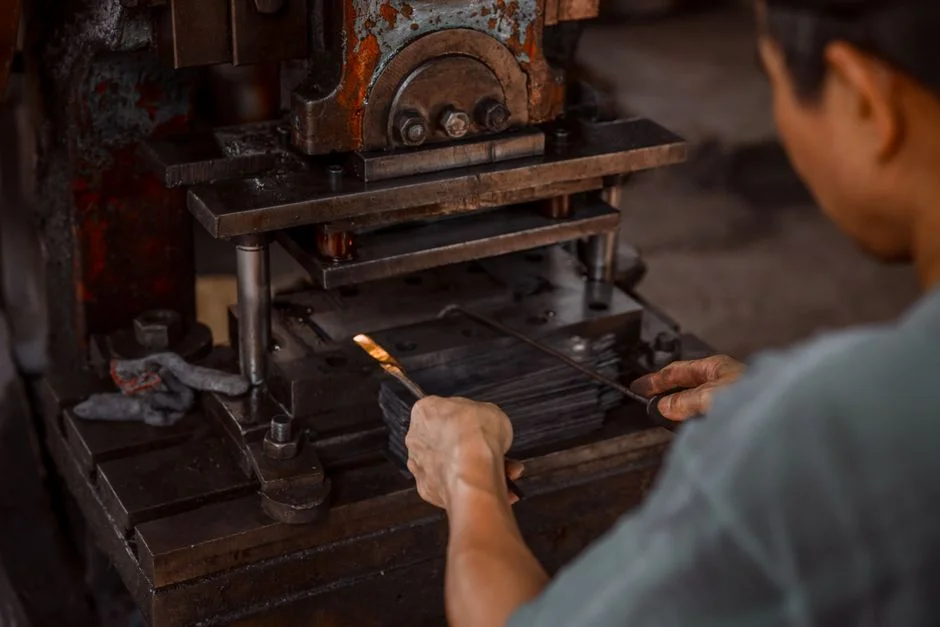
Continuous enclosed screw pressing is suitable when conditioned pharmaceutical sludge is sufficiently consistent to sustain steady feed, whereas a plate-and-frame press provides benefits when batch flexibility, plate handling, or intermittent operation is required. These formats require a common duty definition for accurate comparison. The academic assessment from the International Journal of Advanced Research identifies mechanical dewatering as a sludge-treatment step affecting the amount and quality of sludge produced, but it does not establish that one format is universally preferable for pharmaceutical sludge.
The verified plate-and-frame alternative covers filtration areas from 1 to 500 m² and is available in manual, hydraulic, or fully automatic PLC-controlled configurations (HydropureWater verified product catalog, 2026). Filtration area alone cannot be converted into equivalent dry-solids throughput, as cake results depend on feed solids, conditioning, pressure programme, cycle time, and cake handling.
| Decision item | Multi-plate screw press | Plate-and-frame filter press | Buyer’s test |
|---|---|---|---|
| Operating pattern | Continuous enclosed operation is possible when feed and conditioning remain stable. | Manual, hydraulic or fully automatic PLC-controlled options suit intermittent or batch duty. | Model the pharmaceutical production and sludge-generation schedule. |
| Capacity basis | Require feed flow and dry-solids throughput separately. | Require plate count, filtration area, cycle time and dry-solids result under the specified feed. | Do not compare feed capacity with filtration area as equivalent measures. |
| Conditioning | Verify compatibility with flocculated sludge and the proposed polymer program. | Specify the required conditioned-feed condition and plate blinding risk. | Use the same representative sludge and disclosed conditioning basis. |
| Containment and cleaning | Evaluate enclosed access, zone cleaning, odour control and washdown. | Evaluate plate removal, washing, drip control and manual intervention. | Review containment interfaces, cleaning cycle and access route. |
| Controls | Evaluate monitoring, adaptive adjustment, alarms and diagnostics. | Compare automatic sequencing with manual or hydraulic operation. | Define required controls, interlocks, records and operator involvement. |
| Cake discharge | Confirm the discharge arrangement, chute or conveyor and receiving container. | Confirm plate opening, cake fall and downstream handling. | Include containment, access and final disposal route in the same comparison. |
| Pilot evidence | Use a representative-sludge trial if the duty remains uncertain. | Use a representative-sludge trial if cycle and blinding behaviour are uncertain. | Set acceptance measurements before testing. |
For a defined scope, review the plate-and-frame sludge dewatering alternative alongside the screw-press proposal. If the available sludge data cannot support a reliable comparison, treat pilot testing as a procurement requirement rather than filling the gap with catalogue capacity.
Build the Supplier Specification and Acceptance Checklist
A comparable tender requires each bidder to disclose both the supplied duty and the limits of its guarantee. Require the bidder to identify who supplies the sludge analysis, chemical-conditioning recipe, feed pump, sludge tank, cake container, and final disposal route. A PLC-controlled chemical dosing system may be included in the package, but the equipment supplier must define the conditioning basis used in its performance proposal.
- Require a signed duty schedule stating feed flow, feed solids, required dry-solids throughput, conditioned-sludge condition, operating schedule, and test method.
- Require general arrangement and foundation drawings, wetted-material schedules, utilities, controls narratives, cleaning instructions, spare-parts lists, and maintenance-access dimensions.
- Define the acceptance protocol before testing, including feed sampling, polymer dose, feed rate, runtime, cake-moisture measurement, noise measurement, and stability criteria.
- Record deviations and campaign changes, with a stated procedure for retesting where the agreed feed basis is no longer represented.
Use the controls and service claims as evaluation prompts. ANDRITZ describes adaptive process control, real-time monitoring, remote diagnostics, certified spare parts, and upgrade support (ANDRITZ, 2026). Ask each bidder to identify which functions are included, what they monitor, who can access the data, how spare parts are certified, and what upgrade work is supported.
| Fillable specification item | Required supplier disclosure | Acceptance evidence |
|---|---|---|
| Duty basis | Feed flow, feed solids, dry-solids throughput, conditioning and test duration | Signed duty schedule and witnessed test records. |
| Equipment boundary | Feed pump, sludge tank, conditioning, press, controls, cake handling and utilities | P&ID and battery-limit drawing. |
| Materials and containment | Wetted materials, seals, screens, liners, enclosure and washdown interfaces | Material certificates and containment inspection. |
| Performance test | Feed solids, feed rate, polymer dose, cake moisture, runtime, noise and operating stability | Raw readings, calculation method and witnessed acceptance report. |
| Cleaning and maintenance | Cleaning sequence, water demand, access, isolation and service tasks | Demonstration and completed checklist. |
| Controls and support | Monitoring, adaptive functions, alarms, remote support, spare parts and upgrade scope | Function test, records review and contractual support schedule. |
Frequently Asked Questions
What is the typical price of a screw press for pharmaceutical sludge?
The supplied research provides no universal pharmaceutical screw-press price or quotation basis. Price depends on the required dry-solids duty, feed condition, conditioning, containment, materials, controls, footprint, and package boundaries. Request an itemized quotation stating which equipment is included, performance assumptions, utilities, installation scope, commissioning tests, warranty, and annual spares; do not compare headline feed capacity as if it represented the same scope.
How should a supplier be selected when capacity is the only published figure?
Reject capacity as the sole selection criterion and ask for a documented duty basis, model-specific dry-solids throughput, feed and conditioning assumptions, wetted-material schedule, cleaning method, controls scope, and acceptance-test method. A capable supplier should identify missing sludge inputs rather than assume pharmaceutical sludge behaves like generic municipal sludge. Review the same disclosed data across bidders and include pilot testing where the available evidence cannot support the stated duty.
Which equipment format suits variable pharmaceutical sludge?
Continuous enclosed screw pressing becomes less certain when feed composition or production campaigns cause material variability, while batch plate-and-frame dewatering offers greater