The rural sanitation gap behind Dominican treatment decisions
Rural sewage treatment in the Dominican Republic should be planned as a decentralized service shaped by settlement density, land availability, groundwater conditions and local operating capacity. Historical WHO/UNICEF data reported 76% rural improved-sanitation access and 81% rural improved-water access in 2010, but these figures are not current 2026 estimates. The source also describes fragmented responsibility among regional water and sewer companies, INAPA and rural community-based water boards, making ownership and handover arrangements a central equipment-selection issue. A defensible project therefore requires current agency data, site evidence and a funded O&M model rather than capacity selection alone.
The same overview, Water supply and sanitation in the Dominican Republic, attributes service responsibility to regional companies in major cities, INAPA in other towns and community-based water boards in rural areas. That fragmented institutional structure means a buyer should identify in the contract who owns the works, who holds the operating permit, who pays for maintenance and which authority accepts the asset at handover. It should also confirm whether the proposed treatment system will be operated by the municipality or utility, a community organization or a contracted service provider.
Community participation should not be interpreted as cost-free operation. The overview describes rural associations such as ASOCAR as consisting largely of unpaid volunteers. For sewage treatment, volunteer oversight can support local access and reporting, but it cannot substitute for a trained operator, funded inspections, laboratory support, replacement parts and an emergency response arrangement.
During due diligence, request current INAPA and other responsible-agency data, recent field observations, community-service information and verified wastewater flows and characteristics. The historical access figures should establish the context for planning, not be presented as evidence of present service performance. A related rural sewage treatment planning guide provides additional context for site-specific decentralized decision-making.
Which treatment route fits the community?
Septic treatment, buried package plants and membrane bioreactors solve different rural-service problems, so the correct starting point is the receiving environment and service model rather than a preferred equipment brand. Use septic treatment only where plot configuration, soil, groundwater separation, collection feasibility and local approval conditions support it. A comparison of septic, package-plant and MBR options provides a useful technical reference, but site-specific percolation and groundwater information is still required.
For a compact communal installation, the WSZ underground package sewage treatment plant combines anoxic/aerobic biological contact oxidation, sedimentation and disinfection in one buried unit. The HydropureWater verified product catalog states a capacity range of 1–80 m³/h and describes the system as fully automated and as not requiring an operator. That claim does not eliminate routine maintenance, inspections, resident training or accountable local oversight.
Use the integrated MBR membrane bioreactor where a compact membrane footprint, the manufacturer’s higher stated capacity range or a reuse-oriented treatment objective supports the added process complexity. The catalog gives an MBR range of 10–2,000 m³/day and filtration below 1 μm. Neither catalog range replaces hydraulic and wastewater characterization.
| Decision question | Septic treatment | WSZ package plant | MBR system |
|---|---|---|---|
| Where it fits | Dispersed sites with suitable soil, groundwater separation, plot configuration and local approval | Compact communal treatment where below-grade installation and integrated treatment are priorities | Constrained sites, larger decentralized systems or projects with a defined reuse objective |
| Supplier-stated capacity | Not stated in the supplied research | 1–80 m³/h | 10–2,000 m³/day |
| Main installation issue | Plot-level siting, soil and groundwater constraints | Below-grade civil works, access, landscaping and commissioning | Process integration, aeration, membrane installation and residual handling |
| O&M emphasis | Owner inspection, pumping and system servicing | Inspection, maintenance, automation checks and local responsibility | Membrane cleaning, aeration, sludge handling and skilled technical support |
| Key procurement check | Site evidence and approval pathway | Module selection, civil interface and service scope | Effluent objective, membrane support and life-cycle obligations |
Compare options by installation logistics, land footprint, process complexity, effluent objective, expansion path and technical support. WSZ may simplify deployment through an integrated buried package. MBR may be justified by footprint or reuse constraints, but its aeration, membrane-fouling controls, sludge handling and specialist maintenance need a credible service arrangement. For broader context, see the containerized MBR treatment-plant sizing method.
Process and performance considerations for package plants
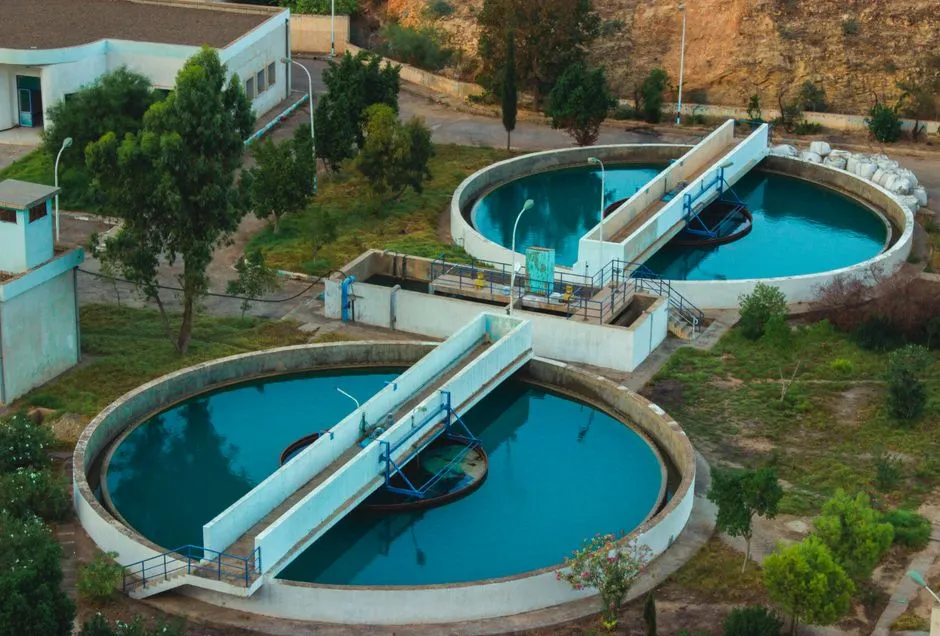
The WSZ process integrates biological treatment, solids separation and disinfection in one buried package, reducing the number of separately installed treatment units while retaining several interfaces that must be controlled. According to the HydropureWater verified product catalog, the sequence comprises anoxic/aerobic biological contact oxidation, sedimentation and disinfection. Final module selection must reflect the wastewater—not only an estimated population.
The catalog offers two installation arrangements: below grade with landscaping above, or trailer mounting for mobile deployment. Civil design must therefore resolve excavation, buoyancy protection as applicable, access for inspection and maintenance, weather protection, connections, controls and future lifting or module removal. Above-ground constraints should not force a compromise that removes safe access to maintenance points.
| Design input or deliverable | Information required before procurement |
|---|---|
| Hydraulic basis | Average and peak wastewater flow |
| Wastewater characterization | Relevant characteristics and discharge objective |
| Site levels | Inflow and outflow elevations |
| Ground conditions | Soil and groundwater conditions |
| Physical space | Available footprint and above-ground constraints |
| Maintenance access | Access route and method for routine and major interventions |
| Disposal route | Receiving point and applicable permit conditions |
| Supplier deliverables | Process guarantees, controls, spares, commissioning tests, training and O&M documentation |
Request a proposal that states the selected capacity basis, process sequence, control-system scope, alarm functions, electrical requirements, test procedure, training content, recommended spares and O&M tasks. The 1–80 m³/h figure is a manufacturer-stated catalog range, not a selection value. Require the supplier to explain how the proposed modules satisfy verified average and peak loads and how the system responds to hydraulic or organic variation.
Commissioning documentation should establish how performance will be demonstrated, which measurements are required and who receives unresolved deficiencies. A rural treatment-system comparison can help frame these questions, but the Dominican project must remain tied to its own site and receiving environment.
When membrane treatment is the better fit
MBR is technically defensible when the project needs a compact membrane footprint, the supplier’s stated capacity is appropriate or reuse is an explicit design objective. The HydropureWater verified product catalog describes activated sludge treatment combined with submerged PVDF membrane filtration, with a capacity range of 10–2,000 m³/day and filtration below 1 μm.
Filtration below 1 μm does not by itself establish reuse compliance or guarantee suitability for every reuse application. The buyer must define the intended reuse, identify the applicable water-quality requirements, specify the required testing and obtain regulatory review for the receiving environment. A supplier’s near-reuse-quality claim should therefore be treated as a claim requiring project-specific verification.
| MBR issue | Evidence or supplier statement | Buyer action |
|---|---|---|
| Treatment configuration | Activated sludge with submerged PVDF membrane filtration | Obtain the proposed process flow, control narrative and performance criteria |
| Capacity | 10–2,000 m³/day in the HydropureWater verified product catalog | Match modules to verified flow, peak demand and wastewater characteristics |
| Filtration | Below 1 μm | Do not treat as automatic reuse approval; request project-specific evidence |
| Footprint | Manufacturer claim of 60% less footprint than conventional systems | Validate the comparison basis and proposed site configuration |
| Operational burden | MBR requires attention to fouling, aeration, sludge handling and skilled maintenance | Clarify cleaning, maintenance, membrane replacement and residual-management responsibilities |
The manufacturer’s claim of a 60% smaller footprint than conventional systems should be validated because the comparison depends on what is counted as the system boundary. Ask whether civil works, tanks, sludge handling, access zones and replacement clearances are included. Membrane fouling, aeration reliability, sludge removal, trained operators and access to spare membranes are commercial and technical conditions, not commissioning details to be left implicit.
For larger decentralized systems, constrained footprints or defined reuse strategies, these conditions can justify MBR. For a small cluster with simpler objectives, a less complex route may offer a stronger operating proposition. The containerized MBR treatment-plant sizing method provides a separate sizing framework, while the integrated MBR membrane bioreactor page contains the supplied configuration data.
Cost, procurement and compliance risks to resolve before purchase
Equipment price alone cannot rank a rural sewage treatment option because network, civil, operating and residual-management costs can determine life-cycle performance. Compare bids on a common scope covering treatment equipment, collection works, installation, commissioning, electrical supply, power, consumables, routine maintenance, sludge or residuals handling, monitoring and major replacement risk.
Funding assumptions deserve early review because the historical overview reports that wastewater treatment received only 2.3% of total investments during 1990–1998, while 84% of investment went to urban centers. These are period-specific figures from Water supply and sanitation in the Dominican Republic, not current allocation data. They demonstrate the historical imbalance without proving the present funding position. Current capital sources, affordability arrangements and any fee or tariff mechanism still require confirmation.
| Commercial item | Question every bidder should answer in writing |
|---|---|
| Package boundary | What equipment, civil works, pumps, piping, electrical supply, controls and installation are included or excluded? |
| Startup | Are permits, mobilization, startup assistance, testing and training included? |
| Operating costs | Which power, chemicals, consumables, inspections, sampling and residual-handling services are priced? |
| Support | What local service capability, operator training, response time, remote assistance and on-site support are committed? |
| Spares | Which critical spares will be stocked, where, and what replacement lead time applies? |
| Long-term obligation | Which membrane, pump, disinfection or control components are included in maintenance and replacement pricing? |
Evaluate supplier support as part of the technical offer, not as an accessory. Request named local personnel or service partners, training records, response commitments, critical-spares lists and examples of comparable operating support. Ask whether the quoted O&M scope includes remote monitoring and what happens when a critical component fails.
Compliance is site- and discharge-specific. Request current Dominican permitting, water-quality and discharge requirements from the responsible authorities, and establish the receiving point before selecting a process. The supplied catalog ranges and product claims are selection inputs, not evidence of regulatory approval. The WSZ underground package sewage treatment plant and integrated MBR membrane bioreactor should therefore be evaluated against verified project requirements.
Build an O&M and community-governance plan
A community-managed sewage system needs an operating structure that assigns money, authority and technical work. The Michigan Technological University Sustainability Analysis Tool provides a practical starting point through three categories: organization and management, financial administration and technical service. Its evidence concerns rural water systems, not sewage plants, but the organizational questions remain directly applicable.
Schweitzer’s 2009 Michigan Technological University study evaluated 61 Dominican rural water systems and classified 23% as likely sustainable, 59% as possibly sustainable and 18% as unlikely to be sustainable over the long term. These results are rural-water evidence, not sewage-plant performance data. The study examined factors including gender participation, the legal status of water committees, operator or plumber remuneration, demand responsiveness, post-construction support and project-design criteria.
- Municipality or utility: define asset ownership, regulatory interface, emergency authority and capital-replacement responsibility.
- Community committee: represent users, communicate service rules, support fee collection and escalate operational problems.
- Trained operator: conduct defined inspections, interpret alarms, record operating data and manage routine maintenance.
- Laboratory or sampling provider: perform the agreed monitoring and reporting required for the permit and operating plan.
- Equipment service provider: provide technical support, critical spares and defined response or on-site coverage.
Before commissioning, document inspection frequency, alarm response, laboratory sampling, sludge or residual handling, spare-parts custody, emergency bypass planning and fee-collection arrangements. Also define how support changes after construction and who pays for major replacement. The decentralized sewage treatment equipment guidance for rural communities can support equipment preparation, but the operating agreement should use the Dominican project’s own authority and community arrangements.
Frequently Asked Questions
How should a rural sewage treatment system be sized in the Dominican Republic?
Size it from verified average and peak wastewater flow, wastewater characteristics, site conditions and treatment objectives—not population estimates alone. The HydropureWater verified product catalog states WSZ capacities of 1–80 m³/h and MBR capacities of 10–2,000 m³/day. Ask the supplier to explain how its proposed configuration satisfies the project flow profile and peak-load requirements.
What should a buyer include when comparing treatment-system prices?
Use a line-item total-cost comparison covering equipment, civil works, collection, installation, commissioning, power, consumables, maintenance, residuals, monitoring and major replacement risk. No defensible project price can be stated without the scope and site inputs. Require each bidder to identify exclusions, especially for civil works, pumps, piping, electrical supply, permits, startup, training and long-term spare parts.
How should suppliers be selected for local operation and maintenance?
Screen suppliers on documented local service capability, operator or technician training, response commitments, critical-spares stocking and remote or on-site support. Use the MTU study’s organization, financial-administration and technical-service categories to check whether a proposed community-management model has paid responsibility, capable personnel and post-construction support. A low equipment quote is not sufficient if maintenance capability remains undefined.
What is required before selecting a process for discharge or reuse?
Confirm discharge and reuse requirements for the specific project and receiving environment with current Dominican authorities. Filtration below 1 μm, automated operation and manufacturer capacity claims do not establish regulatory approval. The approval pathway, receiving point, required testing and compliance responsibility should be defined before technical selection and included in the procurement scope.
Who should operate and maintain a community-managed sewage treatment system?
Assign roles formally among the municipality or utility, community committee, trained operator, sampling provider and equipment service provider. Community participation can support local engagement, but the operating plan must fund operator remuneration, inspections, laboratory support, alarm response, residual handling, spare parts and emergency arrangements. This prevents the unsupported assumption that community management means maintenance without cost or accountability.