Determine which discharge requirements control the mill
Pulp-and-paper plants near Putney meet sewer pretreatment limits by treating wastewater to the specific limits imposed by the receiving publicly owned treatment works, with compliance normally verified at the industrial user's point of connection. EPA's pretreatment rules require POTWs to establish local limits that protect the treatment plant, sludge process, and receiving waters. Federal pulp-and-paper effluent guidelines in 40 CFR Part 430 inform controls, but they do not replace the mill's permit or the receiving POTW's site-specific requirements.
First determine whether the mill is an indirect discharger connected to a POTW or a direct discharger to waters of the United States. EPA explains that the pulp, paper and paperboard effluent guidelines in 40 CFR Part 430 are incorporated into NPDES permits for direct dischargers and into permits or other control mechanisms for indirect dischargers (EPA, Pulp, Paper and Paperboard Effluent Guidelines). For an indirect discharger, the enforceable compliance chain is the industrial-user permit, POTW local limits, prohibited-discharge rules, and monitoring obligations.
Pretreatment standards are pollutant discharge limits that apply to industrial users under 40 CFR 403.3(j), according to EPA's Pretreatment Standards and Requirements—Local Limits. Local limits address the specific needs and concerns of the POTW, its sludge, and its receiving waters. They may be numeric or narrative effluent limits, including best management practices, and EPA applies them at the industrial user's end-of-pipe discharge, or point of connection.
| Requirement | What it controls | Documents or evidence to obtain |
|---|---|---|
| Federal pulp and paper effluent guidelines | Category and subcategory requirements incorporated into permits or other control mechanisms | Applicable subcategory, current 40 CFR Part 430 text, NPDES or POTW control documents |
| Industrial-user pretreatment permit | Mill-specific discharge conditions, monitoring, reporting, and compliance procedures | Permit, permit modifications, monitoring protocol, reporting forms, slug-load provisions |
| POTW local limits | Site-specific numeric or narrative limits protecting the POTW, sludge process, and receiving waters | Approved local-limit calculations, effective dates, definitions, monitoring locations |
| Prohibited discharges | Discharges that may pass through, interfere with operations, or affect sludge and receiving waters | POTW sewer rules, discharge prohibitions, chemical restrictions, approval requirements |
Request the industrial-user permit, local limits, prohibited-discharge rules, monitoring requirements, reporting format, and any applicable slug-load provisions from the receiving POTW. Do not treat federal guidance, a treatment brochure, or general treatment capability as proof that a particular Putney-area mill complies. The mill must demonstrate performance against its own permit and the POTW's applicable requirements, including any concentration and mass-loading conditions. For a broader view of industrial pretreatment documentation, see the industrial pretreatment requirements overview.
Characterize the wastewater by mill process and pollutant group
Wastewater properties vary with the process, raw material, recirculation, and amount of water used, so characterization must follow the mill's actual flows rather than a single generic sample. The review A review of pulp and paper industry practices and opportunities identifies pollution formation in wood preparation, pulping, pulp washing, screening, paper-machine operations, coating, and especially bleaching operations.
Map each wastewater source before selecting equipment. Separate or characterize streams from wood preparation, pulping, pulp washing, screening, paper-machine operations, coating, deinking, and bleaching. For each source, record whether it is intermittent, continuously discharged, or normally reused internally. Establish background data for pH, flow, temperature, suspended solids, settleable solids, BOD, COD, color, toxicity, AOX, FOG, and colloidal material—but apply only the parameters required by the industrial-user permit and POTW local limits.
| Wastewater source | Characterization focus | Design or compliance use |
|---|---|---|
| Wood preparation | Suspended solids, settleable debris, extractives, flow variability | Segregation and solids recovery strategy |
| Pulping and pulp washing | High organic load, COD, BOD, color, suspended solids | Organic-load and solids treatment boundaries |
| Screening and paper-machine operations | Fiber, fillers, suspended solids, colloids, FOG where relevant | DAF or clarification evaluation and chemical dosing |
| Coating and deinking | Colloids, suspended solids, color, organic load, residual chemicals | Stream segregation, solids removal, biological loading |
| Bleaching | AOX, toxicity, color, pH, organic load | Separate treatment and advanced-treatment assessment where required |
Use composite sampling for routine characterization and event-based sampling for cleaning, production changes, upsets, and suspected slug discharges. Locate sampling points at representative process flows and at the point of connection. A single grab result cannot define normal operating variability or demonstrate that the complete treatment train consistently meets a permit condition.
Keep bleaching wastewater segregated where practical. The academic review states that AOX content is generally proportional to chlorine consumption in bleaching, so changes in bleaching chemistry can alter both the AOX load and the treatment requirement. The same review describes BOD-to-COD as an indicator of the fraction of organic matter that is comparatively easy to degrade. It is a diagnostic relationship, not a substitute for a permit-specific analysis or treatability testing.
Reduce the wastewater load before end-of-pipe treatment
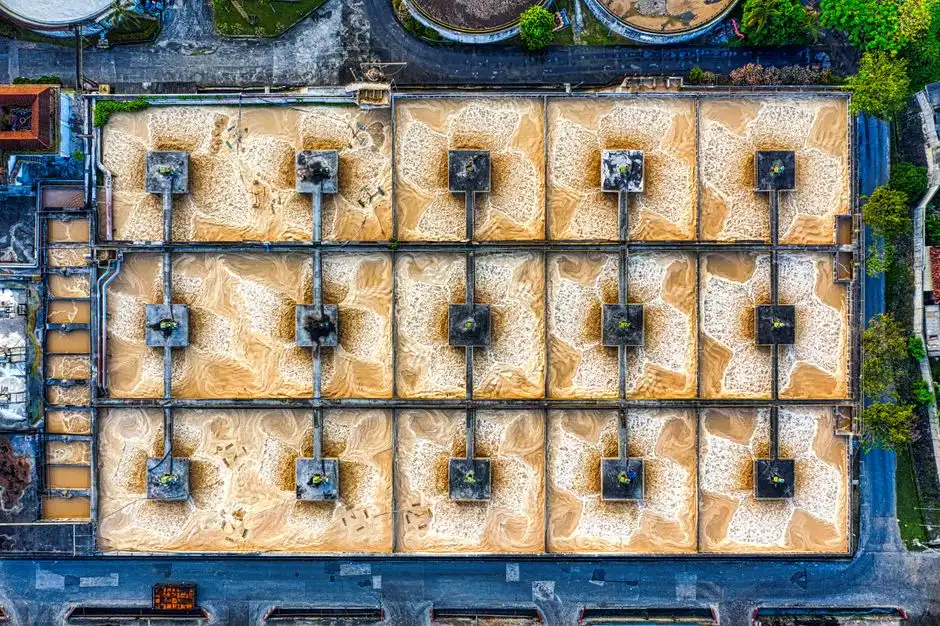
Upstream recovery can reduce the hydraulic and pollutant load reaching end-of-pipe treatment. The pulp-and-paper review identifies filtration save-alls, process-water recovery, dissolved-air-flotation systems, and other upstream process changes as ways to reduce pollutant load and the volume of effluent sent to end-of-pipe treatment.
Start with a source-by-source water balance. Identify where process water can be clarified, filtered, or returned for a defined use without accumulating contaminants that cause corrosion, deposits, odors, or paper-machine runnability problems. The review describes the “water-fit-for-use” principle: treat water only to the quality required for its intended use, rather than applying full effluent treatment to every internal stream.
Where suspended solids and colloidal material would interfere with downstream biological treatment or exceed a local limit, evaluate a dissolved air flotation system for pulp-and-paper pretreatment or clarification as an upstream barrier. Chemical addition should be controlled and optimized against measured effluent quality; the review identifies coagulants, flocculants, filter aids, and biological agents as potential operational improvements, not automatic replacements for process controls.
Segregate incompatible or high-concentration streams where practical. A bleach stream, coating wastewater, and high-solids fiber stream should not automatically be combined simply because they discharge to the same collection point. Each stream may need a different recovery, treatment, or monitoring strategy.
The water-use context supports upstream action but must be applied carefully. The review states that the pulp and paper industry uses about 70% of its water intake as process water, that water consumption per tonne declined substantially through internal recirculation and cleaning, and that large wastewater volumes arise in part from water use and reuse decisions. These are industry-level observations, not performance figures for a particular Putney mill. Site-specific flow and constituent data remain necessary before sizing recovery or end-of-pipe equipment.
Assemble a treatment train that matches the pollutants
A pulp-and-paper treatment train should be selected as a sequence of removal barriers, not as one machine expected to solve every pollutant. The academic review identifies conventional systems commonly built around primary clarification followed by activated sludge, with supplementary anaerobic biological stages, advanced oxidation, bioreactors, and membrane filtration used where higher removal or reuse objectives require them.
- Protect biological and downstream systems. If solids, FOG, oil and grease, or colloids are material to the local limit, evaluate primary clarification or DAF before biological treatment.
- Remove biodegradable organic load. Use biological treatment where BOD and the biodegradable fraction of COD require it. Evaluate the final effluent against the permit; do not infer compliance from process configuration alone.
- Address residual or specialized contaminants. Consider anaerobic stages, advanced oxidation, bioreactors, or membranes where toxicity, color, refractory organics, AOX, or reuse requirements justify them.
- Verify end-to-end performance. Test the complete train under representative flow, composition, pH, temperature, and operating conditions.
| Treatment function | Primary evaluation | What it does not establish |
|---|---|---|
| DAF or clarification | Suspended solids, settleable solids, FOG, oil and grease, colloidal material | Compliance for BOD, COD, color, toxicity, or AOX |
| Activated sludge or other biological treatment | Biodegradable organic load and associated solids separation | Complete removal of refractory organics, color, AOX, or toxicity |
| Anaerobic biological stage | Organic-load reduction where the mill stream and operating objectives support it | Universal removal of all regulated pollutants |
| Advanced oxidation | Residual refractory organics, color, or toxicity where treatment objectives require it | Substitution for upstream solids control or biological capacity |
| Membrane filtration | Additional solids separation or reuse-quality objectives | Automatic compliance with local limits |
Use the MBR wastewater treatment system only as one option within a complete train. Its relevance depends on the measured effluent target, hydraulic profile, solids loading, biological process requirements, and operating conditions. Likewise, the review supports primary clarification followed by activated sludge as widely implemented pulp-and-paper practice, but no technology can be declared sufficient before the permit requirements and mill wastewater are characterized.
Protect the biological system from excessive solids, incompatible chemicals, pH shocks, and biodegradable organic overload. The review also notes that separation rate can limit throughput in settling and flotation units; chemical treatment and biological operating conditions can affect that rate. Design should therefore address both contaminant removal and hydraulic capacity.
Verify compliance at the point of connection
Compliance must be demonstrated with the complete treatment train operating as designed and with samples collected at the point of connection. EPA states that POTWs impose local limits at the industrial user's end-of-pipe discharge, meaning the mill's final treated stream—not an intermediate process sample or a vendor's treated-water result.
Use the industrial-user permit and POTW monitoring protocol as the governing procedure. Confirm flow, pH, operating conditions, chemical dosage, and the parameters named in the permit before collecting a compliance sample. Composite and event-based monitoring should characterize normal production, cleaning, upset, and slug-discharge conditions, while remaining consistent with the POTW's required sampling method and frequency.
Check each result against both the numeric concentration limit and any mass-loading limit. A stream can comply on one basis while exceeding another if flow is high enough to increase the discharged mass. Keep the sample point, flow period, production condition, and analytical result linked so the result can be defended.
Retain chain-of-custody records, calibration records, laboratory results, operating logs, chemical-use records, and corrective-action documentation. These records establish that the sample represented the permitted discharge and that operators responded to excursions or equipment failures. After an exceedance or upset, follow the permit's reporting, resampling, and corrective-action rules; do not substitute an internal recovery sample for the required compliance sample.
Plan for local-limit changes and treatment upsets
Local limits must be managed as a living permit obligation because EPA's pretreatment guidance includes annual reviews and periodic reevaluations of POTW local limits. A mill should establish a scheduled interface with the receiving POTW and a process for implementing revised limits before they become enforceable obligations.
Track changes in raw material, product mix, bleaching, water reuse, production rate, and chemical use because the pulp-and-paper review shows that wastewater properties depend on process, raw material, recirculation, and water use. A treatment train sized for one production pattern may not retain the same margin when a higher-strength stream, a new chemical, or a hydraulic shift enters the system.
Where the risk assessment justifies them, provide equalization, online monitoring, bypass prevention, alarm response, and defined sampling procedures. Set operating triggers for chemical dosage, solids removal, biological-process conditions, and final effluent quality. The DAF selection guide for FOG and TSS provides a useful adjacent reference for equipment evaluation, but operating triggers should reflect the mill's own permit and measured wastewater.
When limits or production conditions change, revisit the treatment train rather than automatically adding capacity. The academic review identifies upstream process changes, filtration save-alls, DAF, biological treatment, advanced oxidation, and membrane filtration as complementary options. For broader project context, the 2026 pulp-mill wastewater plant project illustrates the scale of current plant decisions, but it does not replace site-specific design data for a Putney mill.
Frequently Asked Questions
What cost information should a mill request before selecting pretreatment equipment?
Request a site-specific cost estimate that separates equipment, foundations and installation, utilities, chemical consumption, sludge handling, controls, monitoring, maintenance, and operating labor. The academic review states that separation rates can limit throughput and affect capital cost, but it does not provide a universal equipment price for pulp-and-paper pretreatment. A defensible budget therefore needs representative flow and constituent data, the applicable POTW limits, pilot or supplier performance evidence, and the mill's utility and disposal costs. Do not compare bids based only on purchase price.
How should a mill choose and size DAF, biological treatment, and advanced treatment?
Ask the supplier to size the complete industrial wastewater pretreatment train from representative mill wastewater, including flow variability, suspended solids, FOG, BOD, COD, color, toxicity, AOX, pH, and temperature. DAF or clarification should be evaluated for solids and colloidal removal; biological treatment for biodegradable organic load; and advanced processes only where the measured residual or permit objective requires them. The final sizing must also address the point-of-connection concentration and mass-loading limits.
Which supplier qualifications reduce compliance risk?
Check documented pulp-and-paper or comparable industrial application data, pilot results or references, control integration with existing mill systems, materials compatibility, maintenance and spare-parts support, and delivered-performance evidence tied to the proposed wastewater and permit conditions. A supplier should also document how the proposed train handles solids, biological loading, chemical compatibility, monitoring, and upset response rather than offering a single-unit guarantee.
Why is solids removal alone not proof of pretreatment compliance?
DAF and clarification primarily address suspended solids, FOG, oil and grease, and colloidal material. A mill can achieve low suspended solids while still exceeding applicable requirements for BOD, COD, color, toxicity, or AOX. Compliance must be demonstrated for the complete treatment train at the point of connection, using the monitoring method and frequency required by the industrial-user permit and POTW local limits.