Define the operating objective for the entire network
Sewage network operation and maintenance is the planned cycle of inspecting sewers, identifying deposits or defects, cleaning and repairing assets, recording work, and preventing recurrence. Reliable programs combine video inspection, condition assessment, risk-based scheduling, written corrective work orders, and clear asset records. EPA maintenance guidance recommends preventive checklists for major equipment, numbered assets, and regular review of maintenance labor and budgets. At treatment facilities, reliable performance also depends on monitoring wastewater before and after treatment stages, as demonstrated by the Qatar University plant study.
The operating objective has four connected parts: maintain reliable conveyance, protect worker safety, preserve downstream treatment performance, and meet applicable wastewater and waste-disposal requirements. A blockage can interrupt conveyance and expose crews to hazardous conditions while sending an unrepresentative waste load to the receiving plant. Treatment compliance cannot be managed reliably if the condition of the network upstream remains undefined.
Network design affects that operating responsibility. The E3S Web of Conferences study A wastewater retention canal as a sewage network and accumulation reservoir assumed a linear network of 12 storm canals with the retention reservoir at the outlet. Although that study concerned storm sewage, the operating implication remains direct: outlet conditions and storage capacity must be included in network planning and operating decisions rather than treated as separate from collection-system maintenance.
Collection-system maintenance is also distinct from treatment-plant operation. The network conveys wastewater to the receiving asset. Restrictions, surcharge conditions, or excess solids can therefore affect a treatment plant before the failure appears in an effluent or process-control record. Treatment operators need an upstream condition record; collection crews need to understand how deposits and industrial loads will affect downstream equipment.
Establish the baseline with flow, level, rainfall, odor, blockage, overflow, complaint, and maintenance-history records. The supplied research supports operating records but does not provide universal threshold values, so local permit conditions, hydraulic data, and site evidence must determine the limits. Treat inspection, cleaning, repair, and preventive maintenance as separate work packages: inspection produces condition evidence, cleaning removes deposits, repair restores assets, and preventive maintenance reduces recurrence.
Build a risk-ranked inspection program
Video inspection converts a sewer survey into documented evidence that can support a defensible intervention priority. Commercial sewer-maintenance guidance identifies video inspection, hydrodynamic cleaning, and vacuum trucks as principal inspection and intervention technologies; the inspection record should show what is present, not merely where a crew operated.
- Rank each asset by consequence and likelihood of failure. Consider blockage or overflow potential, downstream treatment criticality, the consequence of failure, asset age or condition history, previous problem frequency, and exposure to rainfall or external loading.
- Inspect upstream and downstream of known problem points. Include junctions, drop structures, siphons, pump stations, manholes, and the treatment-plant inlet where those assets exist.
- Record the location, observed condition, likely consequence, recommended action, responsible party, and verification requirement for each defect.
- Classify the condition as monitor, clean, repair, investigate the cause, or escalate for process-engineering review.
- Set the next inspection frequency from recurrence and changed risk conditions rather than from an unsupported universal interval.
EPA maintenance guidance identifies equipment identification and maintenance records as vital operating information and says every item requiring maintenance should receive a number. Apply that principle to collection assets as well as plant equipment so inspection history follows a physical location rather than remaining in crew notes.
Do not assign the same interval to every main. After the initial condition survey, adjust frequency when rainfall, industrial discharge, silt, rag, grease, or construction activity changes the operating risk. A recurrent blockage at one location calls for investigation of its cause; repeated cleaning without that analysis can become a recurring cost rather than a correction.
| Field evidence | Condition action | Verification required |
|---|---|---|
| Localized deposit with no observed structural failure | Clean using a method matched to the deposit and pipe | Post-cleaning video and restored flow-path confirmation |
| Structural or displacement defect | Repair or obtain engineering assessment | Inspection after repair and asset-record update |
| Repeated blockage at the same location | Investigate discharge loading, local hydraulics, capacity, or material issues | Cause documented and recurrence test defined |
| Restriction or debris reaching the treatment inlet | Clean and escalate for downstream protection review | Inlet condition confirmed before treatment operations |
| Early-condition defect without immediate consequence | Monitor under a defined condition class | Next review date and changed-condition trigger recorded |
Match cleaning methods to field conditions
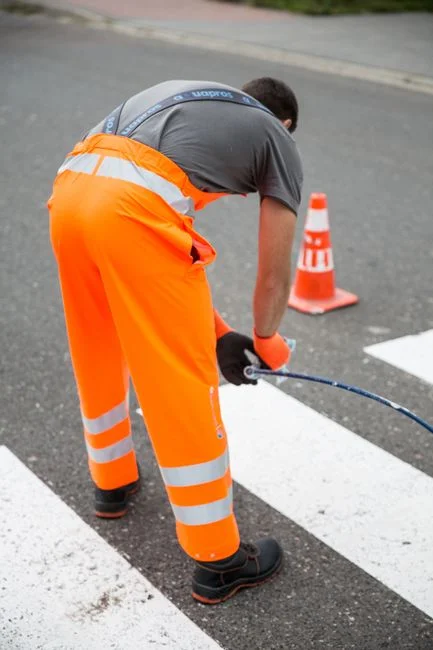
Cleaning methods must follow field evidence, as video inspection identifies the condition while deposit types and pipe characteristics constrain the intervention. Commercial guidance from Franchini Servizi Ecologici describes sewer-maintenance cleaning as a structured process in which technology is selected according to network condition and deposit type; it identifies hydrodynamic cleaning, vacuum trucks, and video inspection as principal options.
Hydrodynamic cleaning uses a water-driven removal method and is appropriate only when the pipe material, installation, access, wastewater conditions, and receiving environment can tolerate the selected process. Vacuum removal is more relevant to accessible deposited solids or residual material. These are method-selection principles, not permission to transfer equipment specifications from another site. Ask the site crew and equipment manufacturer for pressure, nozzle, vehicle, and production-rate requirements specific to the pipe and deposit conditions.
Confirm that the method will not damage the infrastructure or create unsafe exposure. The referenced commercial guidance describes targeted methods intended to avoid infrastructure damage and emphasizes environmental compliance and worker protection. Confirm the safe working method, isolation requirements, confined-space controls where applicable, and crew competencies before mobilization.
Define the waste route before work begins. The same guidance states that waste generated during sewer maintenance is handled through collection, transport, and authorized disposal under the applicable regulatory framework. The receiving facility, transfer records, and disposal authority should therefore be identified before the first tank or vacuum load is moved.
Post-cleaning verification closes the operating cycle. Confirm the restored flow path, manage residual waste, inspect exposed defects, update the asset record, and determine whether recurrence indicates a design, discharge-control, or maintenance issue. A successful clean is not proof that the underlying cause has been corrected.
| Method | Primary use | Selection inputs | Required closeout |
|---|---|---|---|
| Hydrodynamic cleaning | Water-driven removal where suitable for the asset | Pipe material, installation, deposit, wastewater characteristics, safe access | Post-work video, flow-path confirmation, defect and waste records |
| Vacuum removal | Removal of accessible deposited solids or residual material | Access, deposit characteristics, vacuum compatibility, waste route | Residual-waste disposition, restored flow path, updated condition record |
| Video inspection | Baseline and post-work condition assessment | Reach, access, operational conditions, defect-recording requirements | Linked footage, location, classification, action and verification |
Turn field findings into preventive maintenance
Preventive maintenance begins when inspection and corrective-work records become a repeatable program. EPA’s Maintenance Management Systems for Municipal Wastewater Facilities recommends detailed preventive-maintenance procedures or checklists for all major equipment items. For a collection system, translate that requirement into checklists for recurring assets, access points, lifting or confined-space equipment, inspection vehicles, and treatment-interface assets.
EPA also states that a maintenance-management system should be ready for implementation when a plant starts and may be revised later. The same principle applies to new network assets and treatment equipment: establish the program before handover, then revise checklists using operating experience. Documented revisions should show what changed, who authorized it, and which inspection or failure history prompted the change.
Initiate corrective maintenance through a written work order, as required by the EPA guidance. Each work order should contain the symptom, diagnosis, safety controls, parts, labor, target completion, testing, and closeout record. Assign every asset requiring maintenance a unique identification number. EPA recommends numbering equipment from the wastewater inlet and continuing in the direction of process flow; extend the same traceability into collection records so the crew, contractor, and treatment operator refer to the same asset.
Maintain the information in equipment cards or computer files, which EPA identifies as vital to maintenance and operation. The record should hold inspection evidence, condition class, cleaning history, repair work orders, verification results, parts, labor, and the next review trigger. Schedule planned work around crew availability, vendors, isolation requirements, notifications, and treatment-plant operations.
Review maintenance labor, manpower use, and expenditure regularly. EPA states that maintenance cost information should be incorporated into the total operation and maintenance budget rather than left outside it. Spare-parts planning follows the same evidence: criticality and failure history determine which parts need controlled availability.
| Program element | Required content | Operational use |
|---|---|---|
| Preventive checklist | Asset, task, frequency, safety control, acceptance condition, closeout | Prevents recurrence and standardizes recurring work |
| Corrective work order | Symptom, diagnosis, controls, parts, labor, target, test, approval | Creates traceable responsibility for non-routine work |
| Asset record | Unique number, location, condition history, work, parts, labor, verification | Connects evidence across crews and contractors |
| Priority schedule | Consequence, due date, dependencies, crew and vendor capacity | Coordinates planned work with network and plant operations |
| Budget and parts control | Planned labor, materials, contractor support, waste handling, critical spares | Connects maintenance demand to operational expenditure |
Protect treatment performance downstream
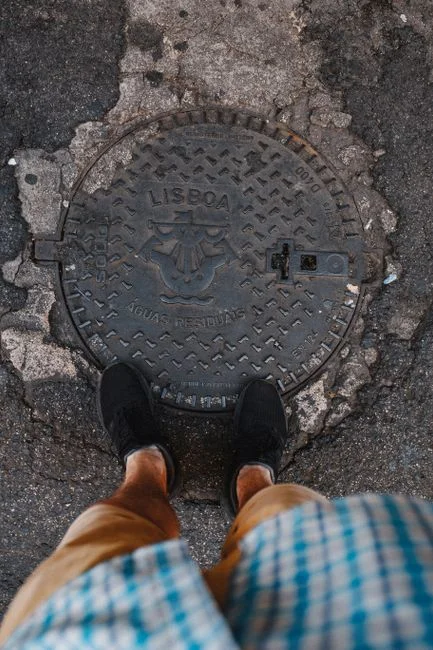
The treatment-plant inlet is a network-to-process interface, so debris removal and condition verification belong in the collection operating plan. Insufficient upstream control can expose pumps, screens, biological systems, and disinfection stages to material that the network should have retained or removed. EPA’s maintenance framework also supports the treatment side of this interface: equipment identification, maintenance records, checklists, and work orders should extend into the plant rather than stop at the collection boundary.
Use continuous screening where solids, rags, plastics, and fibrous debris are credible risks. A rotary mechanical bar screen for wastewater headworks is continuous-duty equipment intended to protect downstream pumps, valves, and biological treatment processes. Its suitability still depends on the character and rate of incoming material, available headworks layout, and maintenance access; screening is not a substitute for controlling discharge loading.
Verify process performance through treatment-stage sampling. The Qatar University study Operation And Maintenance Of Sewage Treatment Plant In Doha states that samples are collected regularly at the plant inlet and before and after each treatment process. That sampling structure links upstream evidence with downstream process response instead of evaluating the plant in isolation.
Assess industrial discharges before accepting them into a shared sewer. Investigate high-shear solids, oils and grease, rags, or unusual loadings that could produce blockages, odor, or treatment upset. For permitted FOG and TSS applications, the method for selecting a DAF system for FOG and TSS should begin with characterization of the discharge and its collection-system consequences.
Where a small, decentralized application requires treatment beyond screening, consider an integrated underground sewage treatment plant. HydropureWater’s verified WSZ Series catalog specifies anoxic/aerobic biological contact oxidation, sedimentation, and disinfection in a buried package, with automated operation and no operator required for a stated capacity of 1–80 m³/h. Do not select from flow alone: wastewater characterization, discharge obligations, treatment objectives, site constraints, maintenance capability, and upstream-network condition are also required.
Turn maintenance data into continuous improvement
Maintenance records become useful when they are analyzed against asset locations. Track blocked sections, repeat defects, cleaning recurrence, overflow events, response time, labor hours, spare-parts usage, and downstream process excursions. The purpose is to distinguish a recurring physical problem from a recurring response to an uncontrolled discharge or local hydraulic condition.
Test whether defects cluster around network-capacity constraints, local hydraulics, industrial loading, construction damage, inappropriate materials, or delayed first-time repair. Blockage frequency alone does not identify the cause. A repeat at the same location should trigger cause review before another scheduled clean, while multiple locations affected by one discharge event should prompt industrial sewer discharge control rather than independent local cleaning plans.
Compare planned work with corrective work to determine whether condition-based scheduling is reducing emergencies and unnecessary intervention. Review whether planned tasks are actually completed, whether work orders close with verification, and whether repeat work reflects new conditions or ineffective repairs. The review should also compare labor and parts use with the work achieved; a low number of emergency calls does not necessarily indicate a healthy network if unresolved defects remain unrecorded.
Use verified operating evidence when revising inspection priorities, cleaning methods, preventive frequencies, and treatment-protection requirements. Translate recurring lessons into revised checklists, work instructions, training requirements, and contractor scopes. Close the cycle by feeding the revised plan back into asset records and the next scheduled survey.
Frequently Asked Questions
How much should a sewage network operation and maintenance program cost?
Build the
Frequently Asked Questions
How much does sewage network operation and maintenance cost per year?
Annual O&M costs typically range from $2,500 to $5,000 per mile of pipe, depending on the network's age, diameter, and material composition. These figures cover routine labor, equipment fuel, disposal fees for debris, and minor non-structural repairs.
Capital-intensive systems with high infiltration and inflow (I&I) rates often see costs trend toward the upper end of this spectrum due to increased pumping energy requirements and more frequent emergency intervention needs.
How often should sewer mains be inspected and cleaned?
Industry standards recommend a preventive maintenance cycle of 18 to 24 months for standard gravity mains. High-risk segments, such as those with low flow velocities or known grease accumulation, require quarterly or semi-annual cleaning to prevent blockages.
CCTV inspections should be conducted on a 5-to-10-year rotation to meet NASSCO Pipeline Assessment Certification Program (PACP) standards. This frequency ensures that structural degradation is identified before catastrophic pipe collapse occurs.
What should I ask a sewer cleaning contractor before awarding the work?
You must verify that the contractor utilizes NASSCO-certified operators for all CCTV inspections and data coding. Additionally, request documentation on their disposal protocols to ensure compliance with local environmental regulations regarding the handling of hazardous sewer grit and sludge.
Inquire about their fleet's capabilities, specifically the PSI and GPM ratings of their high-velocity jetting trucks, to ensure they can handle the specific pipe diameters and debris loads present in your network without causing structural damage to aging lines.
How do we choose between preventive cleaning and emergency repair?
Preventive cleaning is a data-driven strategy based on historical performance logs and scheduled maintenance cycles, aimed at extending asset life and reducing total cost of ownership. It is the preferred approach for 80% of routine network management.
Emergency repair is strictly reserved for reactive scenarios involving sanitary sewer overflows (SSOs), structural collapses, or sudden blockages that threaten public health. Transitioning from emergency to preventive status is achieved by analyzing "hot spot" data to identify segments that require permanent structural lining or capacity upgrades.
What compliance records should we retain for sewer maintenance?
Agencies must maintain permanent records of all CCTV inspection footage, PACP-coded condition reports, and service logs detailing the dates and volumes of debris removed. These records are critical for demonstrating compliance with EPA Capacity, Management, Operation, and Maintenance (CMOM) requirements.
Retain all work orders, repair invoices, and material specifications for at least 7 to 10 years to support infrastructure lifecycle modeling and to provide necessary documentation during regulatory audits or potential litigation regarding environmental discharges.