What changes when Rivian expands an EV factory in Mexico?
Wastewater from a Rivian EV factory expansion in Mexico should be managed through a source-segregated treatment train designed for the plant’s actual production changes—not sized from vehicle output alone. Separate paint-shop, stamping, battery-related, vehicle-washing, cooling, boiler, RO-reject, sanitary and stormwater streams; establish peak flows and batch loads; and characterize contaminants under representative conditions. Then confirm the applicable CONAGUA discharge concession, SEMARNAT environmental authorization, sewer requirements and receiving authority’s standards before selecting equipment. No supplied source provides Rivian’s project flow, permit limits or expansion schedule, so those records must be obtained before equipment release.
The supplied research contains no Rivian-specific Mexican factory expansion flow, wastewater profile, permit limits, receiving sewer terms or project schedule. The expansion review therefore cannot be reduced to a proportional increase in annual wastewater volume. Equipment additions, production rates, operating shifts, utilities, vehicle washing, stormwater controls and support systems must be reviewed together because each can change wastewater quantity or composition. This expansion-stage approach is described in the automotive expansion wastewater planning method.
Average daily flow and vehicle-production forecasts are insufficient design inputs. The project team needs peak hourly flow, average daily flow, batch-discharge frequency, slug loads and representative operating conditions, including start-up, shutdown, cleaning and maintenance periods. Sanitary, process, cooling, vehicle-washing, stormwater and utility-generated streams must remain separately visible, including RO reject and boiler blowdown.
| Expansion change | Design question | Evidence required |
|---|---|---|
| More production or additional shifts | Does the change alter continuous flow, batch discharges or contaminant loading? | Hourly flow series, production schedule and batch records |
| New painting, stamping or battery operations | Which streams require isolation and source-specific characterization? | Process drains, material inventories and representative samples |
| Expanded utilities and vehicle washing | How do blowdown, RO reject and wash-water demand affect treatment and reuse? | Water balance, chemical use and operating schedule |
| Modified site drainage | Which flows are stormwater, process wastewater or another regulated category? | Drainage plan, rainfall controls and applicable authority route |
EPA’s Tijuana program shows why future demand and operating obligations belong in infrastructure planning. The South Bay International Wastewater Treatment Plant expansion increased treatment capacity from 25 MGD to 35 MGD, and the related agreements added projects to account for future population growth and operation and maintenance costs, according to the EPA announcement published in 2025.
Segregate every wastewater stream before choosing equipment
Automotive wastewater segregation determines treatment because combining streams can dilute one contaminant while concentrating another or upset a biological process. The first deliverable should be a complete process flow diagram and mass balance covering collection, screening, equalization, treatment, discharge or reuse, monitoring and residual management. The Mexico plant wastewater requirements review provides a useful permit-oriented framework, but its treatment logic must be tied to site data.
For battery coating and formation, characterize cobalt, nickel, lithium, fluoride and COD. For paint-shop effluent, examine TSS and VOCs. For stamping and body-in-white effluent, examine oils, greases and suspended solids. These are screening requirements, not proof that every stream contains the same contaminants at the same concentration.
Cooling-tower blowdown, boiler blowdown and RO reject require separate evaluation for TDS, silica, hardness and treatment-chemical effects. Do not import oilfield-wastewater assumptions into an automotive balance. Those assumptions can distort the selected process, chemical demand and membrane strategy.
Vehicle washing, sanitary wastewater and stormwater belong in the overall balance, but stormwater must follow the applicable regulatory program rather than automatically entering the industrial treatment train. The source-segregation logic used for EV assembly wastewater supports tracing each collection point through collection, treatment, final discharge or reuse and residual management.
| Source stream | Initial characterization focus | Segregation decision |
|---|---|---|
| Battery coating and formation | Cobalt, nickel, lithium, fluoride and COD | Assess whether segregation enables targeted metal and fluoride treatment |
| Paint shop | TSS and VOCs | Keep separate from utility blowdown unless the mass balance supports combination |
| Stamping and body-in-white | Oils, greases and suspended solids | Route toward source control and physical pretreatment |
| Cooling, boiler and RO streams | TDS, silica, hardness and treatment chemicals | Evaluate independently from paint and battery streams |
| Vehicle washing | Detergents, suspended solids, oils and wash-water variability | Confirm collection and reuse or discharge destination |
| Sanitary wastewater | Flow, COD, BOD and discharge-route requirements | Document whether it enters a dedicated, combined or receiving-authority system |
| Stormwater | Runoff, exposed materials and applicable program | Route under the applicable program; do not default to industrial treatment |
The sampling plan must cover representative production conditions. HydropureWater’s 2026 Mexico research reports that annual accredited-laboratory testing covers heavy metals, TSS, COD, BOD, pH, oils and greases, total nitrogen and total phosphorus. A single clean-water sample cannot characterize the system. Record production condition, sampling point, flow, holding time, analytical method and laboratory accreditation so the results can support both treatment design and permit review.
Confirm the Mexican permit and discharge route
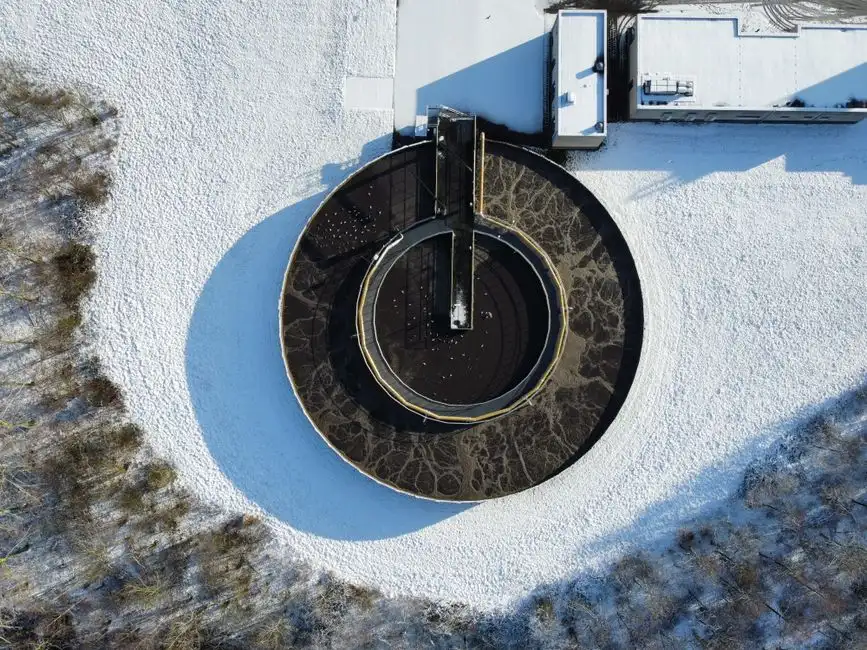
The discharge route determines the governing requirements, and it must be confirmed in writing before treatment equipment is specified. A municipal-sewer discharge, direct discharge to a water body or ground, reuse route and combined discharge option create different treatment, monitoring and residual obligations.
For a Mexican industrial plant, verify the Título de Concesión for water extraction, the Concesión de Descarga for wastewater discharge and the Registro Ambiental ante SEMARNAT for operation of the industrial facility. If the plant discharges to a municipal sewer, coordinate with the state authority and receiving publicly owned treatment works. If it discharges to a water body or ground, evaluate NOM-001-SEMARNAT-2021. NOM-002-SEMARNAT is the sewer-discharge framework where the receiving route is a municipal sewer.
Do not treat a generic standard summary as the permit. Require the applicable authority or sewer operator to provide written numerical limits, pretreatment requirements, monitoring and sampling conditions, reporting obligations, tariff terms and residual-disposal requirements. HydropureWater’s 2026 Mexico research reports that NOM-002 sewer-discharge limits can be stricter than comparable U.S. POTW limits, so a U.S. pretreatment precedent cannot substitute for site-specific confirmation.
| Confirmation | Document or decision required | Procurement consequence |
|---|---|---|
| Water extraction right | Título de Concesión and confirmed extraction conditions | Defines available water and any production constraint |
| Discharge authorization | Concesión de Descarga or applicable sewer requirements | Sets the required treatment endpoint |
| Industrial operating authorization | Registro Ambiental ante SEMARNAT | Confirms whether material process changes require modification |
| Receiving route | Written municipal-sewer or direct-discharge route | Determines pretreatment, monitoring and reporting scope |
| Residuals | Written sludge, concentrate and chemical-waste conditions | Defines storage, transport and disposal responsibilities |
Permit work should proceed in parallel with engineering, but agency schedules must not be treated as project commitments. HydropureWater estimates 90–180 days for novation of the three listed Mexican authorizations; confirm the actual schedule with the authorities and the site’s transaction structure.
The receiving utility’s operating and compliance status also needs verification. HydropureWater’s 2026 research reports that 1,255 of Mexico’s 3,960 municipal wastewater treatment plants do not meet SEMARNAT NOM-01 minimums and that 1,330 are non-operational. Those figures do not establish the receiving plant’s condition, but they justify checking capacity, operating status and compliance records before accepting a sewer route.
Build a source-specific treatment train
Treatment should follow the characterized stream and the confirmed endpoint. Source control comes first: screen for rags, plastics, fibrous debris and suspended solids that could overload downstream equipment; use equalization for batch or slug loads; and apply physical pretreatment where the objective is removal of oil, grease, floatable material or suspended solids. DAF pretreatment for oily automotive wastewater is a candidate for streams requiring floatable-solids or oil removal, not a substitute for characterization.
Use biological treatment where the stream contains biodegradable loads. Consider an MBR system for biological treatment and membrane solids separation where compact biological treatment, membrane solids separation and the available footprint align with the design basis. An MBR versus conventional activated-sludge comparison should use the same wastewater data, endpoint and lifecycle boundary for both alternatives.
Use UF for membrane pretreatment or polishing only when the design basis supports it. HydropureWater’s 2026 technical research lists UF systems with 0.03 μm PVDF membranes, flow from 2,000 to 40,000 L/h and turbidity acceptance up to 300 ppm. Those are catalogue values, not project guarantees; influent chemistry, solids loading, backwash waste and required recovery still govern suitability.
Chemical precipitation or other targeted treatment should follow quantification of the relevant metal or dissolved contaminant. Confirm chemical demand before specifying dosing equipment. RO treatment design for high-TDS industrial wastewater can support the membrane and concentrate review, but RO should not be inserted merely because reuse is mentioned.
| Design condition | Treatment decision | Required confirmation |
|---|---|---|
| Debris or high suspended-solids loading | Screening and source-specific physical pretreatment | Solids inventory and downstream equipment protection |
| Oil, grease or floatable material | DAF or another justified physical separation step | Oil and grease characterization, emulsion behavior and sludge fate |
| Batch or slug discharge | Equalization before continuous treatment | Batch frequency, peak load and mixing requirements |
| Biodegradable COD or BOD | Biological treatment, potentially MBR | Biodegradability, nutrients, footprint and solids separation |
| Quantified metals or dissolved contaminants | Targeted precipitation or another validated process | Contaminant concentration and chemical demand |
| Permit- or reuse-driven membrane quality | UF or RO after suitable pretreatment | Feed chemistry, recovery objective, scaling and concentrate route |
| Required microbial control | Disinfection selected against the endpoint | Target organism, flow profile, water matrix and residual controls |
Compare alternatives using one lifecycle basis: treated-water quality, hydraulic capacity, energy, chemicals, monitoring, residuals, footprint, maintenance and recovered-water value. Treatment technology does not replace regulatory approval. Recovered liquid also does not eliminate the management of DAF sludge, biological solids, chemical waste, UF reject or RO concentrate.
Decide whether reuse is technically and economically credible
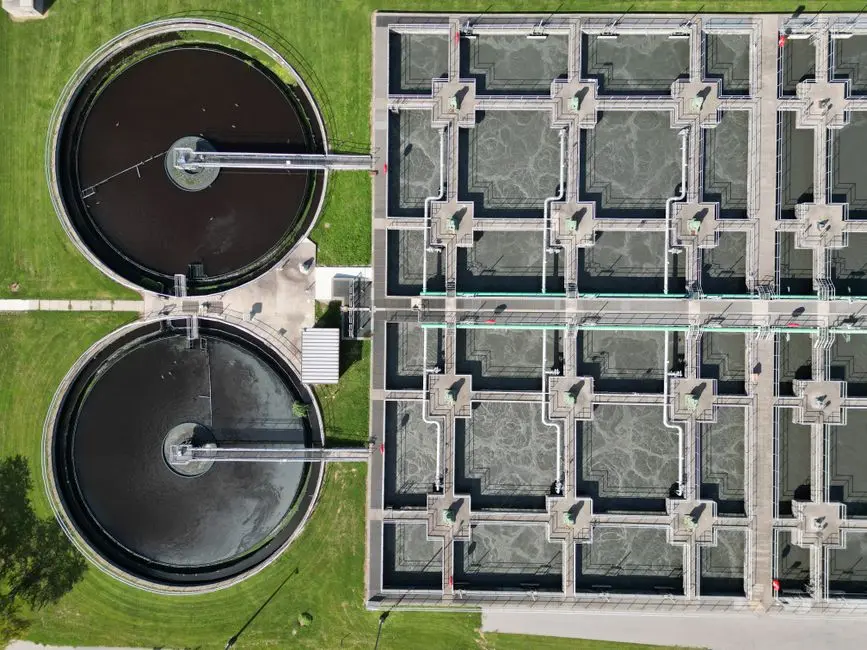
Industrial wastewater reuse is credible only when a defined application, water-quality target and continuous offset support the added treatment. Before adding UF or RO, specify the reuse demand, required quality, operating reliability, measurable water offset and consequence of an outage. Without those inputs, reuse is an aspiration rather than an engineering basis. The RO capacity assessment for a Mexico battery plant illustrates why site-specific water chemistry and production conditions are necessary.
Confirm the concentrate fate, membrane pretreatment needs, scaling risk, water chemistry and recovery objective. Compare reuse with sewer discharge and permitted direct discharge using identical assumptions for equipment, utilities, chemicals, maintenance, monitoring and residual disposal. An industrial RO capacity review should test membrane demand against the actual water balance rather than a vehicle-production forecast.
Recovered water should enter the economic comparison as one value component, not as the entire benefit. If there is no continuous offset, reuse may add treatment and residual costs without delivering the assumed saving. Conversely, sewer discharge may not be credible if the receiving authority lacks capacity or sets pretreatment conditions that the plant cannot meet.
EPA’s Tijuana infrastructure program reinforces the need to include future demand and lifecycle obligations. Its 2025 agreement added projects for future population growth and operation and maintenance costs, while the South Bay plant expansion increased capacity from 25 MGD to 35 MGD. The transferable lesson is methodological: infrastructure decisions need both capacity and the commitments required to operate it.
Release equipment only after six project gates are closed
Equipment procurement should follow six objective release gates; failure at any gate should stop final selection rather than transfer unresolved risk to the supplier. The sequence used for the EV plant expansion procurement method separates verified project data from catalogue capacity claims.
| Gate | Evidence required to close the gate | Procurement status |
|---|---|---|
| 1. Characterization | Complete source inventory and representative wastewater results | No equipment release |
| 2. Mass balance | Closed peak, average, batch and slug-load balance | No hydraulic sizing |
| 3. Permit route | Written sewer, direct-discharge, reuse or combined route | No endpoint selection |
| 4. Process design | Approved PFD showing streams, units, bypasses, monitoring and residuals | No final equipment specification |
| 5. Residual plan | Documented sludge, concentrate, chemical waste, media and transport responsibilities | No lifecycle cost approval |
| 6. Supplier commitment | Guaranteed project-wastewater performance and complete commercial scope | Ready for award |
At Gate 6, require bidders to guarantee performance against project wastewater. The guarantee should state analytical test methods, sampling protocol, acceptance period, remedy, utility requirements, controls, training, maintenance and exclusions. Bidders should also define pretreatment needs, scope boundaries, alarms, consumables, spare parts, start-up support and scale-up provisions.
Do not issue a defensible budget or equipment award from production volume alone. Request flow data, wastewater composition, variability, route, residual constraints, utility requirements and supplier quotations. A procurement decision should be traceable to closed engineering gates, not to a vehicle forecast or a clean-water performance claim.
Frequently Asked Questions
What inputs are needed before producing a defensible wastewater budget for a Rivian Mexico expansion?
Request peak and average flow, batch and slug-load data, representative composition, discharge or reuse criteria, residual quantities, utility requirements and supplier quotations. Compare those inputs on one lifecycle basis, including equipment, chemicals, energy, maintenance, monitoring, sludge and concentrate disposal, and recovered-water value. The supplied research contains no Rivian-specific project cost or flow data, so a price should not be estimated from vehicle output.
Why are peak flows and batch conditions needed to size wastewater treatment equipment?
Treatment equipment must handle the operating condition that governs hydraulic or contaminant loading, not merely the daily average. Peak hourly flow establishes the instantaneous duty; batch frequency and slug loads establish equalization, pretreatment and downstream resilience requirements. Characterization also determines whether the selected process can treat the stream at all.
How should a buyer evaluate a wastewater treatment supplier for a Mexican EV plant?
Require performance guarantees against project wastewater, with test methods, sampling protocol, acceptance period and remedy. The commercial package should identify pretreatment, controls, alarms, utilities, training, maintenance, consumables, start-up support, exclusions and the handling of sludge, concentrate, chemical waste and spent media. Catalogue capacity alone does not establish project suitability.
When should a Rivian expansion choose reuse instead of sewer or direct discharge?
Choose reuse only when the application, target quality, continuous demand, reliability requirement and measurable offset are documented, and the concentrate has a feasible endpoint. Compare reuse, sewer discharge and direct discharge using the same treatment, utility, monitoring and residual assumptions. Without a dependable water offset, the added equipment may not produce a defensible lifecycle benefit.