Separate the Wastewater Streams Before Choosing Equipment
A Kawaguchi data center needs a treatment plan that separately handles cooling blowdown, sanitary sewage, and other equipment wastewater. Cooling blowdown is the concentrated residual left after evaporation; it can contain elevated salts, heavy metals, residual biocides, corrosion inhibitors, and altered pH, depending on source-water chemistry and the cooling chemical program. The required train depends on whether the water will be discharged, reused for process applications, or recycled as cooling makeup. In 2026, reclaimed-water treatment had about twice the global warming potential of the freshwater case, with treatment energy accounting for roughly 80% of the difference. A practical design therefore starts with Kawaguchi source-water chemistry, discharge conditions, seasonal demand, and verified flows—not a fixed-treatment prescription.
Cooling blowdown should not be combined with sanitary sewage by default. The former is a concentrated cooling-loop residual; the latter is an organic wastewater stream with different treatment objectives, biological load and discharge requirements. Equipment drains, laboratory wastewater and any process wastewater also require separate characterization because metals, oils, cleaning chemicals or elevated conductivity may change the required treatment.
Reclaimed water reduces potable-water demand but changes the chemistry challenge. It does not remove the need for pretreatment, scale and corrosion control, biological control, or monitoring. The regional data-center blowdown treatment framework provides the broader sequencing approach, but the Kawaguchi design must be based on local water, utility and permit conditions.
Open Engineering Inc’s 2026 life-cycle assessment found that the upstream water penalty associated with reuse was approximately 0.93 L/m³, less than 0.1% of the direct freshwater-displacement benefit. Treatment energy nevertheless remained a major climate impact, so water recovery cannot be evaluated independently of electricity use, chemical demand and operating labor.
| Stream to characterize | Typical control question | Treatment decision |
|---|---|---|
| Cooling makeup | What dissolved solids and treatment chemistry enter the loop? | Source-water pretreatment and chemical-control compatibility |
| Cooling blowdown | Which salts, metals, biocides, inhibitors and solids have accumulated? | Discharge, low-grade reuse or cooling-makeup recovery |
| Sanitary sewage | What is the organic, solids and nutrient load? | Biological treatment, solids separation and disinfection as required |
| Equipment and process drains | Do they contain oil, metals, cleaning chemicals or high conductivity? | Segregated pretreatment before any common treatment step |
Document which streams enter the sewer, which are intended for reuse, and whether the receiving utility has assessed cumulative load. The Water Utility Report, updated 2026-04-14, recommends asking about discharge volumes, expected chemistry, pretreatment requirements and the receiving system’s cumulative capacity.
Build a Kawaguchi Water Balance That Covers Seasonal Peaks
Cooling treatment capacity must be derived from measured mass and water balances rather than average site intake. For an evaporative cooling loop, evaporation equals makeup minus blowdown, and theoretical blowdown equals makeup divided by (cycles of concentration minus 1). The calculated result must then be reconciled against meter data, because leakage, carryover and emergency dumps can make actual blowdown exceed the theoretical balance.
Genesis Water Technologies provides a useful worked relationship: at 4 cycles of concentration, blowdown is 25% of makeup-water volume; at 6 cycles, it is 20%. Moving from 4 to 6 cycles therefore reduces blowdown by 20%, not 50%. The same source warns that actual blowdown can exceed theoretical calculations by 15–30% because of unmeasured losses and emergency dumps. Use that discrepancy to define metering and operating uncertainty rather than treating it as guaranteed recoverable capacity.
| Balance item | Required measurement or method | Engineering use |
|---|---|---|
| Makeup water | Calibrated meter with operating timestamps | Calculates cycles of concentration and theoretical blowdown |
| Blowdown | Continuous and manual discharge metering | Establishes treatment and storage duty |
| Evaporation | Water-balance estimate reconciled with measurements | Separates consumption from return flow |
| Cycles of concentration | Ratio of circulating to makeup-water conductivity | Tests whether additional concentration is operationally feasible |
| Emergency dumps | Event log, volume and cause | Sets peak and contingency treatment requirements |
| Sanitary flow | Diurnal, weekday and seasonal metering | Separates biological-treatment capacity from cooling duty |
For Kawaguchi, calculate the humid-period operating case from actual cooling and makeup records; do not import a generic climate flow. Include minimum and maximum operating hours, future IT load, cooling configuration, emergency-dump frequency and seasonal water quality. High humidity can affect cooling demand and evaporation, but the magnitude must come from the site model and operating data.
Water Usage Effectiveness should be treated as an intake-based indicator, not evidence that blowdown is recoverable. Genesis Water Technologies states that WUE does not account for discharge quality or reuse potential. The Khabarovsk data-center cooling treatment guide describes a comparable measurement method, but the Kawaguchi balance must use Kawaguchi meter data.
Characterize the Water Before Setting Treatment Targets
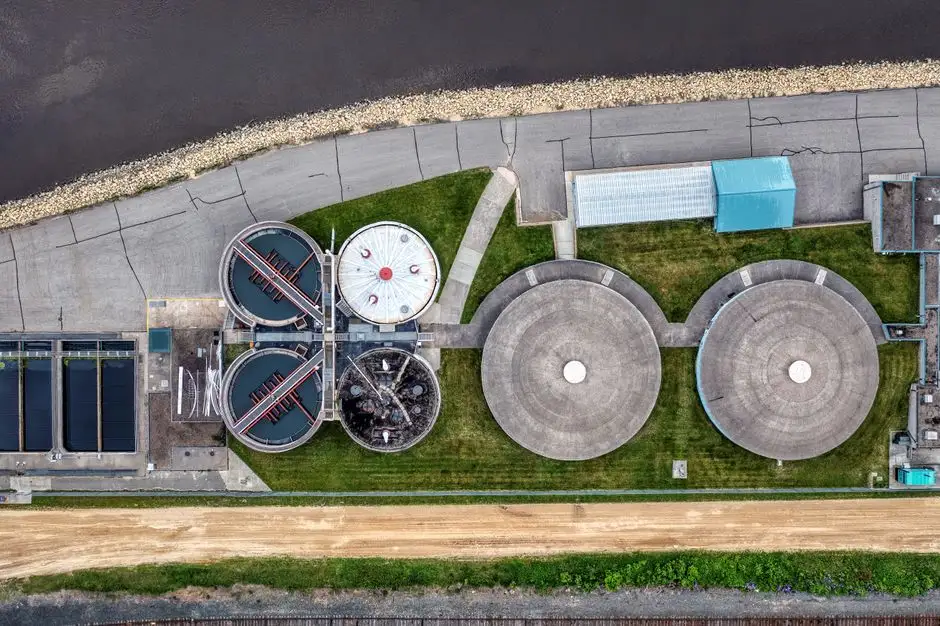
Treatment targets cannot be set reliably without samples from the source water, circulating cooling water and blowdown. At minimum, record pH, conductivity, total dissolved solids, hardness, alkalinity, calcium, chloride, sulfate, silica, suspended solids and temperature. Where chemical treatment is used, also measure residual biocide, corrosion inhibitor and anti-scalant. These parameters determine whether the governing problem is dissolved salts, suspended solids, microbes, oil or chemical contamination.
Cooling blowdown can contain elevated salts, heavy metals, biocides, corrosion inhibitors and altered pH, but those constituents are conditional rather than universal. Their concentration and acceptable disposition depend on the source water, chemical program, cycles of concentration and receiving system. A conductivity measurement alone therefore cannot establish suitability for reuse.
| Destination | Target-setting basis | Data required before commitment |
|---|---|---|
| Approved sewer discharge | Written sewer acceptance and discharge conditions | Flow, temperature, pH, conductivity, suspended solids and chemical constituents |
| Process reuse | End-use quality and site contamination controls | Intended service, health and operational requirements, chemical inventory |
| Cooling-makeup reuse | Scale, corrosion, biological and concentration control | Complete ion profile, alkalinity, silica, hardness, chlorides, microbes and chemical history |
| Sanitary reuse | Applicable reclaimed-water or reuse requirements | Organic load, nutrients, pathogens, treatment performance and authority approval |
North Carolina State University’s 2026 article on data-center growth reports that warm blowdown and residual biocides or anti-scalants can degrade receiving-water quality and increase the burden on municipal treatment. It also describes data-center cooling demand as continuous and comparatively inflexible. These observations support early engagement with the receiving system, but they do not establish Japanese or Kawaguchi limits.
Confirm Kawaguchi discharge limits, sewer acceptance criteria, reclaimed-water standards and utility connection conditions in writing with the relevant municipality, sewer authority or water-quality authority. The supplied research contains no numerical Kawaguchi limits, so none should be assumed in the equipment specification.
Match the Treatment Train to the Water's End Use
The treatment train should follow the required end use, not a fixed sequence copied from another data center. Solids generally require media or self-cleaning filtration. DAF is relevant where oil, FOG or floatable material is present. Ultrafiltration pretreatment for reclaimed cooling water can remove colloids, bacteria and suspended solids and can protect downstream RO. An industrial RO system for cooling-makeup reuse addresses dissolved-salt reduction, while disinfection provides microbial control. These technologies solve different problems and should be selected from the measured contaminant profile.
Open Engineering Inc’s 2026 UF+RO analysis found that wastewater energy use increased to more than five times the freshwater scenario. The same analysis found that improved cycles of concentration reduced blowdown and chemical consumption. That is a trade-off, not an automatic recommendation for UF and RO. Higher recovery may justify more treatment energy where freshwater and discharge costs are material, but it should be demonstrated against the actual Kawaguchi water balance.
| Decision branch | Candidate treatment | Primary target | Key operating issue |
|---|---|---|---|
| Compliant sewer discharge is acceptable | Segregation, equalization and targeted pretreatment | Protect the receiving system and meet written conditions | Lowest-complexity option; confirm disposal route |
| Permitted low-grade process reuse is available | Filtration and disinfection as required by the end use | Recover water for a defined non-critical service | Prevent cross-contamination and manage residual chemicals |
| Lower-demand cooling reuse is feasible | Filtration, controlled chemistry and disinfection | Replace part of the cooling makeup | Scale, corrosion and biological control remain binding constraints |
| Advanced high-recovery cooling reuse is justified | UF, RO, stabilization and full monitoring | Reduce freshwater withdrawal and blowdown | Higher energy, membrane maintenance and concentrate management |
Cooling-makeup reuse has tighter scale, corrosion and biological constraints than many process applications. A selected non-critical service may accept a different quality, but its water-quality, health and local-rule requirements must be explicit. Sanitary wastewater requires a separate biological solution. Biological treatment addresses the organic load; MBR combines biological treatment with membrane solids separation and produces near-reuse-quality effluent. A packaged aerobic-anoxic plant is generally more relevant to smaller or segregated sanitary flows. The available integrated MBR treatment option should be evaluated only after sanitary flow and reuse quality are established.
Open Engineering Inc’s decarbonized-grid sensitivity found the reuse GWP penalty negligible over most of a system commissioned in 2026 under that scenario, while water savings retained full value; chemical production became the main carbon contributor. The result depends on the electricity mix, so a Kawaguchi carbon assessment needs local power data rather than a generic renewable-energy assumption.
Verify Capacity, Reliability, and Operating Burden
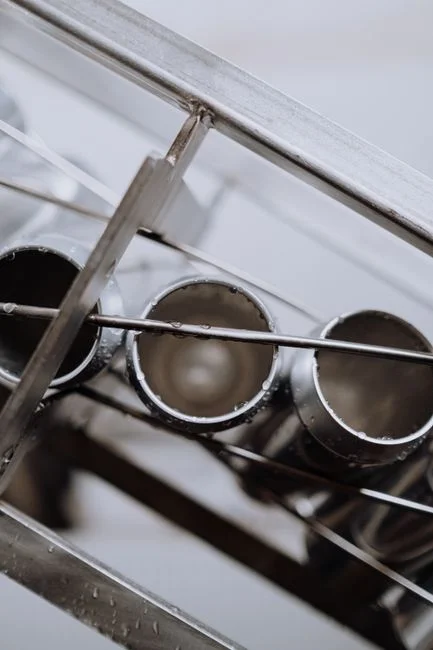
Equipment capacity should follow verified peak duty, contaminant loading and availability requirements. Size pretreatment from peak flow, turbidity, suspended solids and required filtration rate—not average flow. Size UF from hydraulic duty and contaminant challenge, then account for cleaning, membrane loss and off-line units. If one train must remain available during cleaning, redundancy must appear in the process flow and control philosophy.
RO sizing requires feed salinity, required permeate quality, recovery, concentrate-management route and available electrical capacity. The supplied industrial RO product is described as having recovery rates up to 95%, but that catalog value is not a project guarantee. Project recovery must be established from the actual feed analysis, recovery target and concentrate route.
| Equipment | Supported selection range | Design verification required |
|---|---|---|
| Media or self-cleaning filtration | Suspended-solids and turbidity control | Peak hydraulic load, solids loading, cleaning method and standby capacity |
| DAF | Supplied catalog range: 4–300 m³/h; applicable to suspended solids, FOG, oil and grease, and colloidal matter | Oil and floatable loading, chemical demand, sludge handling and performance; not a universal blowdown demineralizer |
| UF | Colloid, bacteria and suspended-solids barrier | Feed solids, flux, cleaning frequency, recovery and redundancy |
| RO | Dissolved-salt reduction; supplied catalog recovery up to 95% | Feed salinity, permeate target, energy, concentrate disposal and membrane replacement |
| Disinfection | Microbial control | Target organism, contact performance, monitoring and chemical or UV requirements |
Specify conductivity and turbidity monitoring, differential-pressure or recovery-ratio monitoring, chemical interlocks, controlled bypasses and a documented response to off-spec reuse water. Automatic dosing must be linked to measured flow and water chemistry; the automatic chemical-dosing approach is useful only with calibrated pumps, tanks and verification tests. Equipment, media and valve selections should be tied to the feed chemistry and pressure conditions documented in the treatment-parts specification.
North Carolina State University’s 2026 finding that cooling demand is continuous and inflexible means treatment downtime can affect facility continuity, not only compliance. Ask vendors for guarantees against the agreed feed and effluent datasets, membrane or media life, cleaning frequency, availability, energy and chemical consumption, and the response to off-spec product.
Develop the Project in Three Decision Gates
The project should proceed through three decision gates. Gate 1 establishes the baseline: measure makeup, blowdown, evaporation and water quality; distinguish consumption from returned flow; and determine seasonal variability. Gate 2 optimizes the existing cooling system by repairing leaks, eliminating unnecessary once-through cooling, improving controls, reducing premature blowdown triggers and testing whether higher cycles of concentration are achievable without unacceptable scale, corrosion or biological risk.
Gate 3 compares the investment case. Include water, treatment energy, chemicals, labor, disposal, permit risk and the value of recovered water. Do not evaluate a treatment system on throughput alone. The wastewater treatment operating-cost breakdown provides the structure for that comparison.
- Baseline: submit source, circulating and blowdown analyses; one year of makeup, blowdown and operating-hour data; cooling PFD; chemical inventory; measured sanitary flows; and projected IT load.
- Optimization: reconcile theoretical and measured blowdown, identify leaks and emergency dumps, evaluate seasonal operating modes, and test feasible cycles of concentration.
- Investment: define the selected end use, treatment objectives, preliminary trains, storage and equalization needs, concentrate route, monitoring, redundancy, staffing and written approval pathway.
Genesis Water Technologies describes a modular 100–300 GPM blowdown-treatment system as an initial modular scale. That range is a concept for early planning, not a selection for Kawaguchi. Actual peak flow, operating profile and batch-storage calculations are required before choosing it.
For public and utility engagement, provide expected discharge volume and chemistry, pretreatment requirements, receiving-system capacity, cumulative-load information from nearby facilities and water-quality data. The site-specific brief should include source-water analyses, sewer or reuse conditions, meter history, cooling PFD, chemical inventory, selected end use, peak demand and operations staffing requirements.
Frequently Asked Questions
What treatment does a data center in Kawaguchi need for cooling blowdown and wastewater?
Start with segregation. Cooling blowdown requires targeted treatment for accumulated salts, solids and cooling chemicals; sanitary sewage requires biological treatment and appropriate solids separation; equipment and process drains require contaminant-specific pretreatment. The final train depends on written discharge conditions or the selected reuse quality. No single treatment package should be selected before source, circulating and blowdown samples establish the design basis.
How should wastewater treatment equipment be sized for a Kawaguchi data center?
No defensible equipment rate can be given without verified makeup flow, measured blowdown, cycles of concentration, seasonal peaks, source chemistry and intended reuse quality. Use theoretical blowdown only as an initial calculation, then reconcile it against at least one year of meter data and include emergency dumps. Size pretreatment, UF or RO from peak hydraulic and contaminant duty, including cleaning, downtime and concentrate-management requirements.
What should buyers request when selecting a wastewater treatment supplier?
Require a feed-water and effluent performance guarantee using the agreed site datasets. The supplier should provide membrane or media life data, cleaning frequency, expected energy and chemical consumption, redundancy, controls, O&M support, spare-parts arrangements and a contingency plan for off-spec product. Treat a catalog recovery rate or treatment range as a starting point rather than project performance.
How should the cost and budget for cooling blowdown treatment be assessed?
Request a life-cycle cost covering treatment energy, chemicals, labor, media or membrane replacement, disposal, avoided potable water, recovered-water value and compliance exposure. A modular treatment system may reduce initial capital exposure, but operating reliability, storage requirements and disposal cost can dominate the comparison. Obtain a site-specific quotation only after flows, chemistry, treatment objectives and redundancy are fixed.
What Japanese compliance evidence is needed before treatment equipment is approved?
Engineering assumptions are not legal approval. Obtain written conditions from the applicable Kawaguchi municipality, sewer authority and water-quality authority covering discharge, sewer acceptance, reclaimed-water use, monitoring, sampling and reporting. If the recovered water will enter a cooling loop, also document why its chemistry and chemical residues are acceptable for that service. Confirm whether connection or use approval requires a particular application procedure or monitoring plan.