What Kigali manufacturers should install for high-COD trade waste
In 2026, manufacturers in Kigali should treat high-COD trade waste with a staged train: characterize and equalize the effluent; remove suspended solids, oil and grease, FOG, and colloids with screening plus DAF or clarification; then apply biological treatment to reduce biodegradable COD and BOD before clarification and polishing. Rwanda requires industries in designated industrial zones to provide primary treatment before discharge to a centralized plant. A 2025 Kigali constructed-wetland study reported COD removal of 68.77% in the dry season and 71.65% in the rainy season, showing potential for polishing, but not a substitute for industrial pretreatment.
Trade waste is the industrial wastewater stream generated by the factory and requiring treatment before it enters a sewer, receiving plant, watercourse, or reuse system. Equipment selection cannot be based on a COD figure alone. Before procurement, characterize COD, BOD, TSS, oil and grease, pH, dissolved oxygen, flow variation, and the originating production process. Segregate incompatible streams because dilution and mixing can conceal a batch discharge that would overload a biological process or receiving plant.
- Characterization and segregation: establish source streams, production schedules, batch discharges, and industrial contaminants.
- Screening: remove rags, plastics, fibrous debris, and suspended material before pumps and biological equipment. A rotary mechanical bar screen for factory wastewater pretreatment can form the inlet protection stage.
- Equalization: balance flow and pollutant loading before treatment. Equalization manages variability; it does not substitute for removal of oil, solids, or biodegradable COD.
- DAF or clarification: recover suspended solids, oil and grease, FOG, and colloidal material before biological treatment. A DAF system for industrial high-COD pretreatment addresses these front-end contaminants.
- Biological treatment, clarification, and polishing: reduce biodegradable COD and BOD, settle biological solids, and add polishing or disinfection where required. An MBR membrane bioreactor for high-COD effluent combines biological treatment and membrane separation where its loading and effluent targets are justified.
- Monitoring and authorized routing: sample the treated stream and discharge or reuse it only under the applicable permit and receiving-plant conditions.
This sequence matters because DAF and biological treatment solve different problems. The 2022 Water study “Industrial Wastewater Discharge and Compliance Investigation for Environmentally Resilient Rwanda” found that all five investigated facilities failed both oil-and-grease and fecal-coliform checks. Unremoved solids, oils, FOG, and colloids can interfere with biological treatment or burden a centralized plant.
Constructed wetlands should be evaluated as polishing or a possible decentralized component, not assumed to replace factory pretreatment. The 2025 study “Impact analysis of constructed wetland for wastewater management in Rwanda” measured COD removal of 68.77% in the dry season and 71.65% in the rainy season at a Remera wetland. That performance provides a benchmark, not proof that every industrial stream will meet the same outcome.
Rwanda's treatment and compliance context for Kigali factories
Rwanda’s industrial-zone model assigns each industry responsibility for primary treatment of its own effluent before discharge to the centralized industrial wastewater treatment plant.
This requirement is stated in the 2022 Water study, “Industrial Wastewater Discharge and Compliance Investigation for Environmentally Resilient Rwanda.” It therefore affects how a Kigali factory defines its equipment boundary: the industrial pretreatment package must treat the specific effluent generated on site, not merely provide a connection or general clarification.
REMA is Rwanda’s national environmental regulator and the body responsible for environmental compliance and enforcement. However, a generic national value should not be substituted for the current permit applicable to the site. Before purchasing, obtain the site-specific permit, zoning confirmation, discharge authorization, and the receiving plant’s written acceptance criteria. The framework for checking industrial pretreatment limits before discharge is useful, but each criterion must still be confirmed for the actual factory and receiving route.
The five-industry investigation in Water from 2022 provides a clear risk warning. Compliance across pH, DO, BOD, COD, TSS, Pb, Cd, and Cr was reported at 66.7%, while every investigated facility failed the oil-and-grease and fecal-coliform checks. The same study documented deliberate untreated discharge by one industry, followed by closure by REMA.
Transferring effluent to a centralized plant does not remove the factory’s responsibility to control its discharge. The factory must demonstrate that primary treatment meets receiving criteria, maintain its equipment, sample at agreed points, retain records, and prevent untreated or substandard bypasses.
Procurement scope should therefore include more than vessels and pumps. Require pretreatment design, sampling provisions, chemical dosing where needed, maintenance access, operator training, control-system integration, commissioning, sludge handling, and a clear performance demonstration. The receiving plant and REMA should be consulted before finalizing equipment guarantees, because acceptance limits and monitoring obligations may be more demanding than a general treatment specification.
How each treatment stage reduces high-COD effluent
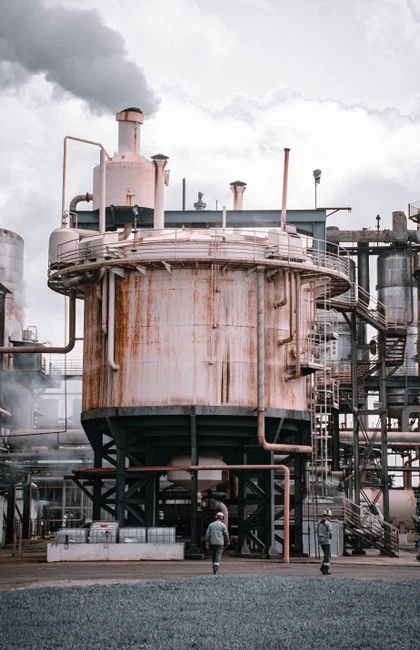
Each treatment stage should have a defined contaminant-removal duty, measurable inlet condition, and required outlet condition.
Mechanical screening protects downstream equipment from suspended solids, rags, plastics, and fibrous debris. It prevents these materials from entering pumps, valves, clarifiers, and biological systems. Equalization then buffers flow and load variation, but its performance must be demonstrated from the factory’s production and discharge records rather than from a nominal tank volume.
DAF is front-end treatment. It removes recoverable suspended solids, oil and grease, FOG, and colloidal matter that can interfere with biological treatment. The DAF system for industrial high-COD pretreatment covers 4–300 m³/h across 13 standard models according to the supplied product information. Those are equipment capacities, not guaranteed treatment results; project performance depends on wastewater characteristics, conditioning, hydraulic loading, and operation.
Biological treatment is the principal COD- and BOD-reduction stage when the remaining organic load is biodegradable. Configuration must account for biodegradability, toxicity, temperature, loading, nutrients where relevant, hydraulic retention, and the required final quality. An MBR membrane bioreactor for high-COD effluent provides submerged PVDF membrane filtration below 1 μm and is offered from 10 to 2,000 m³/day. These are product specifications, not guaranteed project effluent values. The related MBR membrane bioreactor module should be evaluated as part of the biological and solids-retention design, not selected from flow capacity alone.
Wetland data illustrate why solids removal and seasonal behavior must be considered together. The 2025 Remera study reported:
| Parameter | Dry season | Rainy season | Source |
|---|---|---|---|
| COD influent to effluent | 242.2 ± 2.4 to 79.4 ± 1.9 mg/L | 162.8 ± 2.1 to 49.2 ± 3.21 mg/L | “Impact analysis of constructed wetland for wastewater management in Rwanda,” Frontiers in Environmental Science, 2025 |
| COD removal | 68.77% | 71.65% | Same 2025 Frontiers study |
| TSS removal | 81.05% | 65.39% | Same 2025 Frontiers study |
These results make wetlands a relevant polishing benchmark for the Kigali context. They do not establish suitability for untreated high-strength industrial effluent, because the tested stream, wetland configuration, hydraulic loading, and seasonal conditions must be compared with the factory’s discharge.
DAF, biological treatment, or a combined train
DAF should precede biological treatment when suspended solids, oil and grease, FOG, and colloids are the principal pretreatment risks.
The selection follows the wastewater character rather than a preference for one equipment category. The 2022 Water compliance study provides the strongest local warning against sending inadequately treated industrial effluent downstream: all five facilities failed the oil-and-grease and fecal-coliform checks.
| Wastewater condition | Appropriate treatment route | Decision evidence |
|---|---|---|
| Recoverable solids, oil and grease, FOG, or colloids dominate the risk | Screening and equalization followed by DAF or clarification | Representative characterization, recoverability assessment, and receiving-plant acceptance criteria |
| Organic load is predominantly biodegradable and compatible with biological treatment | Biological treatment, followed by clarification and required polishing | Biodegradability, toxicity, loading, and final effluent requirements |
| Recoverable oils and solids coexist with substantial biodegradable COD | Combined DAF-plus-biological train | Laboratory characterization plus pilot evidence or enforceable supplier guarantees |
| Compact land use or near-reuse-quality output is required | Evaluate MBR | Biological loading, membrane flux, peak demand, reuse target, and pretreatment performance |
| Industrial-zone discharge to a centralized plant is required | Factory-owned primary treatment sized to receiving criteria | Current zoning, permit, and written acceptance requirements |
A DAF system for industrial high-COD pretreatment is therefore not a substitute for biological treatment; it protects and conditions the stream entering that stage. Conversely, biological treatment should not be asked to solve all upstream loading problems.
Constructed wetlands remain possible polishing or decentralized treatment components. The 2026 Environments study “Wastewater Treatment with Constructed Wetlands and Banana Fibre Filtration” reported COD removal of 78–83% for constructed wetlands alone and used banana-fibre filtration to improve polishing. It also states that wetlands often fail, on their own, to meet discharge and reuse standards. These findings support a staged decision, not a blanket wetland recommendation.
Where compact treatment or near-reuse quality is required, an MBR membrane bioreactor for high-COD effluent should be checked against biological loading, membrane flux, peak demand, and effluent targets. A generic flow rate is insufficient. If the factory is feeding a centralized plant, first establish what primary treatment the receiving plant requires; an underground integrated treatment system may be relevant to a broader site assessment, but it should not be assumed to satisfy a trade-waste pretreatment specification without project evidence.
Size the system from measured wastewater inputs
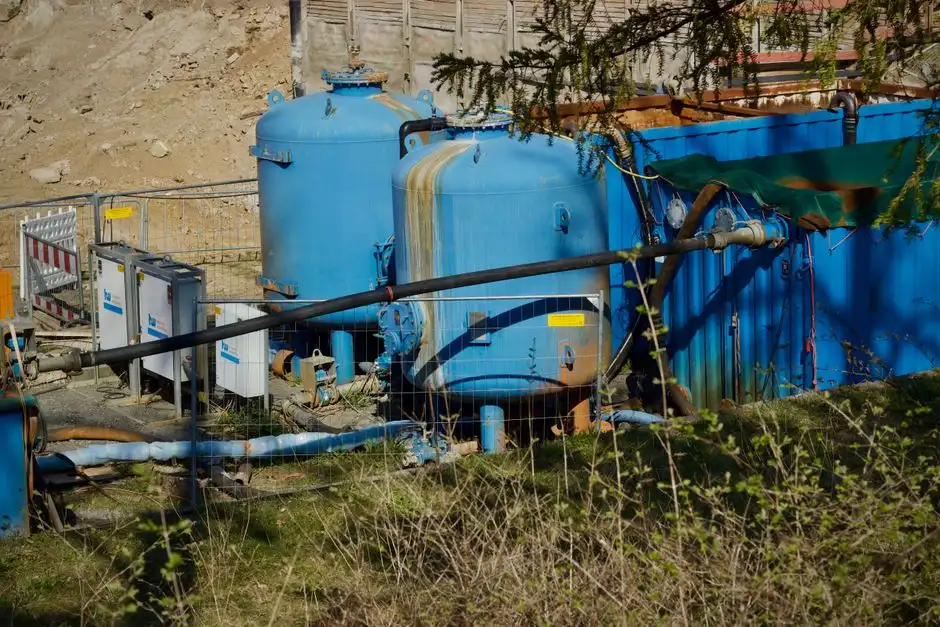
Accurate sizing requires measured wastewater inputs, not a nominal factory production rate.
Request at least one year of hourly or production-representative flow data. It should identify peak and minimum flows, batch discharges, clean-in-place events, storm-related variation, and shutdown flows. Give the supplier the underlying production schedule because equalization, DAF, biological, and membrane duties must respond to the actual load profile.
Characterize the effluent across operating seasons. The minimum analytical request should cover COD, BOD, TSS, oil and grease, pH, DO, temperature, nutrients where relevant, conductivity, and industry-specific contaminants. The 2025 Remera wetland study is a seasonal warning: measured influent COD was higher in the dry season than in the rainy season, and reported removal efficiency also changed with season.
| Procurement input | Information required | Why it affects the scope |
|---|---|---|
| Flow history | Hourly or production-representative data, including batch and shutdown flows | Defines equalization, hydraulic loading, peak equipment demand, and controls |
| Wastewater characterization | Seasonal COD, BOD, TSS, oil and grease, pH, DO, temperature, nutrients, conductivity, and relevant contaminants | Determines pretreatment, biological feasibility, membrane design, and chemical use |
| Discharge route | Permit, zoning, centralized-plant acceptance criteria, and reuse objective | Sets the treatment boundary and outlet guarantees |
| Sludge forecast | Expected generation by selected process, thickening, dewatering, storage, and disposal route | Completes the civil, equipment, and operating scope |
| Commercial and technical guarantees | Guaranteed inlet and outlet duties, test methods, controls, utilities, commissioning, training, and civil boundaries | Creates a testable and auditable supply scope |
Liquid flow alone will understate the project. Obtain sludge-generation data from the selected process and define how residuals will be thickened, dewatered, stored, and disposed of. A plate-frame filter press for sludge dewatering and a high-efficiency sedimentation tank may form part of that scope, but neither should be included without the selected process, solids characteristics, and handling objective.
Require each bidder to state guaranteed inlet and outlet duties, test methods, operating envelope, duty cycle, utilities, control philosophy, operator attendance, commissioning protocol, and the boundary between supplied equipment and local civil works. These items determine whether the quotation represents an operable treatment train or only a collection of units.
Verify compliance with sampling and operating controls
Compliance must be demonstrated through controlled sampling, operating records, and an auditable response to excursions.
Establish dedicated inlet and outlet sampling points. Monitor COD, BOD, TSS, oil and grease, pH, and DO, then add parameters identified by the permit, receiving plant, or environmental assessment. Sampling locations must represent the stream being discharged or reused rather than a diluted or unrepresentative point.
For context only, the 2025 Kigali constructed-wetland paper compared its results with WHO values of COD below 250 mg/L, BOD below 40 mg/L, TSS below 100 mg/L, pH 6.6–8.5, and DO above 2 mg/L. These values are not established by the supplied research as current Rwandan industrial discharge limits and must not be used as the sole compliance criterion.
Use automatic chemical dosing where pH or coagulation chemistry must be controlled. The automatic chemical dosing system supports PLC-controlled injection of coagulants, flocculants, pH adjusters, and specialty chemicals. Chemical selection should follow jar tests and process chemistry rather than a generic dose.
| Control point | Monitoring or operating action | Required response |
|---|---|---|
| Inlet and outlet | COD, BOD, TSS, oil and grease, pH, DO, and permit-specific parameters | Correlated sampling, retained records, and comparison with applicable limits |
| Flow and organic loading | Flow, batch-discharge events, and load trends | Adjust equalization and biological operation; investigate deviations |
| DAF | Oil carryover, solids flotation, chemical dose, and surface condition | Adjust conditioning and investigate breakthrough |
| MBR | Differential pressure, membrane-fouling trends, flux, and permeate quality | Apply the approved cleaning and recovery procedure |
| Disinfection, where required | Dose and discharge condition, including a chlorine dioxide generator where justified | Verify effective contact and maintain operating records |
Set alarm and escalation rules for high COD, flow surges, differential-pressure or membrane-fouling trends, DAF oil carryover, and deterioration in final effluent quality. The 2022 Water finding of deliberate untreated discharge is a governance lesson: metering, controls, records, operator competency, and transparent sampling matter as much as treatment capacity.
Questions to ask before selecting a wastewater supplier
A wastewater supplier should demonstrate performance for the factory’s measured wastewater, not only demonstrate that a standard unit can operate.
Ask for guaranteed inlet and outlet values, the exact test method, the operating envelope, duty cycle, remedies for non-compliance, and any exclusion that shifts risk to the owner. A useful reference for structuring a broader comparison is the 2026 effluent treatment plant buyer’s guide; if the stream contains sulfide or other process-specific contaminants, also review sulfide removal methods for industrial wastewater.
Confirm whether the quotation covers equipment only or includes process design, civil interfaces, installation, commissioning, training, chemicals, spare parts, sludge handling, and operating support. It should also identify excluded foundations, access roads, power upgrades, drainage, laboratory services, and disposal routes.
Verify local service capability: technician response time, critical-spares availability, remote PLC support, site attendance, and maintenance access. Ask for reference projects with comparable industrial streams and seasonal flow profiles, then compare those references with the factory’s actual effluent. Similar nominal flow does not establish similar COD, oil-and-grease content, FOG, toxicity, or operating variability.
Compare lifecycle requirements rather than purchase price alone. Request estimates for energy, chemicals, sludge volume, membrane cleaning, consumables, operator time, and performance during peak production. For DAF, clarify how recovered oil and sludge are handled; for biological or MBR systems, identify biological loading, membrane flux, cleaning frequency, and replacement strategy.
Finally, require the supplier to state the permit and centralized-plant assumptions used in its guarantee. If those requirements change, the scope and price should be reopened rather than treated as an uncontrolled supplier risk.
Frequently Asked Questions
What treatment train is best for high-COD wastewater from a factory in Kigali?
Use screening and equalization first, then remove suspended solids, oil and grease, FOG, and colloids with DAF or clarification. Biological treatment follows where the remaining COD is biodegradable, with secondary clarification and polishing added as required. The correct configuration must be confirmed through characterization, the discharge route, and applicable acceptance criteria.
Can a constructed wetland treat all industrial trade waste in Kigali?
No blanket conclusion follows from the research. The 2025 Remera study measured COD removal of 68.77% in the dry season and 71.65% in the rainy season for its constructed wetland, while the 2026 Environments study cautions that wetlands alone can fail discharge or reuse standards. Wetlands should therefore be assessed against the factory’s stream, seasonal load, and required outlet quality rather than assumed to replace pretreatment.
How much should a Kigali high-COD treatment system cost?
The supplied research does not provide project-specific prices. Request a scope-based quotation using measured flow, complete effluent characterization, treatment objectives, centralized-plant acceptance criteria, civil works, sludge handling, utilities, and service requirements. Then compare the total lifecycle scope, including energy, chemicals, membrane cleaning, consumables, operator time, and peak-production performance.
Should the factory install a full treatment plant or provide primary treatment to a centralized plant?
Rwanda’s industrial-zone model requires industry-owned primary treatment before discharge to the centralized plant. Confirm the factory’s current zoning, permit, and receiving plant’s written acceptance criteria before deciding the equipment boundary. A supplier should not assume either route without documentary confirmation.