How to Select an Effluent Treatment Plant in Ipoh
An effluent treatment plant in Ipoh should be selected based on the wastewater profile, flow pattern, discharge permit and reuse objective—not from a generic technology package. The HydropureWater commercial guide identifies COD ≤50 mg/L, BOD₅ ≤30 mg/L, TSS ≤10 mg/L and pH 6–9 as indicative general-industry limits, while DAF addresses suspended solids and FOG and MBR suits tighter solids control and reuse. Final design requires influent testing, permit review and treated-water quality trials.
Turn a purchase request into an engineering basis by collecting five inputs: average and peak flow, a complete effluent characterisation, the intended discharge or reuse route, current permit conditions and operating constraints. Peak flow or COD alone is inadequate because production variability, FOG, heavy metals, dissolved salts, colour and cleaning chemicals can change the required process.
An industrial ETP is not a sewage treatment package with the building name changed. It must address the factory’s pollutants, hydraulic variation and permit conditions. According to the HydropureWater commercial guide, direct discharge to the Kinta River requires a specific Perak DOE discharge permit and compliance with applicable limits.
- Characterise the influent across production, cleaning and shutdown periods.
- Confirm the receiving route and reuse objective.
- Define the required final water quality.
- Select the treatment train.
- Size for peak hydraulic and contaminant loads.
- Price CAPEX, OPEX and downstream obligations.
| Design input | Evidence required | Decision affected |
|---|---|---|
| Hydraulic profile | Average flow, peak flow, production schedule and clean-up discharges | Equalisation, pumping and unit sizing |
| Wastewater chemistry | COD, BOD₅, TSS, FOG, pH, heavy metals, TDS and process-specific contaminants | Pretreatment, biology and polishing |
| Compliance route | Current permit, applicable sector limits and discharge point | Guaranteed effluent specification |
| Reuse target | Intended reuse and receiving-process water-quality requirement | MBR, UF, NF or RO selection |
| Site and operations | Footprint, power, operator availability and waste-disposal route | Civil scope, redundancy and OPEX |
The broader sequence in this Malaysia ETP buyer’s guide can then be adapted to the factory’s own data rather than treating a catalogue rating as a design guarantee.
Ipoh Discharge Requirements to Confirm Before Equipment Selection
The HydropureWater commercial guide cites a Perak DOE Gazette 2024 and Perak DOE Compliance Manual 2025 for its planning values, but its general-industry figures are not a substitute for the facility’s current permit. Buyers should obtain the latest official gazette and confirm sector-specific conditions before selecting equipment.
| Parameter | Indicative planning value in HydropureWater commercial guide | Status before design |
|---|---|---|
| COD | ≤50 mg/L | Confirm permit category and sampling basis |
| BOD₅ | ≤30 mg/L | Confirm permit category |
| TSS | ≤10 mg/L | Confirm permit category |
| pH | 6–9 | Confirm permit category |
| Heavy metals | Generally ≤0.1–1.0 mg/L, depending on parameter and sector | Confirm each parameter, limit and grab-sample condition |
These values may not be applied automatically to food processing, electronics, metalworking or other sectors. The commercial guide states factories must collect 24-hour composite samples and submit quarterly reports, but the current sampling protocol, reporting frequency and sector category must be confirmed for each facility.
Compliance risk is material: the guide reports fines of RM50,000–RM500,000 per violation and possible production stoppages. The legal basis and final consequences must be checked against current applicable law and the regulator’s findings. Before selecting a heavy-metal removal route, review industrial heavy-metals removal methods alongside the site’s specific permit.
Match the Treatment Train to the Wastewater
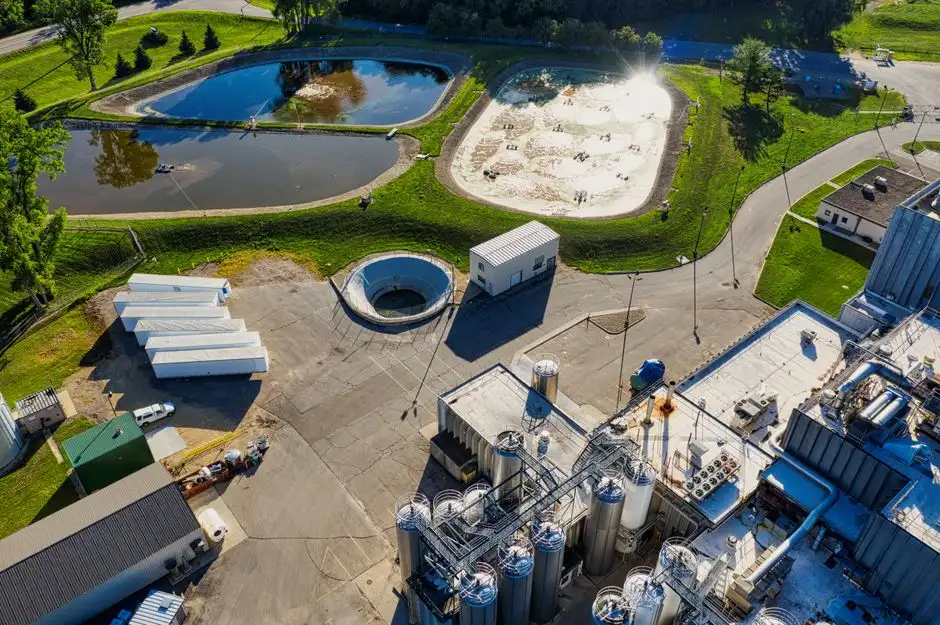
Each treatment stage should remove a defined pollutant group, and the next stage should receive a controlled feed; a generic “package plant” cannot substitute for that mass balance.
For food-processing wastewater, DAF is the cited pretreatment option for suspended solids, FOG, oil and grease and colloidal matter. The HydropureWater catalogue lists an industrial DAF wastewater treatment system range of 4–300 m³/h across 13 standard models. For electronics wastewater or demanding reuse targets, MBR may follow suitable pretreatment. The catalogue specifies submerged PVDF membrane filtration below 1 μm and system capacities from 10 to 2,000 m³/day for the integrated MBR wastewater treatment system. These are catalogue specifications, not proof of performance on a particular factory effluent.
| Wastewater or objective | Potential train | Evidence and limitation |
|---|---|---|
| Food processing with FOG | DAF → biological treatment → required polishing | DAF is identified for FOG and suspended solids; final stages require effluent data |
| General organic load | A/O or activated sludge | Commercial guide reports BOD₅ and TSS removal of 85–90%; it describes the route as less suitable for significant heavy metals or FOG |
| Electronics or tighter solids control | Pretreatment → MBR → polishing if required | MBR catalogue data cover membrane type and capacity, not site guarantees |
| Advanced polishing or reuse | UF, NF or RO as required | University of Twente research identifies nanofiltration as suitable for polishing WWTP effluent to EU WFD standards for agricultural or potable-use objectives; this does not make arbitrary industrial effluent potable |
| Micropollutant research | Constructed wetlands subject to feasibility review | Wageningen University’s 2022 thesis investigated this route; project-specific and regulatory assessment remains necessary |
| Research-stage colour and COD treatment | Continuous-flow bioreactor with hybrid waste-sludge biochar | Separations research investigated agro-industrial effluent; this is not a default commercial process selection |
UF is relevant where low-turbidity polishing or downstream RO protection is required. The supplied catalogue lists 0.03 μm PVDF membranes, 2,000–40,000 L/h capacity and chemical-free removal of bacteria, colloids and suspended solids. These figures describe catalogue capability and still require application checks.
Complete the process flow with sludge handling: route separated solids to a plate-and-frame filter press and define the final sludge-disposal route, receiving acceptance and handling responsibility in the project scope.
Compare DAF, MBR and A/O for an Ipoh Plant
The HydropureWater commercial guide provides a quantitative comparison, but its cost figures are estimates rather than binding quotations. It positions DAF for high organic loads and FOG, MBR for higher-quality effluent and reuse, and A/O for general-industry loads at relatively lower capital cost.
| Option | Estimated CAPEX | Estimated OPEX | Principal operating considerations |
|---|---|---|---|
| DAF | RM1.2 million–RM3.5 million | RM8–RM15/m³ | Coagulation, flocculation and reliable solids skimming |
| A/O | RM800,000–RM2.5 million | Not stated in the supplied comparison | Biological loading, aeration and sludge separation |
| MBR | RM3.2 million–RM4.8 million | RM18–RM22/m³ | Membrane cleaning, fouling control and replacement |
All figures are from the HydropureWater commercial guide. Its comparison does not establish that the quoted CAPEX includes every project-specific civil structure, electrical installation, permit, commissioning item or site condition unless the supplier expressly confirms inclusion in its offer.
No option is universally best. DAF–MBR may suit wastewater containing both FOG and demanding final-quality requirements, but the combination must be checked against the complete effluent analysis and discharge or reuse target. The commercial guide describes DAF as effective for high organic loads and FOG, MBR for higher-quality effluent and reuse, and A/O for general-industry loads. For metals or solids-sensitive streams, compare the hydraulic and contaminant basis in DAF versus clarifier for metals wastewater.
Estimate CAPEX and OPEX Without Oversizing the Plant
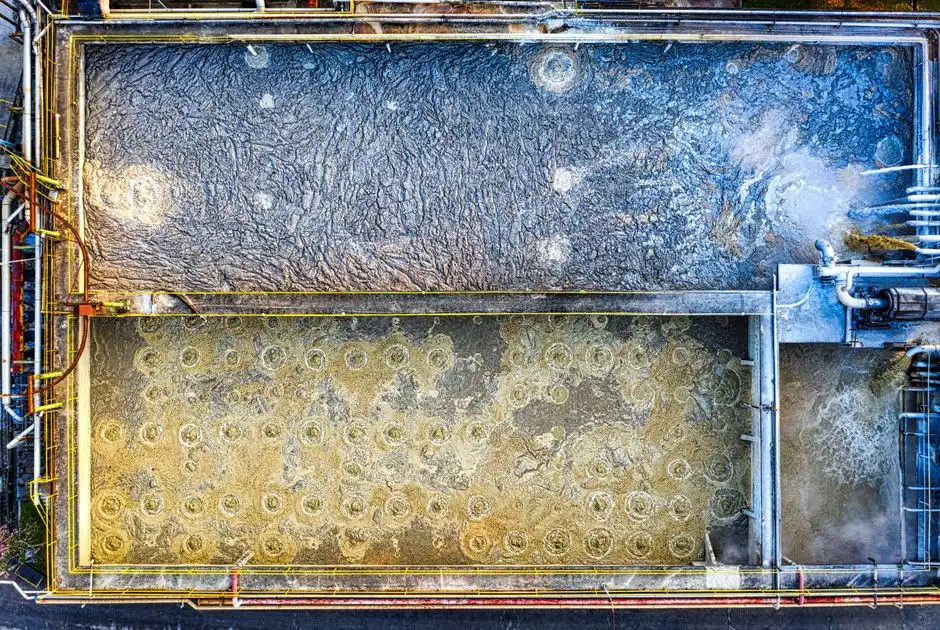
The HydropureWater commercial guide estimates approximately RM2.1 million CAPEX and RM12/m³ average OPEX for a 100 m³/h DAF example, giving an estimated RM438,000 annual OPEX under its continuous-operation assumption. These are planning estimates, not quotations or guaranteed site prices.
| Cost element | Commercial estimate or method | Buyer check |
|---|---|---|
| CAPEX benchmark | RM1.2 million–RM4.8 million across compared configurations | Ask for itemised equipment, civil, electrical, installation and commissioning prices |
| OPEX benchmark | RM8–RM22/m³ across compared configurations | Confirm what energy, chemicals, labour and disposal are included |
| Annual OPEX | Flow per day × 365 × OPEX/m³ | Use the actual operating schedule; add excluded costs separately |
| Permit fees | RM5,000–RM20,000 annually | Confirm current fee with Perak DOE |
| Testing | RM1,500–RM5,000 per sample | Confirm parameters, frequency and laboratory scope |
Break OPEX into energy, chemicals, labour, sludge disposal and maintenance. Aeration intensity affects energy use; chemical dosing affects reagent consumption; membrane cleaning affects MBR service costs; and sludge dewatering increases disposal expenditure. Exclude sludge disposal, maintenance, consumables, testing and permit fees from the base calculation if the supplier’s unit rate does not already include them.
Size equipment against peak hydraulic and contaminant loads with appropriate operating redundancy. A nominal production rate is not sufficient for ETP capacity calculation: the supplier needs actual average and peak flow, wastewater analysis and operating history.
Prepare a Supplier Brief That Produces Comparable Proposals
Comparable bids require the same influent data, design boundary, guarantee basis and commercial breakdown. Require average flow, peak flow, complete water analysis, production schedule, source separation, drain layout, available footprint, power, reuse target and current permit as mandatory bid inputs.
| Submission item | Required content |
|---|---|
| Engineering basis | Signed-off process description, mass balance and hydraulic calculations |
| Equipment and controls | Equipment schedule, electrical load list and control philosophy |
| Project boundary | Civil works, utilities, installation, permits and exclusions |
| Performance | Guaranteed effluent parameters with sampling method or composite-sample basis |
| Commissioning | Testing protocol, acceptance criteria, training and handover plan |
| Lifecycle support | Local capability, spares, response arrangements and maintenance schedule |
| Commercial structure | Base equipment, installed price, civil works, utilities and five-year operating costs separated |
| Evidence | References for comparable wastewater treatment in Malaysia |
Also request membrane and consumables replacement costs, operator training, local spare-parts availability and response arrangements. A performance guarantee should be tied to documented influent and operating conditions and a shared testing protocol; an unconditional promise without agreed sampling boundaries is not comparable evidence.
Frequently Asked Questions
How much does an industrial effluent treatment plant cost in Ipoh in 2026?
The HydropureWater commercial estimate is RM1.2 million–RM4.8 million CAPEX and RM8–RM22/m³ OPEX across the compared configurations. These are not quotations: technology, capacity, civil works, utilities and site conditions change the price. Request an itemised installed-price offer and separate five-year operating-cost schedule.
Frequently Asked Questions
How much does an industrial effluent treatment plant cost in Ipoh in 2026?
For 2026, the capital expenditure for a standard industrial effluent treatment plant (ETP) in Ipoh typically ranges from RM 150,000 to RM 800,000, depending on the flow rate and pollutant load. Systems handling 50 to 200 cubic meters per day generally cost between RM 2,500 and RM 4,500 per cubic meter of installed capacity, excluding land acquisition and civil engineering works.
Which wastewater treatment system is best for a food processing factory in Ipoh?
Food processing facilities in Ipoh are best served by a combination of Dissolved Air Flotation (DAF) for oil and grease removal, followed by an Anaerobic Digester or Upflow Anaerobic Sludge Blanket (UASB) reactor to handle high Chemical Oxygen Demand (COD) loads. These systems effectively manage the high organic content typical of food waste, ensuring the effluent meets the Department of Environment (DOE) Standard A or B requirements.
Is an MBR wastewater treatment plant necessary for an Ipoh factory?
A Membrane Bioreactor (MBR) is necessary only if the factory has limited space for secondary clarifiers or if there is a strict requirement for water recycling and reuse. While MBR systems provide superior effluent quality with a smaller footprint, they incur higher operational costs due to membrane cleaning and electricity consumption; they are typically recommended only if discharge limits are exceptionally stringent or space constraints are significant.
How do I choose a reliable wastewater treatment equipment supplier in Perak?
A reliable supplier must possess a valid Certificate of Registration from the Suruhanjaya Perkhidmatan Air Negara (SPAN) and demonstrate a track record of projects compliant with the Environmental Quality (Industrial Effluent) Regulations 2009. Prioritize vendors who offer local technical support teams based in Perak to ensure response times under 24 hours for emergency maintenance and spare parts availability.
What information is needed to size an industrial wastewater treatment plant?
Accurate sizing requires a detailed influent characterization report including average and peak daily flow rates (m³/day), pH levels, and concentrations of COD, Biological Oxygen Demand (BOD), Total Suspended Solids (TSS), and Oil and Grease (O&G). Additionally, you must provide the intended discharge point—whether it is a public sewer, watercourse, or land application—to determine the specific treatment technology required to meet local environmental standards.