Which Borivli data-center streams need treatment?
A Borivli data center needs treatment selected from its actual water streams, not a generic data-center ETP. Closed-loop leakage and maintenance flow, evaporative cooling-tower blowdown, sanitary wastewater and RO concentrate must be assessed separately. Cooling blowdown typically contains concentrated salts, silica, hardness, corrosion inhibitors, biocides and suspended solids, so a metered water balance and representative chemistry analysis must precede equipment selection. UF can control particulates before RO, while RO may produce cooling make-up water if site-specific recovery and scaling limits permit. Conventional brackish-water RO commonly reaches 75–80% recovery; the 95% figures published by IDE and HydropureWater are examples or catalog maxima, not guaranteed Borivli performance. The final design must also secure an accepted discharge and concentrate route.
The first engineering decision is the cooling architecture. A closed-loop liquid-cooling system does not automatically generate concentrated cooling-tower blowdown. An evaporative or hybrid arrangement does. This distinction determines whether the dominant treatment duty is a relatively small leakage and maintenance stream or a continuous, chemically concentrated blowdown stream. The regional data-center blowdown treatment planning guide provides a useful reference structure, but its regional conclusions should not replace Borivli measurements.
| Stream | What must be established | Initial treatment decision |
|---|---|---|
| Closed-loop leakage and maintenance drainage | Measured peak flow; coolant identity; additives; possible refrigerant or PFAS contamination | Specialist recovery or controlled disposal until compatibility is established |
| Evaporative cooling-tower blowdown | Flow, cycles of concentration, conductivity/TDS, pH, hardness, silica, TSS, chlorides, sulfate, alkalinity, temperature and chemical residuals | Solids removal where needed, followed by RO only against site-specific scaling limits |
| Domestic sewage | COD, BOD, TSS, ammonia, pH and pathogen data | Independent biological and solids-treatment design; avoid blending into the cooling basis |
| RO permeate | Feed-specific recovery and reuse specification | Define approved use before finalizing pretreatment |
| RO concentrate | Conductivity, hardness, silica, chloride and sulfate; solids route | Confirm an accepted discharge, reuse or specialist recovery route before equipment award |
For closed-loop leakage, obtain the coolant inventory and determine whether refrigerant- or PFAS-containing fluids could be present. Specialized handling may be required, so leakage cannot automatically be assumed suitable for dilution or cooling reuse. For evaporative blowdown, sample across cooling modes and representative IT loads because composition and flow can change with operating conditions.
Use measured peak blowdown, maintenance-drain flow and the emergency-dump route to establish design duty. Average daily facility water use will not capture short-duration discharges. Do not import IDE’s 2026 illustration of up to 2 million litres per day for a 100-MW facility into the Borivli design: IDE presents it as an illustration, not a local sizing input.
Build the Borivli water balance before sizing equipment
Capacity should follow the measured peak flow and complete water balance, not an assumed percentage of average water use. Meter makeup, evaporation, blowdown, leakage, maintenance drainage, permeate, concentrate, reclaimed-water demand and final discharge as one linked system. The step-by-step wastewater treatment capacity calculation provides a useful methodology, but every input must be replaced with Borivli operating data.
- Record makeup and evaporation by cooling mode.
- Measure blowdown, leakage, maintenance drainage and emergency dumps.
- Measure RO permeate and concentrate.
- Reconcile reclaimed-water demand with final discharge.
- Select equipment from maximum design flow plus the required operating margin.
HydropureWater’s 2026 guidance cites a blowdown relationship of 1 divided by CoC minus 1: at 4 CoC, blowdown equals 25% of makeup; at 6 CoC, it equals 20%. The same source warns that actual blowdown may exceed theoretical values by 15–30% because of unmeasured losses and emergency dumps. These are the source’s stated relationships, not a Borivli measurement or a substitute for metering.
Cycles of concentration determine the concentration severity of the circulating cooling water; measured flow and chemistry determine the treatment duty.
The balance must also track cooling configuration, IT load and operating modes. Evaporation, blowdown and water chemistry can change when the thermal architecture changes. A vessel or pump sized only for normal operation may be inadequate during a startup dump, maintenance event or peak cooling demand. IDE’s 2026 100-MW daily-use illustration should therefore remain outside the Borivli sizing calculation.
Choose treatment by contaminant risk and end use
Treatment should remove contaminants in the order that protects downstream equipment and the intended reuse. Suspended solids, colloids and particles come first because they can foul membranes, instruments and cooling distribution systems. Dissolved-solids removal follows only when the selected reuse specification requires it.
HydropureWater’s 2026 catalog describes a 0.03-micron PVDF ultrafiltration pretreatment system with 2,000–40,000 L/h capacity, feed turbidity up to 300 ppm, automatic backwash and air scour. These are catalog parameters, not guaranteed Borivli performance. Fouling potential, peak flow, feed chemistry and required permeate quality still require verification.
An industrial RO system for Borivli water reuse is appropriate where dissolved salts must be reduced for a defined reuse target. Project recovery from feed TDS, calcium hardness, silica, temperature, antiscalant strategy and site-specific scaling limits. IDE’s 2026 article reports that conventional brackish-water RO commonly reaches 75–80% recovery before scaling becomes unmanageable. HydropureWater’s 2026 catalog rating of up to 95% recovery is not an operating guarantee.
| Treatment step | Applicable condition | Procurement requirement |
|---|---|---|
| Solids removal or UF | Reuse specification limits suspended solids or RO pretreatment requires reliable particulate control | Confirm peak flow, feed turbidity, recovery, cleaning method and redundancy |
| Industrial RO | Dissolved-solids removal is required for the selected reuse | Provide feed-specific projection, scaling analysis and pilot recovery data |
| Disinfection | Microbial control is required for the destination | Select against the reuse risk; filtration alone does not establish microbiological suitability |
| Automatic chemical dosing | Target chemistry, residual requirement and materials compatibility are confirmed | Define chemical inventory, control response and downstream impact |
| High-recovery treatment | Conventional RO cannot meet the site recovery target | Require specialist chemistry design, pilot evidence and a solid-residue route |
IDE’s 2026 specialist concept combines conservative local RO, controlled precipitation of silica and calcium salts in a fluidized-bed reactor, and a brine loop that becomes primarily sodium chloride. The precipitated pellets require an approved solid-residue route; this is not a default packaged treatment train.
HydropureWater’s 2026 summary of a Genesis Water Technologies guide gives general cooling-water screening targets of 500–1,500 mg/L TDS and 10–25 mg/L suspended solids. These are not Borivli acceptance limits. Replace them with the project’s approved cooling-makeup specification.
Compare discharge, reuse and high-recovery options
The preferred route depends on stream chemistry, receiving-use requirements, concentrate handling and operating capability. Treatment that meets an effluent specification still has little value if the concentrate has no accepted destination.
| Route | When it is appropriate | Primary gate |
|---|---|---|
| Treat and discharge under controlled conditions | The receiving authority accepts the treated stream and its chemical, temperature and solids characteristics | Written discharge acceptance criteria |
| Reuse for washdown or another non-contact service | Recovered-water quality is suitable for the specified application | Defined reuse specification and storage or distribution controls |
| Reuse as cooling make-up | TDS, suspended solids, scaling, microbiology and control limits protect the cooling system | Cooling-chemistry compatibility and pilot proof |
| Use a specialist high-recovery train | The required recovery cannot be met reliably by conventional treatment | Specialist design, residue handling and site-specific validation |
IDE’s 2026 industrial example reports approximately 95% recovery and about 1 mg/L permeate silica. It blended blowdown from 20 hybrid cooling towers with RO brine and manufacturing wastewater. It is proof-of-concept evidence for that installation, not guaranteed performance for a Borivli data center.
Open Engineering’s 2026 lifecycle preprint found that its wastewater scenario had about twice the global warming potential of the freshwater case, with treatment energy accounting for roughly 80% of the difference. The UF+RO scenario used more than five times the freshwater case’s energy, partly offset by improved cycles of concentration that reduced blowdown and chemical consumption. The preprint also reported an indirect water penalty of approximately 0.33 L/m³ for the reuse train, less than 0.1% of the direct displacement benefit; this result must remain within its study context.
Require each bidder to price equipment, installation, membranes, chemicals, energy, testing, operator time, cleaning, redundancy, replacement parts and residue handling. The supplied research contains no Borivli-specific tariff or quotation. After award, technical schedules can be aligned with the appropriate RO and UF membrane elements and treatment valves, filters and media.
Pilot, monitor and prove the Borivli treatment package
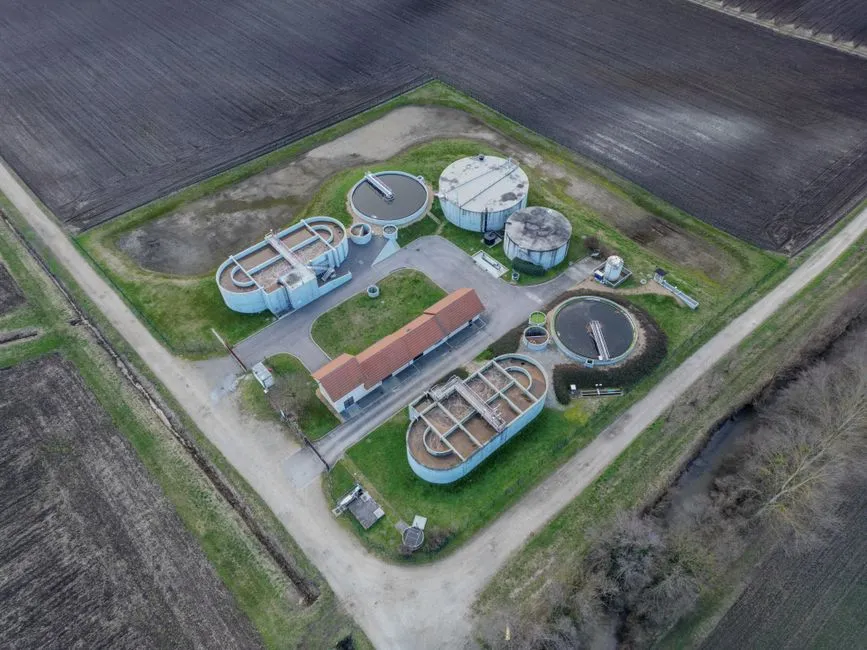
Acceptance should be based on representative operating evidence rather than a catalog recovery figure. HydropureWater’s 2026 guidance proposes a trial lasting 3–6 months, or the longest practical operating window. Use that window to cover representative cooling demand, startup conditions, treatment operation and concentrate handling.
The pilot should test:
- Membrane recovery and scaling tendency.
- Chemical demand and consumption.
- Permeate quality against the approved reuse specification.
- Concentrate quantity, chemistry and handling.
- Automation, interlocks and peak-load operation.
- Cleaning frequency and differential-pressure development.
Monitor flow, conductivity, pH, hardness, silica, TSS, the selected biocide residual and differential pressure across membrane or filter stages. Trend cycles of concentration, actual recovery, cleaning frequency, chemical consumption and reuse performance. Control logic should respond to cooling demand, permeate quality and concentrate-handling capacity; otherwise a technically successful treatment train may create a downstream bottleneck.
Set contractual acceptance criteria for recovered-water quality, stable recovery, concentrate handling, cleaning frequency and automatic controls. The supplier should identify every projection assumption and explain how site data supports it. This approach is consistent with the ETP technology and equipment buyer’s guide, while remaining specific to Borivli’s actual service and compliance conditions.
Smaller systems can carry disproportionate cost and operating burden. HydropureWater’s 2026 summary of Genesis Water Technologies reports capital cost per gallon treated can be 3–4 times higher at smaller scales and that operating complexity can exceed available staff expertise. Obtain itemized Borivli quotations and assess training, automation and maintenance support rather than applying those cost factors directly.
Confirm discharge and compliance before finalizing equipment
The discharge and concentrate route must be fixed before the effluent specification and treatment package are finalized. A technically reusable effluent remains commercially unusable if its reject or precipitated solids cannot be accepted by an authorized destination.
Request written criteria from the relevant Maharashtra authority or sewer operator for the selected discharge route. Confirm applicable requirements for pH, TDS, temperature, chemical additives and other parameters relevant to the stream. Seek separate acceptance criteria for the main effluent and for RO concentrate or sludge; one approval does not automatically cover the residue stream.
Do not apply United States NPDES or pretreatment numbers cited in the supplied 2026 review to Borivli. Those examples identify the type of criteria to request, but they are not Indian legal limits and cannot substitute for the applicable Maharashtra and local-authority requirements.
Document the local water source, current discharge constraints and freshwater actually avoided. Use those facts to support the business case rather than generic water-scarcity claims. The same discipline applies to reuse: specify the receiving service, its chemistry limits and any applicable authority or operator approval before treating the route as bankable.
The final procurement gate should therefore have four closed items: measured water balance, representative chemistry, accepted end use or discharge route, and accepted concentrate or residue destination. If any one remains open, equipment selection is provisional.
Frequently Asked Questions
How much should a Borivli data-center treatment system cost?
No defensible price can be calculated from the supplied research because it contains no Borivli tariff, flow data or quotation. Require itemized site-specific quotations covering equipment, installation, membranes, chemicals, energy, testing, operator time, cleaning, redundancy, replacement parts and residue handling. Provide measured peak flows, chemistry, recovery target, reuse route and concentrate destination before comparing prices.
Should the supplier guarantee 95% recovery?
No supplier should guarantee 95% recovery merely from a catalog rating. IDE’s 2026 industrial example achieved approximately 95% recovery on a mixed industrial stream, while the same source reports that conventional brackish-water RO commonly reaches 75–80%. Contract only the stable recovery demonstrated by representative Borivli feed chemistry and pilot operation, including cleaning, chemical use and concentrate-handling conditions.
What information should be requested before equipment selection?
Request the cooling architecture, measured makeup, blowdown, leakage and maintenance flows, cycles of concentration, representative analyses, coolant inventory, written reuse or discharge criteria and the concentrate destination. Include peak conditions, emergency-dump routes, operating modes, future IT-load assumptions and downstream material-compatibility requirements.
Can Borivli reuse cooling blowdown as cooling make-up?
Yes, but only after the stream is characterized and the recovered-water specification protects the cooling system. Solids and dissolved salts may need treatment, while microbiology, scaling, residual chemistry and controls must meet the receiving system’s requirements. A concentrate route must also be secured before the reuse decision is final.
Which Borivli compliance risk creates the most project delay?
An unresolved discharge or concentrate acceptance route can block the project even when the treatment equipment is technically viable. Obtain written acceptance criteria from the relevant authority or sewer operator for both the treated effluent and RO concentrate or sludge, then align the equipment specification and pilot acceptance tests with those requirements.