Recommended Wastewater Treatment Approach for Taipei Hotels
A Taipei hotel or resort in 2026 usually needs a decentralized biological wastewater treatment train: screening or grease and oil pretreatment where required, an A/O package plant for conventional domestic sewage, or an MBR system when compact installation, high-quality effluent or water reuse is important. The final design depends on measured flow, kitchen and laundry loads, public-bath or pool discharges, land availability and the authority’s sewer, reuse and discharge requirements.
For a straightforward site with verified flow within the available package range, begin with an underground A/O package sewage treatment plant, preceded by the pretreatment needed to protect the biological process. Consider an integrated MBR membrane bioreactor when footprint, effluent quality or a defined reuse objective makes the conventional arrangement unsuitable.
Guestroom count is only one inventory item. Water House Hotel Taipei lists 23 rooms, a hot tub and hot public baths in its property description, according to HOTEL WATER HOUSE, TAIPEI (waterhouse.taiwanhotelstaipei.com, accessed for this article). Those fixtures create wastewater characteristics that cannot be inferred from occupied rooms alone. Public-bath and pool discharges may need separate assessment because their flow and chemistry differ from domestic sewage.
The process should therefore begin with source mapping and measured flow-and-load data, then proceed through pretreatment, biological treatment, clarification, disinfection and sludge handling. Environmental stewardship should be integrated into resort development rather than deferred to the final equipment purchase. A 2016 University of Oregon dissertation, Imaginative geographies and state reliance: Examining Taiwan’s Shanyuan Bay and Miramar Resort, connects environmental protection with the wider social and development effects of Taiwan’s Miramar Resort case. This is an environmental-justice study rather than a current treatment regulation, and it does not establish a Taipei discharge limit.
Build a Hotel Wastewater and Capacity Inventory
Hotel equipment cannot be sized reliably from room count alone; the procurement basis must identify each wastewater stream, its measured and forecast flow, and its contaminant load. The inventory should distinguish normal daily discharge from breakfast, banquet, laundry, cleaning and other event-related surges, because intermittent peaks can control equipment and equalization requirements.
Request meter records, operating observations, occupancy forecasts and event schedules. Identify overnight low flow, weekend variation and seasonal occupancy changes. The designer should characterize grease and oil, suspended solids, COD, BOD, nutrients and pH before assigning biological capacity or pretreatment duties. These inputs also help determine whether kitchen, laundry and public-bath flows should remain segregated until controlled.
| Inventory item | Information to obtain | Why it affects design |
|---|---|---|
| Guestroom sewage | Metered flow, occupancy pattern, fixture discharge characteristics | Establishes the domestic base flow and peak factor |
| Kitchen wastewater | Flow, grease and oil, food solids, cleaning chemicals | May require local solids capture and FOG pretreatment |
| Laundry wastewater | Flow and discharge timing | Can create concentrated or intermittent loads |
| Public-bath or hot-spring discharge | Flow, chemistry, temperature and origin | Requires separate assessment before biological treatment |
| Pool discharge | Backwash frequency, disinfectant and water chemistry | Has a different hydraulic and treatment profile |
| Grease-waste and stormwater | Collection method, entry points and sewer connection | Sets pretreatment and drainage boundaries |
Local solids control can be specified functionally: the GX rotary mechanical bar screen removes suspended solids, rags, plastics and fibrous debris, protecting downstream pumps, valves and biological treatment. Confirm the point of discharge, sewer ownership, available sewer capacity and reuse destination during a project-specific review with the relevant Taiwanese authority. No Taipei-specific discharge limit or reuse standard was supplied in the research.
Match Each Wastewater Stream to the Right Treatment Step
A defensible hotel treatment train follows the wastewater source: preliminary screening or local solids control; grease and FOG control where relevant; flow and load equalization; biological treatment; clarification; disinfection; and authorized reuse or discharge. Designers should adjust this sequence after the source inventory, as one biological plant cannot automatically absorb every hotel discharge without appropriate controls.
Kitchen, laundry and public-bath streams may need separate pretreatment or hydraulic segregation before joining the main biological unit. The DAF pretreatment system has a stated capacity range of 4–300 m³/h and is intended to remove suspended solids, FOG, oil and grease, and colloidal matter. That range makes it a candidate for physical pretreatment where the measured flow and contaminant profile support that duty; it does not establish its suitability for a particular hotel without wastewater characterization.
| Process step | Primary purpose | Hotel streams requiring attention |
|---|---|---|
| Screening or local solids control | Remove rags, plastics, fibrous debris and suspended material | Guestroom and service areas |
| Grease and FOG control | Remove free oils, grease and food-related solids | Kitchen and food-service areas |
| Equalization | Moderate flow and load variation | Meals, events, laundry and cleaning cycles |
| Biological treatment | Organic matter removal through A/O treatment or MBR | Combined domestic sewage after appropriate pretreatment |
| Clarification | Separate biological solids from treated liquid | Main treatment train |
| Disinfection | Reduce remaining pathogens before the selected receiving route | Final effluent |
| Sludge handling | Capture, thicken, store, dewater and dispose of residuals lawfully | All solids-generating steps |
DAF is a pretreatment option, not a substitute for biological treatment of hotel sewage. Pool and hot-bath discharges remain separate design questions because their hydraulic profiles and water chemistry differ from domestic sewage. The designer must decide whether to segregate them, equalize them with the main flow, or treat them through a dedicated route after confirming their actual effects on the biological system.
Compare A/O Package Plants, MBR and Intensive Pretreatment
The appropriate route depends on verified flow, available footprint, installation depth, treatment objectives and the quality required at the discharge or reuse point. Pretreatment equipment should be compared by function, while complete biological systems should be compared by process configuration and verified operating scope.
| Option | Verified configuration or scope | Procurement position |
|---|---|---|
| WSZ A/O package plant | 1–80 m³/h; anoxic/aerobic contact oxidation, sedimentation and disinfection in one buried unit; automated operation; below-grade installation | Consider for conventional decentralized treatment where the design flow falls within the verified range and excavation, access and discharge conditions are suitable |
| Integrated MBR system | 10–2,000 m³/day; activated sludge combined with submerged PVDF membrane filtration; filtration below 1 μm; stated 60% smaller footprint than conventional systems | Consider when footprint, effluent quality or reuse objectives cannot be met by a conventional package arrangement, subject to project-specific hydraulic and membrane analysis |
| DAF pretreatment | 4–300 m³/h; for suspended solids, FOG, oil and grease, and colloidal matter | Use where measured characteristics justify physical pretreatment; it is not a complete biological sewage plant |
| GX bar screen | Removes suspended solids, rags, plastics and fibrous debris | Use for solids protection where its verified duty matches the design flow and arrangement |
The WSZ and MBR figures above come from the supplied HydropureWater product specifications, while the DAF and GX functions are stated on their respective product pages. They are equipment scopes, not independent performance validation for a Taipei site. Loading rates, treated-effluent guarantees and installed costs require a proposal tied to the measured design basis.
Space is especially relevant in urban Taipei. The supplied Water House Hotel description places the property approximately 0.4 miles from MRT Xinbeitou station, illustrating the compact urban context of that example hotel but not proving the engineering conditions of another property. A buried package may preserve landscaping, but excavation depth, groundwater, access, vehicle loading and flood exposure still require site-specific investigation.
Use A/O packaging where the verified flow fits its range and straightforward decentralized treatment is the objective. Use MBR where the space or effluent requirement justifies membrane treatment. Add intensive pretreatment where source characterization shows a duty that would otherwise overload or impair the biological unit. This domestic sewage COD removal guide provides background, but the final selection should follow project-specific analysis.
Plan Disinfection, Sludge Handling and Water Reuse
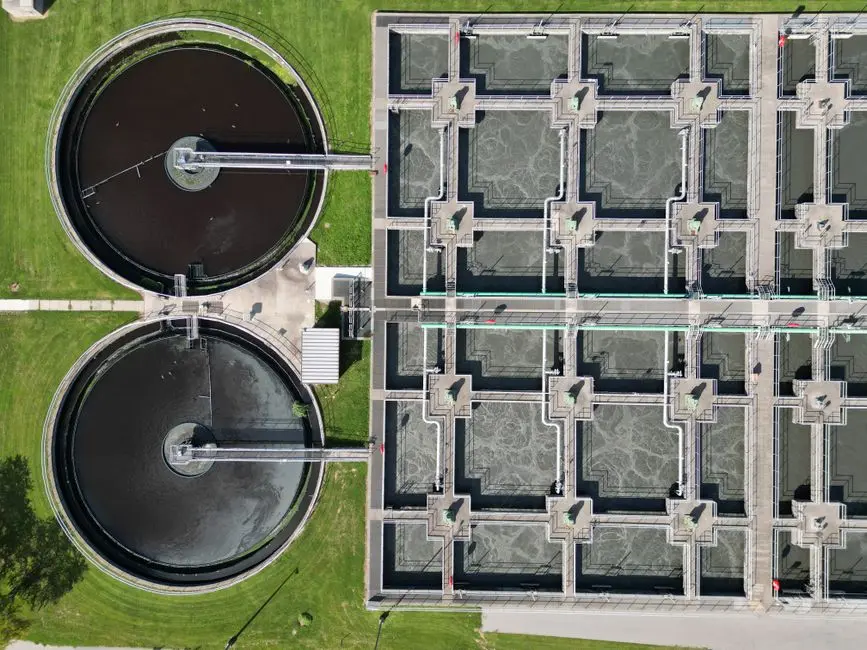
Disinfection, sludge handling and reuse are separate design obligations that must be included in the procurement scope. The treatment train should not be considered complete when clarified effluent is available; the project must also define residual-solids management and the permitted final route.
For an MBR project with a reuse objective, the stated filtration below 1 μm is relevant to equipment selection but does not make the effluent suitable for guest consumption. Taiwan wastewater reuse requires a separate review of the intended application, health controls, process performance and current authority requirements. The supplied research does not establish a current Taiwanese reuse standard or a Taipei reuse classification, so neither should be assumed.
Sludge capture, thickening, storage, dewatering and lawful disposal should appear in the process flow, operating plan and cost schedule. The plate and frame filter press is one dewatering option: HydropureWater specifies filtration areas from 1 m² to 500 m² and manual, hydraulic or fully automatic PLC-controlled operation. The selected method must be matched to expected sludge volume, moisture characteristics, operating frequency and disposal arrangements; the supplied information does not establish a filter-press capacity for a particular hotel.
Do not equate membrane filtration with potability, permit compliance or unrestricted reuse. The receiving route and applicable Taiwanese approval define the required treatment.
Disinfection method, dose, contact arrangement and performance criteria should be selected against the specific permit, receiving-water conditions and reuse destination. None were supplied in the research. If reuse is commercial rather than regulatory, document the intended process and health criteria separately; if reclaimed water will enter toilet flushing, cooling or irrigation, identify the receiving fixture and its design requirements during the authority review.
Site, Automation and Compliance Checklist for a Taipei Project
A technically defensible tender should require a complete design basis and compliance matrix, not only a package capacity and product photograph. The supplier should demonstrate how the proposed process handles the hotel’s measured peaks, loads and wastewater characteristics.
Require a process flow, hydraulic basis, equipment layout, utilities demand, control philosophy, O&M plan and commissioning method. The tender should also identify installation depth, maintenance access, vehicle loading, excavation constraints, odor control, noise, bypass provisions and flood exposure at the actual site.
| Check before award | Evidence requested | Decision supported |
|---|---|---|
| Capacity definition | Design flow, peak basis, duty point, redundancy and stated operating range | Confirms that the proposed system fits the hotel’s measured and forecast loads |
| Civil and installation interface | Layout, excavation, access, loading, utilities, bypass and flood strategy | Tests feasibility on the actual Taipei parcel |
| Controls and operation | Automatic controls, alarms, local controls, operator duties and manual fallback | Defines the operating burden and failure response |
| Performance evidence | Test basis, references and source data for every performance claim | Separates contractual guarantees from typical design values |
| Compliance ownership | Permit matrix identifying authority-confirmed items and client-side actions | Prevents a supplier proposal from substituting for regulatory approval |
| Total O&M scope | Energy, chemicals, membranes or media, sludge removal, maintenance and commissioning | Supports lifecycle cost and owner budgeting |
Ask the supplier to define exactly where its scope ends and civil works, electrical installation, permits, sludge disposal and third-party testing begin. Request test references for claimed performance and state whether effluent values are guaranteed, typical design values or dependent on incoming wastewater meeting an agreed basis.
Permit review must be assigned to the correct project role. The 2016 Miramar Resort dissertation reinforces the need to consider environmental protection and wider community effects in Taiwan’s resort-development decisions, but it is neither current treatment regulation nor evidence of a site-specific permit condition. Current sewer, discharge and reuse requirements should be confirmed with the relevant Taiwanese authority before equipment selection is converted into an approval.
Frequently Asked Questions
How should a Taipei hotel wastewater treatment system be sized?
Size it from measured and forecast flow and contaminant load, not room count alone. Provide meter records, occupancy
Frequently Asked Questions
What size wastewater treatment system does a 100-room hotel in Taipei need?
A standard 100-room hotel in Taipei typically requires a system designed for a daily flow rate between 25 and 40 cubic meters per day (m³/day). This calculation assumes an average water consumption of 250 to 400 liters per guest per day, accounting for laundry facilities, kitchen operations, and standard room occupancy rates.
Is an A/O package plant or an MBR system better for a Taipei hotel with limited space?
For hotels with limited space, a Membrane Bioreactor (MBR) system is superior to a traditional Anoxic/Oxic (A/O) package plant. MBR systems integrate microfiltration or ultrafiltration membranes to replace secondary clarifiers, allowing the system to operate at higher mixed liquor suspended solids (MLSS) concentrations, which reduces the required tank footprint by approximately 30% to 50% compared to conventional activated sludge processes.
How much does a packaged hotel wastewater treatment system cost in Taipei?
The cost for a turnkey packaged wastewater treatment system in Taipei generally ranges from NT$1.5 million to NT$3.5 million, depending on the treatment technology, material specifications (stainless steel versus reinforced concrete), and automation requirements. This estimate excludes civil engineering works, piping installations, and land preparation costs.
What should I check when selecting a wastewater treatment supplier in Taiwan?
When selecting a supplier, verify their certification under the Taiwan Environmental Protection Administration (EPA) standards for wastewater treatment equipment manufacturing. Ensure the vendor provides a comprehensive maintenance plan, local spare parts availability for critical components like membrane modules or aeration blowers, and a proven track record of compliance with Taipei City’s strict effluent discharge standards for sewer systems.
Can treated hotel wastewater in Taipei be reused for irrigation or pool make-up water?
Yes, treated wastewater can be reused for non-potable applications such as landscape irrigation and toilet flushing, provided it meets the "Water Quality Standards for Reclaimed Water" regulated by the Taiwan EPA. While MBR-treated effluent is high-quality, using it for pool make-up water requires additional tertiary treatment stages, including advanced oxidation, activated carbon filtration, and continuous disinfection to ensure compliance with public recreational water safety standards.